‘It seemed like every town in America had something going on’: Week of Action against Flock and ALPRs gets people engaged
As protests spread nationwide, Atlanta-based Flock Safety grapples with backlash over surveillance technology and growing privacy concerns.
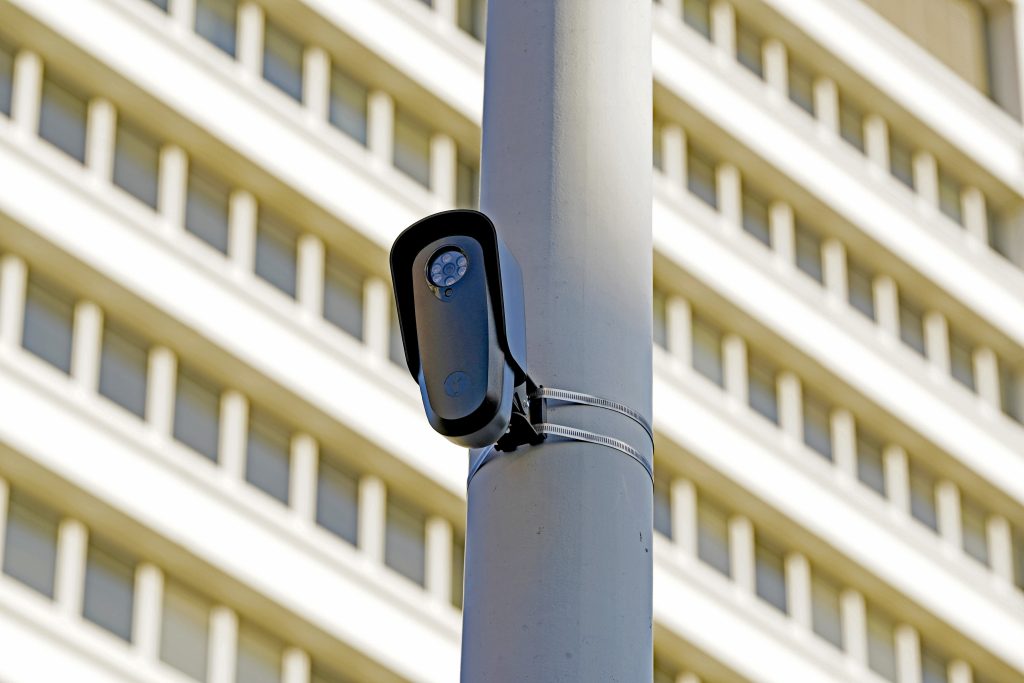
The last member of the audience to speak at an event held in Marietta last Tuesday stuck out in organizer Len Phillips’ mind. The event, part of the first national Week of Action against ALPRs, or automated license plate readers, had been going on for four hours.
The man wore a hat from a gun and ammo store. “I don’t agree with some of y’all on a lot of things–but I’m upset and don’t know what to do,” he said.
Phillips said the man was an example of how the event’s 110 or so attendees included people of differing political ideologies—including Democratic Socialists, Libertarians and conservatives—who nonetheless shared concerns about the proliferation of police surveillance in their communities.
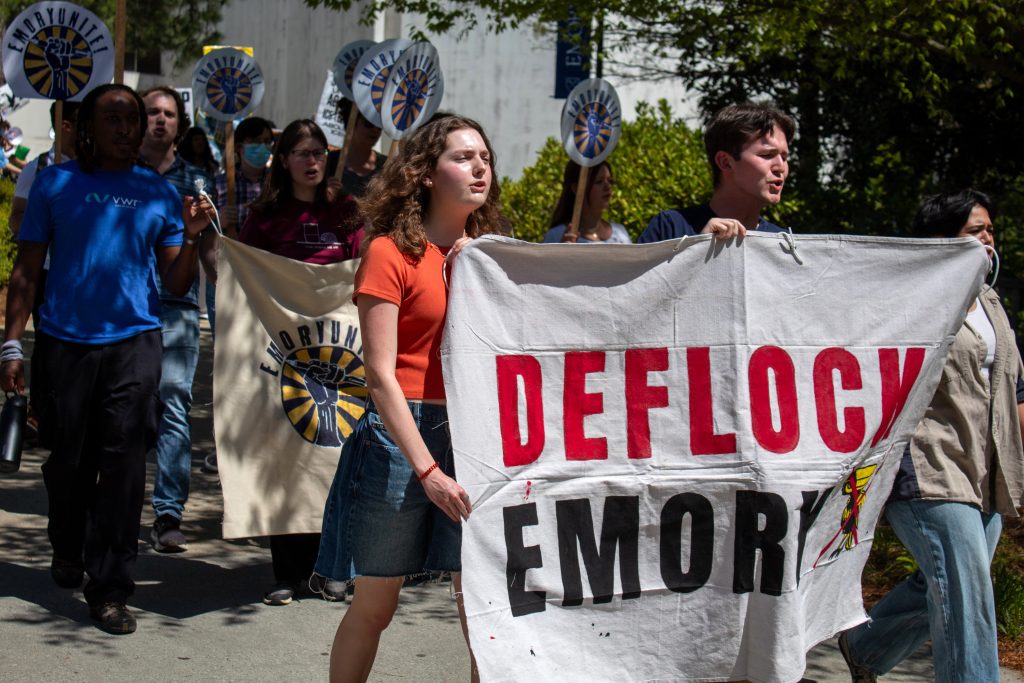
The same thing was seen in many of the week’s 485 events across the country, said Ed Vogel, a member of DeFlock, a national group that organized the week.
The group’s name plays on that of Flock Safety, an Atlanta-based company and the biggest player in the field. Georgia organizers hosted 26 events during the week.
Another common thread, according to organizers: a recent, seemingly non-stop blitz of media coverage centered on Flock served to increase public concern, drawing attendees to Week of Action events in towns and cities across the country.
Flock feels the heat
The coverage created a “crisis [that] has crossed into national media at a scale with no precedent,” according to IVPM, an independent outlet that covers “video surveillance, access control, weapons detection and more,” according to its website. In a story from earlier this month, the outlet noted that the coverage spanned “across the political spectrum,” including Fox News and The Guardian–on police using the technology to stalk exes, citizens smashing cameras in their communities, city councils cancelling contracts with Flock and more.
Flock announced reforms that were quickly criticized as window dressing and, more unexpectedly, CEO Garrett Langley decided to add to the media blitz by speaking to 10 outlets in several days with a new message: police bad, Flock good. In one interview, Langley said, “People’s concerns were actually not with Flock. It was with who was using it.”
On Friday, Patrick Yoes, national president of the Fraternal Order of Police, said in a statement, “facing intense public criticism of its technology…[Flock’s] CEO seems increasingly focused on portraying the officers who use it as the problem. So much for building trust.”
Vogel sees Flock’s behavior as instructive. “They’re feeling pressure,” he said. “When you look at how they’re responding, they’re obviously a corporation. It’s a reminder of whether we should be building public safety around corporate needs.”
Perhaps unsurprisingly, amidst these events, the company has been advertising for a “Director of Digital Social Content Strategy,” a position whose responsibilities include “oversee[ing]…crisis communication nuances”—as first reported by Bloomberg.
Watching the watchers
The Week of Action was scheduled to coincide with Flock’s annual police convention, held Aug. 18-20 in Atlanta. Benn Jordan, a researcher with a YouTube channel who has exposed many of the surveillance technology’s shortcomings, bought a ticket to the event but had the money refunded. A Flock employee asked the Hilton to cancel Jordan’s reservation at the last minute.
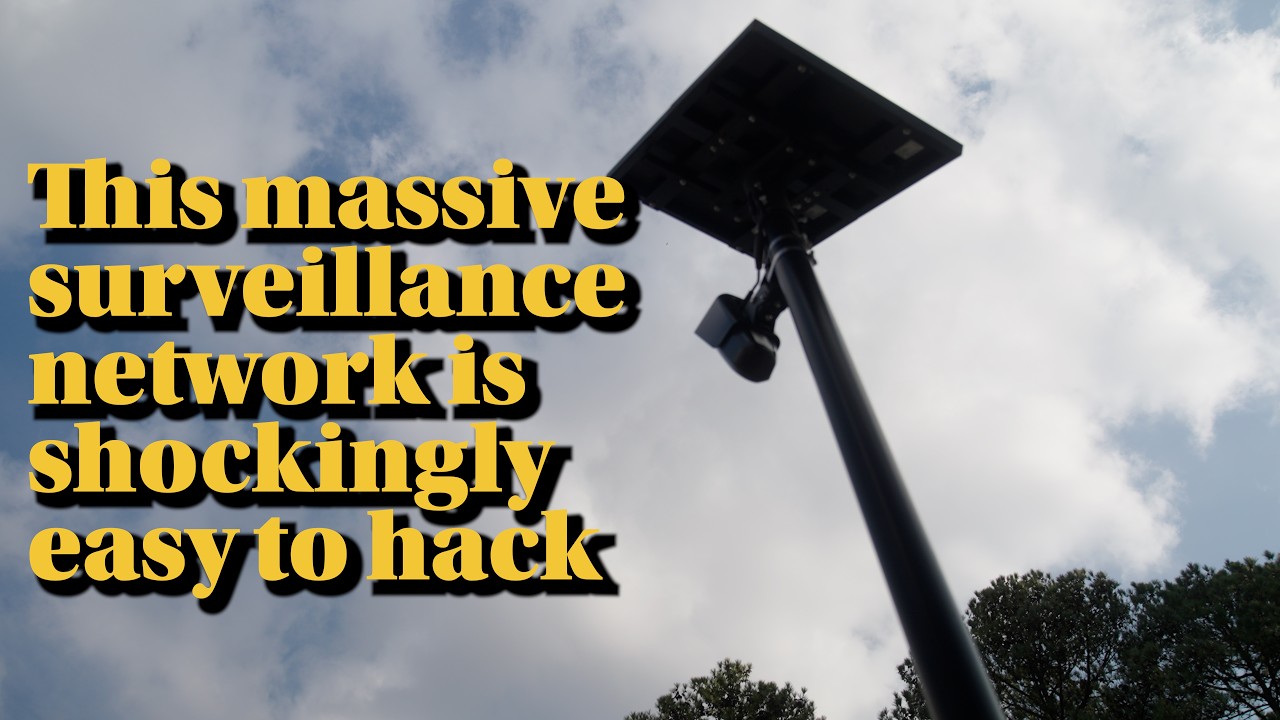
“So I said, ‘Let’s record everything we can record publicly—since that’s what they do,’” he told ACPC. On Wednesday, Aug. 19, he set up radio equipment to record audio inside the event and drones to film attendees entering and leaving.
Jordan said he is having attorneys review the material he gathered before releasing any of it.
Shortly after he packed up his equipment, at around 6 p.m., a group of about 80 people, some of whom had attended the Marietta event the night before, protested outside the convention. It was another Week of Action event Phillips helped organize.
By then, Phillips said, “On X, Bluesky, Instagram—it seemed like every town in America had something going on. People were engaged!”
The same night, in Madison County, North Carolina, a rural area of about 20,000 people, Mary Gibson, a 32-year-old shepherd, had organized “Popsicles for Privacy,” a community event centering on police surveillance technology.
The two-and-a-half-hour event drew about 30 people, including a county commissioner who works for the local sheriff, she said.
Gibson said she tried to overcome any possible defensiveness on the commissioner’s part by explaining that the local ALPRs “are part of a huge network, so it’s not only how our guys use it.” Indeed, data from local sources being accessed by outside agencies such as ICE is another of the concerns driving recent reporting.
As at Phillips’ Marietta event, Gibson reinforced one of the main themes of the Week of Action and explained to her neighbors that these concerns were not limited to the Atlanta-based company. “One of my first slides was, ‘Is it just Flock?’” she said.
Gibson’s neighbors agreed to meet again to discuss the issue.
This was Vogel’s hope in helping organize the week. “We wanted to use the week as a jumping-off point—for more democratic participation and community events. For a long time, people haven’t used their political agency. Now people are starting to see what this looks like.”
No paywall. No corporate sponsors. No corporate ownership.
Help keep it that way by becoming a monthly donor today.
Free news isn't cheap to make.
Author

Related Articles
2026 Midterms: Metro Atlanta’s local races to watch
These are the competitive downballot races ACPC is watching in the 2026 election.
Popsicles and the FBI: Organizers launching week of action against Flock and ALPRs
From Aug. 16 to Aug. 22 organizers, both new and experienced, are holding events across the country for the National Week of Action Against Automated License Plate Readers.

