‘Islamophobia is on the ballot’: Muslim voters in Georgia face midterms
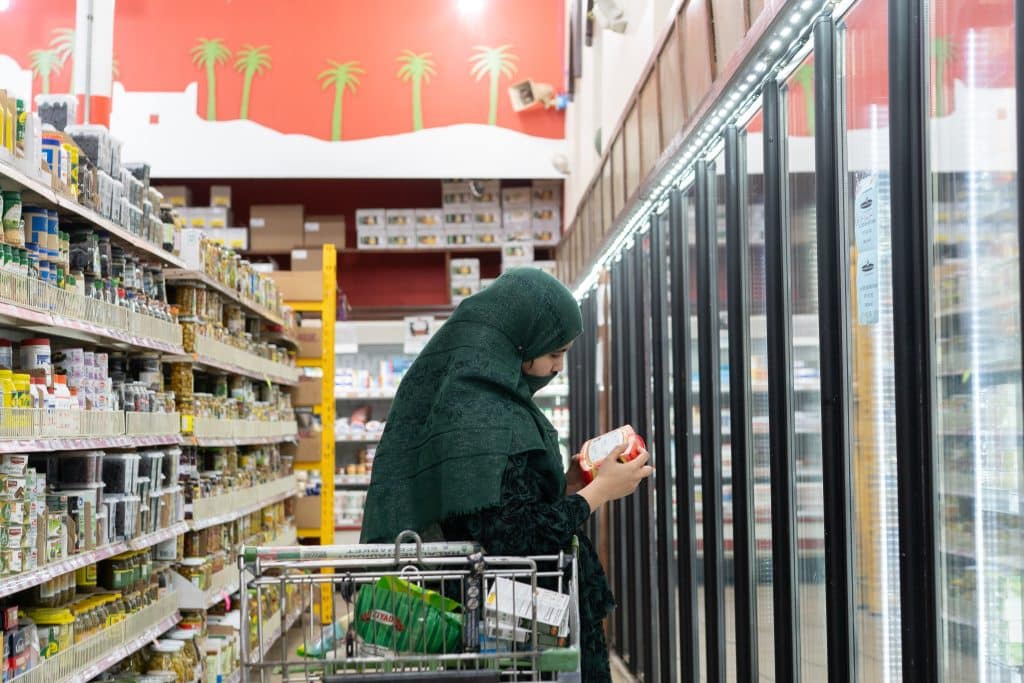
The Georgia Muslim Voter Project had scheduled an event called the Civic Leadership Summit for Oct. 8, five days before early voting began, inviting imams, board members and other leaders from about thirty mosques across Georgia.
The idea was to share information about the elections—how to find polls, sample ballots, candidate platforms and so on—so the leaders could then share that information with their congregations, adding up to thousands of Muslim community members statewide.
But then Tori Branum, who identifies as a “firearms trainer” and “Marine” on her Facebook page, posted an 88-second reel about the event to her 500,000-plus followers, crowing that “their agenda is getting exposed—so now they’re going to get together and try to figure out how to work the system.”
Branum—who earlier this year lost by nearly 70 points in her bid to replace incumbent Rick Allen as the GOP candidate for Georgia’s 12th congressional district—went on to allege that the summit was proof “they” were “trying to bring sharia law into our government…”
Hundreds of comments followed, including calls for sending the National Guard and ICE to the event. Others suggested sending “attack dogs” or “eliminating them.”
Out of an abundance of caution, the organization decided to move the summit to a time and location known only to attendees. “Our stance is to not fan the flames or give oxygen” to efforts such as Branum’s, said Urooj Ali, communications director for the Georgia Muslim Voter Project.
“At the same time, our goal is to keep our communities safe,” she added, explaining how the organization handled the incident. Branum did not reply to a query from ACPC.
Together with rhetoric by candidates such as Greg Dolezal, the Republican running for lieutenant governor who earlier this year ran an ad referring to Muslims as “invaders,” the incident was an example of how “Islamophobia is on the ballot this year,” Ali said.
Ali and others whom ACPC spoke to asserted that Georgia’s estimated 107,000 Muslim voters are engaged in the midterms, despite being increasingly surrounded by public expressions of bigotry. That bigotry extends beyond Georgia, as when President Trump attempts to ridicule Abdul Al-Sayed, Michigan’s Democratic candidate for Senate, by calling him “Muhammad.”
Ali said that attitudes among Muslim Americans have changed in the decade since her organization launched. “Before, many Muslims would shy away from public-facing acts—even showing up to the polls. But Americans don’t look a particular kind of way, whether it’s a woman with a hijab or a man with a beard. Now, we’re showing up, even though our community feels the looming fear.
“We’re seeing Islamophobia broadly in these elections––but voting is one of the most American things you can do…and Muslim Americans are just doing what we’re supposed to do as Americans,” she said.
Similarly, Azka Mahmood, executive director of CAIR-Georgia, said, “The key to answering all the rhetoric and hate is to show up at the polls.”
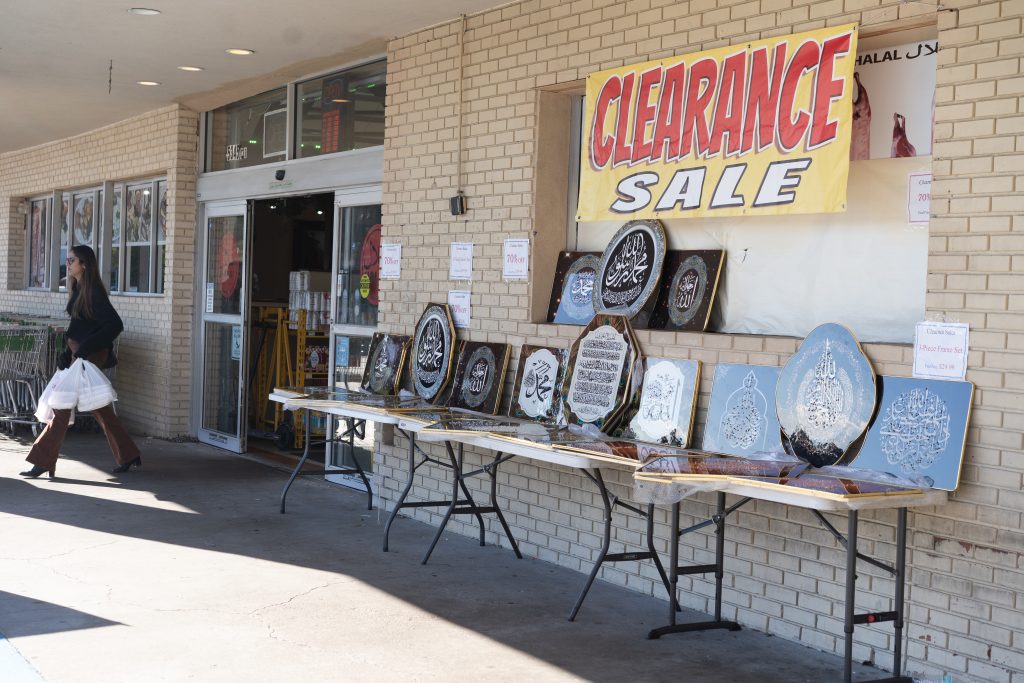
And in recognition of threats ranging from private citizens to federal agents, Ali’s organization is urging Muslim voters to vote early and in groups. The project’s website also has election hotlines in multiple languages listed.
As for how, where, when and even who to vote for, this midterm cycle, there may be more information tailored to Georgia’s Muslim voters than ever before.
Most of what the Georgia Muslim Voter Project planned to go over in its summit is contained in their comprehensive online guide to the election, publicly available to midterm election voters for only the second time in its ten-year history.
Additionally, hardware engineer Emad Sabbah developed an app called SiyasaUSA that offers similar information, plus endorsements and daily estimates of Muslim voter turnout. Based on a formula using last names, Sabbah told ACPC there are about 107,000 Muslims registered to vote in Georgia, nearly 10 percent of whom had voted as of Tuesday.
The 58-year-old Marietta resident called his app a “modern civic engagement tool, to mobilize and amplify the voices of Muslims.”
“We feel strongly that Muslim voters are key in any race,” he said. “If 60% show up, we could make a huge difference.”
And what are Muslim voters paying attention to? “Affordability, healthcare, the cost of gas—and how foreign policy affects the price of gas,” he said.
At Al Madina Market on Jimmy Carter Blvd. Tuesday, Abdul Jebar Yassin was finishing up lunch at the market’s restaurant tables during a break from his job doing apartment maintenance.
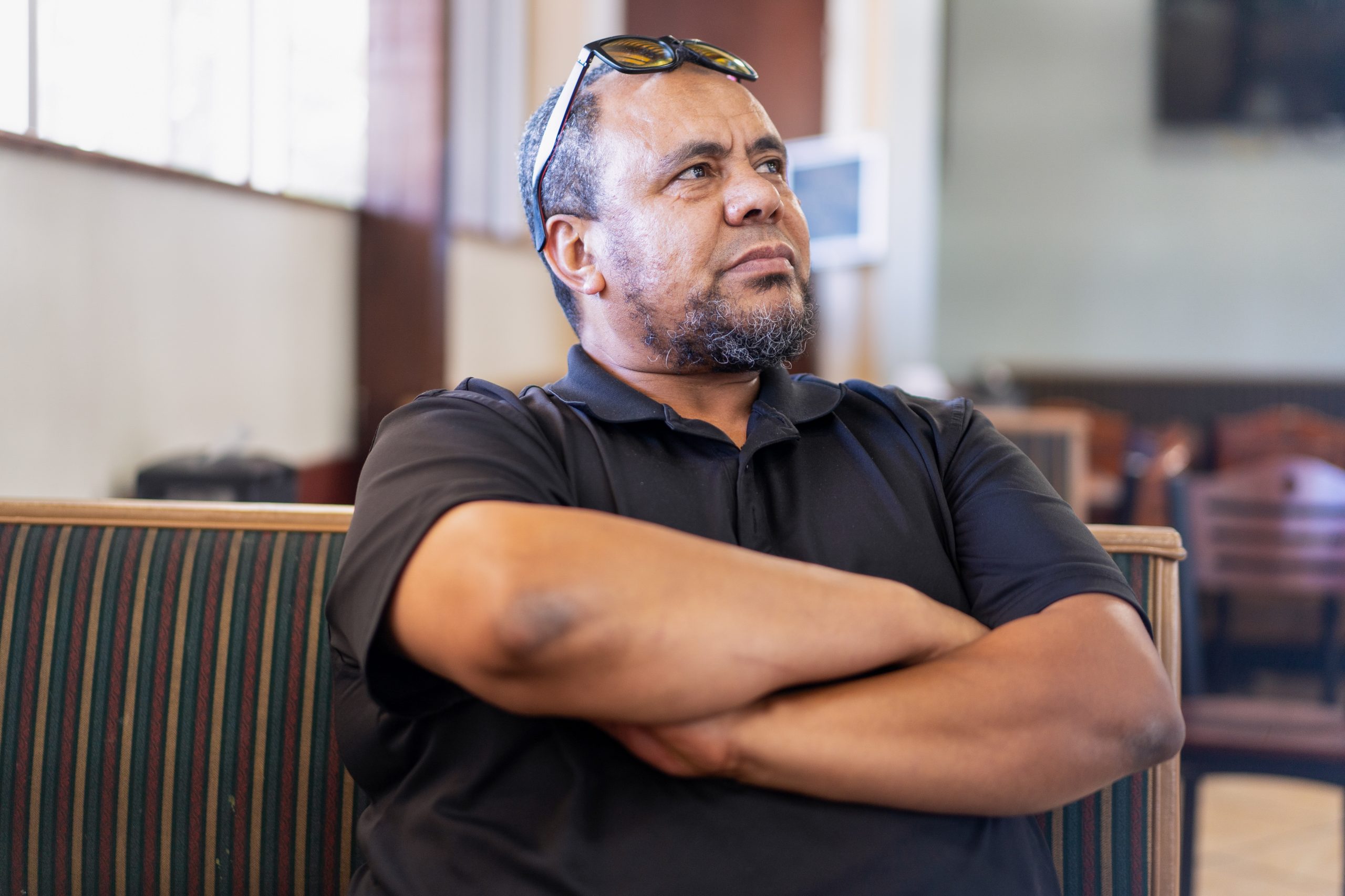
“makes you want to vote more.” (Jesse Pratt López)
Yassin had fresh in his mind the comments Trump had made the day before, blaming Muslims for burning buildings and other property destruction during protests in France.
“It’s just hate,” Yassin said. “It’s not even true.”
Then he mentioned the viral video of an audience member—later revealed by journalist Marisa Kabas to be a Republican plant––asking Al-Sayed about disavowing the Muslim Brotherhood.
“When you listen to something like that, it makes you want to vote more,” he said.
“With Republicans attacking Islam, it’s not politics now—it’s religion.”
Then, he admitted, “You won’t believe this, but I voted for Trump. I feel horrible. At that time, I thought he might help with the economy.”
The Ethiopian-born father of two also drives Lyft to make ends meet. “Right now, people are struggling,” he said. “I feel like voting may not help, but I have to do it anyway.”
Nearby, James Copeland, who became the only Muslim member of his family five decades ago at the age of 17, said he faced no obstacles practicing his faith in his daily life, with a mosque near his job and bosses who allow him to pray. When he sees incidents like the ones targeting Al-Sayed, “it gives me an outlook on their perspective,” he said.
As for the midterms, he said, “It’s our duty to vote.”
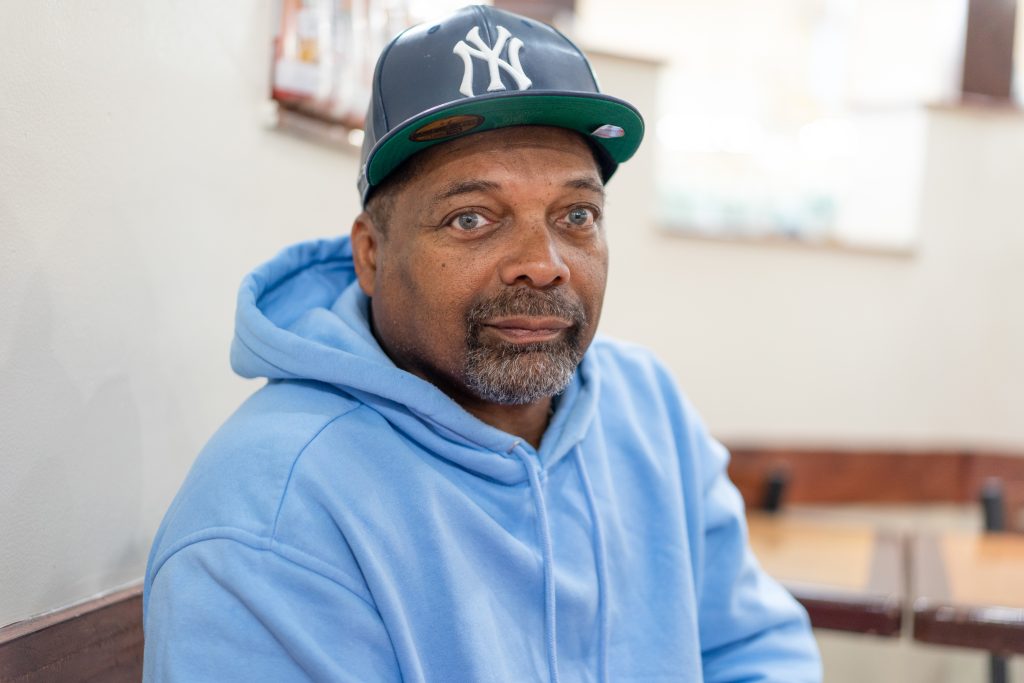
behavior dating to the 1980s. (Jesse Pratt López)
And being an African-American Muslim who grew up in New York, he also has a lifetime’s worth of perspective on Trump. “That you have a person in power pushing an agenda against certain individuals is disappointing. He still hasn’t apologized for the Central Park Five,” Copeland said—referring to five youths of color who Trump accused of participating in the murder of a white woman in 1989, only to see them exonerated decades later.
“There’s a throughline,” he said.
No paywall. No corporate sponsors. No corporate ownership.
Help keep it that way by becoming a monthly donor today.
Free news isn't cheap to make.
Author

Related Articles
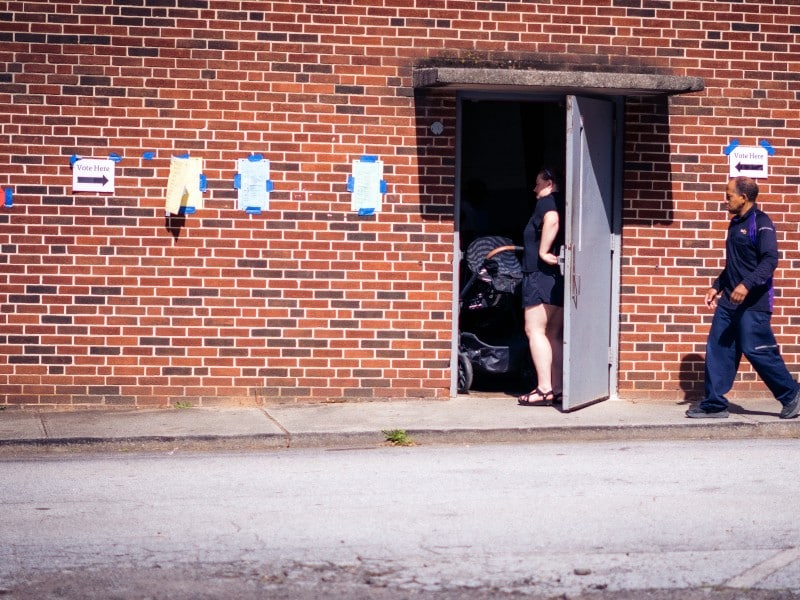
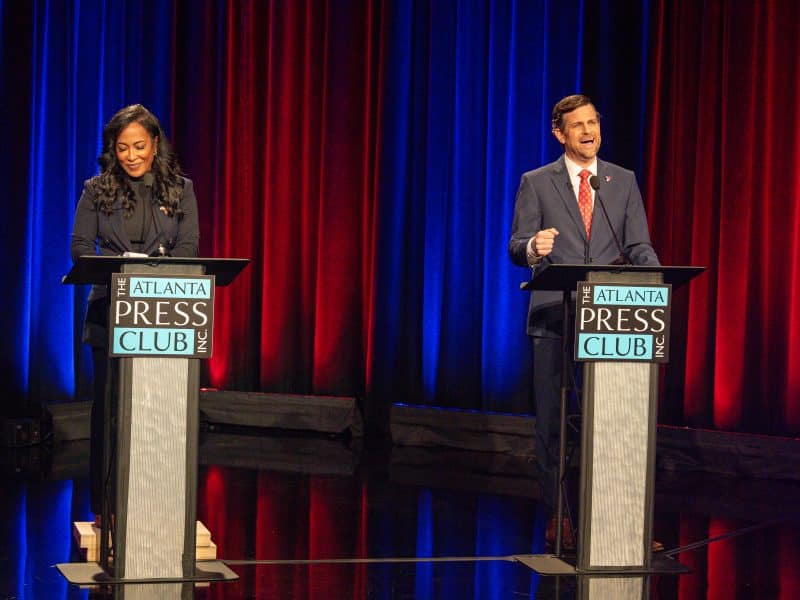
AI, Flock cameras and data centers dominate debates for Georgia’s statewide races
AI was a hot topic in every Atlanta Press Club debate, from Attorney General to Agriculture Commissioner
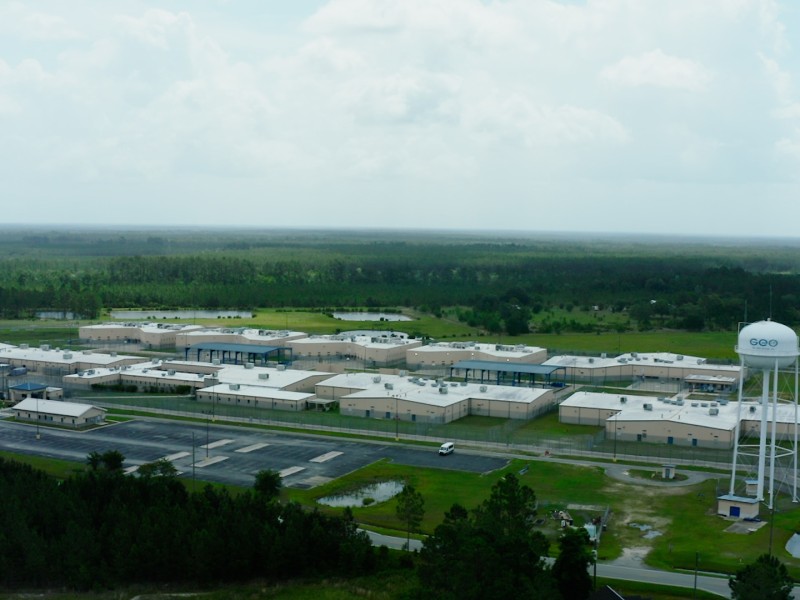
Approximately 500 participate in hunger strike at Folkston immigration detention center
Government recently awarded massive contract to expand GEO Group facility to 3,000 beds to become largest permanent ICE site in United States.

