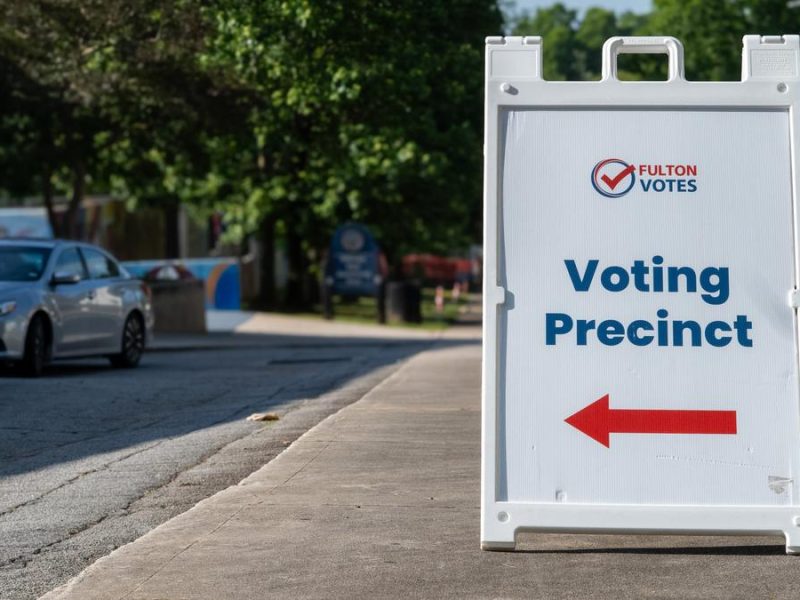
AI, Flock cameras and data centers dominate debates for Georgia’s statewide races
AI was a hot topic in every Atlanta Press Club debate, from Attorney General to Agriculture Commissioner

The first question put to the candidates for Georgia Attorney General by ANF journalist Brendan Keefe at the Atlanta Press Club debate was about the controversial AI-powered Flock cameras.
“How can the people and the press hold police accountable for misuse of surveillance technology if the departments themselves control whether the evidence of that misuse becomes public, and what would you do as attorney general?” Keefe asked state Rep. Tanya Miller, the Democratic nominee, and state Sen. Brian Strickland, the Republican.
In fact, nearly every press club debate held on Oct. 12 and 13 featured questions over artificial intelligence and data centers in some form.
Here’s what candidates had to say, with edits for length and clarity.
Attorney General

Miller (D): “Surveilling citizens is not what this technology is supposed to be used for. This technology is supposed to be used for solving crimes, but with incredible power comes incredible responsibility.”
“I was a homicide prosecutor, a sex crimes prosecutor. We relied on videotape evidence. We relied on technology to solve crimes and to [solve] them quickly. But what we cannot have are departments who are not effectively responding to the public. We cannot have private companies having control of this information; the attorney general’s job is to enforce the Open Records Act.”
“When these records exist, they are public records. There are exceptions. They are limited. They are limited for a reason because this belongs to the public. So, if you’re asking what the attorney general can do, the attorney general can enforce the Open Records Act.”
Strickland (R): “We have to have parameters on this technology. If the private company will not act and put the parameters in place to make sure it’s not misused, make sure we can catch bad actors, I’ll act as attorney general.”
“Lastly, you talk about open records. What I want to do as attorney general is create an open records task force. Yes, we’re currently tasked with enforcing open record laws in our state, but it should be a dedicated task force we have in this office to make sure that people have sunshine on all levels of government.”
Q: Does mass surveillance from Flock cameras implicate the Fourth Amendment of the US Constitution’s protection against unreasonable search and seizure?
Strickland: “It could, but it depends. It depends on how it’s being used. When law enforcement is using it directly, it may or may not, depends on case by case.”
Miller: “No, the Fourth Amendment protects you from searches and seizures in places where you have a reasonable expectation of privacy, any prosecutor would know that. […] Here is the issue: things that the public can see, cameras can record. Things that the public cannot see without a search warrant, cameras cannot record without a search warrant. At the end of the day, the question is not whether or not these things should be used to solve crimes. […] The problem is with regulating these things and making sure that it is not being abused, that people are not recording you in places that you have an expectation of privacy.”
Public Service Commission – District 3
Democratic incumbent Peter Hubbard faces Republican Fitz Johnson. Johnson did not attend the debate.
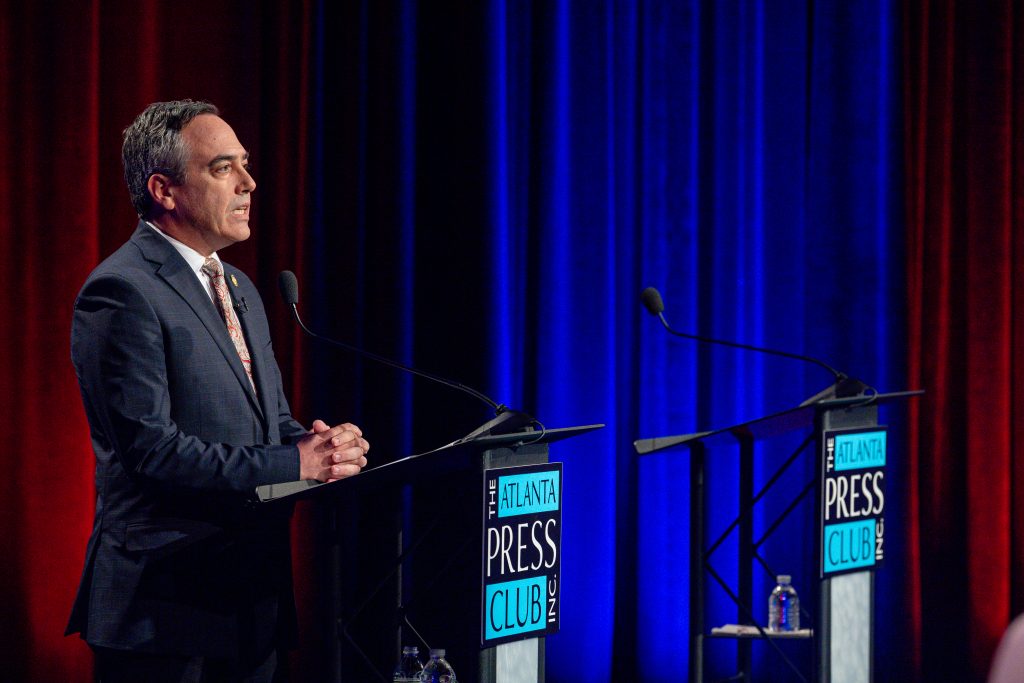
Q: Many local officials, especially in rural areas, are welcoming data centers as it can help them diversify their tax base and it provides counties and cities much-needed revenue, even when it goes against their residents’ wishes. When making decisions to approve more energy capacity to power those data centers, how do you balance those concerns with the need for local economic growth?
Hubbard: “I’m advocating for a whole of government approach, because we have local county commissioners that are seeing dollar signs in their eyes, and we’re also seeing at the state level tax abatements for data centers. So, when I’m thinking about how we expand our grid to make sure that we’re lowering costs for all customers, what I’m thinking about is what are the lowest cost resources that we can deploy, which at this point in time is solar energy along with batteries.”
Public Service Commission – District 5
Republican Josh Tolbert and Democrat Shelia Edwards are vying for this open seat.

Q to Tolbert: What do you think about the recent agreement with Georgia Power and the commissioners about data centers and customer protections? Do you feel that it went far enough?
Tolbert: “I went and objected to the decisions that the commission was making last fall, where they were expanding 10 gigawatts of power, with 80 or 85 percent of that being for data centers, because I do not feel like it is appropriate protection for the ratepayers. At the end of the day, we need to make sure that in every single circumstance, Georgians are not paying for data centers, and that means not only their direct costs like electricity, but also the indirect costs. The decisions need to lie with the community.”
Q to Edwards: You pledged that massive data centers and AI facilities must pay the full cost of the infrastructure that they require to power them. Will you support a pause on accruing new energy capacity for data centers until there are clearer regulations on how tech companies will pay for the infrastructure that they need?
Edwards: “Yes, I would support that. We need to make sure everybody’s voice counts and is heard as we make plans on what to do with data centers. They came into our communities, they didn’t pay any taxes, they’re using our water, using our electricity, and they’re being a public nuisance to the communities that they’re coming into.”
Labor Commissioner
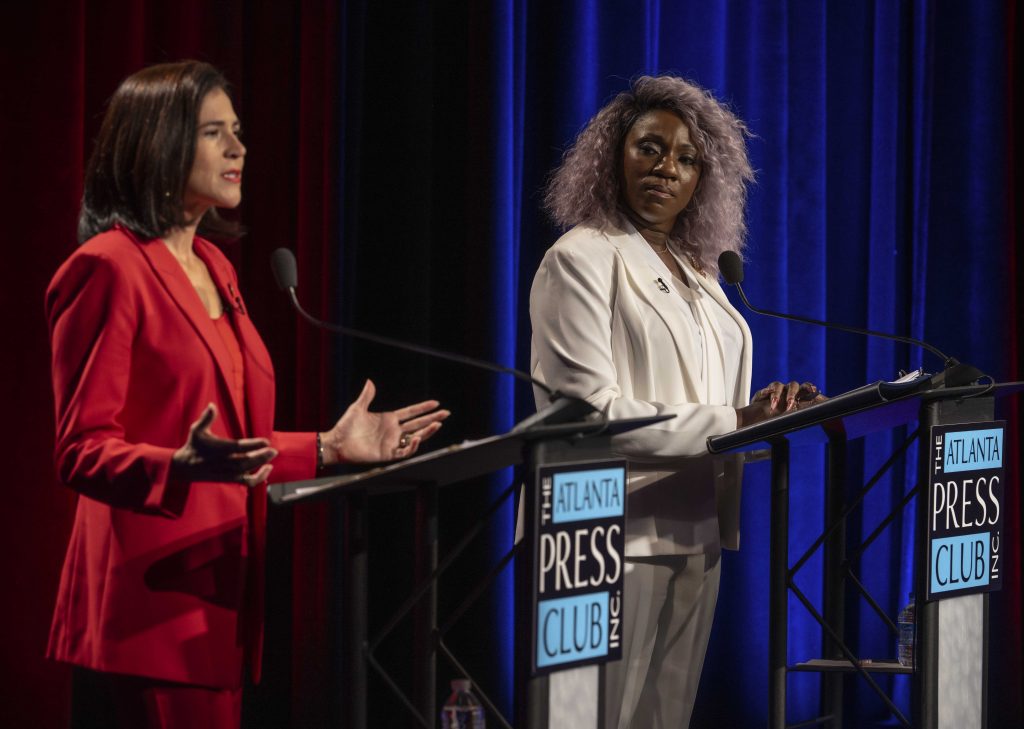
Barbara Rivera Holmes, a Republican appointed to the role by Gov. Brian Kemp, is seeking her first election to the position. Running against her is Democratic nominee Nikki Porcher.
Q: What can we do to make sure AI doesn’t take all of our jobs?
Porcher: “One, working with our state house, our state legislators to make sure there are regulations for AI. And when it comes to hiring, when they’re letting go, with AI screening applications, we should have a human double-checking that work.”
“Second, training. We need to train and retrain those who are already in the workplace so that they can use AI to enhance the skills they already have. AI is a tool that can be a great resource if used properly.”
Holmes: “The job as labor commissioner is to ensure [that AI] translates into economic opportunities for Georgia’s labor force and understanding that has to be used responsibly.”
“We’ll continue to work with Georgia’s employers and we’ll continue to upskill and train our workers so that they have the skills that they need to compete and win in an AI-informed economy,” she said.
Agriculture Commissioner
Incumbent GOP commissioner Tyler Harper, who has led the Georgia Department of Agriculture since 2023, is seeking reelection against Democratic nominee Katherine Juhan-Arnold.
Q: Data center development is threatening Georgia farmlands and water, what needs to be done?
Harper: “We have got to protect farmland, which is why we created the Georgia Farmland Conservation Fund to protect farmland in our state.”

“When it comes to data centers, we have to have strong guardrails around them. We shouldn’t be using eminent domain to take farmland. And if they do take farmland, they should be helping to fund to protect farmland moving forward.”
“[Data centers] should pay for 100% of their utility and investment costs. And they should never happen in local communities that don’t want a data center. This should be decided at the local level with local control to ensure local communities know what they’re getting.”
“We should also eliminate the tax breaks for data centers and ensure that we continue to protect farmland communities all across the state.”
Juhan-Arnold: “Farms need dependable water. Before large projects are approved, the public should see how its water needs affect nearby farms, wells, and drought plans. That’s what I talk about in my agricultural review; we haven’t had that yet.”
“I will bring those farm impact issues and address them, and make sure that we know how new infrastructure—not just data centers, but new developments across the board—are affecting our farmers. This office should give farmers a blessing before a decision is made.”
“My position is clear. I’ve been very, very transparent with my employer, and I let everybody know that I support a pause. Until we understand what we have and how it affects us, we need to pause all data center building across the board. I really do think that my employment background helps us out a lot because if you have somebody that speaks data center talk, who’s willing to help the people, that makes a big difference.”
Lieutenant Governor

State senators Josh McLaurin (D-Sandy Springs) and Greg Dolezal (R-Cumming) are competing for this open seat.
Q: How much weight should local opposition to data center projects carry against the statewide good or goals?
Dolezal: “These decisions should be borne 100% by local governments, but with strict guardrails put in place at the state level to ensure that natural resources and people’s power bills are protected.
“My position is firm and it is simple: not one dime of your property taxes or income taxes should be used to subsidize trillion-dollar data centers. Your power bills should not go up a penny because a data center exists anywhere in the state of Georgia. No non-disclosure agreements. No eminent domain for data centers.”
McLaurin: “I’ve taken the position that the water issues, the amount of water that these suck up, the power issues that these massive corporations are not paying their own way, and the sound and diesel emissions. These are all issues that local governments should have the ability to deal with and block.”
“Local governments should be getting the best of these trillion-dollar corporations and imposing property tax relief in their districts by taxing the data centers instead, if that’s what they choose to do. But until we can solve those environmental concerns, we have got to slow down development because these communities have an immense interest in blocking these massive AI companies from entering their space.”
No paywall. No corporate sponsors. No corporate ownership.
Help keep it that way by becoming a monthly donor today.
Free news isn't cheap to make.
Related Articles
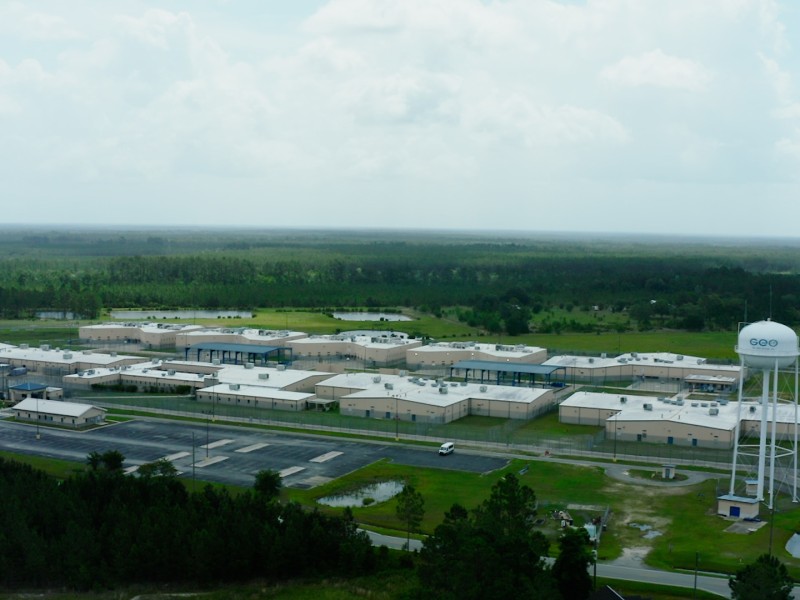
Approximately 500 participate in hunger strike at Folkston immigration detention center
Government recently awarded massive contract to expand GEO Group facility to 3,000 beds to become largest permanent ICE site in United States.