
Marietta City Council tables approval of new data center
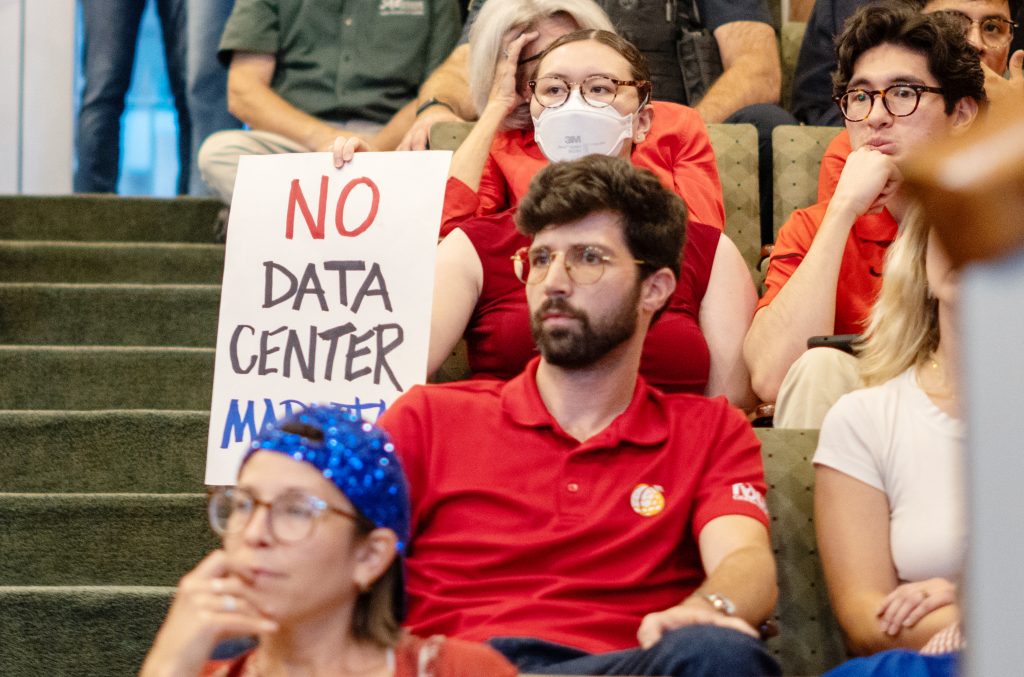
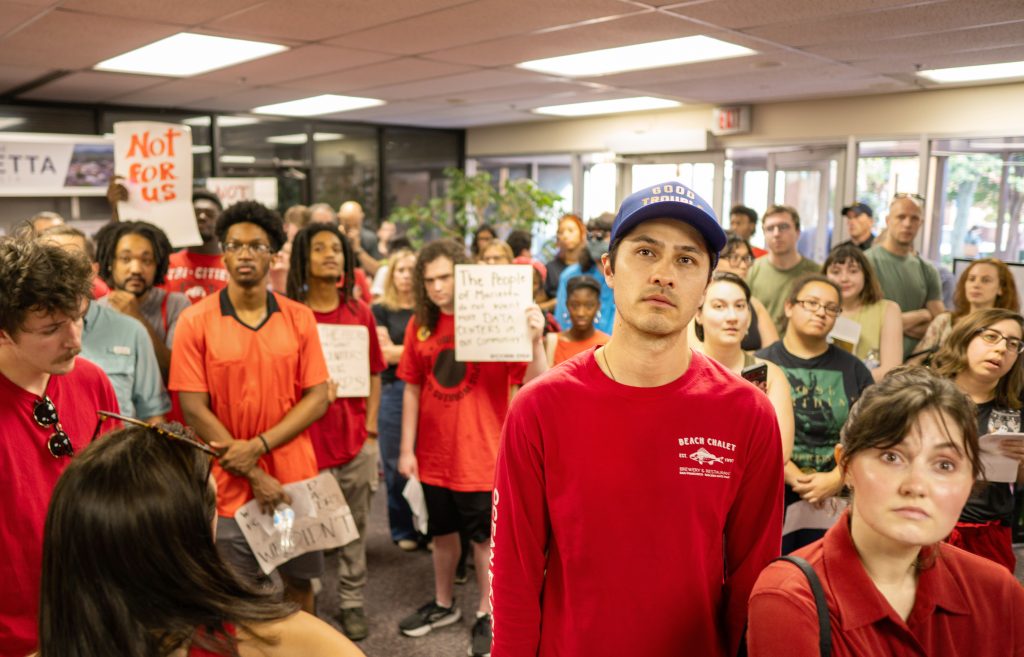
Inside and outside the walls of Marietta City Hall, residents and advocates confronted Marietta City Council members during Wednesday’s meeting with signs and chants to protest a proposed data center at 1155 Powers Ferry Place.
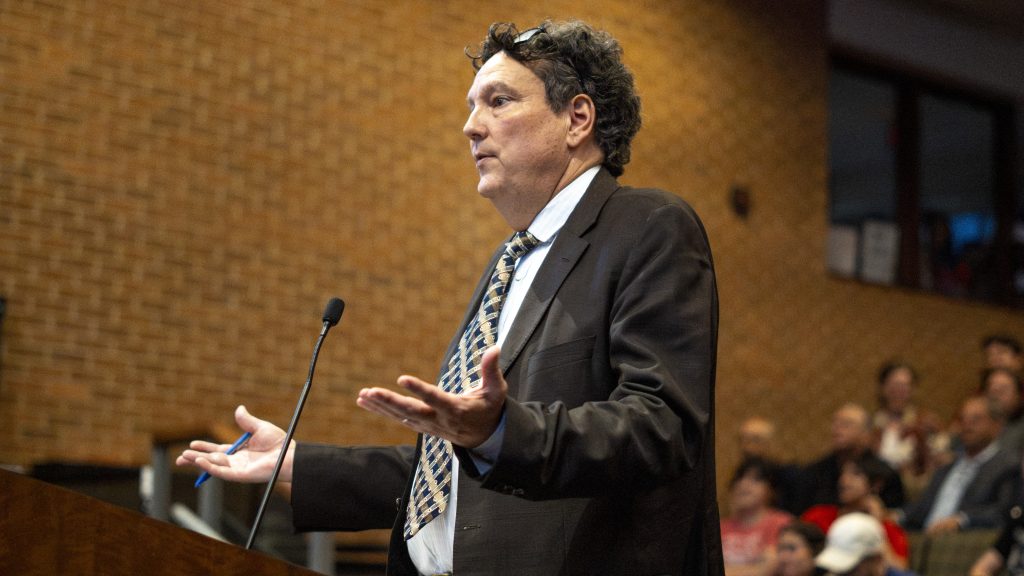
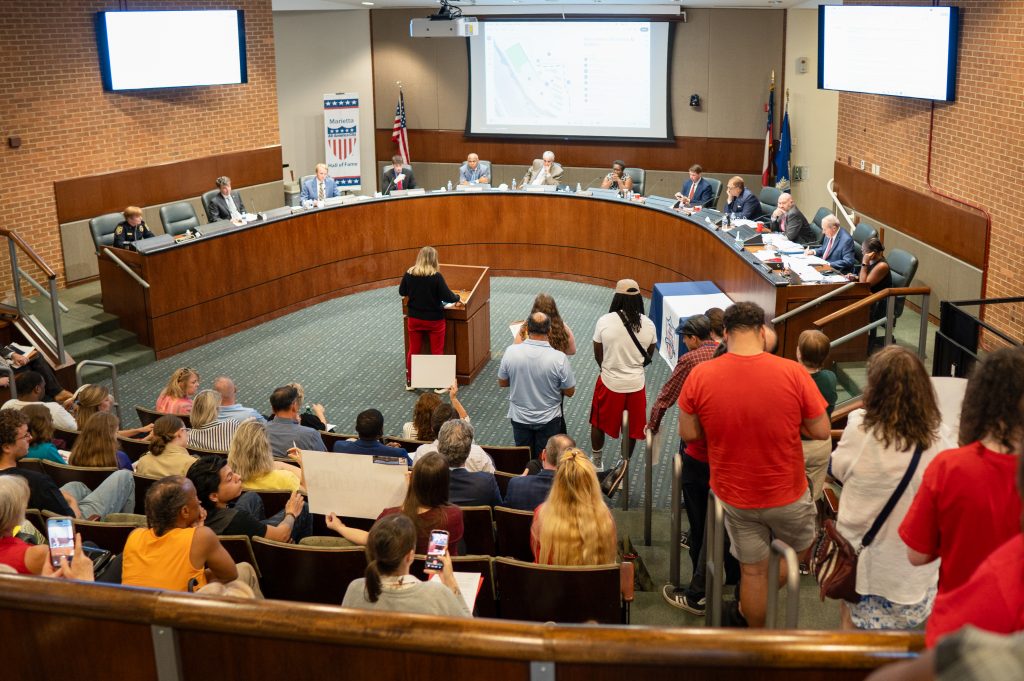
Parks Huff, an attorney representing Prime Storage Powers Ferry Place Marietta, accompanied by two hired engineers, stood in front of a roaring, standing-room-only crowd of Marietta residents on Wednesday as the City Council voted 7-0 to table Prime Storage’s proposal for a new data center on the lot until August.
Councilwoman Cheryl Richardson, Ward 1, quieted the cheering attendees after announcing her preference for a motion to table, clarifying that this vote does not mean a final decision has been made, only delayed. Richardson explained her need to first hear from a sound engineer to ensure noise pollution is minimized.
“For everybody who is clapping, don’t take that to mean that I am against this. What I’m saying is, I have questions,” Richardson said.
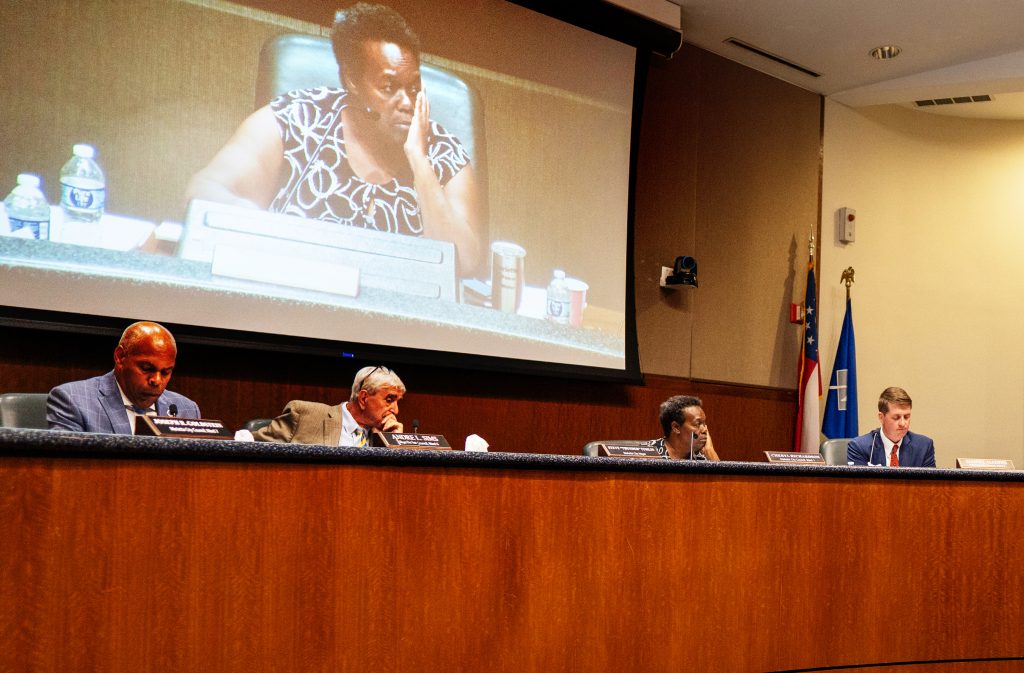
The decision came just over two hours after the council also unanimously voted to pass a six-month moratorium on new data centers through Dec. 31. The moratorium does not apply to the application for the Powers Ferry Place data center or a recently approved center on Bells Ferry Road.
“Nothing comes without a cost”: Supporters and opponents debate data center’s impact
In response to council members’ questions about the specifics of the Powers Ferry data center, former State Sen. Chuck Clay, also representing Prime Storage, took the lectern to emphasize the importance of the center and clarify its purpose.
“Marietta Board of Lights and Water has the energy it needs to sell for all of our benefits, and we’re there to buy it now. We don’t have to wait. This ain’t speculation, guys. This is: flip the switch, and generate millions of dollars for this city,” Clay said. “They use the word data center. This isn’t even a data center. If you want to get into the technicalities of it, this is a transmission of information center.”
In contrast to Clay’s insistence on the benefits of the center, former NFL player Chris Conley broke down the drawbacks during the public hearing section. Conley said his personal concern derives from the location of his residence being less than four miles from the proposed center, where he takes care of two daughters, one with a respiratory complication.
“Let’s talk about cost. Each of you knows that nothing comes without a cost. There are costs associated with air pollution, noise pollution, water contamination, water storage, rising electricity rates, and others. The list goes on and on,” Conley said. “So, right now, I know that this moratorium is necessary, but the council’s laissez-faire attitude toward these rezonings and trying to move quickly to approve something of this nature is dangerous.”
Similar sentiments regarding pollution largely dominated the public hearing section. In turn, Prime Storage representatives explained that they would be utilizing a closed-loop water system, meaning the water would be continuously recirculated through the center, never, they said, having to touch Marietta’s plumbing system.
Additionally, they shared that current plans include a sound barrier, enclosed generators, a 10-foot sound attenuation fence and a buffer zone to mitigate noise pollution. The spokesmen further agreed to the conditions that the facility would emit no more than 60 decibels during the day and 50 decibels at night.
Another component emphasized throughout the meeting was the size of the center, which will comprise approximately 40% of the existing Prime Storage building. Sam Foster, who challenged Tumlin in the 2025 mayoral election, says developers were likely factoring in future data center construction when deciding size.
“You look at this parcel: It’s an 18-megawatt data center. It’s not some of the bigger ones that you’re seeing in the news. You know, looking more into it, I think that’s intentional,” said Foster. “I think this is a strategy to start getting more data centers without as much community backlash. And I think this one is easier for the council to swallow, so I think they will approve it.”
Opposition gains a temporary victory, but remains dubious about the future
Amidst these discussions, a large crowd of residents and protestors lined the windows outside the chamber to watch, having been denied entry due to capacity restrictions in the council chambers and City Hall lobby. One attendee, who asked to go by K for fear of retribution, said a group of police officers confronted them during a chant, warning that further noise would result in a misdemeanor.
The officers proceeded to hand out printed slips of the statute they cited regarding noise demonstrations; however, no arrests were made.
That was not the only step taken in advance of Wednesday’s turnout. Barriers had also been placed around the exterior of the City Council chambers.
“There were no barriers the last time I was there, so that was also new,” K said.
Taylor Arnold, another anti-data center activist in Cobb County, said she had been relatively confident the proposal would pass going into the Wednesday meeting. Arnold says she holds the same expectations for August’s meeting, noting her disappointment with the decision to table.
“We’re talking about stuff that is literally harming our environment,” Arnold said. “Why is tabling it and giving you four weeks of time going to make you feel confident about that? I think it was just pandering and quite exhausting, to be honest.”
Marietta residents organizing around data centers passed out flyers during Wednesday’s City Council meeting for the following events:
- “No Data Centers in Marietta Community Meeting” at Switzer Library (266 Roswell St, Marietta), 6 p.m. on Monday, July 13, 2026.
- “Data Center Community Town Hall” at Dave and Busters (2215 D&B Dr, Marietta) 6 to 8 p.m. on Tuesday, July 28, 2026.
No paywall. No corporate sponsors. No corporate ownership.
Help keep it that way by becoming a monthly donor today.
Free news isn't cheap to make.
Author

Related Articles
‘It seemed like every town in America had something going on’: Week of Action against Flock and ALPRs gets people engaged
As protests spread nationwide, Atlanta-based Flock Safety grapples with backlash over surveillance technology and growing privacy concerns.
Popsicles and the FBI: Organizers launching week of action against Flock and ALPRs
From Aug. 16 to Aug. 22 organizers, both new and experienced, are holding events across the country for the National Week of Action Against Automated License Plate Readers.

