
Proposed data center on Powers Ferry Place in Marietta faces backlash
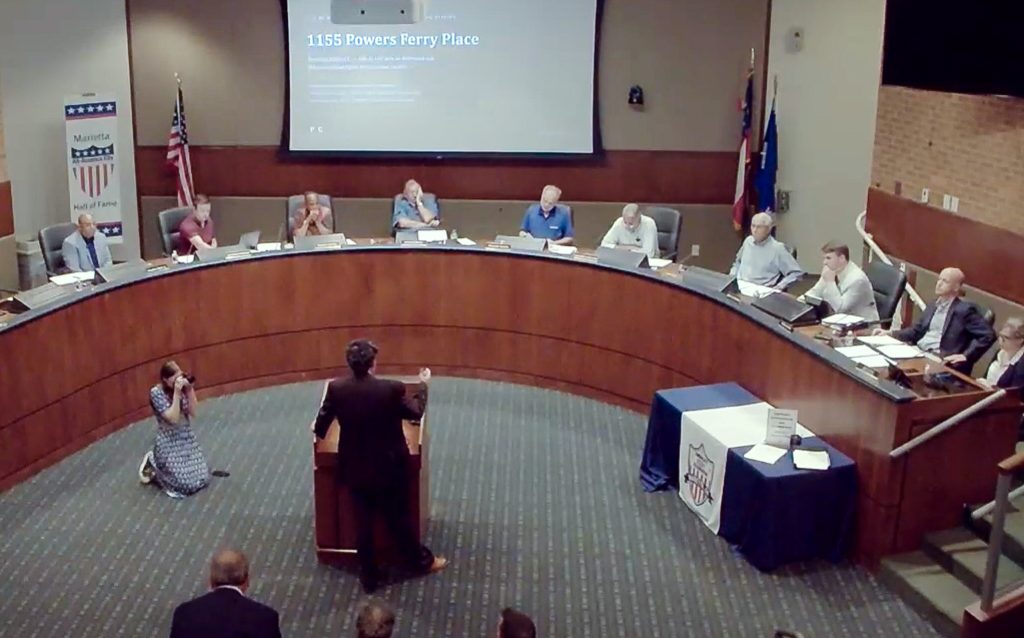
The Marietta City Council is scheduled to vote on whether to approve a data center rezoning request at Wednesday’s council meeting following a 4-3 favorable recommendation from the Marietta Planning Commission.
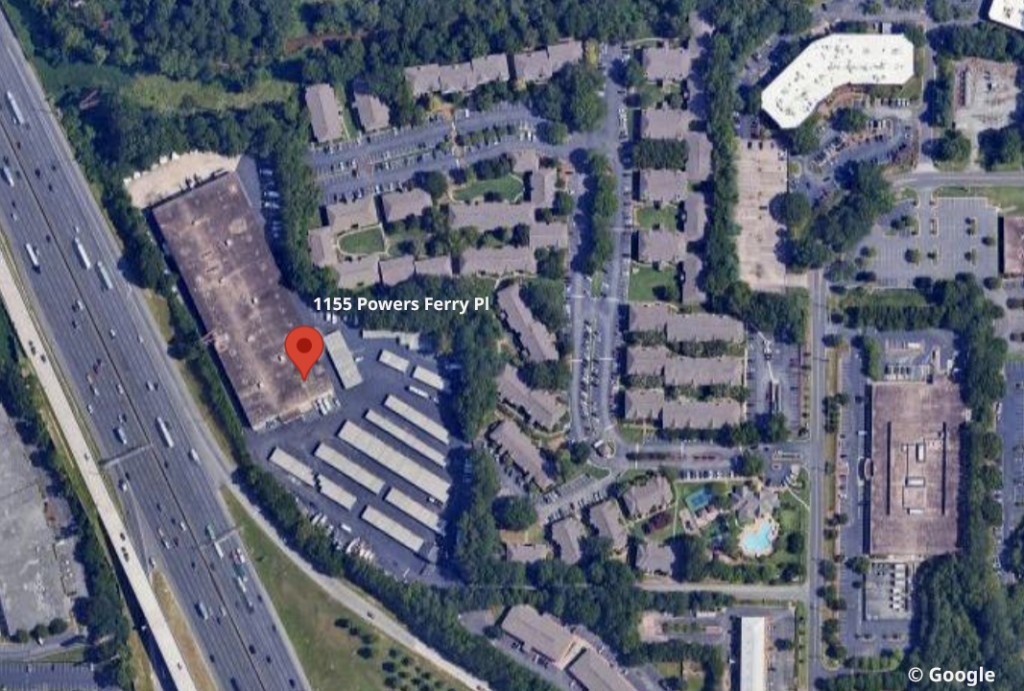
Public outcry against data centers continues to intensify following a 4-3 vote from the Marietta Planning Commission recommending the Marietta City Council approve a data center rezoning request for 1155 Powers Ferry Place.
If approved, the converted portion of Prime Storage’s 90,000-square-foot facility will accompany a neighboring data center at 1130 Powers Ferry Place. Less than half a mile separates the two locations, and another 15-minute drive north will soon bear a third data center, approved by the City Council less than a month ago.
Aside from the planning commission vote, the council will be using the city’s staff analysis to make their decision. Jean Allred of Marietta Blue Ladies United (BLU), a progressive organizing group, pointed out several concerns highlighted in the analysis, specifically that the city currently lacks specific guardrails or guidelines for data centers.
“The city staff did their analysis, and it was overwhelmingly not supportive of a data center in that location,” Allred said.
Without detailed guidelines on data centers, such as a clear distinction between a small-scale and large-scale center and defined standards of equipment and operations, the staff wrote that they must review the application under “existing commercial categories.” As such, they explained that they may be unable to entirely address certain characteristics unique to data center development.
Other noted issues in the rezoning application include a lack of specific details for how the temperature and energy management systems will operate, hindering the staff from being able to fully gauge the impacts on noise levels or energy and water usage. The staff also found a misalignment between the intended data center and the City of Marietta’s long-range comprehensive plan.
Marietta residents respond to Powers Ferry data center zoning application
Prime Storage, a subsidiary of the real estate private equity company Prime Group Holdings, filed the rezoning application May 19, 2026; however, public awareness remained minimal until recently. One resident, Aujé Herndon, a Democratic Socialists of America organizer, said he was not aware of the potential data center until just a week before the MPC vote.
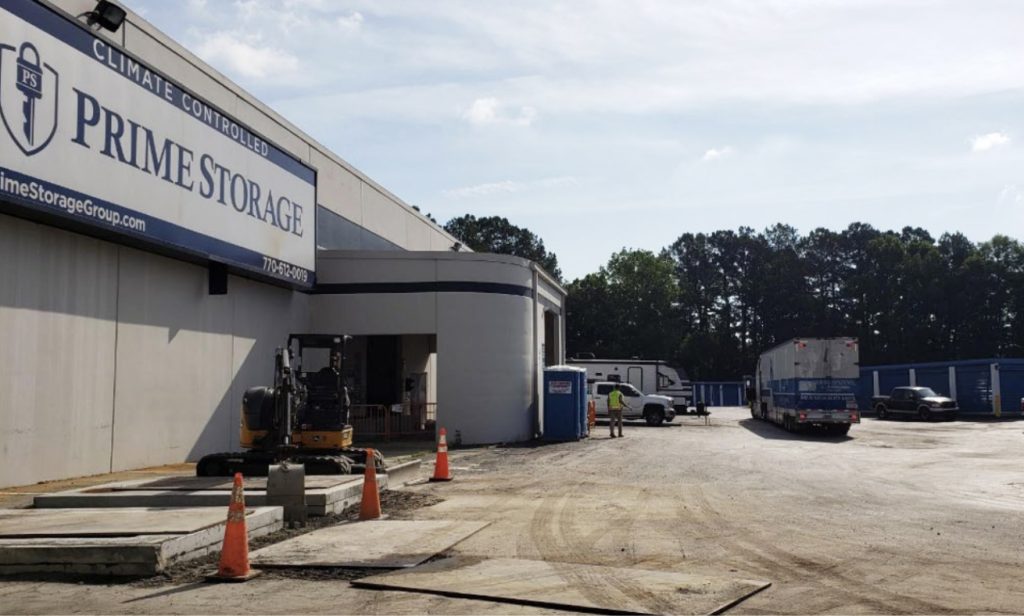
“If this is going to affect communities, they need to be able to display that and let everybody know exactly what is going to happen and maintain full transparency in construction,” Herndon said.
Upon hearing of the favorable planning commission vote, Allred expressed her disappointment but said her group has been actively working to encourage residents to voice their discontent.
“We put together the call to action, asking everybody to call these planning commission people and then the city council, and that was spreading pretty much like wildfire,” Allred said.
Allred noted the positive relationship she has thus far had with the city council members, explaining how they have seemingly continued to show good faith in their communication. What they have not yet made clear to her is how they will be voting on Wednesday.
“I’m getting mixed reviews about who’s going to vote for it, who’s not, and we’re really not going to know until the meeting, unfortunately,” Allred said. “Not only do we want more transparency, but we want a moratorium until the energy drain, the pollution and the environmental concerns can be addressed and regulations put into place.”
A statewide issue
State House Rep. Gabriel Sanchez described some of his own conversations he has been having with Georgia leaders, explaining that pressure from residents does appear to be making an impact.
“I mean, just yesterday, the planning board commission for rezoning, and Marietta passed the second data center with 4-3 vote, which previous ones have been passing unanimously, and so I think that it shows that their pressure is mounting,” Sanchez said. “I think we’ll be able to be successful.”

He also questioned whether another data center is even necessary in Marietta.
“There’s better uses of the very limited resources the city has for the data center projects,” Sanchez added. “I know this new project they’re proposing is on a smaller scale and is not as invasive as the first one, but I don’t think it’s necessary, especially because the place where they’re actually building this new data center is right next to one that already exists, that was built in 2018, so I’m not really sure what the purpose of having a second data center in that area is.”
As the Wednesday City Council vote draws closer, Herndon says he is continuing to canvas the community with the DSA in hopes of drawing a larger crowd for public comment. Despite the MPC already recommending its approval, advocates have affirmed their belief that speaking up at the meeting will be beneficial to getting answers for questions like what the environmental effects will be, the tax incentives, and the cost of construction.
Robert Moser is the owner of the Saratoga Springs, New York-based Prime Group Holdings. Moser is not a local resident, Sanchez and Herndon said, and attributed the decision to build this data center to financial benefits and a lack of direct consequences for him, with no home to lose or clean water to sacrifice.
“They have no stake outside of the financial gain that they could potentially get from constructing a data center and are not affected by its construction and its operation,” Herndon said. “So, if whomever is spearheading this plan doesn’t even live within the community, we really need to have conversations as it pertains to outside investment areas where the investor doesn’t even live.”
In April, Prime Group announced plans to develop data centers across “its real estate footprint in dense urban and suburban markets representing approximately 95% of the U.S. population to create a hyper-connected, low latency network.”
Organizers prepare for future fights
Sanchez said that while the widespread community seems to have reached a consensus on data center construction, some Georgia leaders have chosen to ignore the potential environmental ramifications for economic gain and to maintain the support of their powerful lobbies.
“Our government hasn’t been doing the best job lately of representing the people, and so there are unfortunately a good amount of leaders who are frankly bought and paid for by the power lobbies, Georgia Power,” Sanchez said. “Or, [leaders] are bought and paid for by the other tech oligarchs who are pushing this, and so they have no interest in responding to what the people’s needs are in that regard.”
Marietta BLU will be hosting a community town hall July 28 near the proposed data center site, with the hopes of engaging more community members, Allred said. She plans to collaborate with the Sierra Club, an environmental organization, to holdcity leaders accountable for better communication with their constituents.
Looking ahead, Sanchez affirmed that these end-of-summer plans are only part of the effort, emphasizing the importance of this year’s elections.
“I just think there’s unfortunately some leaders who are blocking progress. I think that depending on what happens in the November elections, we’ll have some good traction on [data centers] next year, for sure. And I think the pressure is mounting to a point where it can’t be ignored,” Sanchez said. “I know, again, there are some Republicans who have been pushing forward some good legislation around this. I think there is bipartisan support. We just need more of it to be able to get through.”
No paywall. No corporate sponsors. No corporate ownership.
Help keep it that way by becoming a monthly donor today.
Free news isn't cheap to make.
Author

Related Articles

‘It seemed like every town in America had something going on’: Week of Action against Flock and ALPRs gets people engaged
As protests spread nationwide, Atlanta-based Flock Safety grapples with backlash over surveillance technology and growing privacy concerns.
Popsicles and the FBI: Organizers launching week of action against Flock and ALPRs
From Aug. 16 to Aug. 22 organizers, both new and experienced, are holding events across the country for the National Week of Action Against Automated License Plate Readers.

