‘Now that joy is not there’: Changes in policy puts citizenship on hold, leaving out many at naturalization ceremonies
Dozens of immigrants celebrated their naturalization ceremony in Atlanta on Friday, while thousands from a list of 39 countries face delays and limbo in attaining their citizenship.
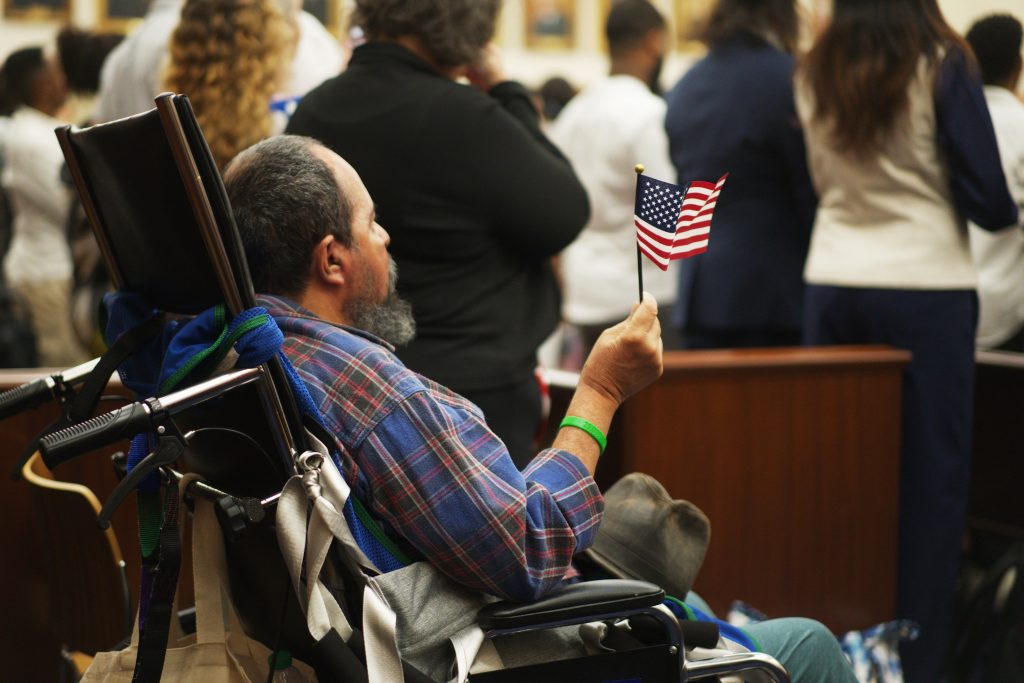
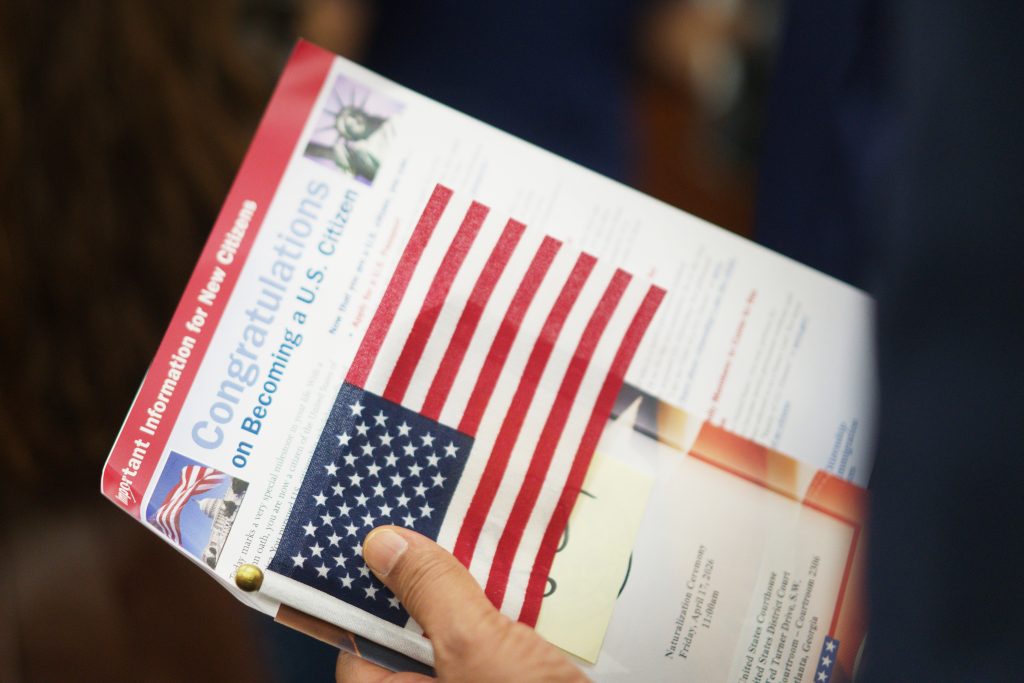
A hundred or so people from Eritrea, South Korea, Germany, Mexico, Colombia, Taiwan, Cameroon and other countries gathered Friday on the 23rd floor of Atlanta’s Richard B. Russell federal courthouse to swear allegiance to the United States and become naturalized citizens.
They were accompanied by newborns, grandparents, aunties, uncles, friends and other loved ones, many bearing bouquets of flowers in celebration.
They had spent thousands of dollars, gone through FBI criminal background checks, taken an exam, been interviewed and waited at least five years after becoming permanent residents—the “green card”—before arriving at this day.
The Sons of the American Revolution entered the solemn chamber, holding the Stars and Stripes.
U.S. District Judge Tiffany Johnson, presiding over the ceremony, waxed poetic about becoming a U.S. citizen and the American experiment. “There are no second-class citizens in America,” she said.
But even if that were strictly true, the ceremony illustrated how the current administration has created an entire class of people who are now blocked from such ceremonies, just because they’re from one of 39 countries on lists in federal policies created late last year and January of this year.
Although there were Eritreans at the ceremony, for example, there was no one from the neighboring East African country of Ethiopia. And though a man from the Democratic Republic of the Congo became a U.S. citizen on Friday, no one from the Republic of Congo did. There was also no one from Afghanistan, Cuba, Iran or Venezuela. Two-thirds of the countries on the government’s lists are in Africa–including Nigeria, one of the world’s most populous nations.
The Trump administration’s new policies affect all immigration benefits—such as employment authorization— by subjecting anyone from the listed countries to indeterminate delays for “enhanced screening and vetting.”
‘Huge decreases in the number of people being naturalized’
As for naturalizations: in January, the most recent month for which information is available, USCIS, the federal agency responsible for immigration benefits, approved nearly 33,000 people for naturalization—the lowest total since the government began tracking monthly totals in 2022, according to NPR.
“It’s been clear that there’s been huge decreases in the number of people being naturalized,” said Preye Cobham, attorney and deputy executive director at Women Watch Afrika, an organization that helps immigrants go through the steps needed to become U.S. citizens.
Cobham said members of her organization were at the federal courthouse in early December, shortly after the federal government issued the first of the two recent policy memos blocking people from becoming naturalized citizens. A handful of people got stopped at the door and told to go home and await further notice, she said. “They left crying and disappointed.”
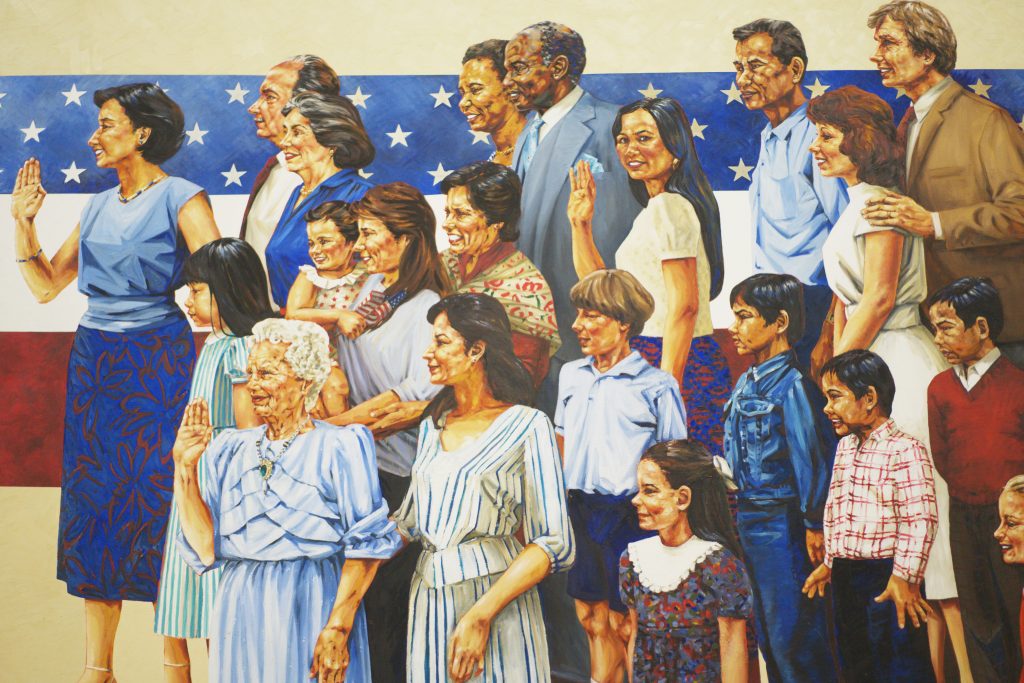
Right: A mural outside the courthouse where naturalization ceremonies are held at the Richard B. Russell Federal Building on Friday, Apr. 17, 2026
In the weeks and months to come, others received letters telling them their naturalizations were “postponed.” Some have waited nearly four months with no update.
These people “are very depressed,” she said. “They worked so hard. They’ve done nothing wrong…They passed all [background] checks. Now they’re in limbo.”
Because of the Trump administration’s policy, the federal government has received an estimated $1 billion in fees for immigration services it is not providing, according to the Cato Institute.
Atlanta immigration attorney Charles Kuck sued the Department of Homeland Security–parent agency to USCIS–in February, together with several other attorneys. Plaintiffs include a handful whose naturalization ceremonies were canceled or whose processes leading up to the ceremony were halted.
His lawsuit points out that federal law stipulates naturalizations must be granted or denied within 120 days of applicants being interviewed by USCIS.
“There is no law that allows the president to tell USCIS to stop adjudicating cases,” Kuck said. “They’ve said, ‘Give us your money, and we’re not going to adjudicate your case.’ Anywhere else, that’s fraud, or theft.”
Women Watch Afrika is part of a coalition that also helps register new citizens to vote, along with the League of Women Voters and others. Both Cobham and Diane Fisher, director of voter registration for the League of Women Voters Georgia, noted how the drop in naturalizations, along with another federal policy change prohibiting their organizations from entering USCIS offices, has drastically reduced the number of newly naturalized voters they register.
The Atlanta-area USCIS office would traditionally carry out many more swearing-in ceremonies, with four or five sessions per week, Cobham said. By comparison, the federal courthouse holds a handful every year. Now, she said, there are one or two each week at USCIS, and they appear to be smaller, with many fewer cars in the parking lot outside the federal agency’s office, which is next door to her organization.
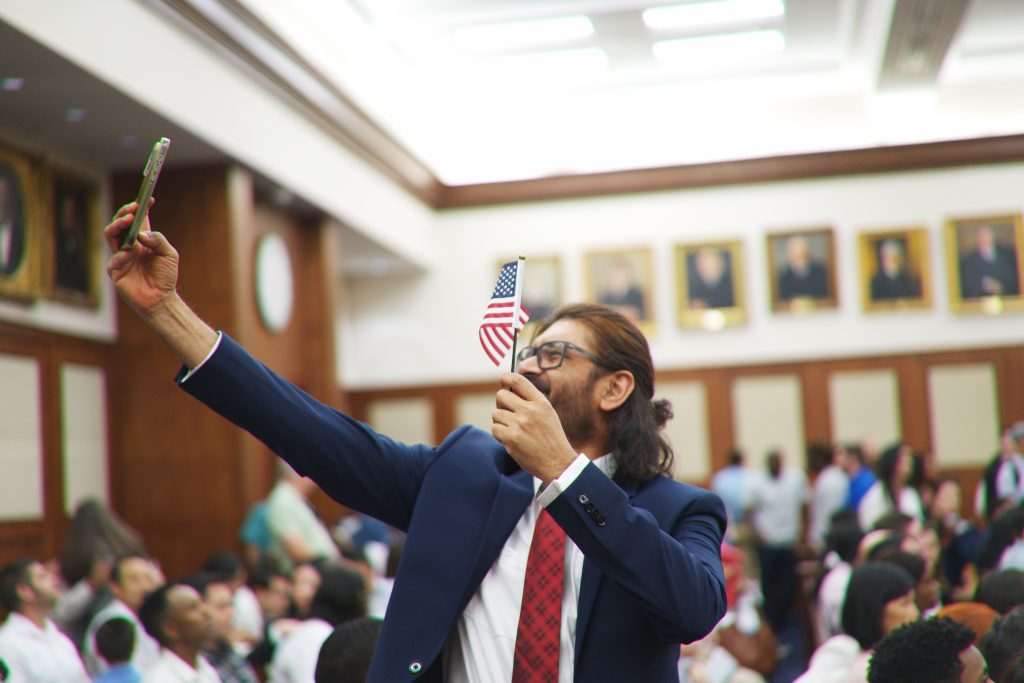
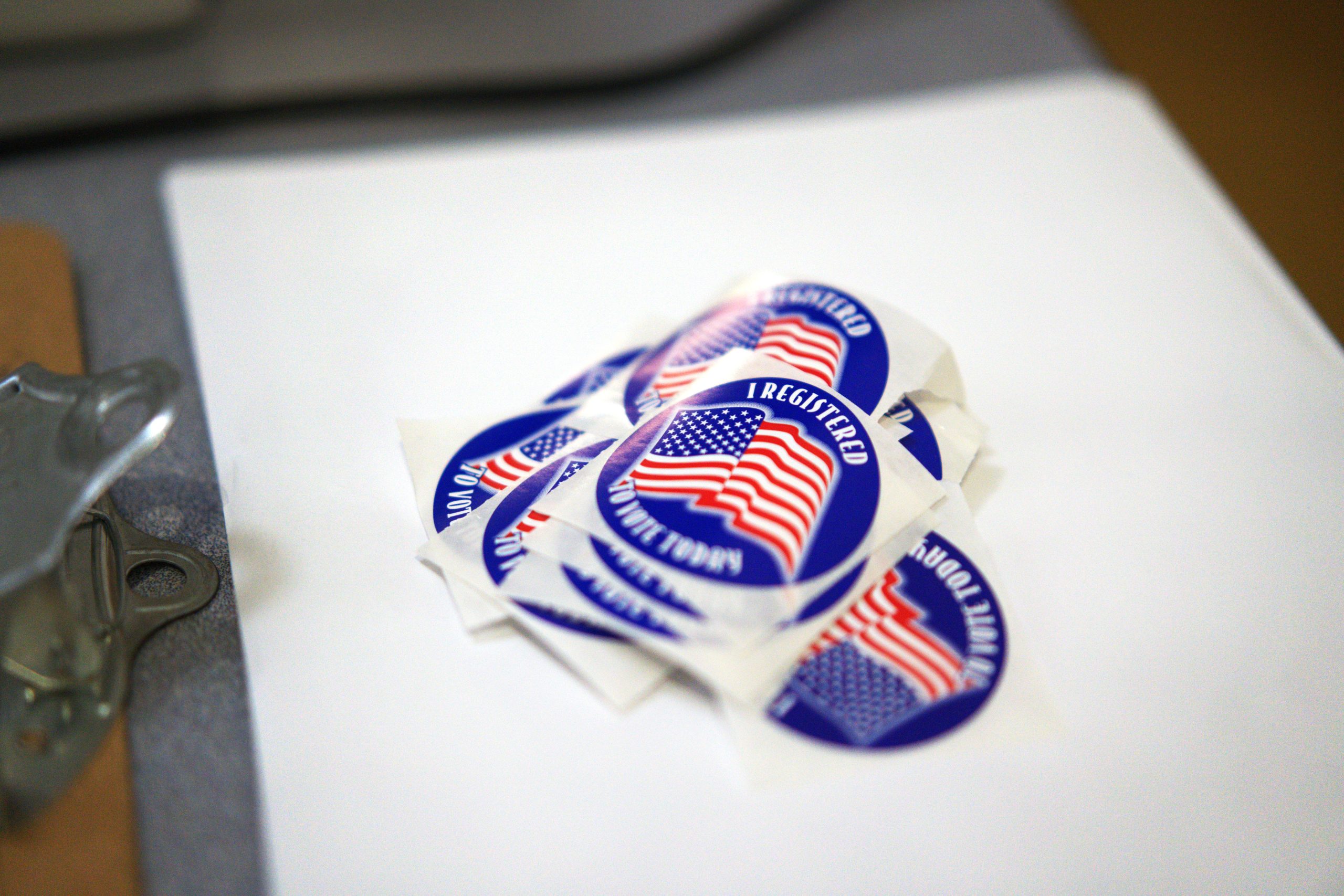
Left: A coalition of organizations registers newly-naturalized citizens to vote after a swearing-in ceremony at the Richard B. Russell Federal Building on Friday, April 17, 2026.
As recently as 2024, the coalition registered about 14,000 new voters. In the first four months of this year, that number stands at only 217, Fisher said.
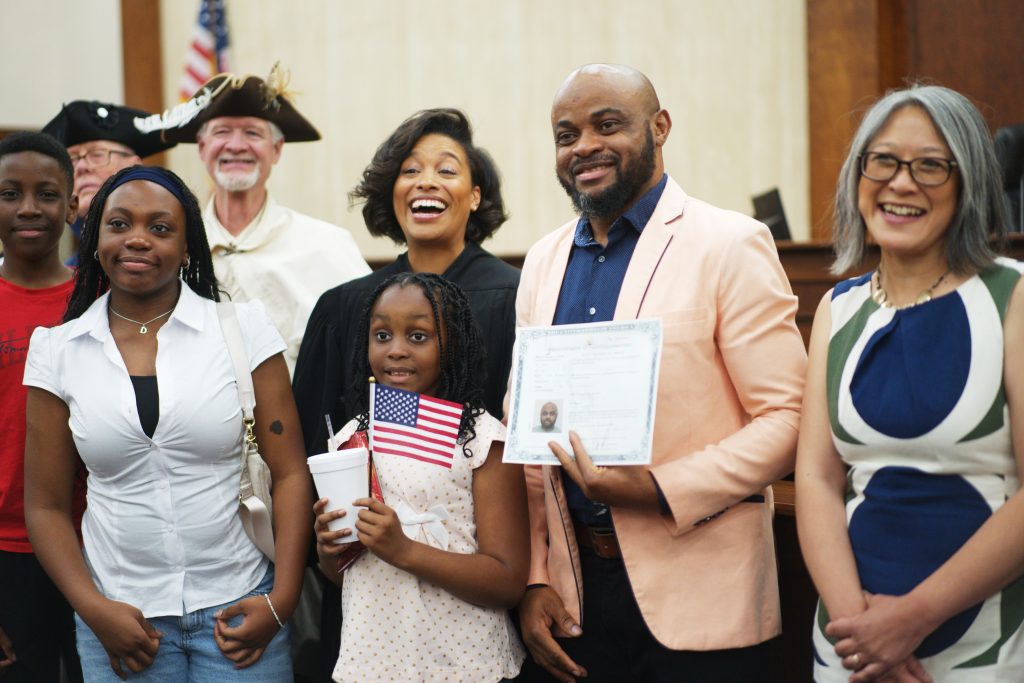
Meanwhile, on Friday, dozens walked into the federal courthouse downtown as permanent residents and walked out as citizens, perhaps unaware of the turmoil exacted on others. Danny Kabuya, a 45-year-old robot programmer, was there with his three children. From the Democratic Republic of the Congo, he had entered the U.S. in 2017 with a Diversity Visa, a lottery program–and another immigration benefit now on hold.
Kabuya said he knew someone who had put off moving forward on the path to citizenship, and now was facing delays.
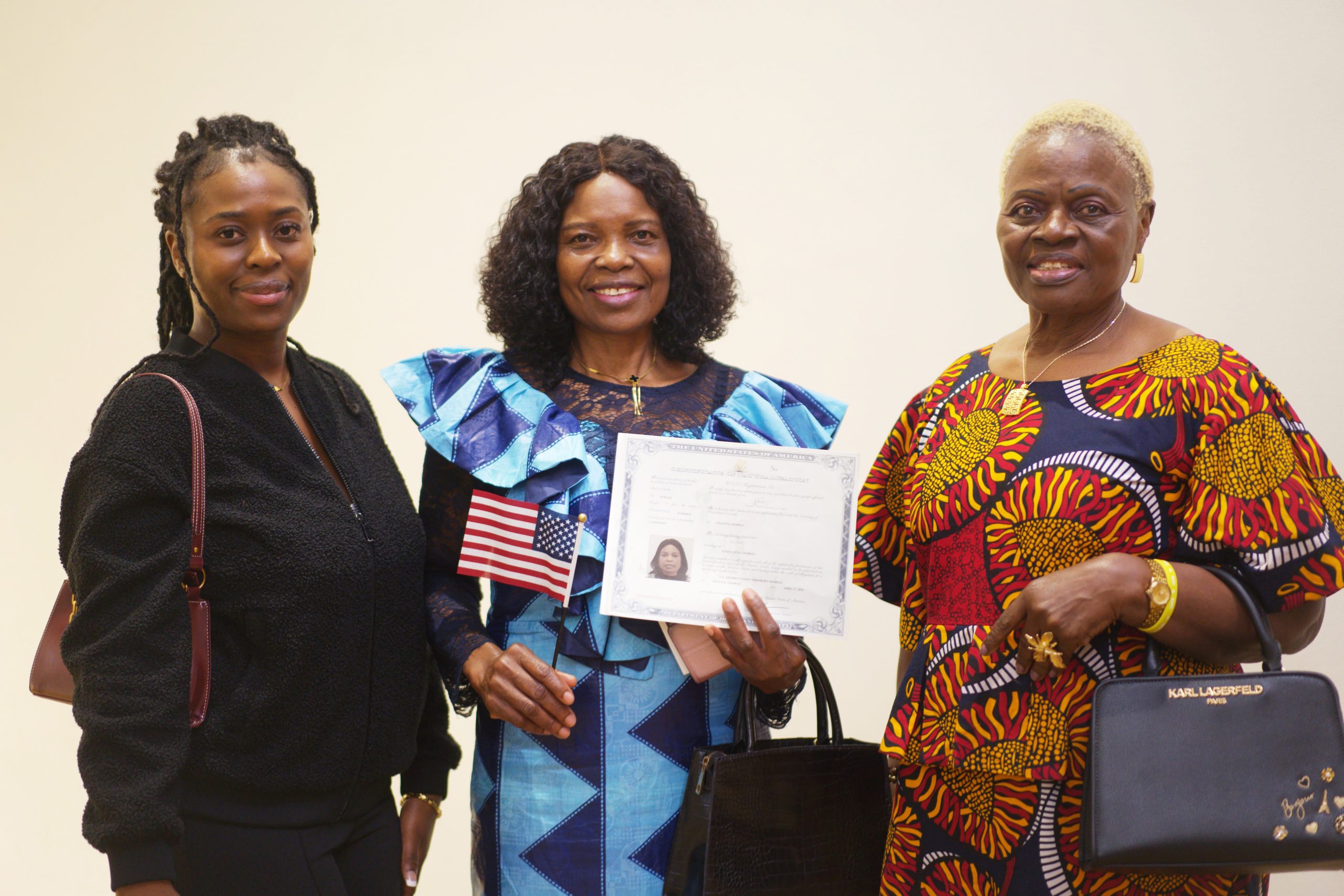
Standing nearby, Angela Sirri Neba was all smiles. The 58-year-old Cameroonian arrived in the U.S. in 2019 through one of her daughters, who also entered the country with a Diversity Visa. A nursing aide by training, she works at an assisted living center.
Now that she’s a citizen, she beamed, she can petition for the two of her six children who remain in Cameroon. “It will help me bring the family together,” she said.
That’s the sort of sentiment that has always made naturalization ceremonies so special, said Cobham. But for many the federal government has left in limbo, “now, that joy is not there.”
We hope you enjoyed this story. It’s only with the support of readers like you that we are able to do this work. We believe it’s important to be up front about how much it costs to produce this content so our donors can see where their dollars go.
This story is 973 words at $.66/word for $642.18. We pay $250 for photo assignments. There was an additional hour of editing time at $27/hour.
The total cost of this story is $919.18.
Will you chip in $25 to help cover the cost of the story and to continue critical immigration coverage like this?
No paywall. No corporate sponsors. No corporate ownership.
Help keep it that way by becoming a monthly donor today.
Free news isn't cheap to make.
Author

Related Articles
‘It seemed like every town in America had something going on’: Week of Action against Flock and ALPRs gets people engaged
As protests spread nationwide, Atlanta-based Flock Safety grapples with backlash over surveillance technology and growing privacy concerns.
Popsicles and the FBI: Organizers launching week of action against Flock and ALPRs
From Aug. 16 to Aug. 22 organizers, both new and experienced, are holding events across the country for the National Week of Action Against Automated License Plate Readers.

