Dunwoody approves Flock contract after delays over security and privacy concerns
Dunwoody approved the delayed Flock Safety contract after negotiating on security risks, privacy concerns and employee access to private cameras.

The Dunwoody City Council voted unanimously on Monday to approve a one-year, $15,000 contract for Flock Safety’s 911 emergency dispatch assistance software.
The Dunwoody elected officials had twice deferred the software contract due to concerns about the company. Chief among those issues were Flock’s evolving contract terms and conditions, the use of the city’s data to train Flock’s computer modeling system and reports of security vulnerabilities in Flock’s hardware and software. More recently, records also showed Flock employees had accessed private camera feeds connected to the city’s network.
Over the past two months, city officials negotiated with the company to address some of those concerns.
“I don’t know of any other city that has gone to this level and pushed back against Flock, negotiated with them,” Dunwoody City Council Member John Heneghan said about how the city handled these issues.
Flock Safety is an Atlanta-based police technology company that sells hardware, including license plate readers, live-streaming cameras, and gunshot detectors. Flock also sells software products, including a nationwide license plate reader data-sharing platform and integration tools that allow private entities to share their camera footage directly with police agencies.
Dunwoody Mayor Lynn Deutsch said there were “two paths to how we address this,” regarding the issues residents and officials have raised in recent months.
The first was through a new master services agreement—the overarching contract that governs the city’s relationship with Flock. Under the new agreement, Flock cannot use Dunwoody’s data to train its computer models and the company must alert the city if any security breaches occur.
The second path, Deutsch said, would be “through internal policies and procedures” to address issues like which agencies Dunwoody shares data with and which individuals have access to Dunwoody’s network.

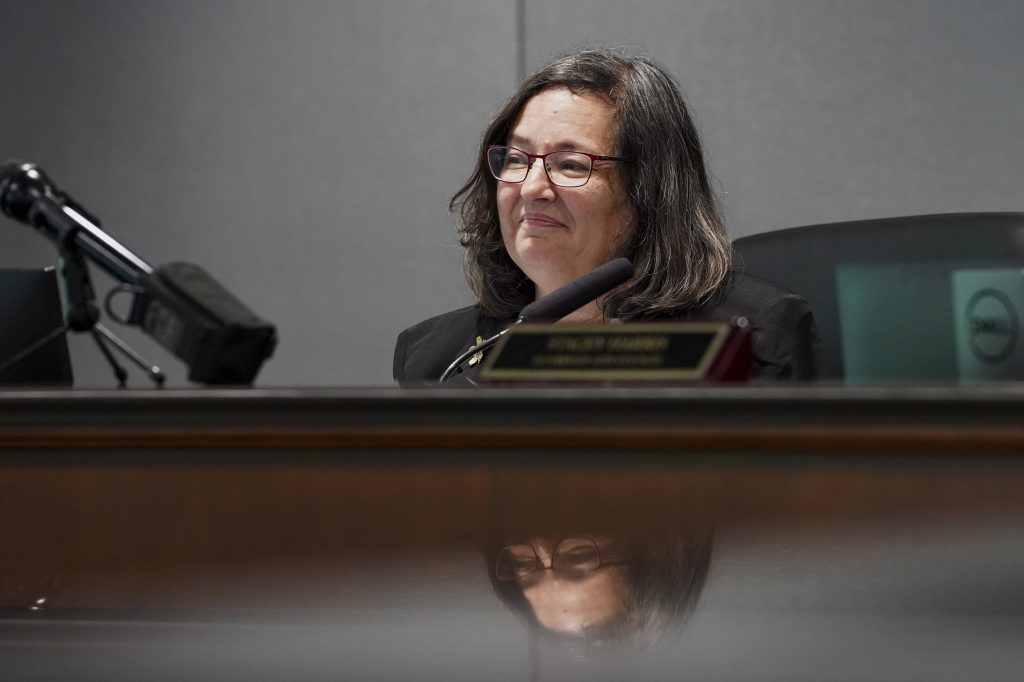
Dunwoody Mayor Lynn Deutsch listens to the public during the meeting. (right) ACPC/Megan Varner
Flock employees accessing cameras in private
The issue of access stems in part from the fact that Flock technology enables private companies to integrate their cameras with local police agencies. The Marcus Jewish Community Center of Atlanta (MJCC) shares its cameras with the Dunwoody Police Department.
Over the past four months, Dunwoody resident Jason Hunyar has filed dozens of public records requests related to the city’s use of Flock. Records he obtained revealed multiple issues, which helped prompt many of the concerns expressed by city officials during their debate over Flock.
In January, he alerted city officials that the Dunwoody Police Department had granted access to MJCC cameras to external police agencies, despite the MJCC network being marked in Dunwoody’s system as “DO NOT SHARE.”
Last week, Hunyar discovered a new concern. He uncovered records of Flock employees accessing camera feeds from gymnastics rooms, pools and fitness centers at the MJCC.
According to the records Hunyar obtained, on July 23, 2025, Randy Gluck, Flock’s business development manager, viewed three MJCC cameras labeled “Gym Mendel – 1” and “Main Pool Right.”
On Sept. 30, 2025, Bob Carter, Flock Safety’s vice president of strategic relations and business development, viewed the MJCC camera labeled “Gymnastics.”
Deutsch said Monday that she was “concerned and perplexed” by the discovery. After requesting more information, she learned Flock employees had been using Dunwoody’s Flock network “for a potential sales call with another law enforcement agency.”
She added that “Flock will no longer use Dunwoody for demonstration projects” and that an apology had been given to the MJCC.
“The city of Dunwoody is one of several cities in our demo partner program. The cities involved in this program have authorized select Flock employees to demonstrate new products and features as we develop them in partnership with the city,” a spokesperson said in a written statement.
The MJCC did not respond to a request for comment.
We need to raise $65,000 by June to keep publishing stories like this one! Historically, readers like you have accounted for ~5% of our annual revenue. For sustainability, we need it to be closer to 25%. We’ve run fundraisers before, but not at this scale. That’s the number we need to hit so we can continue to cover ICE, protests, surveillance, DEI, Cop City, policing and the City Council.
To that end, we’ll start attaching a cost of goods to each of our stories so you can see part of what it costs to do this work.
This story is 838 words. We pay $.66/word for freelance work ($553.08 for this story) and $250 for a photo assignment. There was an additional hour of editing time ($27/hour).
The total cost of this story is $830.08.
Will you chip in $25 to help cover the cost of the story and to continue critical election coverage like this?
Residents speak out against Flock during public comment
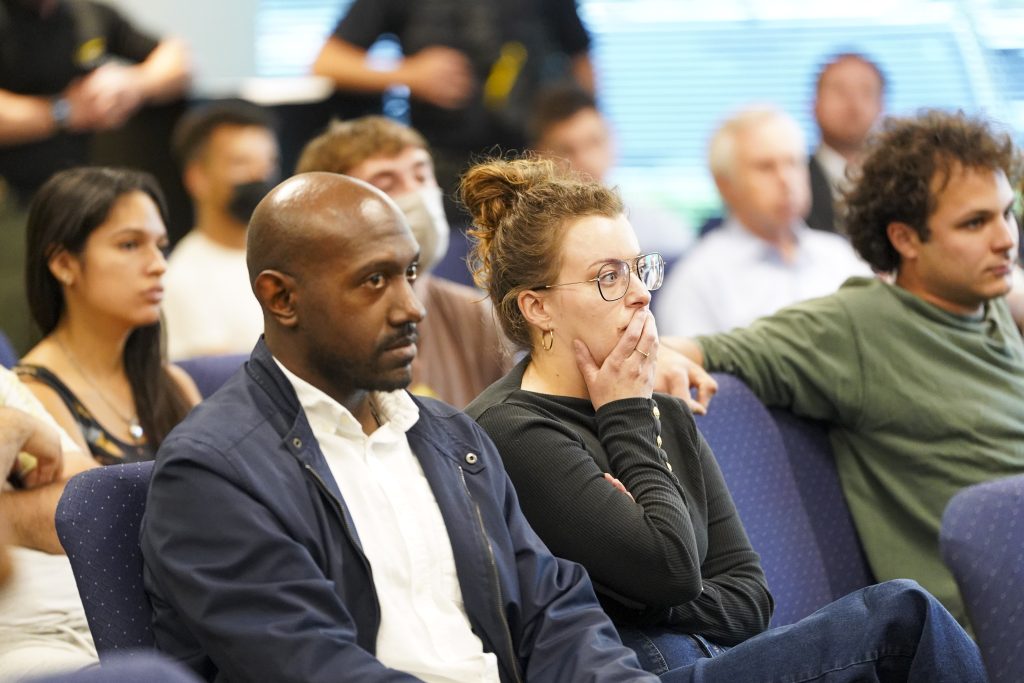

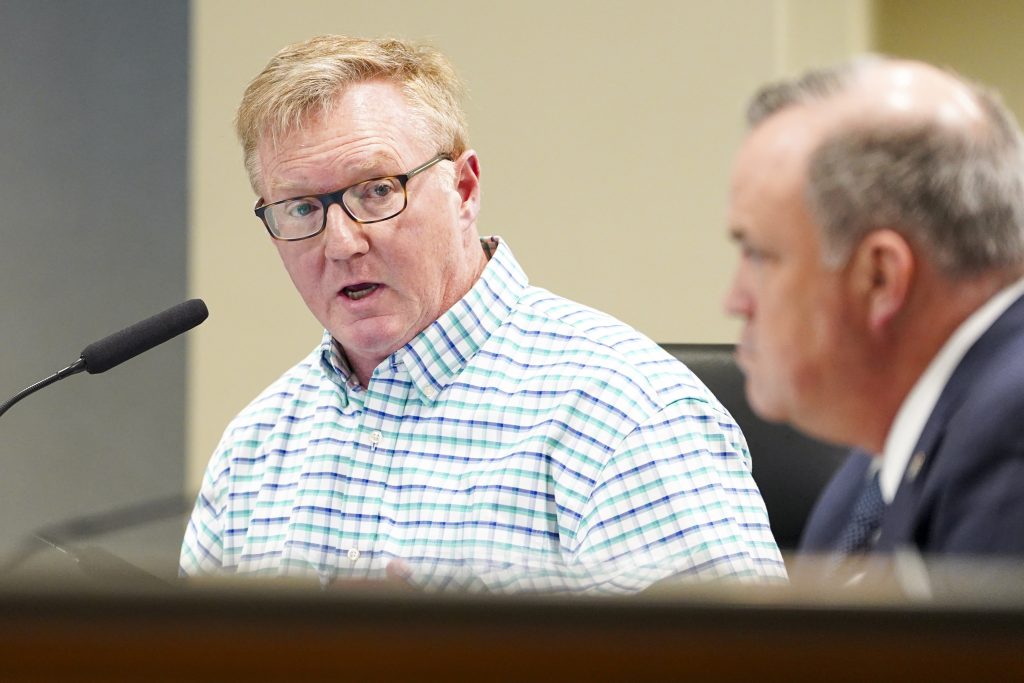
Council Member John Heneghan speaks during the meeting. (right) ACPC/Megan Varner
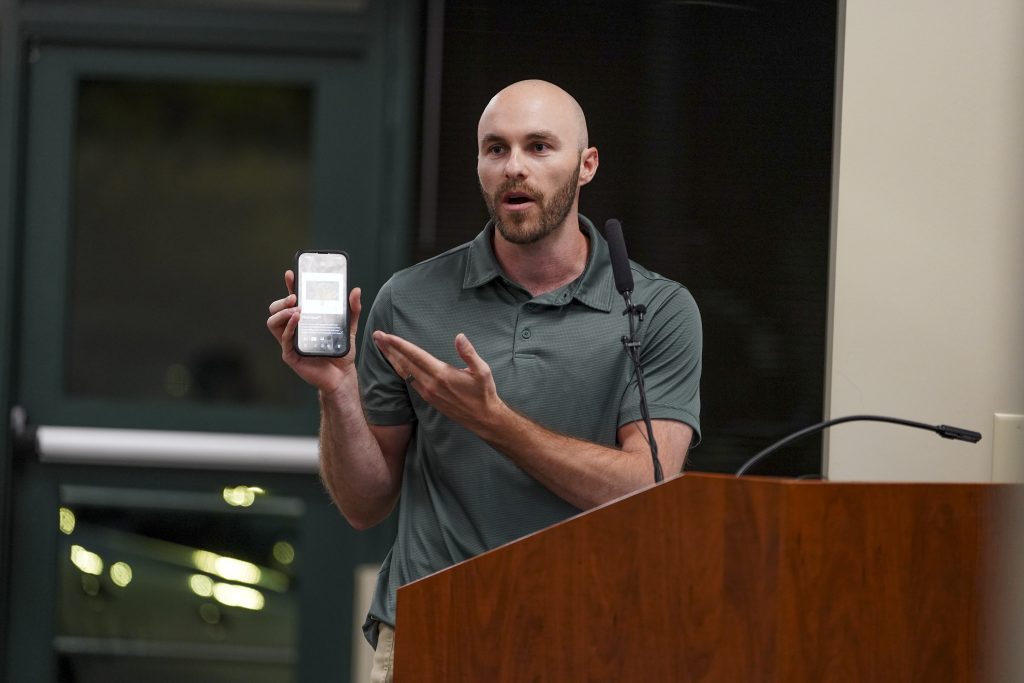
Of the 15 people who spoke during the public comment sessions in Monday’s meeting, 13 gave comments in opposition to Flock. Dunwoody splits public comment into two 30-minute periods, one at the beginning and another at the end of each meeting.
Zach Humphries, a Dunwoody resident who volunteers at food distribution sites, expressed concern for Hispanic community members, noting that Immigration and Customs Enforcement can access data gathered by Flock in Dunwoody through external police departments. He asked the city to find an internal solution to replace Flock.
Sabrina Rahim read a statement written by her son, who she said was raised in Dunwoody but is attending college out of state. The statement called for private camera owners to suspend sharing their camera data with the Dunwoody Police Department.
Former Dunwoody Mayor Denis Shortal was the sole public commenter who spoke in favor of the Flock contract. “There must be some way to fix the problems that the citizens see in that issue,” Shortal said, “but let me tell you, it’s a good system in principle.”
During the public comment section at the end of the meeting, Oliver Smith recalled Mayor Deutsch’s statement that Dunwoody had two paths to addressing issues with Flock. “You present us with two ways we could move forward with the Flock contract,” Smith said. “You would think the second option would be not moving forward.”
After the meeting, local anti-Flock organizers promised to continue attending local government meetings in the metro area to push back against Flock.
No paywall. No corporate sponsors. No corporate ownership.
Help keep it that way by becoming a monthly donor today.
Free news isn't cheap to make.
Author

Related Articles
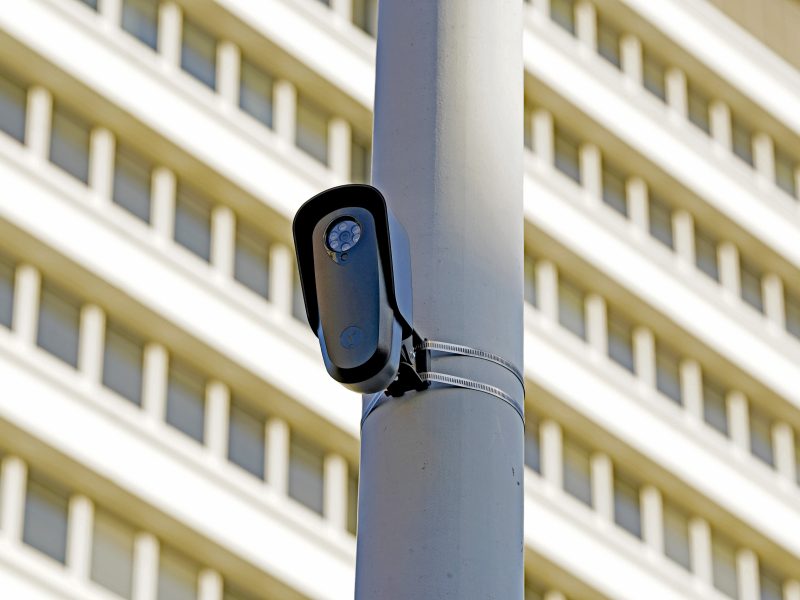
‘It seemed like every town in America had something going on’: Week of Action against Flock and ALPRs gets people engaged
As protests spread nationwide, Atlanta-based Flock Safety grapples with backlash over surveillance technology and growing privacy concerns.
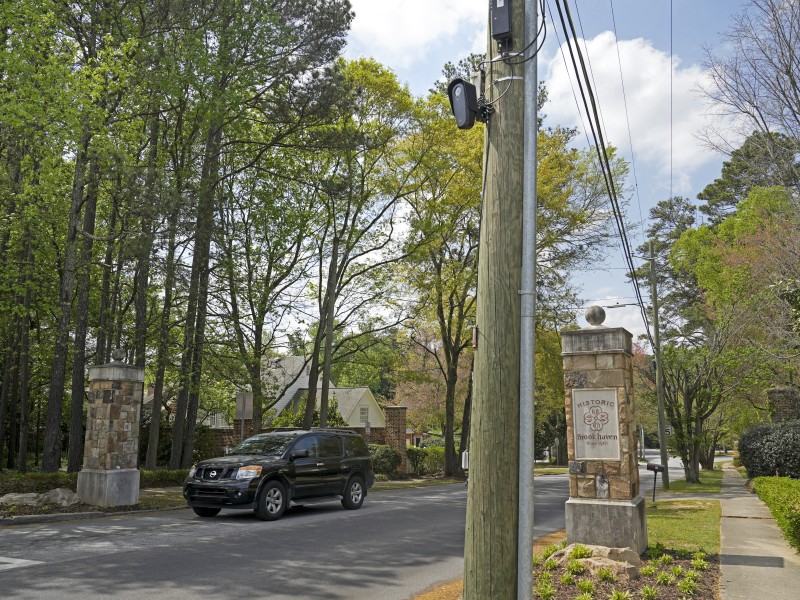
Popsicles and the FBI: Organizers launching week of action against Flock and ALPRs
From Aug. 16 to Aug. 22 organizers, both new and experienced, are holding events across the country for the National Week of Action Against Automated License Plate Readers.

