Confusion, ambulance shortage delayed emergency response in latest ICE detention death
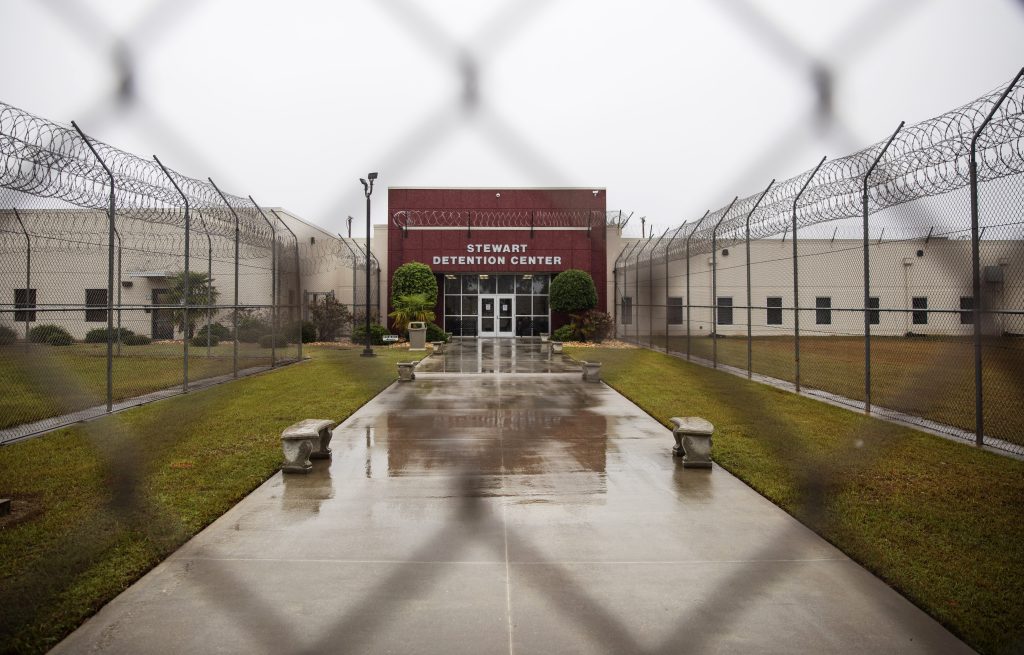
911 records show nearly 20 minutes elapsed before an ambulance was dispatched after a man was found hanging inside Stewart Detention Center.
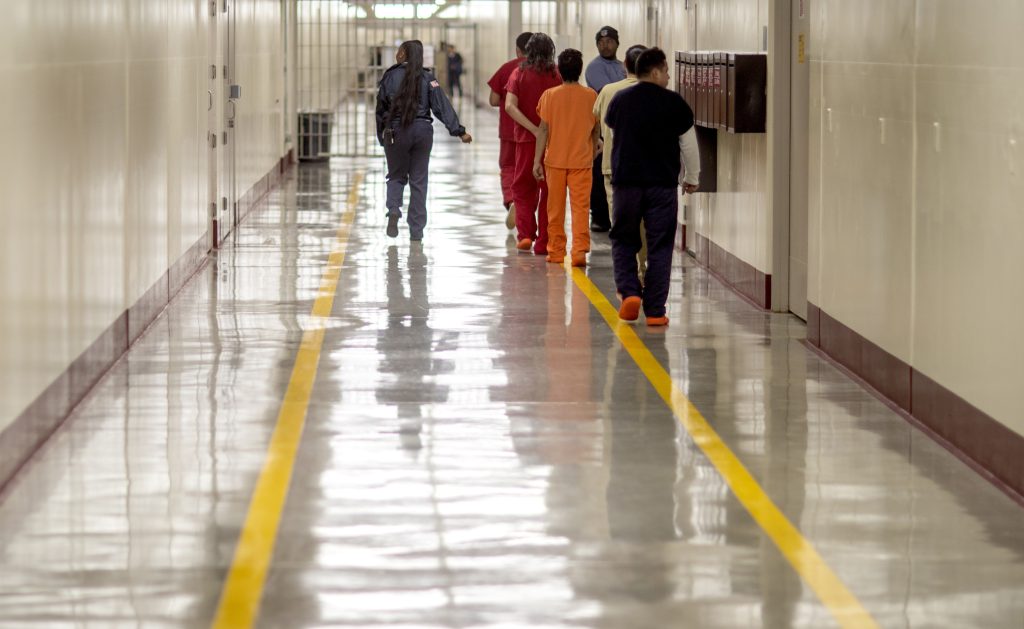
“911. What is your emergency?”
“This Stewart, um, Detention Center. We have a zero-one hanging for a male detainee,” a woman’s muffled voice, awash in background noise, says in a 911 call obtained by the Atlanta Community Press Collective via public records request.
The 911 operator on the other end, apparently unfamiliar with the institutional terminology used in Stewart for a suicide, did not understand. So he asked the caller to repeat. “Okay. What’s going on with him?”
“Um, a hanging in seg,” she responds.
Seven minutes earlier, at about 10:25 p.m. on the night of April 28, employees of CoreCivic, the company that runs the remote detention center under a contract with U.S. Immigration and Customs Enforcement, allegedly found Denny Adan Gonzalez unresponsive with some type of binding, which needed to be cut off, wrapped around his neck.
One minute and thirty-nine seconds into the call, the operator finally grasped what it was about. Another person had hanged himself inside a solitary confinement cell—known in the facility as “seg” or “segregation”—at one of the largest and deadliest for-profit migrant prisons in America.
Content warning: mentions of self-harm
It took 35 minutes from the time Gonzalez was found until an ambulance arrived on scene. The vehicle had to come from another county. All of Stewart County’s ambulances–typically only two of three are running at any given time, according to a county official–were on other calls.
911 records revealed confusion and prolonged delays in obtaining outside life-saving care for Gonzalez–a phenomenon increasingly prevalent at Stewart since its population shot up in January 2025 amid the beginning of President Donald Trump’s massive deportation campaign.
Thirteen minutes after Gonzalez was found, a Stewart County dispatcher contacted Webster County’s emergency response, activating the mutual aid agreement it has to assist if Stewart County has no emergency responders available.
A Webster County firefighter who took off in his personal vehicle to assist with CPR arrived at the facility at 10:47 p.m., 21 minutes after Gonzalez was found, Middle Flint Regional E-911 Director Danielle Truelove told ACPC.
By 11:11 p.m., Gonzalez had been pronounced dead.
“In certain situations, like a cardiac arrest or stroke, the first 10 minutes is critical. Arrival after that period can change the outcome. In the field, it is common for EMS units to terminate efforts for a cardiac arrest after 20 minutes,” according to Dr. Amy Zeidan, a professor of emergency medicine at Atlanta’s Emory University who researches health care in immigration detention.
“Unfortunately, in a cardiac arrest case, a 15-20 minute transport can change the outcome,” Zeidan said.
Last year, Zeidan told The Intercept the combination of a dangerous overload in medical emergencies at Stewart and the scarcity of emergency responders was “unsustainable.” She warned, “People are going to die if they don’t get medical care.”
It is unclear, based on ICE and CoreCivic’s public pronouncements thus far, whether Gonzalez was alive when guards found him.
A Georgia Bureau of Investigation in-custody death investigation is underway.
A National Pattern
ICE’s own reviews of deaths in custody and public records obtained through Freedom of Information Act litigation by ACPC reveal that prolonged delays in calling 911 and obtaining emergency responses to in-custody deaths are a common pattern in detention centers across the U.S.
At CoreCivic’s Otay Mesa Detention Center outside San Diego, California, ICE mortality reviewers faulted the company for delaying the call to 911 and initiating CPR to save 50-year-old Cristian Dumitrascu’s life in 2023. “The responding staff did not call 911 until nine minutes after discovering Dumitrascu was pulseless,” the report found.
57-year-old Jaspal Singh passed away at Folkston ICE Processing Center—run by a different private prison company, GEO Group—in Charlton County, Georgia, on April 15, 2024. Delayed connections to the Folkston 911 call center meant EMS personnel did not arrive at the scene for 26 minutes after staff discovered Singh unresponsive, federal records revealed.
Congressman Jason Crow, a Democrat who represents the Denver-area district where Nicaraguan migrant Melvin Calero died inside GEO’s Aurora ICE Processing Center in 2022, said after reviewing records from that 911 call, ”[i]t is clear that the inability to quickly provide crucial information regarding the patient and facility access led to a delay in the delivery of emergency medical care.”
Georgia Senators Raphael Warnock and Jon Ossoff sent a letter to federal immigration officials last year about the rising numbers of deaths in ICE detention in Georgia and around the country.
Neither lawmaker has yet issued a statement about Gonzalez’s death.
A coalition of Georgia immigrants’ rights advocates released a statement denouncing the latest death in ICE detention and renewing calls for Stewart’s closure.
No paywall. No corporate sponsors. No corporate ownership.
Help keep it that way by becoming a monthly donor today.
Free news isn't cheap to make.
Related Articles

2026 Midterms: Metro Atlanta’s local races to watch
These are the competitive downballot races ACPC is watching in the 2026 election.
‘It seemed like every town in America had something going on’: Week of Action against Flock and ALPRs gets people engaged
As protests spread nationwide, Atlanta-based Flock Safety grapples with backlash over surveillance technology and growing privacy concerns.