With ARC-Southeast layoffs, program pauses, Georgia continues to lose access to women’s reproductive care
Declining donor interest and a lack of adequate city funding has made it difficult for the organization to provide adequate abortion assistance.
While women battle it out for their reproductive rights in front of the U.S. Supreme Court, the South hosts its own war on abortion as major government and corporate donors continue to withdraw funding from reproductive healthcare initiatives.
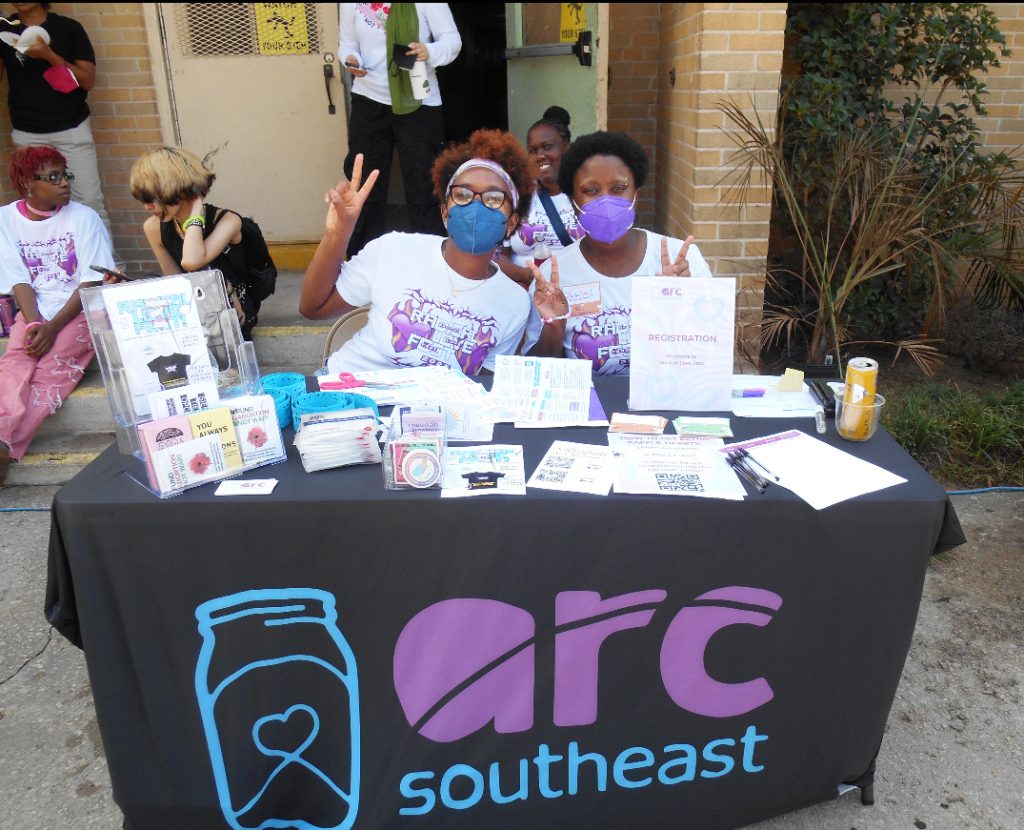
Access Reproductive Care (ARC)-Southeast has become the most recent casualty, announcing in a June 1 Instagram post that budget shortfalls have forced the organization to lay off parts of its staff and pause several of its major programs, including Plan B: Southeast, which provides free, no-questions-asked emergency contraception.
“Our hope is to just pause [Plan B: Southeast] for a few months and bring it back as we build up more of our volunteer base and have them support that, but for right now, it’s one of the only programs in the Metro Atlanta area and in Georgia that provides fully free emergency contraception kits,” said Musa Springer, ARC-Southeast’s media & communications manager, in an interview.
ARC-Southeast’s Healthline, which provides abortion access to callers in Georgia and five other states, will continue to operate, though with a reduced budget.
As for what is driving these budget cuts, Springer attributed funders’ withdrawals to an increase in the politicized nature of abortion and social justice initiatives, making large funders more likely to avoid the “risk” of donating. They noted that the consideration of reproductive justice as a subcategory of DEI has also spurred varying grant cancelations.
“It’s just a fundamentally flawed system, because we’re trying to fulfill a need that this city and the state is not fulfilling anyway, and then we’re having to jump through extra hoops to try to do it,” ARC-Southeast Co-Executive Director Angel Whaley said.
“The people who take the most risk are never the philanthropists or anyone of that class. The people who take the most risk are the actual abortion seekers themselves, the people working at funds on the front lines, trying to get people access, and of course the doctors, nurses, and personnel in the wonderful clinics that we work with,” Springer said.
Limited local government assistance has been yet another hurdle for ARC-Southeast in its struggle for resources. Twice, Fulton County Commissioner Dana Barrett attempted to pass funding resolutions for women’s health and ARC-Southeast, but the commission denied both requests.
Most recently, in 2025, Dekalb County approved a funding allocation of $50,000 for the Plan B: Southeast program. However, Co-Executive Director Angel Whaley said that an over year-long delay in approval and the city’s poor communicationthroughout the lengthy, online registration process has prevented ARC from attaining the money.
“It’s just a fundamentally flawed system because we’re trying to fulfill a need that this city and the state is not fulfilling anyway, and then we’re having to jump through extra hoops to try to do it,” Whaley said.
Springer explained that budget constraints and city shortfalls have plagued women’s healthcare organizations all across the South.
“We are perhaps a microcosm of a much larger shift that’s taking place. In my personal opinion, it feels as though the philanthropy world is intentionally turning away from reproductive justice funding, precisely because as a whole, most abortion funds and related organizations have stood on the side of solidarity,” Springer said.
Though to a lesser degree than ARC-Southeast, Amplify Georgia Collaborative is another reproductive health and justice organization facing financial difficulties. Amplify’s local campaign manager Desirrae Thomas explained that it has had to put a pause on its abortion funding work after local elected officials advised against it, citing economic concerns.
“I think it just has reminded us how imperative it is that we continue to go to these cities and counties, regardless of if they can find money for one-third of their city budget to go to policing or if they can find money to help support people getting access to abortion,” said Thomas.
Georgia residents, who represented almost 50% of ARC-Southeast’s approximately 5,000 callers last year, are already facing the effects of funding cuts. A majority of callers now have to travel out of state to access care, Springer noted, around 200 miles each way.
Nevertheless, District 5 Atlanta City Councilmember Liliana Bakhtiari, who sponsored legislation for a $300,000 grant to ARC-Southeast in 2022, said despite their efforts to continue the discussion on Georgia’s reproductive care, concerns surrounding the city’s project delivery and services are currently taking precedence in the council chambers.
“There are certainly people in the council that absolutely supported and would continue to support these initiatives,” Bakhtiari said. “Right now, it’s just a matter of dollars and major cuts and everybody fighting for the same bucket.”
As such, Bakhtiari noted the significant impact of the decline in these smaller nonprofit agencies, like ARC-Southeast, on regular residents.
“The reduction in safe spaces, like the one that Arc-Southeast provides,” Bakhtiari said, “is going to have, I think, traumatic effects on the ground level because more people will not know where to go, and there will not be as many agencies meeting folks where they are.”
ARC-Southeast’s Healthline is available Monday through Thursday from 11 a.m. to 2 p.m. and Fridays from 10 a.m. to 1 p.m. (855) 227-2475
To support ARC-Southeast’s work, head to their donate page.
No paywall. No corporate sponsors. No corporate ownership.
Help keep it that way by becoming a monthly donor today.
Free news isn't cheap to make.
Author

Related Articles

AI, Flock cameras and data centers dominate debates for Georgia’s statewide races
AI was a hot topic in every Atlanta Press Club debate, from Attorney General to Agriculture Commissioner
Approximately 500 participate in hunger strike at Folkston immigration detention center
Government recently awarded massive contract to expand GEO Group facility to 3,000 beds to become largest permanent ICE site in United States.

