Melting ICE and other chilly topics for families: The People’s Puppet Show
A local organizer uses scenarios of colorful animal friends in conversation to help families break the ice on ICE every Saturday afternoon in Grant Park.
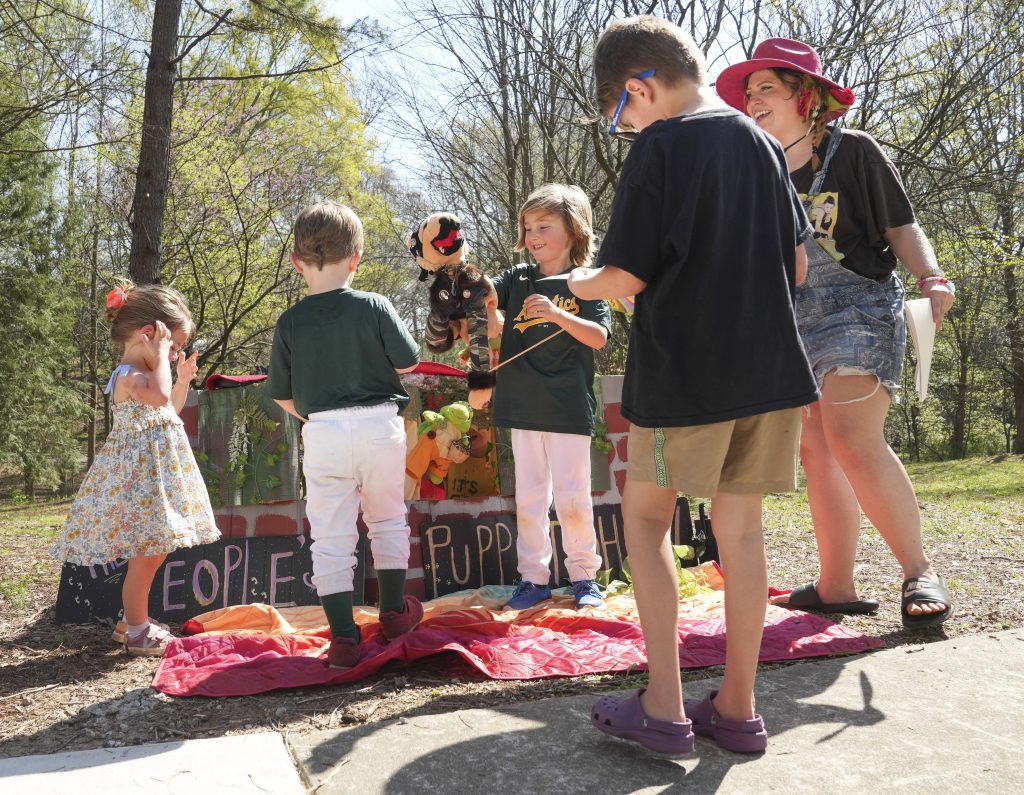
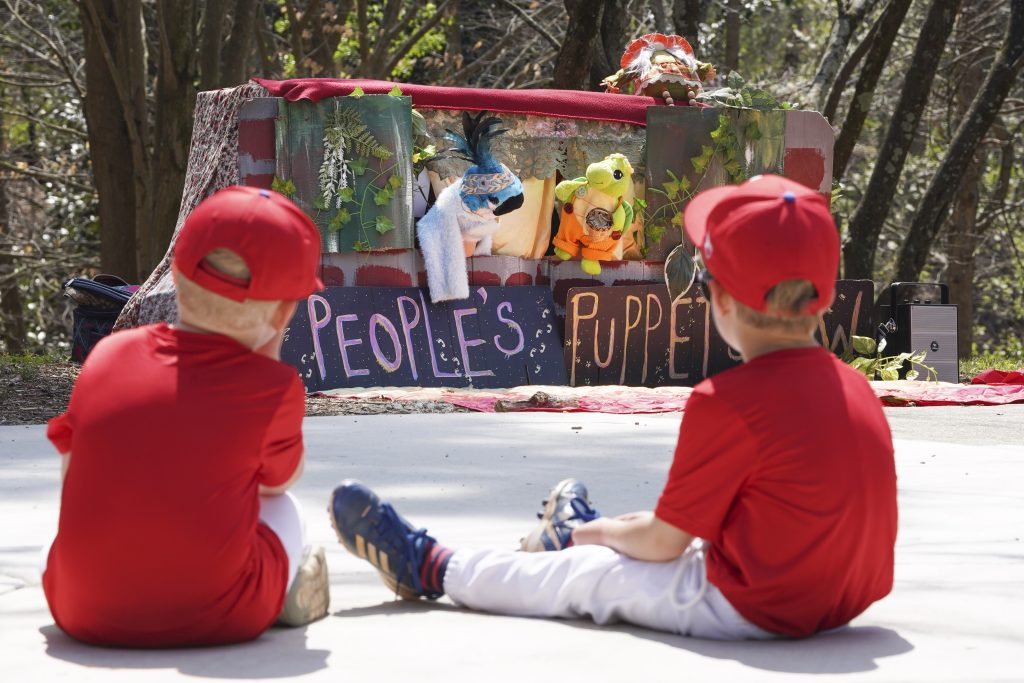
Amid Grant Park’s pick-up basketball games and families out for a stroll on Saturday afternoons is a curious cast of characters meeting to discuss ICE and other serious issues.
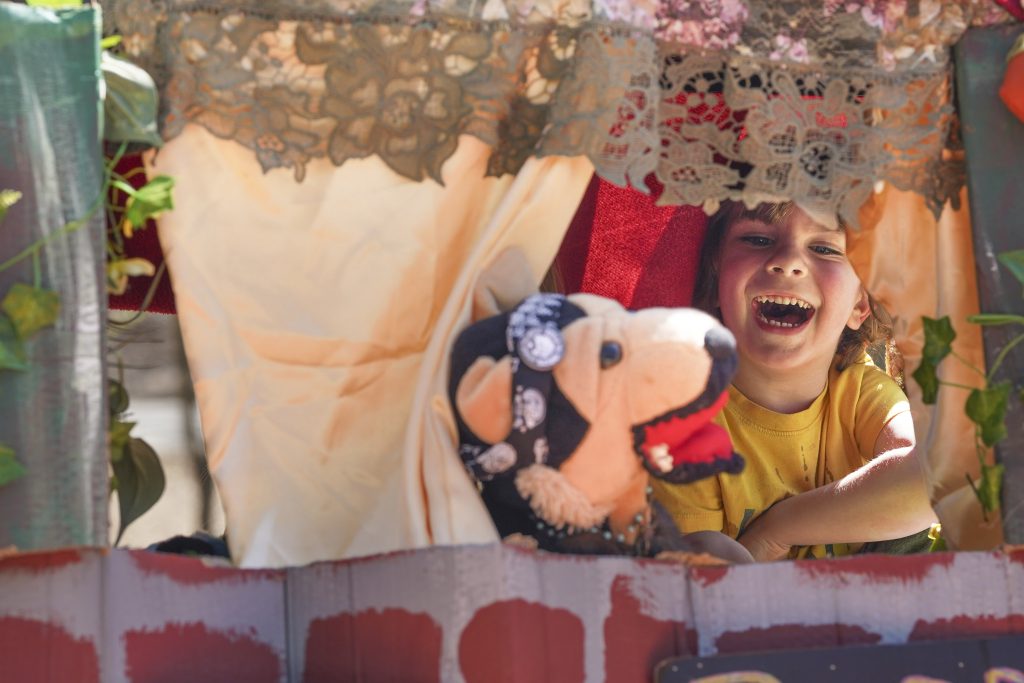
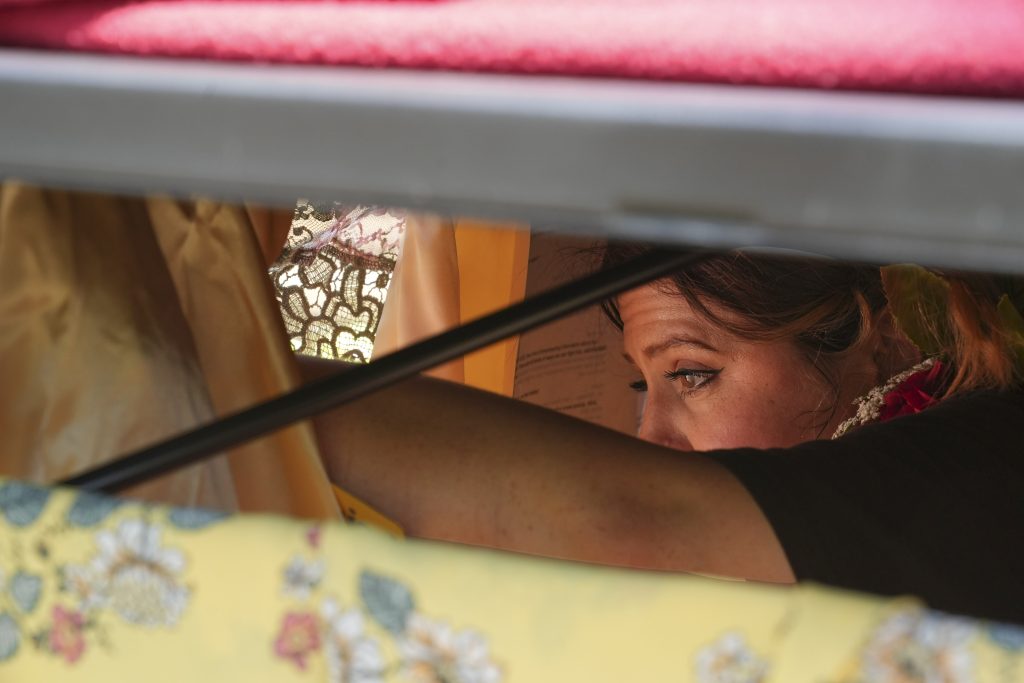
From 2-4 p.m., the little group shares a tiny stage made from a cardboard box. They also share a voice box.
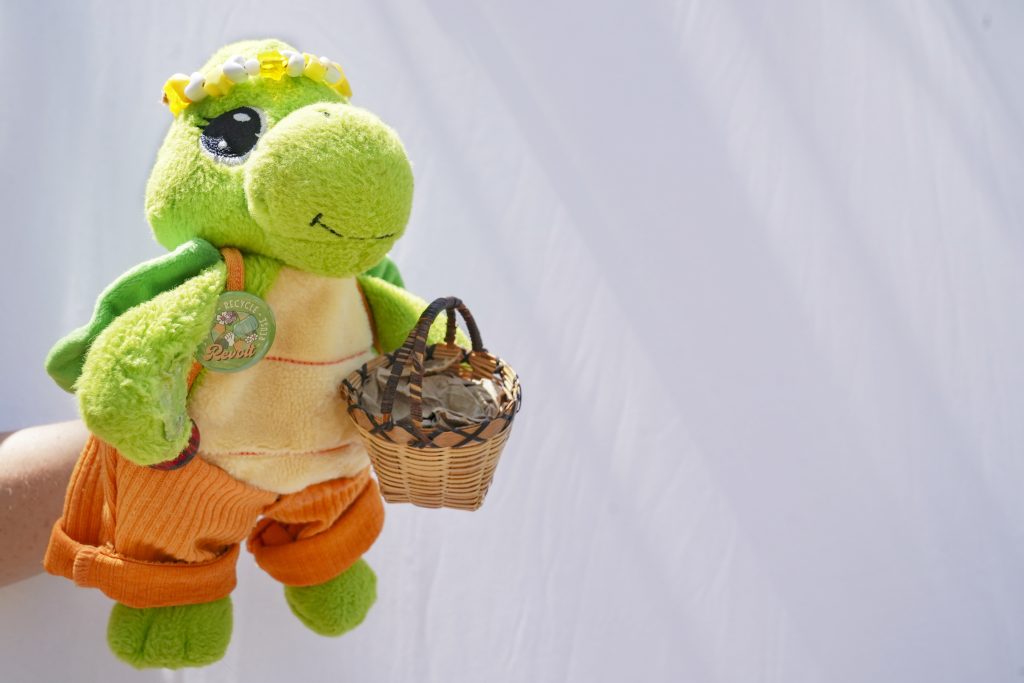
They are the animal puppets of puppeteer Mary Eddie, a young organizer who has made The People’s Puppet Show her mission since mid-December. The Show’s mission is to use entertaining puppetry as a vehicle for informed conversations with neighbors about political issues affecting their everyday lives—and what they can do about it.
For instance, in her ICE show, Eddie’s puppets are having a sleepover party and discuss how ICE can make it scary for some people to go outside or open the front door. They ultimately explore helpful actions on the matter, such as connecting to the ICE hotline of the Georgia Latino Alliance for Human Rights.
“I thought it’d be a nice little soft way to introduce the information,” Eddie said. “I try to keep it as surface-level as possible to reach people. But the show’s always evolving.”
That has included indoor renditions during the winter months across the street at Park Avenue Baptist Church, where Eddie also helps operate the church’s free store. She has also worked on additional parts to her ICE story and adapted some performances to include a third character when she has a helping hand—and voice—behind the stage.
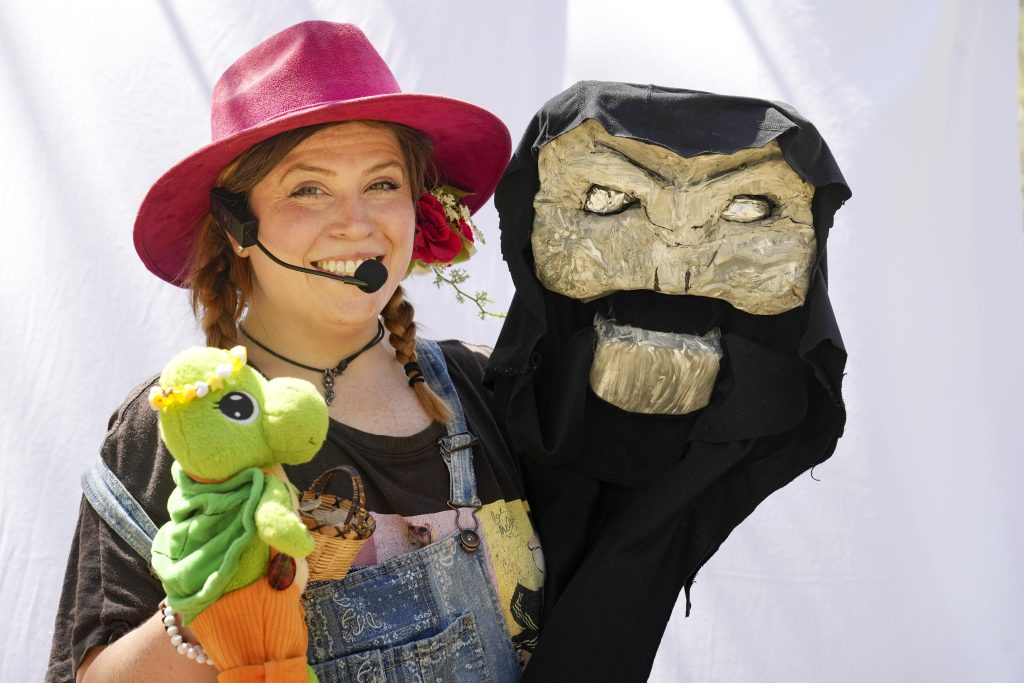
Her helping hand in front of the stage, Irina—who asked to omit her last name for security—recognized Eddie’s capabilities early on and the potential for performance art, encouraging her to take it to the public. Alongside Eddie’s puppet show, Irina supplies an array of informational handouts, pamphlets and zines about the topics the show covers and more. For example, Irina offers materials explaining the importance of coordinating neighborhood groups in a similar style as Minnesotans, so that neighbors can best collaborate on meeting one another’s needs and the unique needs of the entire community, including responses to ICE incursions.
Tina Rashid, a Grant Park resident who stopped to watch the show and chat while passing by, said she had received messages from national organizing groups to look out for efforts like this that help neighborhoods organize themselves.
“It just seems to me, when it’s far away from you—when it doesn’t touch you, it’s not involving your family or your direct neighbors—it’s not until that happens that these things get your attention,” Rashid said of ICE violence. “But this is a great puppet show for that.”
Beyond just ICE, Eddie has an abolitionist vision that undergirds her passion for this show, a continuation of her involvement with the Stop Cop City campaign.
“If it’s ‘Abolish ICE,’ then it’s got to be ‘Abolish the police’ too, because police laid the groundwork for what ICE is capable of doing today,” Eddie said. “I’m not sure how a lot of families feel about their children knowing about ICE, but there are children that are currently having to deal with the consequences of ICE.”
Irina added that imbalanced economic systems always produce police that devolve into a form similar to ICE—or worse. Although family conversations might not reach that level, she has seen the show unmistakably resonate with local children who might not otherwise encounter such messaging about ICE.
“A 14-year-old boy, who probably first came only with his parents, came again for himself with his little brother on a scooter,” Irina said. “He brought the little brother particularly for the show, and Mary did a very nice interaction with both of them. Next week we saw him in the area and gave him a flyer for more information.”
Eddie said children have felt more comfortable with vulnerability around the puppets, divulging matters such as bullying at school that ICE can remind them of. Young adults have also found it to be a natural opportunity to open up to one another as groups of friends who encounter the show as it grows, Irina said.
“We do it at the Atlanta Free Fair,” Eddie said. “We’ve also gotten offers to do the halftime show for the Trans Liberation Basketball League—I think Artists Against Apartheid has even asked us to do a show with them.”
While some of those shows have focused on ICE, others have focused on tax allocation districts (TADs) and data centers, which can run consecutively from the ICE show in increments of about five minutes apiece. The brief length helps keep the attention of children and adults alike, without having to commit to a long deviation from their Saturday afternoon plans, as well as for Eddie to pick it up again at a moment’s notice. In fact, Eddie cut herself off while explaining plans to sustain the Show, as a new audience approached.
“The People’s Puppet Show—puppets for the people!” she joyfully bellowed to a group of passersby. “Y’all look like y’all could use a free puppet show!”
For more on the People’s Puppet Show, including ways to get involved and support it, visit @ThePeoplesPuppetShow on Instagram.
We need to raise $65,000 by June to keep publishing stories like this one! Historically, readers like you have accounted for ~5% of our annual revenue. For sustainability, we need it to be closer to 25%. We’ve run fundraisers before, but not at this scale. That’s the number we need to hit so we can continue to cover ICE, protests, surveillance, DEI, Cop City, policing and the City Council.
To that end, we’ll start attaching a cost of goods to each of our stories so you can see part of what it costs to do this work.
This story is 858 words. We pay $.66/word for freelance work, for a total of $566.28. There was an additional hour of editing time. A livable wage in Atlanta is $27/hr. Our standard rate for photo assignments is $250.
The total cost of this story is $843.28.
Can you chip in $25 to help cover the cost of this story?
No paywall. No corporate sponsors. No corporate ownership.
Help keep it that way by becoming a monthly donor today.
Free news isn't cheap to make.
Related Articles
Popsicles and the FBI: Organizers launching week of action against Flock and ALPRs
From Aug. 16 to Aug. 22 organizers, both new and experienced, are holding events across the country for the National Week of Action Against Automated License Plate Readers.
Potent, mislabeled and easy to buy: Inside Georgia’s kratom market
Investigation finds weak oversight of state laws regulating potency levels, leaving Georgia consumers at risk.
Atlantans organize ahead of Zoning Committee vote on West End data center
Advocates continue to demand that their voices are heard ahead of the Aug. 10 Zoning Committee meeting to determine the future of the proposed West End data center in Atlanta.

