
‘Profoundly destabilizing’: How Georgia residents with roots in Muslim countries are experiencing the war in Iran
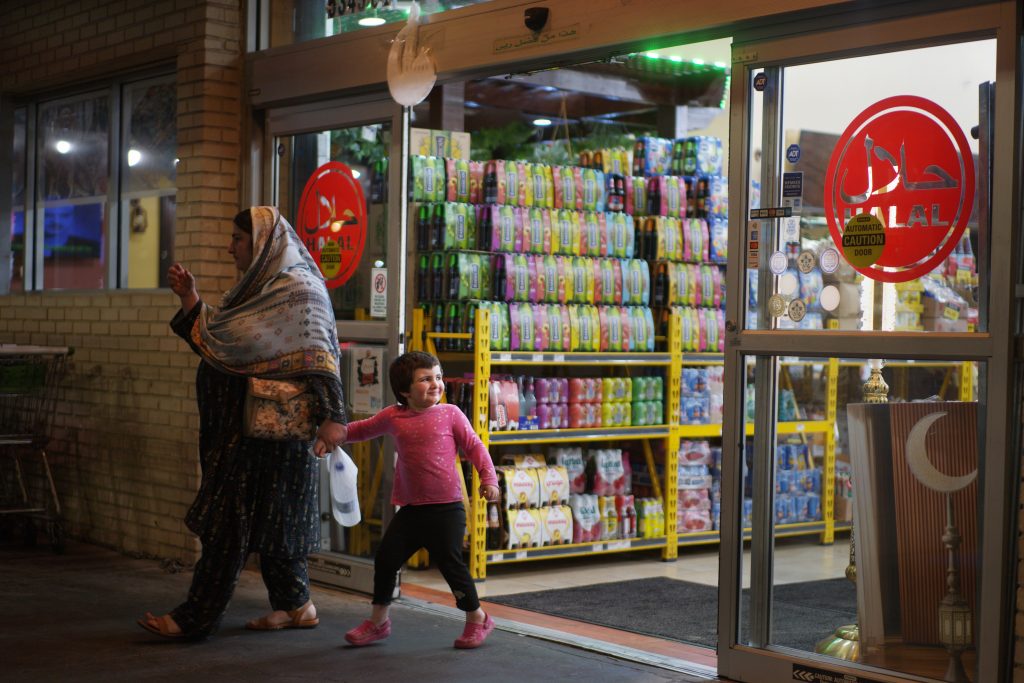
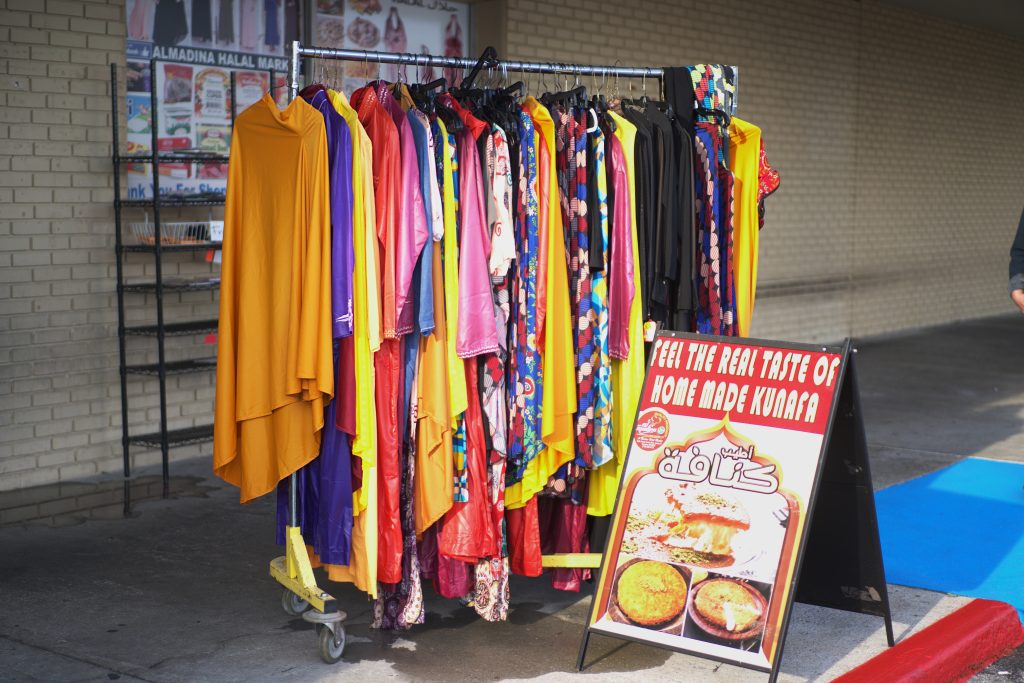
It’s late Friday afternoon at Al Madina Halal Market and Restaurant on Jimmy Carter Boulevard; soon locals with roots in the world’s Muslim countries will be arriving for iftar, the meal following fasting during the holy month of Ramadan.
Busy hands lay out mounds of steaming saffron rice and lamb in deli-style steel trays behind glass.
The war in Iran is a week old; this particular afternoon arrives after U.S. missiles appeared to have killed at least 170 people at an elementary school, but before Israeli bombs landed on Iranian oil refineries.
Normally, a TV on the wall would be broadcasting Al Jazeera, the news network with reporters on the scene in the growing number of countries touched by the conflict. But the TV’s broken, explains Hussein Ali, Al Madina’s manager. Still, everyone working or shopping appears to be knowledgeable about what’s going on, not only from following international outlets like Al Jazeera at home, but also because they’re frequently calling friends and family in the region.
The war is “so profoundly destabilizing that if you have connections to the region, people are negotiating between the broader impact and their family and friends,” said Hatim El-Hibri, a professor at George Mason University whose research includes media and the Middle East.
People breaking their fast also seemed to draw on the Muslim world’s deep well of historical experience with external aggression, internal conflict and what it takes to wage peace, in evaluating the current war.
“Why are we over there?” asks Ali. “Israel told the U.S.: ‘We have to bomb Iran.’ Why do we have to do that?”
A family of four at one of the handful of booths in the small restaurant area of the store had changed travel plans due to the war. Shaymaa Waad Jailawi would have been preparing for a trip to her home country of Iraq, but had to cancel her flight.
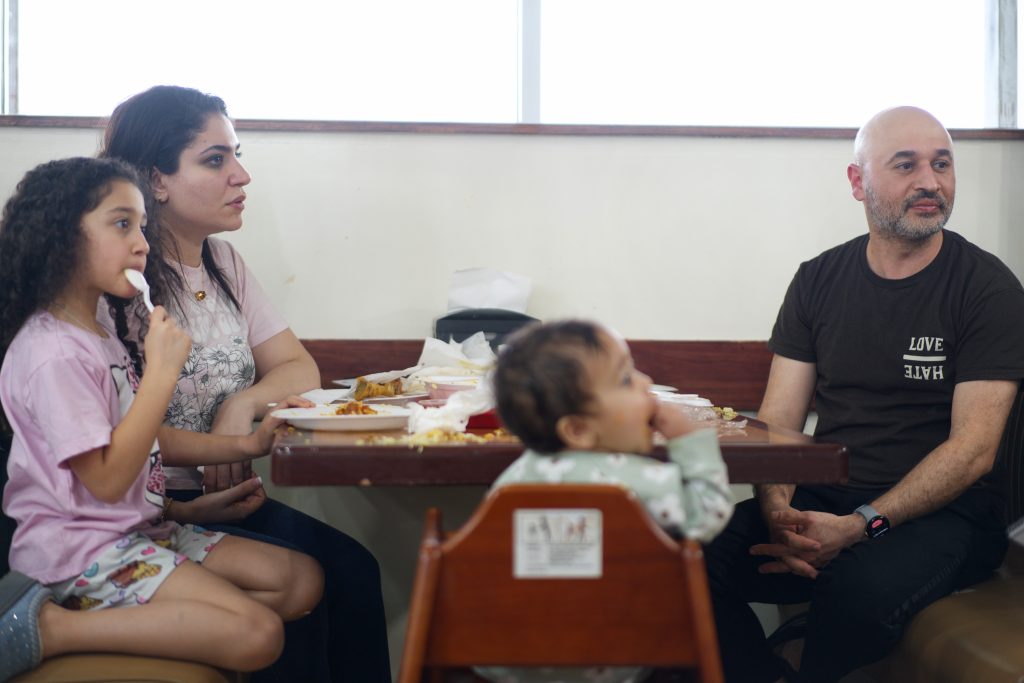
Her husband, Ali Alshammari, said he grew up with the sort of violence now spreading across the Middle East. “I saw a lot of atrocity when I was a child,” he said. “Mushroom clouds. Guided missiles. Two jets fighting each other. I remember thinking, ‘Are the bombs gonna land on me?’…And right now, the bombs have more effect.”
No paywall. No corporate sponsors. No corporate ownership.
Help keep it that way by becoming a monthly donor today.
Free news isn’t cheap to make.
The couple and their two children have lived in Georgia for five years. Their parents, who still live in Iraq, are used to the chaotic destruction of bombs and missiles, they said. “My Mom and Dad have seen a lot,” Alshammari said. “The Iraqi people are resilient after so many wars.”
Across the narrow dining area, Nouredine Nono, 60, is a truck driver from Morocco. “When we talk about humanity, we feel shame,” he said, referring to the slaughter of Iranian schoolgirls. He reminded that his country’s position, as famously shown in the film “Casablanca,” has long been that “we’re against all wars.”
Nono, three years in Georgia, said he drives about 3,000 miles a week in his truck; he noted that as of Friday, diesel had already gone up $1 a gallon.
Bila Mesghewi, a 29-year-old Uber driver from the neighboring country of Algeria, said the current conflict “is not our war – we’ve got no benefit to being involved” – referring to the U.S. He reprised his birth country’s drawn-out experience with colonialism, often brutal. “We were fighting 132 years against France,” he said. “We want peace.”
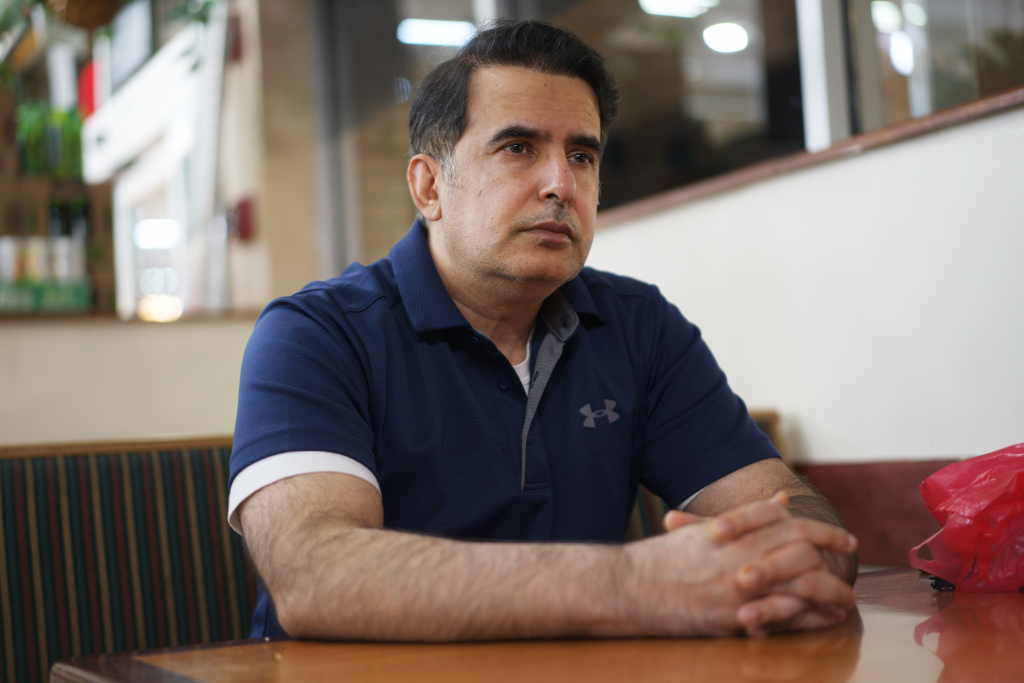
After most had left for home, Faisal Akhtar sat in a booth deciding whether to take leftovers. In Georgia for 13 years, and in the U.S. slightly more than half his life, the 50-year-old Pakistani telecommunications manager said he had been on the phone recently with friends living in the United Arab Emirates, Qatar and Saudi Arabia.
Iranian fighter planes had entered Qatari airspace several days earlier and were downed by Qatari pilots; the Gulf nation is home to the largest U.S. military base in the region. “My friends in Qatar were more concerned” than the other two countries about violence reaching their country, Akhtar said. His friends also noted they were seeing an “impact on daily life” due to a decrease in goods coming into their countries through the Strait of Hormuz.
As for Iran: “It’s an unfair situation for the people,” he said. Fakhtar, who is Sunni – the vast majority of Iran is Shia – added that “there is overwhelming support for Iran” among his Muslim friends.
Akhtar also worries about the impact of continued conflict. “It will have a huge human cost,” he said. “I really fear it will bankrupt our economy,” he added.
One economic effect has already been seen: with Iran making shipping oil through the Strait of Hormuz too risky, oil jumped to more than $100 a barrel Sunday, or “prices associated with recessions,” according to the Wall Street Journal.
Al Madina’s ownership and some of its employees—including Ali, the manager—are Palestinian; like many Palestinians, they have ties to Jordan, Gaza and the West Bank. Some spoke with me using only their first names, due to the controversy associated with Israel’s ongoing assault on Gaza.
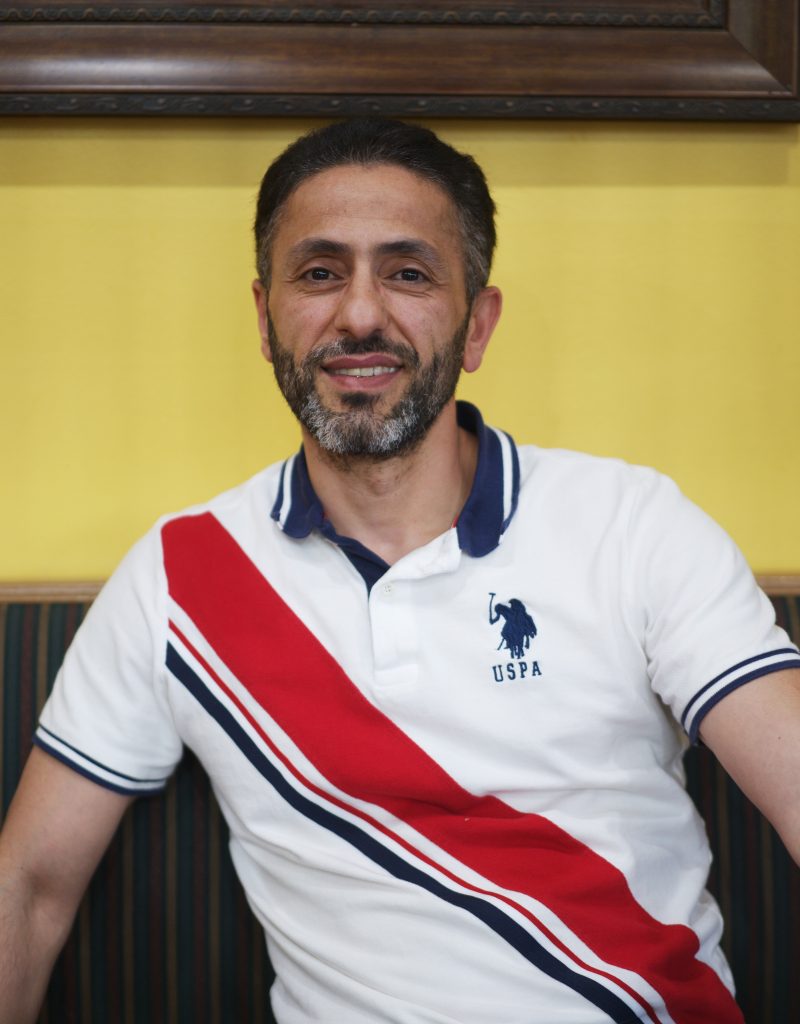
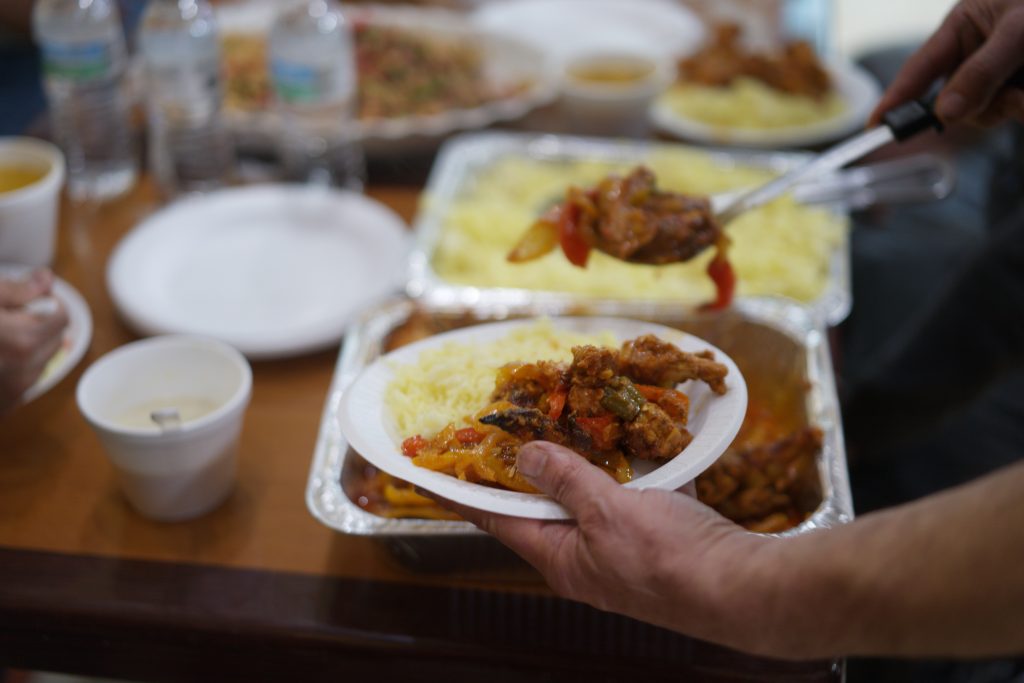
Right: Iftar, the meal following fasting during Ramadan, is served. (Jesse Pratt Lopéz)
Sam, who was busy most of the afternoon scooping out rice, chicken and lamb, edged over to a conversation that had started with Ali to point out that Israeli settlers were taking advantage of the current conflict to wreak more havoc on Palestinians in the West Bank. “I talk to my Mom, who lives in Nablus,” he said. “They’re burning houses, burning fields – more than before,” he said. “They’re choking us in the West Bank.”
Muhammad has been living in Georgia for 12 years. He’s a lawyer by training, but works at a car dealership here. He has family in the West Bank and Jerusalem, as well as friends in Jordan.
Muhammad said his sisters in Jerusalem have seen Iranian bombs land near their houses, only to find that Israeli authorities won’t let them take refuge in bomb shelters. They hide in their basement instead. “She looks Arab,” he explained.
His friends in Amman, Jordan, are scared, he added. “They see missiles going overhead. Their house is shaking, the bombs are falling.”
Several of those breaking their fast at Al Madina also pointed to the role Israel is playing in the war, and the changing views of people in the U.S. toward the country. A recent Gallup poll showed that a higher percentage of people surveyed felt sympathy toward Palestinians than Israelis in the ongoing conflict between the two, for example, for the first time in a quarter-century.
At the same time, they noted, political leadership doesn’t yet reflect this change. “Our government is infected with a cancer,” Alshammari said. “The only way to heal it is by us voters. The politicians supported by contributions from AIPAC”—the pro-Israel political action committee. “We have to vote them out.”
“I’ll tell you something,” Ali said, referring to the same issue. “The U.S. is a great country, with all the opportunities. But the leaders don’t listen to the people.”
Author

Related Articles
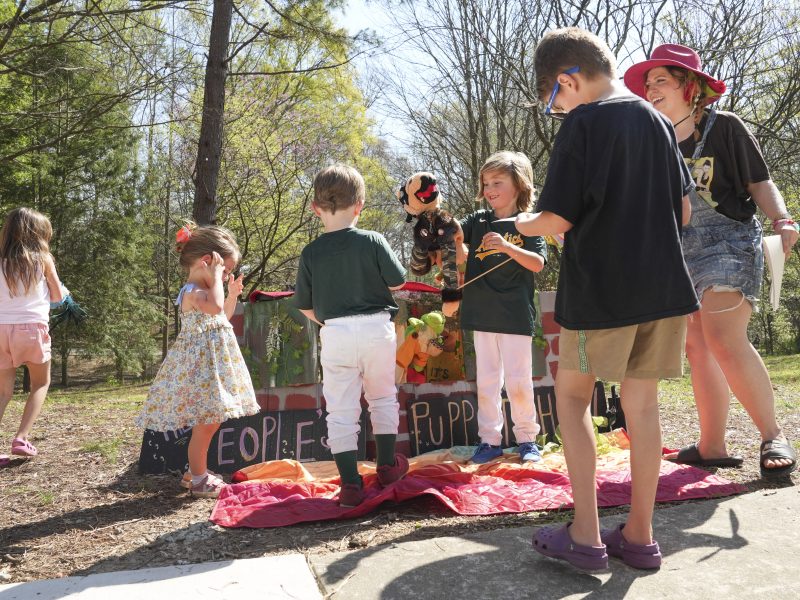
Melting ICE and other chilly topics for families: The People’s Puppet Show
A local organizer uses scenarios of colorful animal friends in conversation to help families break the ice on ICE every Saturday afternoon in Grant Park.
A Rohingya man in New York died under mysterious circumstances— his relatives in Georgia are grappling with the loss
Federal immigration officers left Nurul Amin Shah Alam outside a closed coffee shop in harsh winter weather— days later he was found dead. He was getting ready to move to Georgia, says his niece in Stone Mountain.