‘We still have to eat’: Communities respond to SNAP fund cuts
1.4 million Georgians face challenges feeding their families as the Trump administration cuts SNAP benefits. Atlanta community members are stepping up to fill the gap.
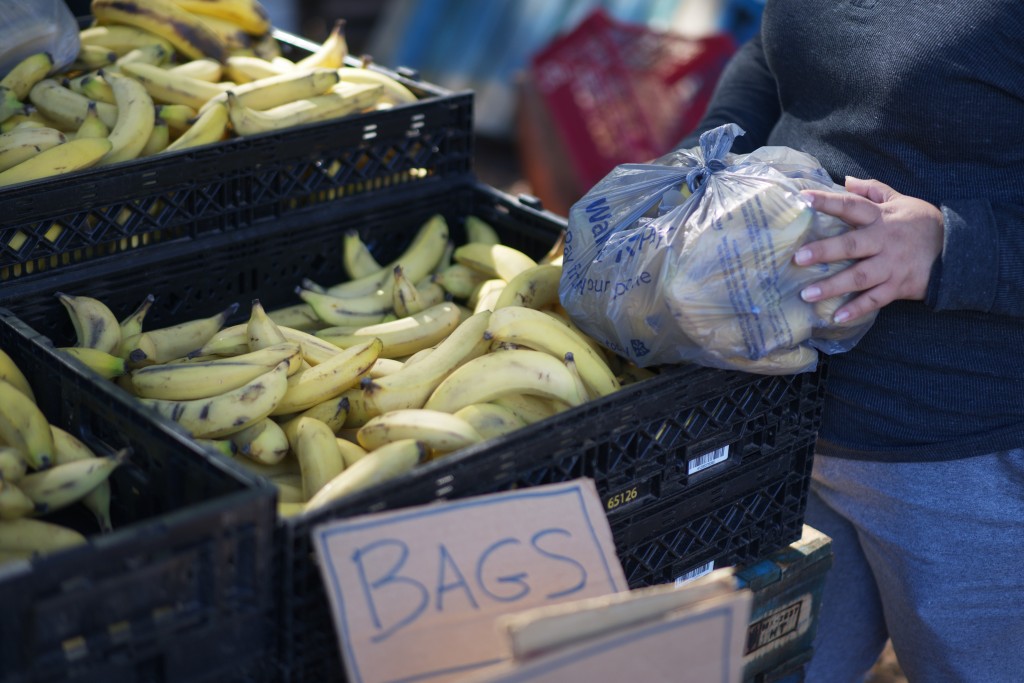
Chaiyoung got up early on the first of November with a plan to try and make up for the nearly $370 in monthly payments that hadn’t been loaded onto her EBT card from the federal program known as Supplemental Nutrition Assistance Program (SNAP).
She and 1.4 million Georgia residents depend on the program’s monthly payments to feed themselves and their families. The Trump administration stopped sending funds to SNAP on Saturday, having earlier attributed the decision to the ongoing government shutdown. While two Friday afternoon federal court orders directed the Trump administration to reverse the decision, they were too late to unblock the funds. Details on when and how millions across the nation will once again receive them remain unresolved.
Meanwhile, even though Chaiyoung had already worked a 40-hour week as a corrections officer for Forsyth County, finding a way to stock the refrigerator and pantry at her Ellenwood home was tops on the agenda Saturday. She’s a single mother of three children, two of whom have disabilities.
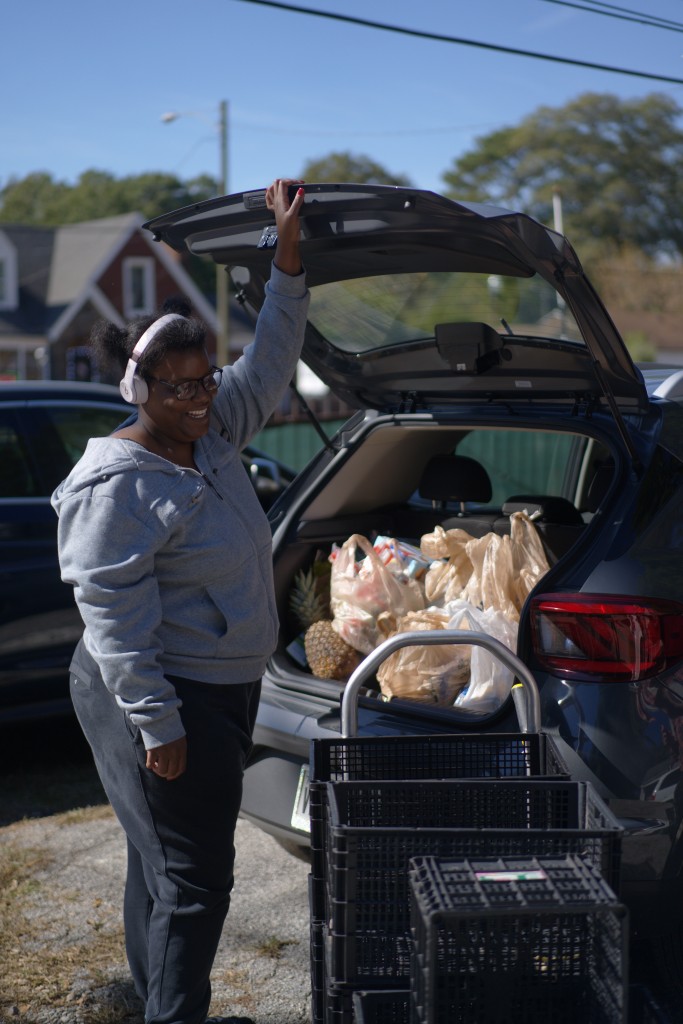
First stop: Tanners Baptist Church, where she was able to get some eggs and milk, as well as some jackets for her children for the coming winter.
Then, Chaiyoung–who didn’t want her last name used in a story about SNAP–drove 20 minutes north to a weekly event off Candler Rd. called the Food Commune, where volunteers pick up food that would otherwise be thrown away and sell it at reduced prices.
Chaiyoung said she found out about the open-air market from TikTok. Others mentioned Facebook and Instagram.
The church and market were two of dozens of community efforts available to SNAP recipients in recent days, including food banks, church giveaways, anarchist food distribution sites and an online application for emergency funds.
Near the Food Commune, on Friday, Mt. Welcome Baptist Church held a special drive-thru event giving away vegetables from the Atlanta Community Food Bank: eggplant, cucumber, cabbage, squash, corn and potatoes. The line to pick up bags of vegetables started an hour before volunteers were ready; about 100 cars came through, a volunteer told ACPC.
Our government isn’t coming to save any of us…That leaves it to us, as communities, to care for one another.
Dom Kelly
New Disabled South, an Atlanta-based nonprofit, posted an application online early last week for disabled people across the South, offering $100 and $250 payments to help cover the impending absence of food stamps. The organization had $10,000 set aside for the initiative. Nearly 19,000 applicants requested $4.1 million in funds before the application closed. New Disabled South raised about $75,000 more and continues seeking donations.
“We have learned a great deal from this effort,” said Dom Kelly, president of New Disabled South. “But I think the most significant thing that has become clear is that our government isn’t coming to save any of us…That leaves it to us, as communities, to care for one another.”
Several SNAP recipients out seeking food on Saturday said one place they didn’t find useful information online about the situation was the state’s website for the Department of Human Services (DHS)–the agency that administers the program in Georgia, also known as “food stamps.”
The website includes contradictory information.
For example, if the Trump administration doesn’t disbubrse SNAP funds to the states due to the federal shutdown now entering its second month, is any unspent money left in individual accounts from October still available after Nov. 1? The state’s website says yes on its landing page and in several other places: “Households may continue to redeem benefits issued to their electronic benefit transfer (EBT) card prior to Nov. 1.”
But elsewhere, the state’s website says no: “…based on current USDA guidance, cards will not work beginning November 1.”
ACPC asked the DHS about this apparent contradiction, as well as whether Gov. Brian Kemp had any plans to follow the examples of Connecticut, Guam, Louisiana, Virginia, and Vermont, which are using state funds to make up for some of the SNAP shortfall people are facing. The agency has not responded to ACPC’s query.
Kemp has resisted the entreaties of Democratic lawmakers, who want to use Georgia’s budget surplus of nearly $15 billion to address the situation. In the absence of a response from Kemp, Ruwa Romman, a Democratic candidate for governor in next year’s election and state legislator, has taken to social media to help direct people to existing food banks across the state. Romman has also mobilized 600 campaign volunteers in more than 40 counties to collect food donations.
“I think it’s important for people to see what leadership looks like in a time of crisis,” she told ACPC.
Back at the Food Commune Saturday afternoon, Elsa–who also didn’t want her last name used–had driven an hour southeast from Acworth. She works cleaning houses. With three children at home, Elsa had used the last of her $300 monthly SNAP benefits on Wednesday, after trying unsuccessfully to figure out from the state’s website if she could save some of October’s funds for this month. “I thought, ‘We need to find an alternative,’” she said, explaining how she wound up making the drive. She typically uses the funds to buy items such as cooking oil and vegetables; she was accompanied by her mother, Maria Guadalupe, who was also shopping.
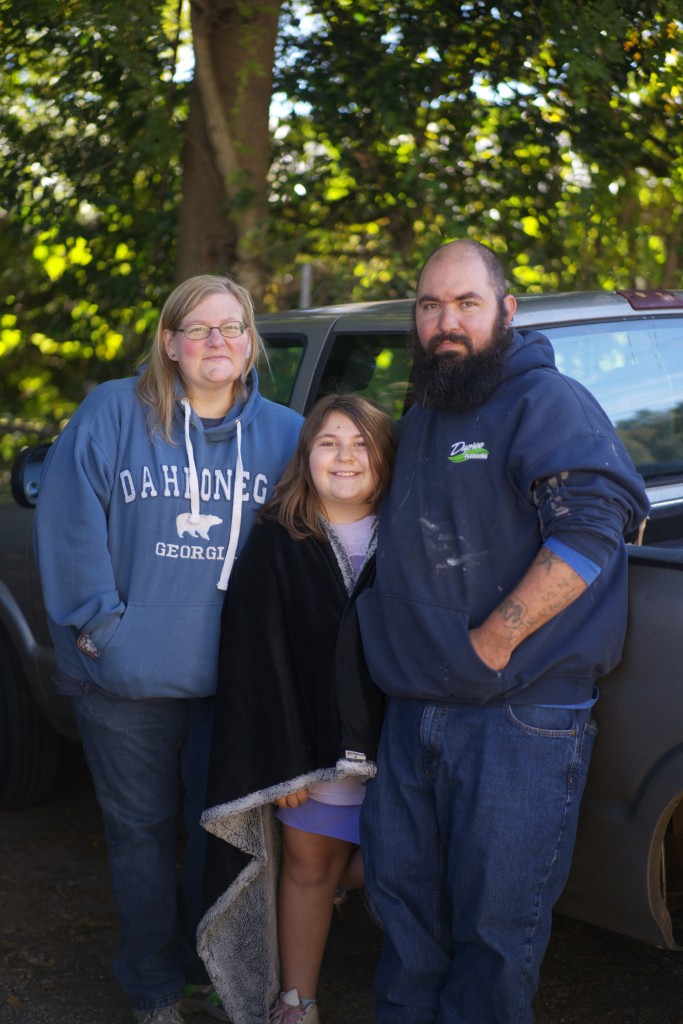
Nearby, Daniel and Amanda Blaylock loaded their pick-up with several boxes of food. The homesteaders had driven an hour-plus northeast from Hogansville. Daniela manages a Dollar General store. She worried over one of her employees, a single mother of two and a SNAP recipient who had already used October’s funds. “We’re praying they give her this month’s [benefits] soon,” she said.
Daniel works in maintenance at LaGrange College. Even with two salaries, the couple struggles to make ends meet, Daniel said. “Sometimes, it’s ‘Do we pay car insurance, or do we pay for food?’”
The hardships for SNAP recipients starting Saturday motivated Lara Hazzard to volunteer at the Food Commune. She works as a nanny for wealthy families and lives nearby. “The disparities become obvious when you live in a community that’s not wealthy,” she said, “[T]o me, hearing about the number of kids who would be affected by the SNAP cut—I was searching for something [to help].” Like others, Hazzard saw the Candler Rd. project on TikTok.
A few yards from where Hazzard was packing a risotto dish picked up from a movie set into used yogurt containers sat a cooler holding one thing Chaiyoung didn’t take home from the Food Commune—fish or meat.
“There was no ice keeping it cold, so I didn’t really want to take it,” she said.
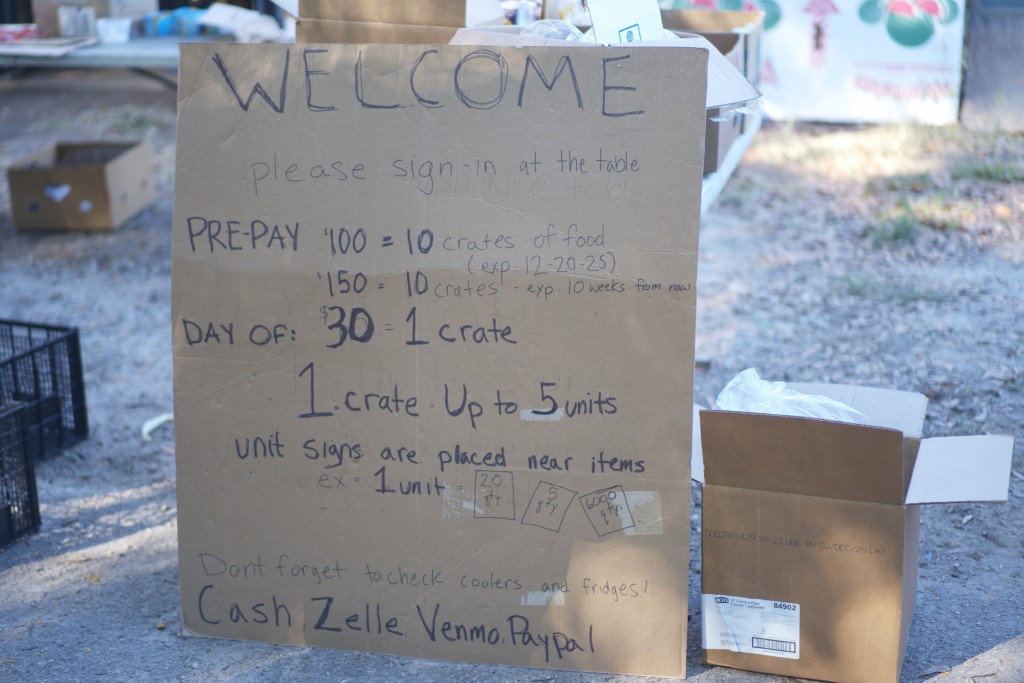
Pam Noud, Food Commune founder, said “things aren’t perfect” at the project and that she needed more volunteers to ensure that tasks are completed, such as leaving ice in the coolers where meat and fish are stored. “I hate the idea of anybody getting sick,” she said.
By late afternoon, more people had come through the project than at any time in recent months, according to sign-in sheets at a table staffed by volunteers.
Among the Food Commune customers was a 21-year-old woman carrying her month-old baby. The young mother and Georgia Power employee, who didn’t want her name appearing in a story, had recently been approved for SNAP benefits. She was supposed to receive her first payment of $350 on Saturday.
Like others, she’s unsure what’s next with SNAP. “Information’s not clear,” she said. “It’s a buncha hearsay. But we still have to eat.”
No paywall. No corporate sponsors. No corporate ownership.
Help keep it that way by becoming a monthly donor today.
Free news isn't cheap to make.
Author

Related Articles

Flock, Ring and Atlanta’s network of more than 28,000 integrated cameras haven’t improved city’s crime clearance rates
Despite an eightfold increase in the number of cameras integrated into the city’s Connect Atlanta surveillance program, crime clearance rates have not meaningfully increased, according to data collected by the FBI.

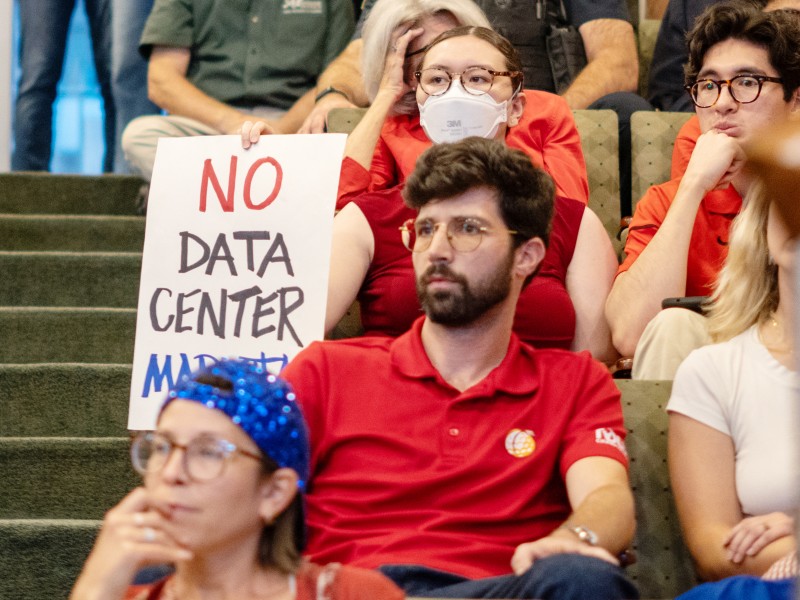
Marietta City Council tables approval of new data center
Inside and outside the walls of Marietta City Hall, residents and advocates confronted Marietta City Council members during Wednesday’s meeting with signs and chants to protest a proposed data center at 1155 Powers Ferry Place.

