
Opinion – Demographics are not destiny – Why People of Color turned towards Trump in record numbers
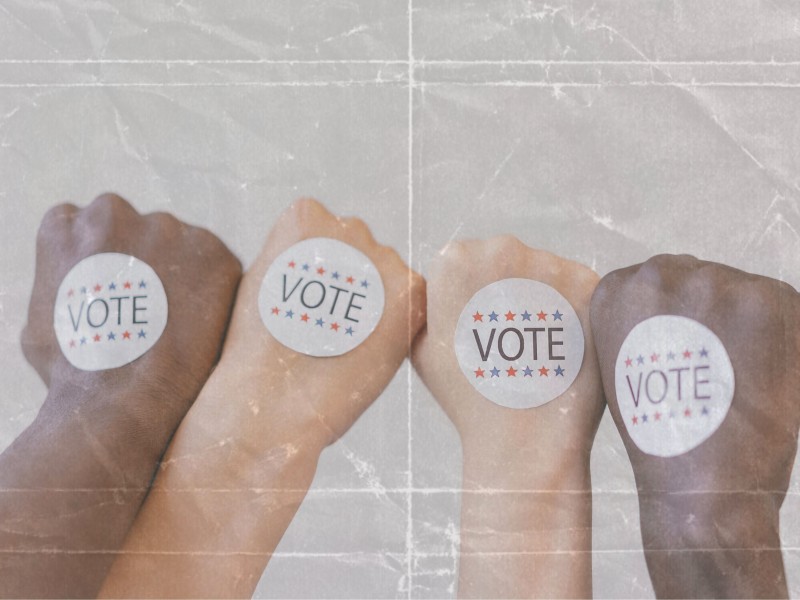
For years, experts have predicted an impending inflection point where people of color will make up the majority in the United States. Assumed to accompany this change in racial demographics is a change in political power; the majority of white Americans vote for the Republican Party, while the majority of people of color vote for the Democratic Party. For example, in the 2020 presidential election, while only 43% of white Americans voted for President Biden, 92% of Black Americans, 59% of Hispanic Americans, and 72% of Asian Americans cast their ballots for him. But fast forward to the 2024 election, and the Democratic Party is losing voters of color. The percentage of ballots cast for the Democratic presidential candidate in 2024 by Black, Hispanic, and Asian Americans fell to 85%, 52%, and 54% respectively. As these changes continue—and as the 2024 election reveals–diverse swing states like North Carolina, Georgia, and Nevada may not favor the Democratic Party the way pundits have been expecting.
Conservative ideology is reaching a cultural fever pitch: conservative podcasts dominate audience charts; Truth Social, Rumble, and other explicitly right-leaning social media platforms have risen in popularity; and Fox News continues as one of the most watched news programs in the country. The newfound coolness of conservatism can also be seen in youth voting trends, with Generation Z voting more for the Republican Party than their millennial counterparts. Conservatism is not only mainstream, but increasingly present in pop culture. As a result, every state except Washington shifted towards the right in the 2024 election.
Black voters have historically been loyal to the Democratic Party since the Civil Rights Movement caused a realignment in American politics. But since 2012, more and more Black voters have opted for the Republican Party. Conservatives joked during the 2024 election cycle that Black Americans supported Trump this past election cycle because his felonies and alleged targeting by the criminal legal system made him relatable. In reality, the top issues for Black voters—the economy, crime, and public safety—represent the issues Americans generally trust the Republican Party to excel in. Feeling taken for granted by the Democratic Party, Black voters are increasingly looking rightward for their political home.
Hispanic Americans have historically been the racial minority group most likely to support the Republican Party. The 2024 Trump campaign won the highest proportion of Hispanic voters seen in modern elections. But the truth is more complex than what the aggregated data on Hispanic voters would show. Approximately 60% of Mexican Americans and Puerto Ricans voted for Vice President Harris, but only 40% of Cuban Americans did the same. In addition to concerns about the economy, nearly a quarter of polled Hispanic voters reported concerns about immigration; while Harris was trusted more to reform the immigration process, Trump was trusted more to address border security at the southern border. As more and more Hispanic Americans subscribe to aspirational whiteness, or the desire to be viewed as white to avoid the harms of America’s racial caste system, Hispanic voting trends and political interests will become closer to the habits of white Americans.
Asian Americans are the fastest growing demographic in the United States. Out of the five largest Asian ethnicities in America—–Filipino, Indian, Korean, Chinese, and Vietnamese—–all traditionally favor the Democratic Party except Vietnamese Americans. In the run up to this year’s election, 67% of Asian Americans expressed disapproval of the Biden administration’s handling of inflation and the economy, and 77% expressed disapproval of the increasing number of migrants arriving at the southern border. And for some, acts by Democrats such as school closures during COVID and support for affirmative action at the alleged expense of Asian students alienated Asian voters from the left. As a result, Trump gained and Harris lost Asian American voters in the 2024 election.
A throughline for the increase in Republican voters of color can be summarized in one word: men. The 2024 election did not have as severe of a gender gap as anticipated, but men and women still demonstrated significantly different voting habits. Vice President Harris had a clear, at times double-digit lead amongst women voters throughout the campaign, and Trump had an advantage with men. An analysis of 10 key states revealed that in 2024, 91% of Black women and 60% of Hispanic women voted for Vice President Harris, compared to only 77% of Black men and 43% of Hispanic men.
The Republican Party’s stranglehold on Christianity also serves as a springboard for an increase to the number of republican voters of color. 71% of Black Americans and 64% of Hispanic Americans are Christian, with 41% of Black Americans and 15% of Hispanic Americans being evangelical Protestants. For Asian Americans, a plurality, or 34%, identify as Christian, with 10% being evangelical protestants. Republicans generally win 59% of the Protestant vote. Even though America is becoming less and less religious in general, conservatives continue to do aggressive outreach in religious spaces.
Georgia is ground zero for both demographic and political change. The state saw the largest increase in the country in Black voter population, going from 29% of the electorate in 2008 to 33% in 2024. The metro Atlanta area makes up 60% of the state’s electorate and has driven much of the state’s diversification, including a 2% decrease in the population of white Georgians since 2010. This explosive population growth and increased diversity allowed metro Atlanta to be one of the few areas of the country that shifted towards the left, not the right, during the 2024 election. But where President Biden won the state by approximately 10,000 votes in 2020, Vice President Harris lost in 2024 by over 100,000 votes.
People of color are often presumed to be Democrats based solely on their ethnic or racial identity. Reality resists these assumptions; while the majority of voters of color have historically voted for the Democratic Party, concerns over the economy and immigration, an increase in conservative outreach in religious and racially diverse spaces, and the political gender gap are driving more and more voters of color towards the Republican Party. The 2024 election should be a wake-up call to the Democratic Party and encourage them to campaign for—rather than assume—support from voters of color.

Nneka Ewulonu (they/them) is a civil rights attorney based out of Atlanta, Georgia. When not waxing poetically about the law, they enjoy college football, baking, and spending time with their partner and dogs. All views contained in Nneka’s writing represent them alone and not their employer or affiliated organizations.
No paywall. No corporate sponsors. No corporate ownership.
Help keep it that way by becoming a monthly donor today.
Free news isn't cheap to make.
Related Articles

Georgia House District 62: Outside PAC spending reshapes Democratic primary field
With no Republican on the ballot, Georgia House District 62 is set to be decided in a crowded Democratic primary—one now defined by heavy outside PAC spending tied to the sports betting industry.

6 challengers seek to fill empty seat in Georgia’s 13th Congressional District after Rep. David Scott’s death
Rep. David Scott had dominated his elections in this Democratic stronghold since the district first elected him in 2002.

Organizer Bentley Hudgins takes second crack at Georgia House District 90 seat
Veteran organizer Bentley Hudgins seeks a second chance at Georgia House District 90, pitching neighborhood investment and alternative approaches to public safety in a crowded Democratic primary.

