“I see the best and worst of humanity here:” Inside El Refugio and the Stewart ICE Detention Center
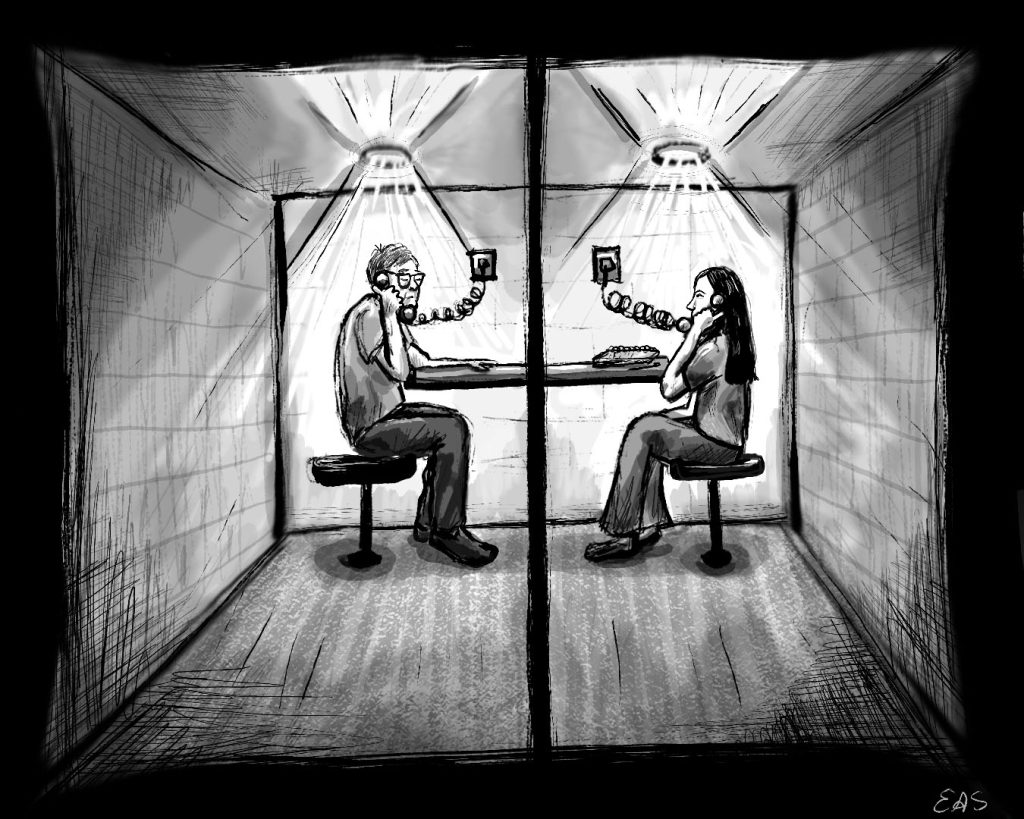
A short, bespectacled Asian man with a shock of salt and pepper hair enters the room, separated from me by a pane of glass. I walk over, pick up the phone and introduce myself in Mandarin.
I can tell he’s a long way from home.
At first, our conversation is stilted and awkward. The crummy landlines exacerbate my rusty Mandarin, making it difficult for me to get my point across. I practically have to yell to be heard; for a minute, it feels like someone swapped the receiver with a tin can when I wasn’t looking.
Finally, after a few minutes of garbled shouting, we’re able to make some headway. I ask what part of China he’s from, how long he’s been inside the Stewart Detention Center and how he came to the U.S.
At the time of publication, he’s been detained for over a year.
Yi Hui Xu had his last court hearing in March 2025. He hasn’t heard anything since. He says he just wants to go home, but Immigration and Customs Enforcement (ICE) won’t let him. Maybe because he called them the Gestapo to their faces, he jokes. He looks exhausted.
I didn’t drive down to Stewart County to see Xu. I’d come to volunteer and tell the story of the organization that brought him and me together.
The origins of El Refugio
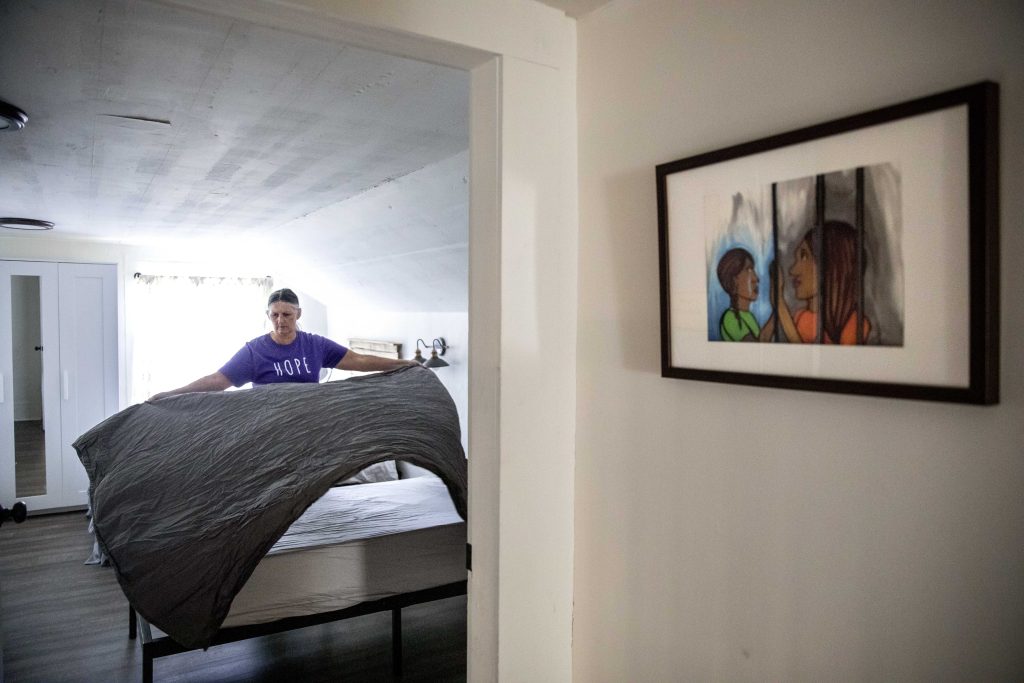
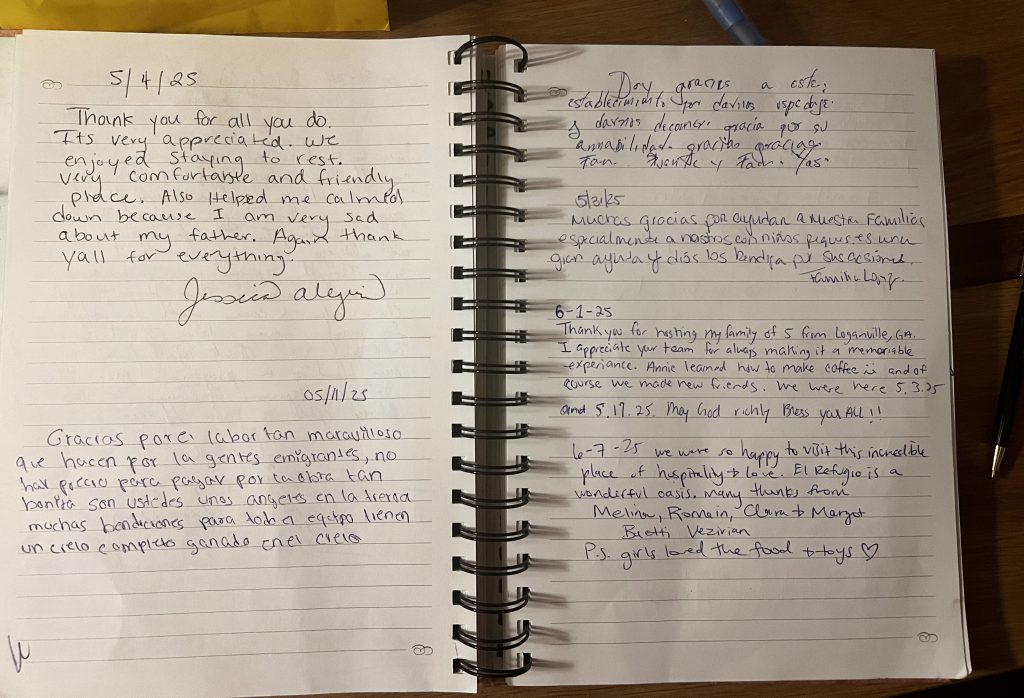
In the town of Lumpkin, Georgia, a couple of miles from the Stewart Detention Center, sits the hospitality house, El Refugio. The house is owned by El Refugio Ministries, whose mission is to advocate for and support people detained at Stewart and their loved ones.
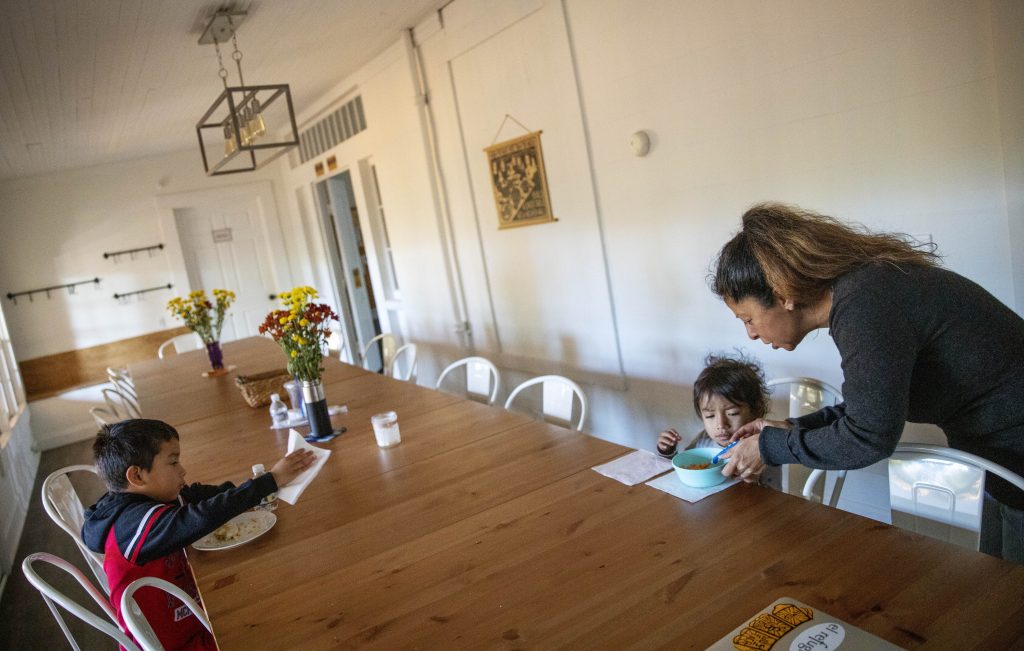
Every weekend, volunteers from across the Southeast gather at the house to cook meals, provide childcare and offer a listening ear for families visiting detained loved ones at Stewart. The volunteers also visit Stewart to support those detained far from family and those who have no other visitors, like Xu.
No paywall. No corporate sponsors. No corporate ownership.
Help keep it that way by becoming a monthly donor today.
Free news isn’t cheap to make.
Marilyn McGinnis, Anton Flores and others founded El Refugio in 2010. McGinnis told me that the project began as a way to address the significant strain that visiting people detained in Stewart often put on families.
Flores came up with the idea after several years of visiting people detained in Stewart and organizing larger groups to do the same. He saw the town lacked the resources to support the families who came to Lumpkin to visit their loved ones in detention.
Lumpkin had a population of 891 in the 2020 Census. It’s a town with only a single traffic light and no hotels.
“It just was a very unwelcoming place for people who had traveled many hours to come here for their one hour a week visit,” McGinnis said.
Stewart’s visitation policy offers families a meager hour-long visit with their detained loved ones each week.
Visitation weeks start on Sundays. Flores figured out that if El Refugio could offer a place to stay on Saturday nights, families could make the most of their visits and see their loved ones on both Saturday and Sunday.
According to Amilcar Valencia, El Refugio’s executive director, between 10 and 12 families visit the house each week, totaling anywhere from 30 to 60 people. Typically, there are six to 10 volunteers on-site to assist with the families’ needs.
Arriving at the house
I spent a good chunk of the past year editing stories on immigration, often about Stewart. Sitting and reading these stories at my desk offers a strange sense of simultaneous intimacy and removal. I often want to participate—to help—in some way, but am detached from the action. As a child of immigrants myself, I felt that going to El Refugio would be a chance to step out from behind the screen and directly support my community.
My plan was to serve as a volunteer like any other, talk to some of the families visiting loved ones and learn more about how organizers and community members are standing up to the current administration.
After parking in El Refugio’s gravel lot, I make a confused attempt at knocking on the screen door. I’m greeted by Rebecca May, one of the volunteers for the weekend. She offers me pancakes before giving me a tour of the house and showing me where I’ll be sleeping. As we climb the stairs, she asks a passing family if they’d like any pancakes, too, and jokes that she’s like a pushy abuela—constantly nagging everyone to eat.
The room I’m staying in is modestly lit; the sun peeks shyly through gauzy curtains. Four twin-sized beds, neatly made, sit quietly, waiting to accommodate volunteers. I notice racks of shoes along the wall closest to the door. Each pair has its size written on a piece of masking tape attached to the heel. Nearby sit tubs of folded clothes for families who don’t meet the Stewart dress code. Shorts, tank tops and short dresses are prohibited, and those who fail to meet the dress code are turned away. Were it not for El Refugio, families who traveled from out of town would have to buy new clothes from the neighboring Dollar Tree or make the hours-long drive back home without even seeing their loved ones because they wore the wrong clothes.
About 15 minutes later, I head back downstairs and see two more families have arrived. They help volunteers make eggs and more pancakes. I do what I can to tidy up the kitchen before realizing the most helpful thing for me to be is out of their way.
Two little girls, Aaliyah and Yaretzi, pass by wearing pink and blue dresses. I joke with them, complimenting their outfits, earning bashful smiles in return.
I strike up a conversation with Lanni, another volunteer.
She’s an ordained minister and trauma therapist who has been hosting asylum seekers in her house since 2021 after meeting representatives of Team Libertad, an Atlanta-based immigrant advocacy organization, at her church.
ICE raided her home a few weeks earlier and took one of the men she was hosting; they entered without a warrant and forced him out of the house in handcuffs. Lanni says he didn’t even have time to finish putting on his shirt.
Our conversation ends when May calls me in from the other room. She asks if I speak any other languages, to which I reply that I know conversational Mandarin. She then asks if I’d like to visit a Mandarin-speaker in Stewart. I nod, and she gives me a note card with a name and A number—a unique numerical identifier assigned to migrants by the U.S. Department of Homeland Security.
May asks one of the other volunteers to accompany me before telling us that we can’t bring anything other than our IDs and the note card. She encourages us to tell the other families who may be sitting in the Stewart waiting room about El Refugio. We check to make sure we’ll pass the dress code and make the five-minute drive to the detention center.
Inside Stewart
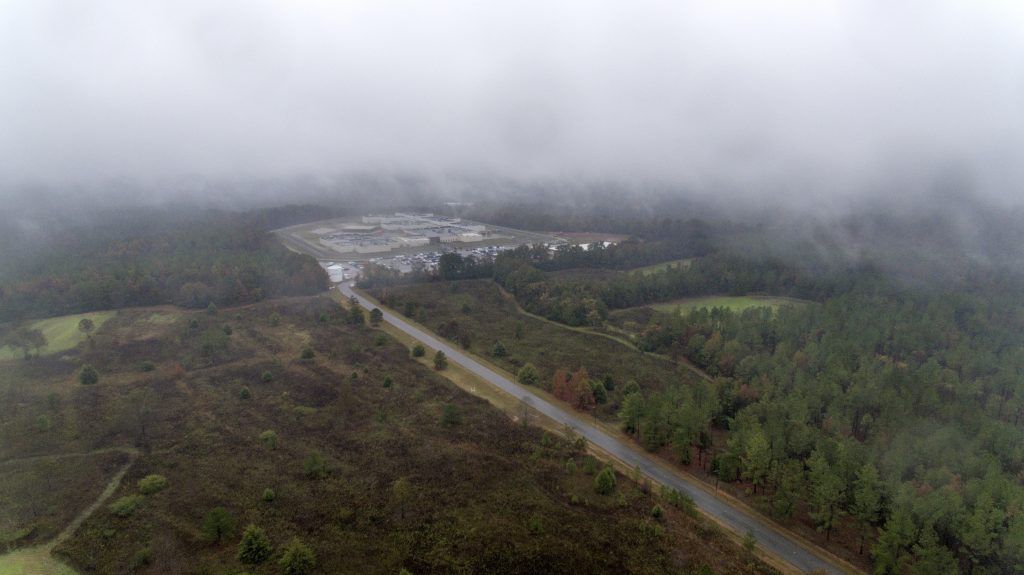
Stewart is tucked away on a side road off of Lumpkin’s main drag, which is really more of a glorified outdoor hallway than a street. You can’t make out the enormity of the campus from the parking lot, but my breath catches anyway. I feel like we’re at the foot of a hungry giant. Stewart has a capacity of over 1,966, over twice the population of the nearby town. In 2022, the average daily population was 1,088, according to a Homeland Security Office of Inspector General report. The entrance to the building is barred by two security gates that take an agonizing amount of time to open.
Once through, we’re greeted by chaos in the lobby. The guard behind the counter is a short, sardonic middle-aged Latine woman, clearly flustered from trying to keep IDs, forms and sign-in sheets straight. Families huddle around, confused and disoriented.
I’m thankful May asked a volunteer to join me. Had I not been there with someone who’d already been through this process before, I wouldn’t have known what to do.
May had told us we could expect the staff to give us a visitation appointment time; the guard checking us in offers no such thing.
She does, however, ask if we’re with El Refugio; we nod. She tells us to take a seat in the waiting area, which is really just a few rows of chairs nearby.
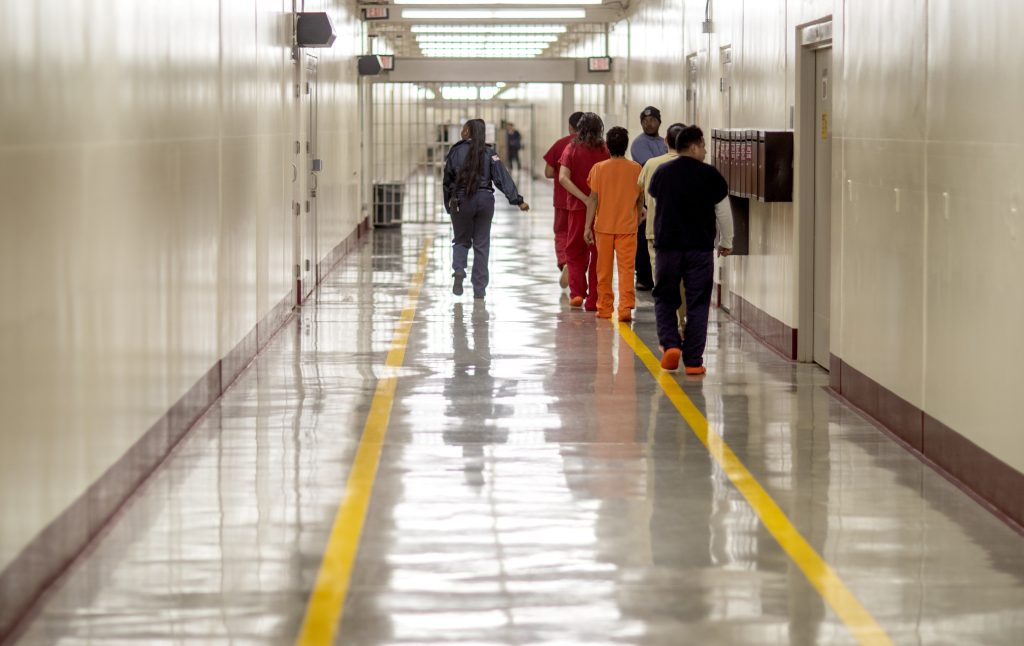
The lobby is too small to accommodate the 20 or so people waiting; many are standing or hanging out outside. One family has an adorable curly-haired toddler whom they take turns entertaining. He’s remarkably patient and jovial, and watching him waddle around is a welcome source of cheer for all of us. But after several hours, the boy’s patience wears thin and his parents escort him outside and back to the car for a break and some snacks.
There’s no bathroom in the lobby, so some of the families group together and ask to be taken to the restroom inside. Their request is granted, but only after each person undergoes a security screening.
As more families arrive, I hear the guard tell them to stop by El Refugio. She gestures in our direction, and says to talk to us if they have questions.
McGinnis says that early on, El Refugio’s relationship with the Stewart guards was adversarial. After a few years, they began to soften, even sending people to the house and, at times, working with them. But recently, the pendulum has started to swing back.
The guards are stressed and overworked, McGinnis says.
A new guard comes to relieve the current one; she is agitated and loudly complains about the first guard. Tensions in the room rise; we’re all exhausted from waiting, and seeing this guard rant to no one in particular isn’t helping. I watch as the new guard almost loses one visitor’s ID, holding up IDs of people who look nothing like him and asking if they’re his.
As we wait, the other volunteer and I talk to each family about El Refugio. One family asks for the address, but all I have is the notecard with Xu’s A number. I rip it in half so that I can write the address down. A father tells us we’re saints.
A guard tells one of the men, who’s wearing sandals, that he needs to have close-toed shoes on in order to be let into the facility. I encourage him to stop by and take advantage of the shoe racks at El Refugio.
After three hours of waiting and repeatedly asking what time we could expect our visitation, we’re finally told it would be about an hour. A cloud of exhaustion hangs over the room; conversations have ceased. Families gather quietly together, trying to stay patient for the remaining hour. An unaccompanied man is crying on the stone bench outside.
We decide to head back to the house to take a breather, grab some snacks and come back.
We arrive back at Stewart just as our names are called. We are hustled into the phone room, alongside the man who was dress-coded by the guard earlier—still wearing sandals. I am finally allowed to speak with Xu.
My friend Xu
Xu is in his early to mid-fifties and has been detained at Stewart since December of 2024. He’s hesitant to tell me about the details of his arrival and arrest, but says that he passed through 14 different countries on his journey here and has extensive video footage of his travels. When I ask him why he came to America, he answers, effectively, that it just seemed like the thing to do at the time.
He has been willing to self-deport ever since his arrest, and was issued a removal order months ago. As part of the deportation process, detained people are supposed to be assigned a deportation officer, but he says it’s been radio silence since his last court appearance in March. He hasn’t had many visits from anyone aside from myself, a few lawyers and a previous El Refugio volunteer.
Xu tells me he hasn’t been able to contact his family since being detained. He asks if I can make international calls, and when I affirm I can, tells me that he’ll give me his father’s phone number so that I can “bao ge ping an”—report that he’s alive and safe, albeit in detention.
As of April 2025, researchers estimated Stewart’s average daily population has increased to nearly 2,200—nearly double what it was three years ago.
“CoreCivic is paid per diem based on how many people are in Stewart that day,” May explained. “The more people are there, the more money they make, so they keep people there as long as they can.”
He tells me that he never expected to have this much trouble in America. He thought America was supposed to be a shining pillar of democracy, not a place where people slip through the cracks and rot for months in prison. He believes that the U.S. is now like Nazi Germany.
The room gets progressively louder as families laugh and swap stories. Xu tells me it’s getting increasingly hard to hear what I’m saying over the handset. I try everything; I repeat myself, over-enunciating each word, miming what I’m saying, but to no avail. Eventually, our time runs out. I promise to stay in touch, but am unsure if he can hear me. He smiles sadly, and is led away by the guard.
Turning grief into power
After I return to El Refugio, I’m greeted by Aaliyah and Yaretzi, the sisters I joked with earlier. They each hold an Elf on the Shelf from El Refugio’s toy room. While I was gone, their mom made chicken tinga. It smells tantalizing, and I help myself to a plate before going on the porch to play with the girls.
We spend the rest of the night jump-roping, playing limbo and making believe. It’s a welcome distraction from the suffering I just bore witness to—families torn apart, babies waiting for hours in mothers’ arms for a chance to see their loved ones. The sisters came with their mother to visit their father who has been detained for 6 weeks. Their mom drove in from out of state, so I get as much of the girl’s energy out as possible so she can have a quiet evening before bed.
When I come downstairs in the morning, I’m told the girls were looking for me. I find them playing in the yard, along with two other kids from a family that just arrived. I grab my laptop and sit on the porch, working and keeping an eye on them. Before long, the sisters sit down on either side of me and ask what I’m doing. I explain that I’m a journalist and that I’m writing a story about my experiences at El Refugio. They ask to be in my story, a request I happily grant.
They take turns pretending to type on my laptop. They insist I write that they love their elves very much.
Yaretzi asks me why there are people detained in Stewart. I struggle to answer her; how can I explain the complex immigration and detention machinery that ripped her father away from her in a way she’ll understand? I want to give her hope and say that her dad will be out soon, but I have no way of knowing. Everything is so uncertain, and I feel helpless in the face of her innocent question.
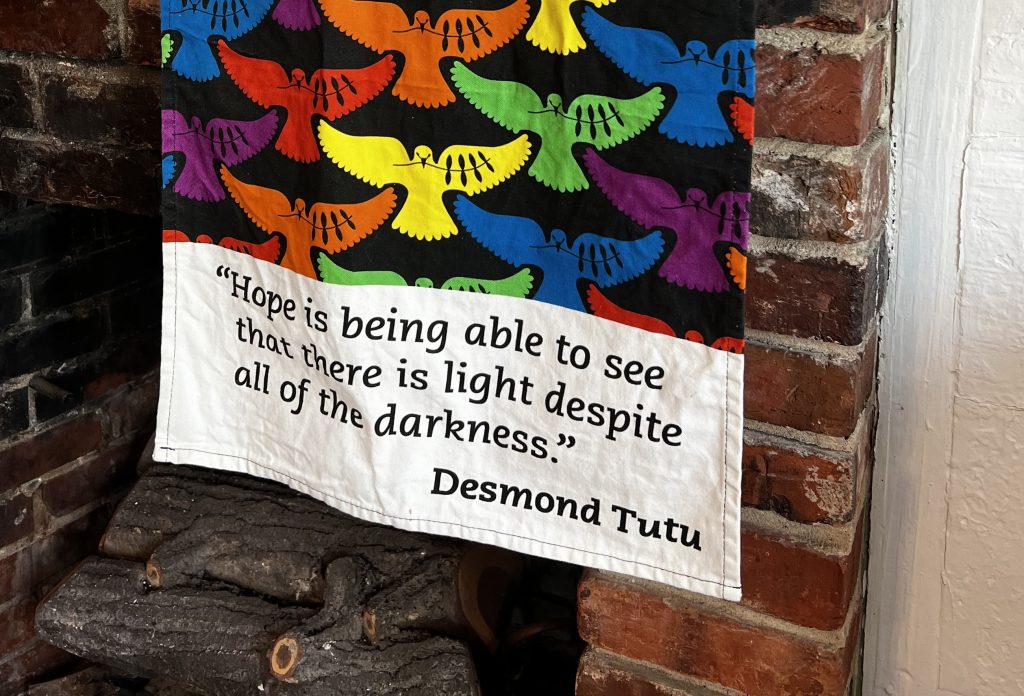
“It’s easy to become complacent with this sort of work, either because we feel powerless or because it’s heavy, emotionally and mentally. But it’s really important that we not lose hope and that we not give up. It’s really important that we do whatever we can,” says May.
For those hoping to get involved, Valencia says that, while volunteers and donations are critical, he urges community members to write to their members of Congress. He says there have been reports of inhumanity about the conditions inside Stewart, and wants as many people as possible to contact their legislators, do unscheduled visits to Stewart and hold CoreCivic and ICE accountable. On February 13, 2026, Georgia lawmakers visited Stewart after a man in detention reported unsafe conditions.
“I would recommend that anyone can either come to El Refugio to do a visit—hang out at the hospitality house or donate a dollar or two when you can—because it really makes more of a difference than we can imagine.” El Refugio offers a chance to experience “the best and the worst of humanity here,” says May. “All in one space.”
A few weeks after my El Refugio visit, I call Xu’s parents in China to let them know his whereabouts and that he’s safe. His 90-year-old dad picks up and seems in disbelief. He asks me multiple times to repeat what state Xu is being held in and why he’s in detention. He tells me that Xu’s mother is bedridden and has been since before Xu left for America. He wants to know why Xu decided to come to the States in the first place—a question I am unable to answer.
We hang up, and I’m left feeling empty. His parents’ reaction struck me as a little odd, but I’m sure that anyone who hadn’t heard from their son in almost a year would be surprised to find out that he’s alive and being held in a detention center halfway across the world.
Like many other detained people, Xu works in Stewart. He spends his hard-earned commissary money on phone calls to me every week. In these calls, he often repeats himself, asking the same questions with slightly different verbiage. I can tell he wants to be absolutely certain of what I’m saying. I am one of a few of his advocates on the outside, and, I suspect, the only person he can speak Mandarin with.
Our calls are typically no-nonsense conversations. One week, when I had a cold, he offered me ideas for some old Chinese home remedies that my mom used to give me as a child, with mixed results. Though I admittedly don’t know much about him, I feel a sense of kinship.
We talk about his struggle to figure out how to file a habeas petition—a legal tool immigrants in the U.S. can use to challenge their detention. He asks whether I think he’ll be able to go home soon. He wants to know how to get out of Stewart and how to survive a system that has no interest in letting him go.
Author

Related Articles
A Rohingya man in New York died under mysterious circumstances— his relatives in Georgia are grappling with the loss
Federal immigration officers left Nurul Amin Shah Alam outside a closed coffee shop in harsh winter weather— days later he was found dead. He was getting ready to move to Georgia, says his niece in Stone Mountain.