Georgia law students say “Hell no” to ICE recruiting at interscholastic career fair
Hundreds of students and dozens of organizations across Georgia’s five major law schools demand ICE be uninvited to the schools’ Public Sector Career Fair this Friday.
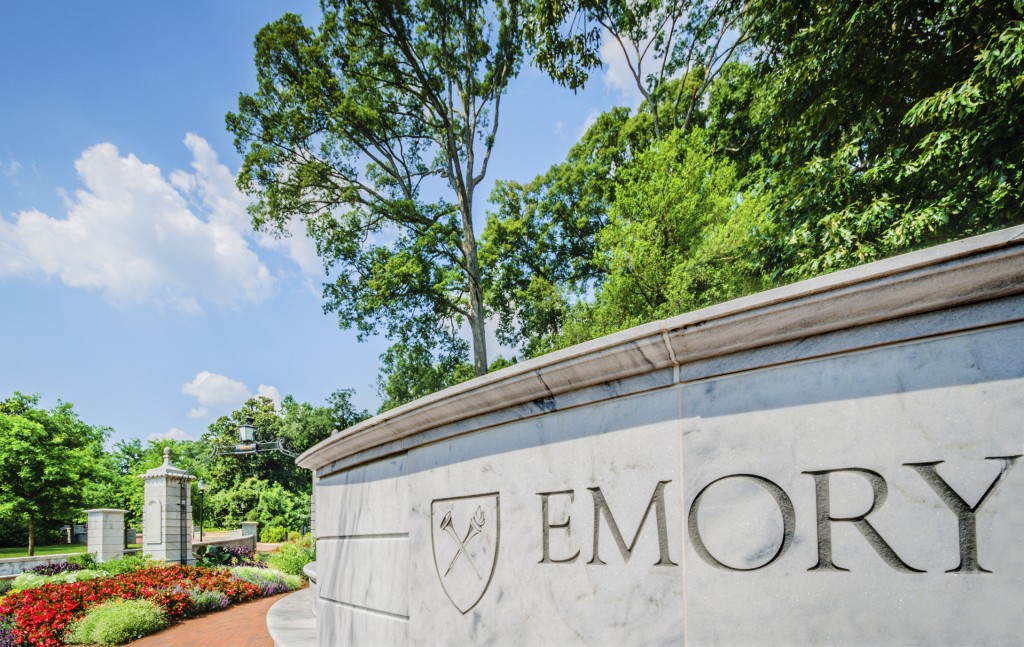
Students at Georgia’s five American Bar Association-accredited law schools are elevating last year’s protest of Immigration & Customs Enforcement (ICE) in the schools’ Public Sector Career Fair.
Amid ICE killings and abductions, Atlanta organizers see unprecedented public outcry at all levels. That includes outrage about ICE hiring at this Fair, where governments and nonprofits virtually interview Georgia’s law students for internships and jobs.
“We saw last year they were hiring,” said Sam, a third-year Emory University School of Law student on Emory’s National Lawyers Guild board. “Students were pissed because pretty much every federal internship suddenly was cut, except ICE was hiring a ton of spots at the job fair. We were like, ‘Hell no, that’s not cool!’”
More than 20 Emory student organizations sent their dean a protest letter last year, to no meaningful response, inspiring a stronger push this year, Sam said. For the Fair this Friday, Sam estimates 500 students and more than 60 student organizations signed a petition demanding ICE’s removal. These aspiring lawyers have united across Emory, Atlanta’s John Marshall Law School, Georgia State University, University of Georgia and Mercer University.
The five schools comprise the Georgia Law School Consortium, which hosts the fair but operates hazily, Sam and others said.
“Decisions are made in an opaque manner,” GSU second-year law student Jackson Deakin said. “I don’t know if much thought goes into the decision for who gets to participate, beyond the fact that this is a government legal position looking for interns.”
None of the law schools or ICE responded to Atlanta Community Press Collective requests for comment. Sam said the Office of the Principal Legal Adviser (OPLA) would recruit 16 law students at the fair via online interviews. On its website, OPLA says it’s “the largest legal program in DHS (Department of Homeland Security), with more than 1,700 attorneys and nearly 300 support personnel.” For ICE, OPLA lists services including counsel, representation, supporting Department of Justice prosecution of ICE cases and defense of ICE’s authorities in federal court. In Georgia, OPLA has two offices in Atlanta and one at ICE’s embroiled Stewart County Detention Facility.
Law school administrations loiter amid students’ outcry
The quick cohesion of myriad students and organizations reflects the abnormality in ICE’s escalated violence, Sam said: broad outrage among usually conservative-leaning law student bodies on a charged issue in historically conservative Georgia is special. He hopes, like at NYU and Georgetown law schools amid a nationwide push, students pressure ICE’s withdrawal from the event.
But having seen the Emory administration’s rapid escalation to riot police during May 2024’s national campus protests of the Gaza genocide—while other university administrations opened dialogues with students—he expects more unsatisfactory responses.
No paywall. No corporate sponsors. No corporate ownership.
Help keep it that way by becoming a monthly donor today.
Free news isn’t cheap to make.
“Organizations, nonprofits don’t want to see their names next to ICE, recruiting the same people,” Sam said. “It does make people feel unsafe.”
That includes immigrant advocacy groups, and local governments encompassing most participating employers wouldn’t like such consternation around the fair either, he said. The students therefore asked all invited employers to demand ICE’s ban.
“Placing ICE alongside legal aid organizations, public defenders and civil rights groups reframes enforcement and detention as ‘service,’” third-year John Marshall students Jennan Moughrabi, Alyssa Massey and Thomas Proenza said in a joint statement. “By legitimizing agencies that cage and abuse people, they make an active choice about whose safety matters, and instead of standing up for their own students and communities, they continue to provide these agencies with credibility and space.”
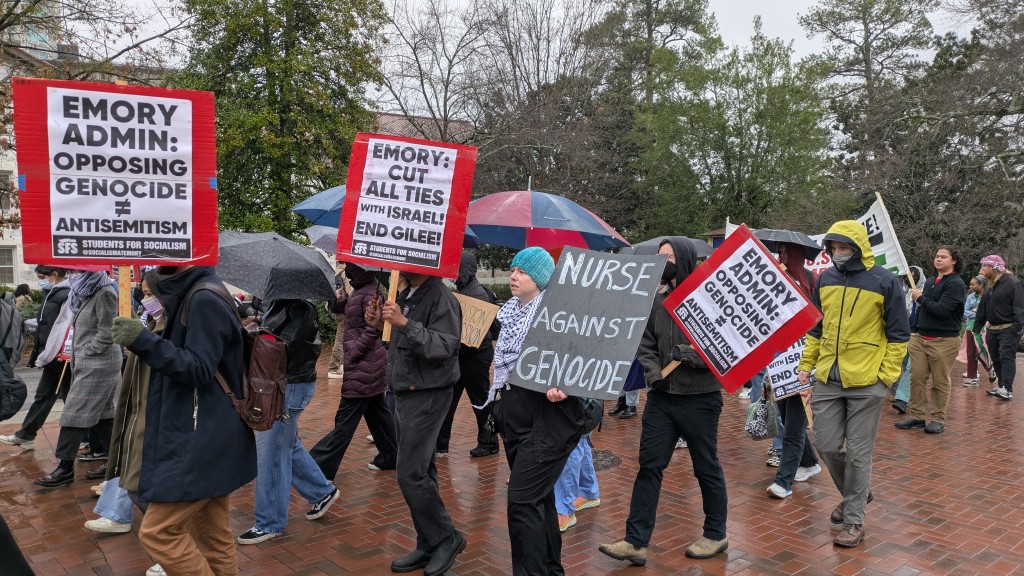
Deakin said similar sentiments are overwhelming within his organizations—though some students worry about jeopardizing career opportunities. Likewise, in conversations with GSU’s staff over several weeks, it broadly supported students’ desire to protest but not the school taking a stance, Deakin said.
Sam said Emory students sent a letter on Feb. 17 to Dean of Emory Law Richard Freer, Assistant Dean for Career Development Natasha Patel and the Emory Career Center’s public interest staff, demanding a meeting.
“On Thursday evening, we got an email back from Dean Freer,” Sam said. “Basically saying Emory can’t do anything, which seems like hogwash and they’re just kicking the can down the road, because if Emory were to actually raise an objection, it would trigger conversation. He commended our advocacy and said other people think the other way and that ICE should be welcome.”
The John Marshall trio said numerous John Marshall students and organizations oppose ICE’s invitation as a discrepancy with institutional values.
“Atlanta’s John Marshall Law School prides itself as a school which provides a gateway to legal education for communities who are typically not able to access it, and in training lawyers to represent people who are typically not afforded high-quality representation,” they said. “It is about the contradiction of our schools claiming to advance justice … while giving support and platforms to an agency that has done nothing but separate families, destabilize communities and repeatedly act with impunity on the other, including against the very students and community members these institutions claim to serve.”
Like Sam, they referenced a broader movement challenging legal powers’ legitimization of state violence and agencies brazenly violating the law, which Deakin emphasized as a longstanding pattern for ICE.
“They’ve killed numerous American citizens and our brothers and sisters who are undocumented,” Deakin said. “This has been going on for more than just the last couple of months. One of the ways we have to hold them accountable is through legal work. That has to start here, but it certainly can’t end here.”
Related Articles
A Rohingya man in New York died under mysterious circumstances— his relatives in Georgia are grappling with the loss
Federal immigration officers left Nurul Amin Shah Alam outside a closed coffee shop in harsh winter weather— days later he was found dead. He was getting ready to move to Georgia, says his niece in Stone Mountain.