ICE ramps up spending for weapons and training center in Columbus
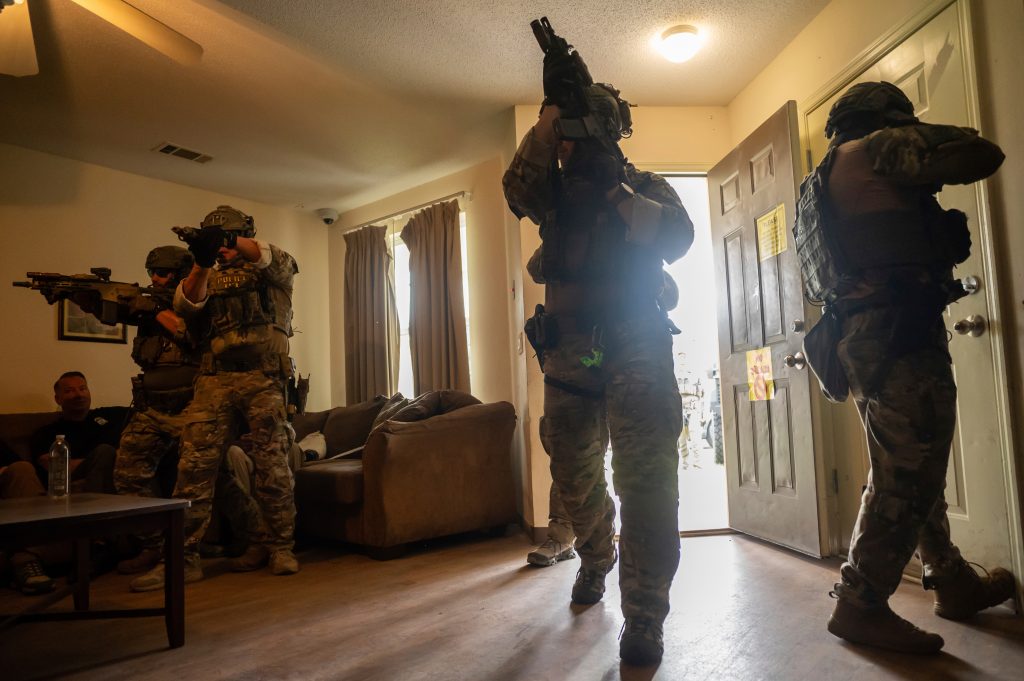
$30 million for soft body armor kits. $15 million for ballistic helmets. $7.8 million for tasers and cartridges. $1.7 million for Glocks, magazines and other accessories. $313,000 for less-lethal weapons. $77,000 for a mini-caliber tactical robot.
These were among the deliveries made to U.S. Immigration and Customs Enforcement’s Office of Firearms and Tactical Programs (OFTP) at the Fort Benning military base in Columbus, Georgia in 2025.
In the years since ICE began building a training unit on the military base in 2019, at least 5,000 agents have undergone “specialized firearms and tactical training” by the OFTP, according to ICE’s annual reports.
The OFTP is also responsible for “all equipment, support, use of force policy development, and guidance to promote officer and public safety.”
Procurement contracts reflect a stark increase in spending by the OFTP. In the past year, the office spent more than $160 million on purchases of weapons, ammunition and other equipment, which is triple the average amount of money spent annually between 2019 and 2024.
At least $10 million dollars were allocated for training purposes—three million more than the average annual spending since 2019.
The courses at Fort Benning, as described in government contracts, include “sniper training,” “academy classes,” “tactical emergency medical service,” “reduced hazard training,” “method of entry training,” “pistol and rifle professional development” and “drone training.”
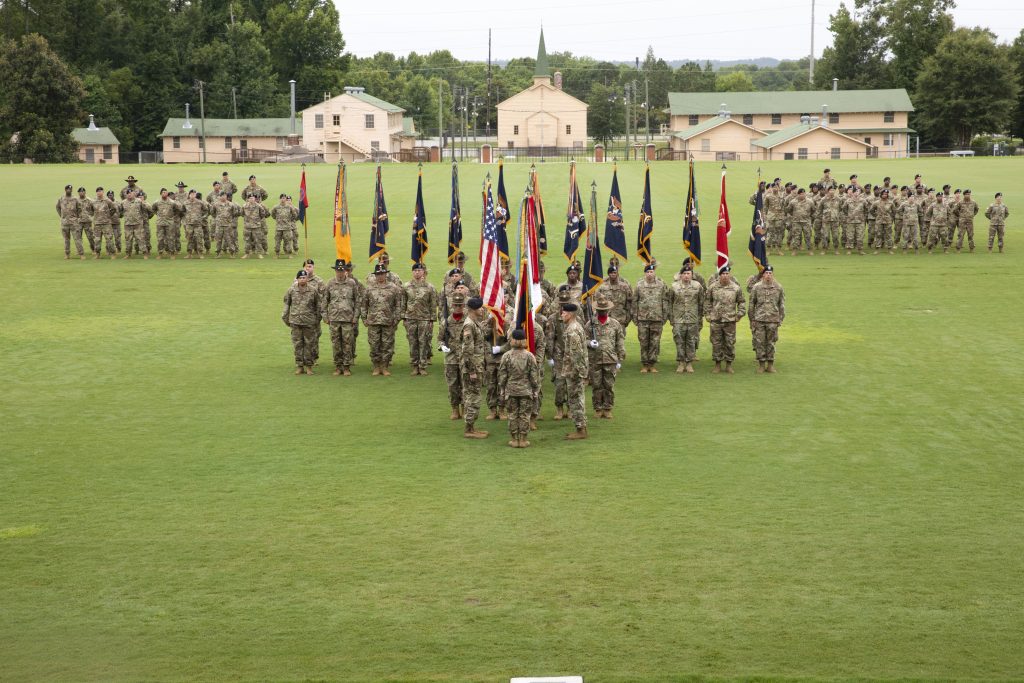
These courses likely make use of the OFTP’s Advanced Training and Operations Center on the military base, which covers over sixty acres of land and was completed in 2024, according to an annual report.
“It’s terrifying to know that ‘blue-dot’ Columbus could be ground zero for all of the things we’re seeing in the headlines happening in these larger cities like Chicago, Charlotte, New York and New Orleans,” said Monica Whatley, an organizer with Columbus’ Indivisible coalition.
No paywall. No corporate sponsors. No corporate ownership.
Help keep it that way by becoming a monthly donor today.
Free news isn’t cheap to make.
ICE is currently under pressure to find new recruits to execute President Donald Trump’s mass deportation goal, and fast—in October, the administration announced that it would onboard 10,000 new officers by the end of 2025, more than doubling the agency’s capacity. With the Federal Law Enforcement Training Center in Brunswick supplying basic training to nearly all of the nation’s federal agents, and the OFTP in Columbus providing more specialized firearms certifications, Georgia is an important node in the herculean task of training these new officers.
This is the case even in the state’s more liberal cities like Columbus, whose surrounding county has voted Democratic in every presidential election since 1992.
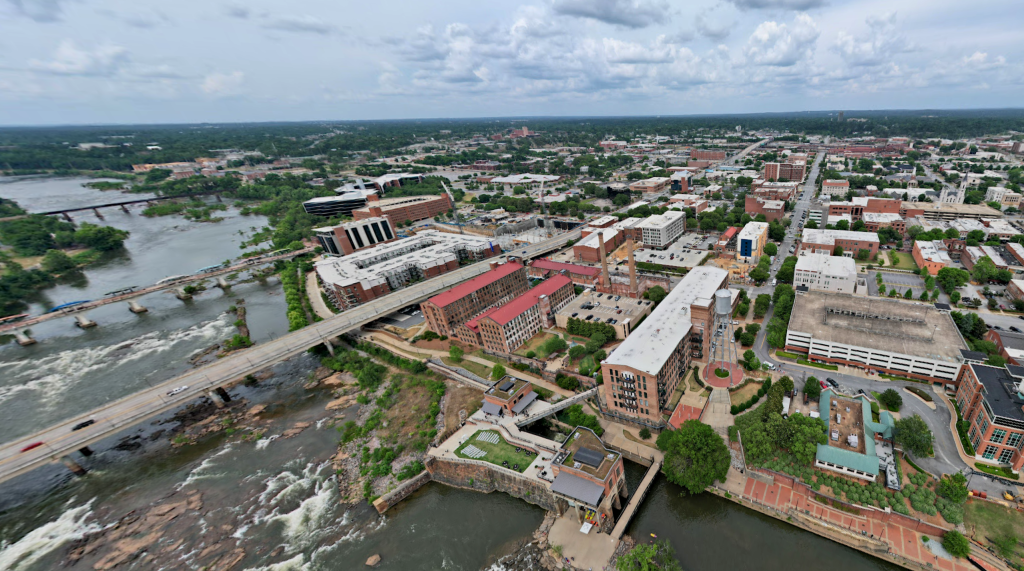
Georgia’s second largest city, Columbus is roughly a two-hour drive southwest of the capitol, and separated from Alabama by the Chattahoochee River.
Fort Benning is located south of the city and by far its largest employer. The military base employed at least a quarter of the population of Columbus, or roughly 45,000 people, as of 2024, according to the city’s financial report.
ICE has made use of the base since as early as 2011 to train “special response teams,” which are similar to SWAT units and specially trained for high-risk operations.
In 2019, the agency drafted a statement of work that described plans to add up to fifty new buildings to the base and spend roughly a million dollars on “hyper realistic” replicas of neighborhoods in Chicago, Illinois and Arizona as well as a “fishbowl” for instructors to view classes from above.
Each structure would include atmospherics and set props such as “furniture, appliances, fixtures, clothing, toys,” as well as “faux passports, currency, and other types of travel documents,” according to the statement of work.
“This decision is a clear indication that ICE, under the direction of President Donald Trump, is declaring war on our neighborhoods,” U.S. representative Jesús “Chuy” García from Illinois said in a press release in response to coverage of the proposal.
Columbus residents say they are disappointed to learn about their city’s proximity to a training center for ICE officers, especially given the agency’s use of aggressive and dangerous tactics to conduct roving sweeps in several major cities across the country in the past year.
Human trafficking investigators redirected to immigration enforcement
John Sandweg, who served as acting ICE director under President Barack Obama from 2013-2014, noted he would not read anything “nefarious” into the 2019 purchase of neighborhood replicas.
Under any administration, he explained to ACPC, much of ICE’s duty involves tracking down individuals engaged in white-collar crimes, human trafficking, child sexual abuse and other cross-border crimes.
The investigative branch of ICE is distinct from enforcement and removal operations, which runs detention centers and carries out arrests and deportations, typically for civil immigration violations.
But those neighborhood replicas are likely now being put to use by an agency that has entirely transformed.
Under Trump’s second term, the administration has put a “much greater emphasis” on the immigration enforcement mission of ICE, pulling agents off of major investigations and redeploying them to “hit the streets, hit the immigration courts, hit the parking lots, and hit the traffic stops” and “get as many people as possible,” Sandweg said.
“That is obviously really stupid,” he said. “It undermines U.S. national security and public safety.”
ICE spent hundreds of thousands of dollars spent on “less-lethal” weapons
Between September and December 2025, ICE agents routinely fired pepper balls at protestors, including in Chicago, Illinois; Tucson, Arizona; Portland, Oregon; and Oakland and Santa Ana, California.
ICE’s use of these chemical munitions is not entirely new.
OFTP’s previous purchases of munitions for “crowd control” and “riots” amounted to roughly $114,000 in 2022.
Its 2025 spending on chemical munitions more than doubled that amount.
At least $313,000 of OFTP’s spending this year was allocated for the purchase of “less-lethal weapons to control hostile crowd environments” from United Tactical Systems, the company that manufactures pepper balls, which are similar to paintballs but filled with a heavy-duty pepper powder that can spread up to 150 feet upon impact, leaving a trail of residue.
As the Trump administration dispatches more and more ICE agents into neighborhoods, churches and schools, its officers, many of whom were trained at Fort Benning, have routinely discharged the weapons against protestors and other civilians, including children.
When asked about the office’s crowd control purchases, Sandweg noted that ICE historically turned to local and state police to confront protestors.
But under Trump, there has been a “dramatic increase” of ICE officers out in the community, and ICE’s clashes with protestors are a byproduct of this shift.
Sandweg added that the OFTP likely tripled its spending in 2025 as preparation to help train and arm those newly recruited by the mass hiring surge.
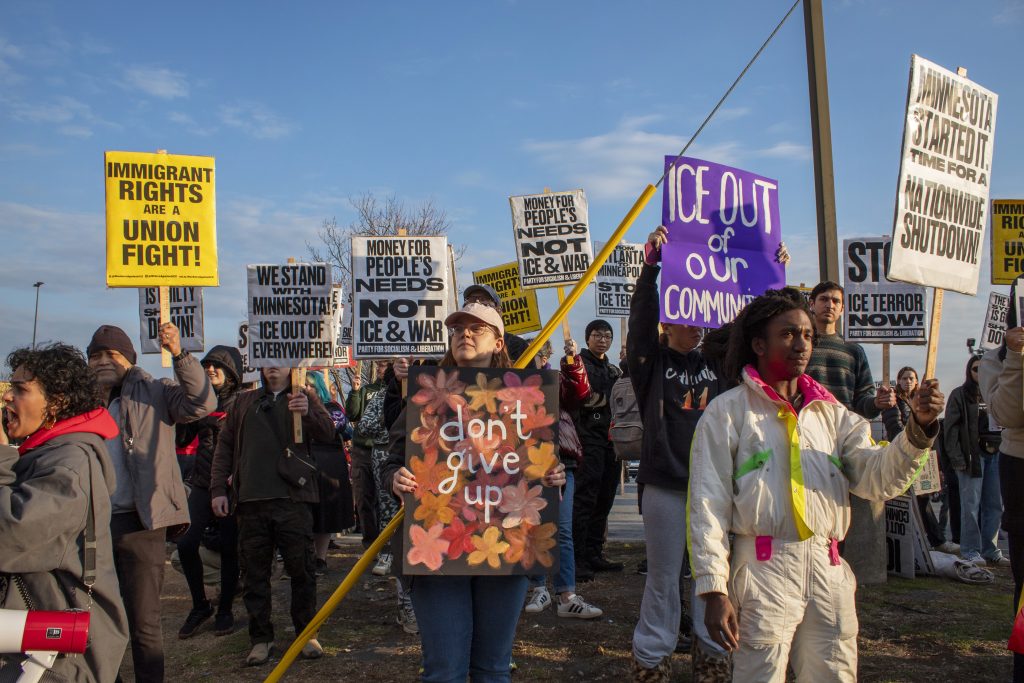
After federal agents fired pepper balls at a pastor who was protesting outside an immigration detention center near Chicago in October, US District Judge Sara Ellis issued a two-week restraining order that blocked ICE and Customs and Border Patrol agents from using crowd control weapons unless there was a serious threat to public safety.
In November, Ellis extended that order indefinitely.
The office in Fort Benning also spent resources on training for ICE’s special response teams.
John Tsoukaris, former Newark ICE field office director, told Bloomberg in December that ICE’s increase in spending on weapons and equipment indicated that the agency was enhancing these teams.
In 2025, ICE awarded contracts to at least three companies to support training for these teams: more than $22,000 to the Southern Police Equipment Company for mini flash bangs, more than $13,000 to Sig Sauer for range-finding binoculars, and more than $19,000 to Atlantic Diving Supply for tactical helmet lights.
Columbus organizers say ICE’s use of the base at Fort Benning to train these specialized teams represents a “worrying trend” of the agency further militarizing its forces.
“This administration has already shown its willingness to unlawfully use the military for domestic enforcement,” said Ric Rivera, another member of Indivisible in Columbus. “If ICE is trained to operate like a military branch, that gets them around that legal hurdle.”
Author

Related Articles

A Rohingya man in New York died under mysterious circumstances— his relatives in Georgia are grappling with the loss
Federal immigration officers left Nurul Amin Shah Alam outside a closed coffee shop in harsh winter weather— days later he was found dead. He was getting ready to move to Georgia, says his niece in Stone Mountain.