
What’s happening with the Cop City domestic terrorism, RICO charges?
In Fulton County, a judge dismissed the 61-person Cop City racketeering charge while also ruling that domestic terrorism charges could move forward. On the same day, an activist filed a motion to dismiss her domestic terrorism charge in DeKalb County.
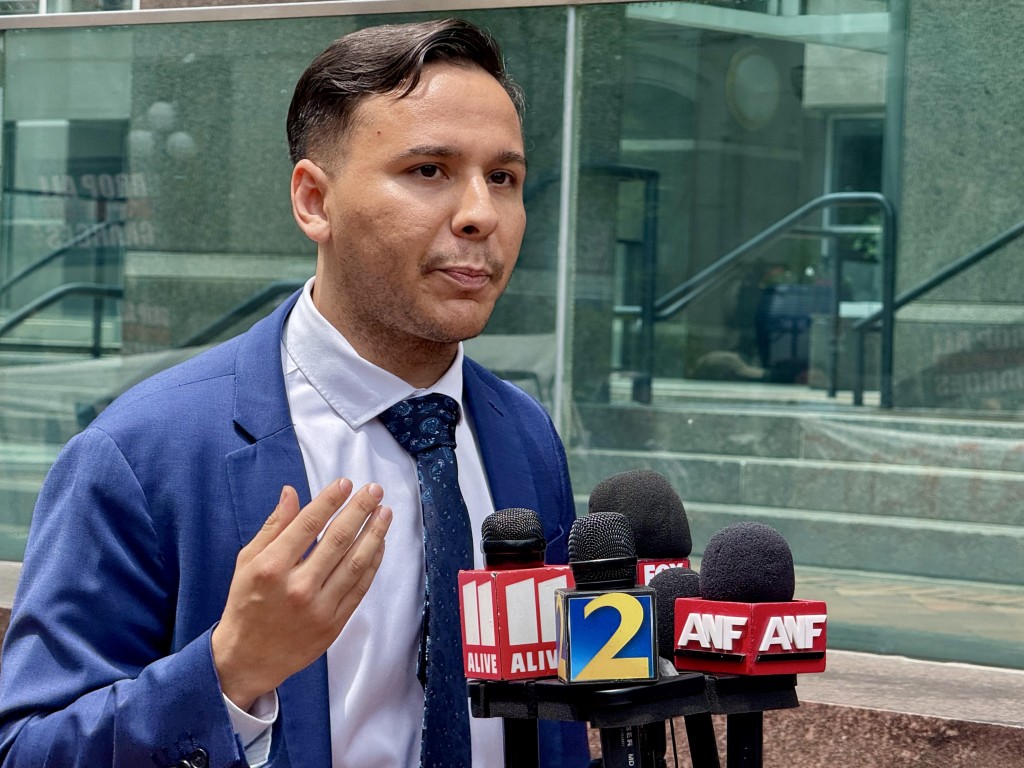
Dec. 30, 2025, was a busy day for Cop City-related court battles, with two rulings issued in Fulton County and a motion to dismiss filed in DeKalb.
A Fulton County judge dismissed racketeering charges against 61 people alleged to be members of the Stop Cop City Movement. In a second order, the same judge declined to dismiss domestic terrorism charges against five people that were filed in the same indictment as the racketeering charges.
Fulton County Superior Court Judge Kevin A. Farmer officially dismissed the racketeering charges against the 61 individuals after defense attorneys argued in September that the attorney general’s office had failed to seek a letter of permission from the governor to bring the racketeering indictment.
Prosecutors motioned for immediate appeal of the judge’s decision, which Georgia Attorney General Chris Carr called “dangerously misguided.”
While the defense is happy with Judge Farmer’s decision to dismiss the racketeering charges, attorney Xavier T. de Janon said that the state’s approach to cracking down on Cop City has already had a massive impact on people opposed to the facility, even if it never results in a conviction. He noted that police and prosecutors had brought “hundreds of charges, raids, arrests and intimidation.”
He connected what’s happening in Georgia to tactics being used against protesters nationwide, particularly those against ICE and Trump’s immigration policy.
“The process itself is the punishment,” de Janon said. “The government doesn’t need convictions to accomplish its goals—charges, raids and years of uncertainty are enough to intimidate and repress.”
On Jan. 9, Judge Farmer granted the prosecutor’s petition for appeal, and the Georgia Court of Appeals must now decide whether to hear it.
Domestic terrorism arguments failed in Fulton
In September, defense attorneys made two arguments in front of Judge Farmer against Georgia’s domestic terrorism statute.
No paywall. No corporate sponsors. No corporate ownership.
Help keep it that way by becoming a monthly donor today.
Free news isn’t cheap to make.
Attorney Michael Schwartz, who represents Francis Carroll, argued that Georgia’s domestic terrorism statute is overbroad and vague, violating both the U.S. and Georgia Constitutions. He said the statute leaves unclear what sort of conduct is prohibited and gives too much power to prosecutors to decide whether an action constitutes domestic terrorism.
Ultimately, Schwartz argued, the domestic terrorism statute fails to distinguish between constitutionally protected speech and harmful activities.
Deputy Attorney General John Fowler, who is the lead prosecutor in both the DeKalb and Fulton cases, argued that since the domestic terrorism statute begins with the statement “that an underlying crime has to occur,” it doesn’t impinge on First Amendment activities.
Defense attorneys also argued in September that the Georgia General Assembly violated Georgia’s Constitution when passing the statute in 2017. That year, the House of Representatives voted down SB 1, the Senate’s version of the domestic terrorism bill. Days later, the House voted in favor of the House version, HB 452, which had been amended in the Senate to include the same language as SB 1. Georgia’s constitution requires that a bill that previously failed in one chamber must be approved by a two-thirds majority when reconsidered.
Judge Farmer rejected both arguments in his decision on the motion to dismiss the domestic terrorism charges. In his two-page order on the issue, Judge Farmer wrote that the General Assembly “passed the Domestic Terrorism statute in accordance with all laws, rules and procedures,” and that the statute prohibits felony violations of state law intended to intimidate a government entity.
On Jan. 6, defense attorney Michael Schwartz filed a motion for an immediate appeal of the domestic terrorism decision on behalf of Francis Carroll, which Judge Farmer granted.
Three challenges to domestic terrorism charge in DeKalb
In neighboring DeKalb County, de Janon filed three motions to dismiss a domestic terrorism charge against Priscilla Grim, a New York-based activist.
Grim’s is the second challenge to Cop City-related domestic terrorism charges in DeKalb County. In August, DeKalb County Superior Court Judge Gregory A. Adams dismissed the charge against Jamie Mariscano, who had argued that a years-long delay in prosecuting the charge violated her due process and speedy trial rights. de Janon also represented Marsicano.
One of Grim’s motions argues that she faces similar constitutional violations from the delay in prosecuting the DeKalb charges.
“She lost her entire career,” de Janon said. “She lost her health insurance. She’s lost teeth. She’s developed PTSD. The intensity of the prejudice is really large, and all because the now almost three-year old charges.”
Between December 2022 and March 2023, 35 people were charged with domestic terrorism in DeKalb County. The Attorney General’s office is the sole prosecutor after DeKalb District Attorney removed her office from prosecuting the charges.
Grim’s other two motions mirror the arguments defense attorneys made in September before Judge Farmer.
Judge Farmer’s decision on those motions may have little impact on a Judge in DeKalb, de Janon said, because it offered no rationale.
A hearing has not yet been scheduled for Grim’s motions in DeKalb. Those motions are not expected to be heard by the same judge who dismissed Mariscano’s charge, de Janon said.
Author

Related Articles
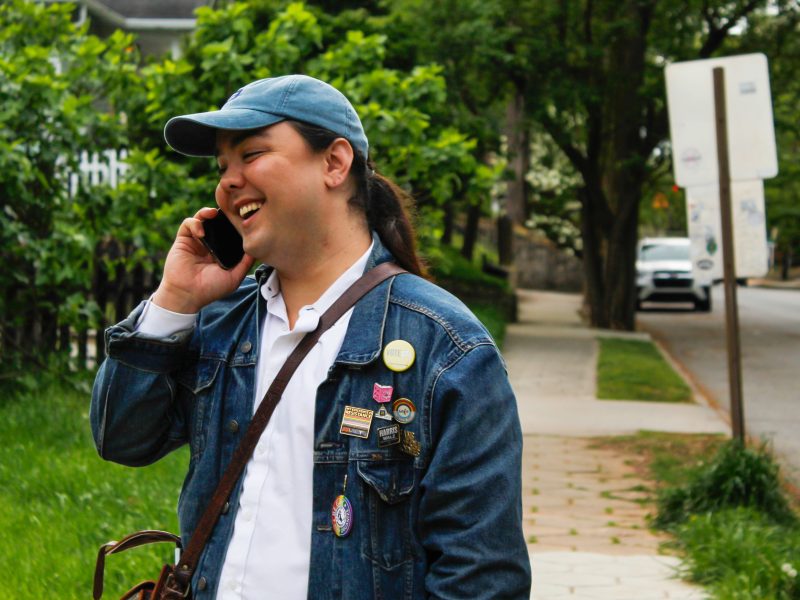
Organizer Bentley Hudgins takes second crack at Georgia House District 90 seat
Veteran organizer Bentley Hudgins seeks a second chance at Georgia House District 90, pitching neighborhood investment and alternative approaches to public safety in a crowded Democratic primary.

Melting ICE and other chilly topics for families: The People’s Puppet Show
A local organizer uses scenarios of colorful animal friends in conversation to help families break the ice on ICE every Saturday afternoon in Grant Park.