DACA recipient, photojournalist detained by ICE over social media posts
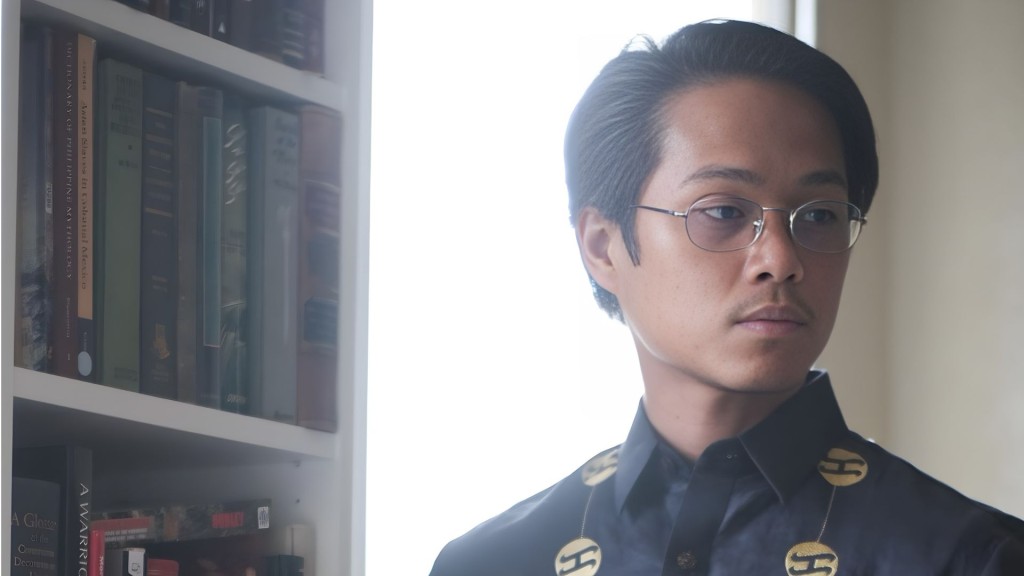
Yaa’kub Vijandre’s cousin had been thinking about her kuya—a Filipino term of endearment—for several days in early October, since their grandmother had passed the week before and members of the family had gone to the Philippines for the funeral.
She was scrolling on social media when she came across someone mentioning her cousin’s name, spreading the news that ICE had detained him. “I was in shock,” she said—especially since Vijandre has Deferred Action for Childhood Arrivals status, or DACA, an Obama-era program meant to shield immigrants brought to the U.S. as children from deportation.
The 38-year-old is detained in Georgia’s Folkston detention center and accused of “glorifying terrorism”—due to a handful of social media posts, several of which refer to his Muslim faith.
On Dec. 2, the federal government revoked his DACA status. Meanwhile, his legal team has filed a habeas corpus petition to get Vijandre released from Folkston while they pursue an asylum claim; their latest motion was filed Dec. 8.
The 38-year-old photojournalist, activist and martial arts teacher has asked his cousin to help take care of his personal affairs while he is detained. He requested she speak with media on his behalf, but prefers she remain anonymous out of concern for the safety of his family.
The two have been close since they were young adults. Vijandre, whose legal name is Jacob Ira Azurin Vijandre, arrived in the U.S. at 14. He has had DACA status since he was 24. “We’ve bonded so much about our heritage, and as immigrants,” his cousin said.
She also pointed out that their family history includes multiple members who served in the U.S. military: Vijandre’s great-grandfather and great-uncle were awarded Congressional Gold Medals posthumously in 2020 for their service in World War II, and her father and uncles served in the Navy. She was born on a Navy base in the Philippines.
Vijandre is also Red Cross-trained as a first responder and works as a safety specialist for airlines, she said–meaning he helps ensure planes are safe to fly. He was part of an emergency response crew that helped family members of the 67 people killed in the Jan. 29 accident involving a Black Hawk helicopter and an American Airlines jet in Washington–one of the worst air accidents in decades.
“And yet, he is considered an endangerment to the community and flight risk,” she said. “The irony is truly remarkable.”
Faith, speech and criminalized dissent
No paywall. No corporate sponsors. No corporate ownership.
Help keep it that way by becoming a monthly donor today.
Free news isn’t cheap to make.
On Nov. 28, the federal government filed a motion to dismiss Vijandre’s habeas petition. In their response, his legal team outlines the events of the last several months: “Nine weeks ago … Jacob Vijandre … was living in Dallas, attending demonstrations, engaging in photojournalism, and sharing social media content expressing what an Immigration Judge characterized as ‘his belief’ that certain individuals accused of terrorism ‘have been wrongfully imprisoned and that they are not having proper treatment.’ Because he held those beliefs and expressed them on social media, the government now claims he is a terrorist.”
His case illustrates “the intersection between faith, speech and the government’s attempt to criminalize any perceived dissent,” said Maria Kari, an attorney with Project Taha and member of Vijandre’s legal team.
Immigration judge Suzette Smikle– the one referred to in the case’s most recent legal file– decided in a Nov. 3 hearing that she lacked jurisdiction to rule on freeing Vijandre on bond. She claimed his social media posts ran afoul of an immigration law’s prohibition on “endorsing or espousing terroristic activity.”
“The government’s position came down to ‘Islam bad’ and ‘scary terrorists.'”
Maria Kari, attorney
Vijandre’s amended habeas petition included an excerpt of the hearing, revealing the content of the posts and how the federal government and Vijandre each characterized them.
They include a post on the Holy Land Foundation, which Smikle says was “convicted of providing material aid and support to a designated terrorist organization called Hamas.” Vijandre responds that he meant to draw attention to due process violations in the foundation’s prosecution.
The judge also refers to a post on Aafia Siddiqui, who was linked to Al Qaeda and given an 86-year sentence in 2010 for allegedly shooting at U.S. military officers in Afghanistan. Human rights groups have sought Siddiqui’s release, citing due process concerns. Vijandre’s post highlighted concerns about her treatment in federal prison, including allegations of rape.
Smikle goes on to state that the federal government alleges he posted something about the Fort Dix Five—a mid-2000s New Jersey case involving an alleged terrorist plot also plagued by apparent due process issues. Vijandre responds that he didn’t recall making this post; his legal team notes in the motion that the federal government hasn’t produced a copy.
The judge then mentions two posts on Islam. Vijandre “liked” a post containing a quote in English and the Shahada in Arabic—a basic pillar of the Muslim faith. The quote: “Islam today is in dire need of truthful, patient men who are inclined to work hard, who find pleasure in toil and find comfort in pain, quietly translating the needs of this stage into action…” The government links the post to a magazine produced by ISIS.
Another post includes the phrase, “death is our victory”; Smikle queries Vijandre about its meaning and he responds that it’s a concept from the Quran. Vijandre’s Dec. 8 motion explains that “it appears to communicate the belief that individuals who die are ‘victorious’ by meeting God—a basic precept of Islam.”
Kari, who attended the bond hearing via Zoom, said she had “never heard an exchange like that,” and that it underscored the difference between immigration court and district courts like the one that now must decide on the habeas petition. “There are essentially no rules [in immigration court],” she said.
“The government’s position came down to ‘Islam bad’ and ‘scary terrorists,’ she added.
Social media activity is First Ammendment protected speech, attorney says
The U.S. Attorney’s office filed a Motion to Dismiss Vijandre’s petition Nov. 28, based in part on the notion that he was not engaging in speech protected by the First Amendment with his social media posts, but instead providing “material support to terrorist organizations.”
The motion goes on to assert that the government’s case against Vijandre is “based upon his actions (e.g., fundraising), not mere speech […and that Vijandre’s] actions sought to further the goals of terrorist organizations, not make merely political statements.”
The reference to fundraising comes from Vijandre’s alleged Fort Dix 5 post, which the government has yet to produce. His legal team’s response asserts that “there is no evidence that Mr. Vijandre ever made such a post, which would have been protected, anyway, since the First Amendment protects asking for funds to support a criminal’s legal defense in the U.S. or to draw attention to the conditions of their confinement.”
The response concludes that Vijandre’s “ongoing detention is therefore unconstitutional, and he must be released.”
DACA protections erode as detentions rise
In her day job working with the Asian and Pacific Islander community at a nonprofit organization, Vijandre’s cousin has heared from more DACA recipients who are concerned about their futures. Vijandre is one of a small but growing number of DACA recipients nationwide who have been detained in recent months.
As their detentions and deportations continue, Republican-led states have also chipped away at benefits available to DACA recipients. There are roughly 18,000 people with the status in Georgia. As of this year, Affordable Care Act health insurance plans, run by Georgia Access, are no longer available to them.
Meanwhile, Vijandre’s cousin has traveled twice between Denver and Vijandre’s Arlington home since October, trying to plan for an uncertain future. “There’s so many things in his space that are not only valuable to him, but to me as a member of the family—including books on the Filipino community and art from Filipino painters,” she said.
“For that reason, I’m taking so much care with his things,” she said. She’s also selecting photos he has taken for upcoming exhibitions in Dallas and San Francisco.
Vijandre has described conditions at Folkston in calls to her cousin. Most of the guards are in their 20s, while many detainees are twice or three times their age. The vast majority of the recently expanded facility’s nearly 1,700 detainees speak Spanish, but only one or two guards are bilingual. He was transferred from one area to another after 75 people detained during the recent ICE operations in North Carolina were brought to Folkston.
She’s had to get used to the reality of her kuya’s situation. “I did not know you could be deemed … a danger to the community solely based on social media posts,” she said. “If you can be detained for constitutionally-protected social media activity, it makes me wonder—what are the future of First Amendment rights in this country?”
Author
Related Articles
A Rohingya man in New York died under mysterious circumstances— his relatives in Georgia are grappling with the loss
Federal immigration officers left Nurul Amin Shah Alam outside a closed coffee shop in harsh winter weather— days later he was found dead. He was getting ready to move to Georgia, says his niece in Stone Mountain.