Former Old Wheat Street encampment residents conduct community ‘sleepout’ and advocate for Housing First policies
Justice for Cornelius Taylor Coalition organizers fed, clothed and opened the microphone to all community members combating homelessness before joining unhoused people sleeping outside in the December chill.
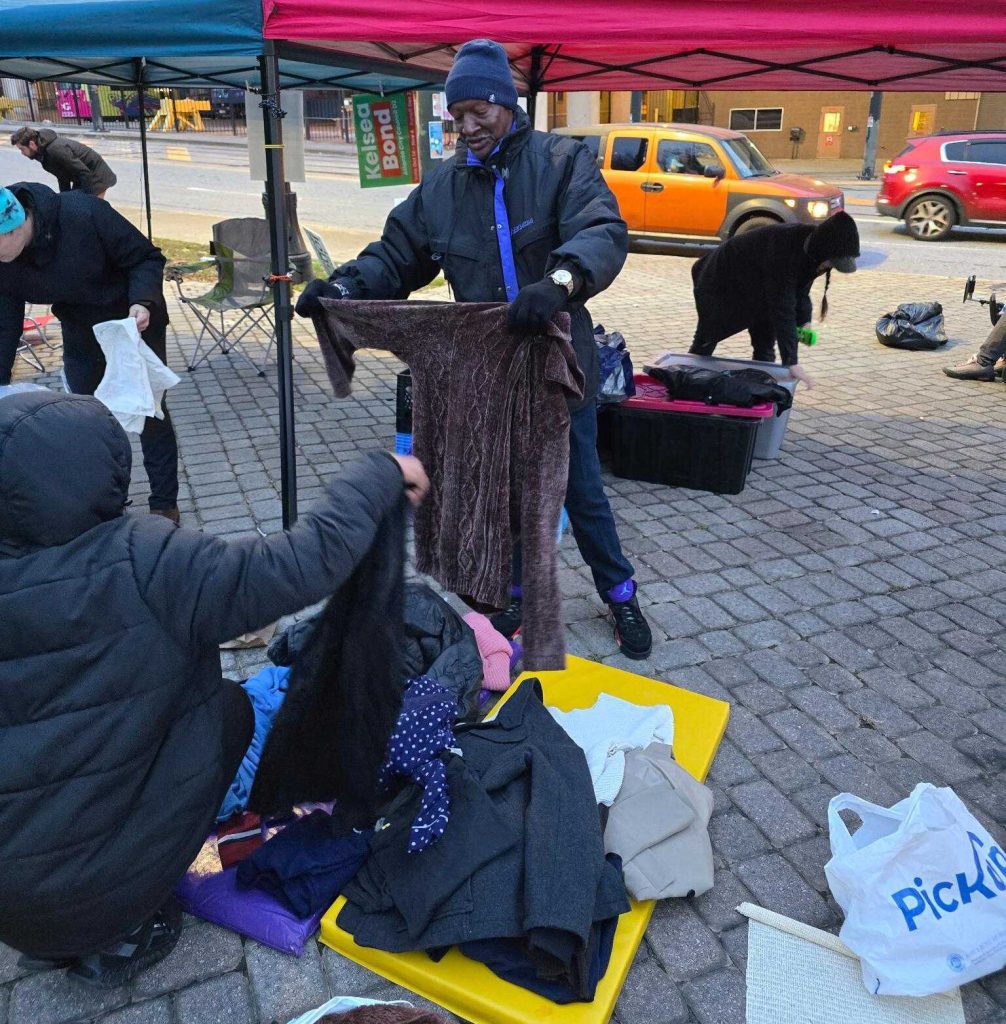
Hot foods to eat, winter clothing to peruse, a movie projector and screen and an open microphone to speak one’s mind—local organizers supplied all of this and more for Atlanta’s unhoused community last Thursday night for “Sleep Out, Speak Out” at John Wesley Dobbs Plaza.
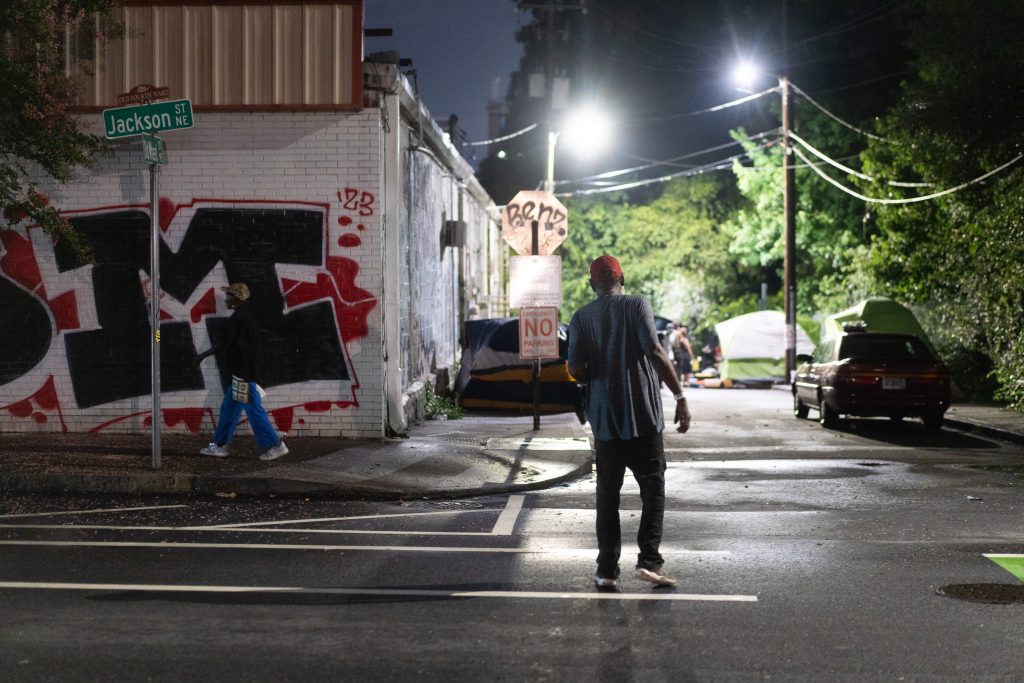
The Justice for Cornelius Taylor Coalition designed the Dec. 4 event to meet unhoused neighbors’ needs and raise awareness of their plight. The night culminated in a sleepout for attendees to feel what a December slumber outdoors is like, led by survivors of the Old Wheat Street encampment where City of Atlanta personnel crushed to death unhoused man Cornelius Taylor on Jan. 16.
Allen Hall, an elder of the former encampment and a Coalition leader, recounted Taylor’s story and honored his memory.
“I want everyone to know the reality of what caused Cornelius’ death,” Hall said. “It was not some guy driving a frontloader that killed Cornelius. It was years of bad policy driving that frontloader—policies that focus on getting people out of sight is not the solution. It’s violence.”
Hall blamed the City of Atlanta’s “cruel policies” for deep trauma Old Wheat Street survivors will bear the rest of their lives. Members of Atlanta City Council have stressed that care for unhoused people falls under Fulton County government’s purview and believe the City of Atlanta has done more than its share on the issue.
“We want government officials, police, relief agencies, shelters, service providers to treat homeless people with respect all the time,” Hall continued. He called on local government to adopt Housing First policies as the humane approach proven most effective to reduce homelessness, as well as wraparound services for survivors and an end to encampment sweeps.
Tim Franzen, another Coalition leader and American Friends Service Committee’s (AFSC) Atlanta economic justice program director, expounded on demands of local government to include formally renaming Old Wheat Street to its already ceremoniously redubbed informal name, Cornelius Taylor Street. He expressed excitement at Housing Justice League’s (HJL) adoption of the demands Hall had outlined and dismay for programs that shuffle unhoused people around like they don’t matter, without meaningful solutions.
“It’s a vicious cycle, and it’s a money pit,” Franzen said. “It doesn’t work on any level. So if you care about fiscal responsibility, then you should support Housing First. If you care about humanity, then you should support Housing First. If you care about justice and reconciliation, then you should support Housing First.”
Alison Johnson, executive director of HJL, asked everyone to pledge to proactively fight for change on homelessness, inviting aligned people to join Coalition meetings every Wednesday at noon at AFSC offices in Adair Park.
No paywall. No corporate sponsors. No corporate ownership.
Help keep it that way by becoming a monthly donor today.
Free news isn’t cheap to make.
“Everybody can be housed with the amount of money that we have, particularly in our state budget,” she said. “We had a $16 billion surplus. And last year—in our 2025 legislative session—not one priority was about housing. We can make housing a priority if we continue to show up and beat down the door, so we don’t have to be here in these circles. Or we can sit back and relax and watch many more people become unhoused.”
Local Palestinian activist Jawahir Kamil Sharwany echoed Johnson’s resolve and presented her logic for how society can produce a straightforward solution.
“Provide houses for the unhoused, and we don’t need to be in the street!” Sharwany said, denouncing arrests of those sleeping in public places.
Survivor Willy Johnson agreed that homelessness shouldn’t be a crime and stressed a one-for-all approach.
“Provide the things that need to be provided for me, and I will not be here—I will not be an eyesore to you,” he said. “But when it gets to the point that society starts to kick you to the side, have no concern about you, then how’s that supposed to be? So you tell me I can’t walk and hold my sign and ask for food because you don’t want to give me food, because you look at me as an outcast. But once you help, I will make it on my own.”
Community members later shared songs, stories and jokes and watched the movie “The Public” to cap the night before the sleepout. The film depicts a group of unhoused Cincinnatians sheltering from winter’s cold in a public library, resulting in a standoff with police.
In the morning, breakfast and cleanup ensued with final reminders for ways people can get involved. The Coalition announced a lunchtime distribution with hot food and care packages for Atlanta’s unhoused on Dec. 12, location to be determined. AFSC’s website hosts donation and petition links to support the Coalition and demand the policies Hall enumerated from local government.