Atlanta’s Beltline rail debate: To build or not to build?
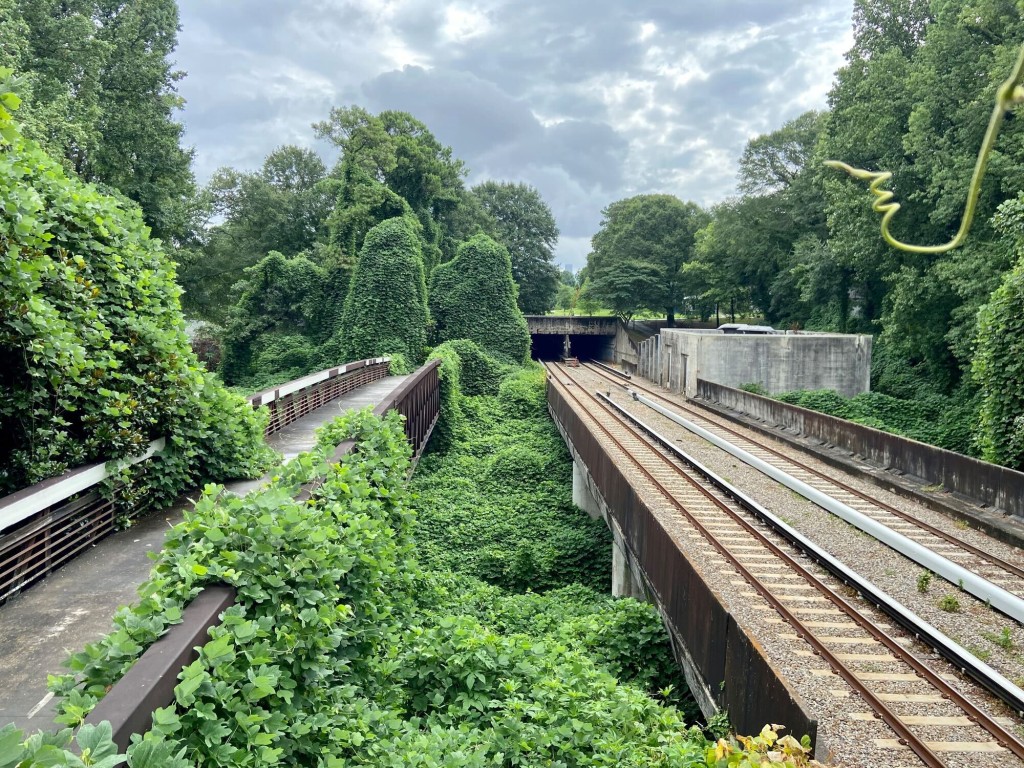
The Atlanta Beltline began as a thesis about urban connection. When Georgia Tech graduate Ryan Gravel proposed a 22-mile rail-to-trail loop linking old freight corridors in 1999, he imagined a transit system that could tie together neighborhoods divided by highways. Two decades later, the trail is real, but the trains are not.
With the debate now extending past engineering blueprints, Atlantans ask what kind of city Atlanta intends to be, and who it intends to move.
In August, Atlanta Beltline Inc. unveiled a $3.5 billion proposal for transit along the Beltline, including $270 million for transit vehicles and $210 million for support facilities. The envisioned system would weave electric streetcars through the corridor and the city’s trails, linking neighborhoods from Armour Yard to Bankhead. While advocates say it’s central to the region’s future, critics argue it misallocates scarce dollars, prioritizes the already privileged and threatens the Beltline’s identity.
For rail
Matthew Rao, chair of BeltLine Rail Now (BRN), a pro-mass transit grassroots organization, made the current moment’s stakes clear: “We’re really so far behind. It’s critical now before things get more expensive and this becomes yet one more pretty picture we’ve drawn.”
Rao describes the Beltline as unfinished infrastructure. “It’s supposed to move people,” he said. “Right now, it’s a beautiful park. But parks don’t get people to work.” He frames the Beltline not as a trail that one walks, but as added, connective infrastructure.
In a recent BRN press release, the group criticized the city’s delay on the shovel-ready Eastside Extension: “We applaud the designers… but how are we supposed to get swept up in the vision when Mayor Dickens just announced his intention to scuttle the first phase… when it’s shovel-ready, fully funded, and could be in service by 2028?”
BRN also pushed MARTA to seek aggressive federal matches on More MARTA projects, calling for at least 40% federal share or even 60%, saying, “if this had been federalized to begin with, we would be further along.”
Rao and other advocates point to data and precedent. The More MARTA sales tax, passed in 2016 with about 71% voter support, promised to raise roughly $2.7 billion for transit over decades. Yet, nine years later, Beltline rail remains largely on paper.
“We’re 10 years after we started down this road, and now we’ve spent more than $20 million. That money doesn’t get refunded. That money was spent with the idea of building something, not just studying it, but actually building it,” Rao said. “If we don’t build anything, we’ve wasted time and money, and we’ve gone against the will of the voters who voted for building this project.”
Rao argues that light rail is the next logical step. “Light rail can carry three times the passengers of a bus in the same lane. It’s smoother, it’s electric, once you lay the track, it lasts fifty years.” Basically, the same as Boston’s Green Line.
What makes the Beltline uniquely suited for rail is its foundation in Atlanta’s abandoned freight corridors. Because the land is already in public or quasi-public hands, the cost of securing right-of-way shrinks.
The light rail would use “steel wheels on steel track, electric vehicles on a guideway, with grass in between the rails and no cars next to it.” As Rao explained, “we’re using what’s already there. We don’t have to tear anything down. That’s the advantage of the Beltline.”
Ryan Gravel, whose thesis launched the Beltline, echoed that vision. “Part of the idea with the Beltline was to incentivize economic investment. Economic investment is a big thing, and a lot of disadvantaged communities want that change, to lift them up, not to push them out,” he told me. “So the question isn’t whether we should be developing or long-term development, it’s how we should be doing it, and who it is for.”
To him, the real problem with transit is that the city is not building it.
“It’s been 20 years since the title was passed, and we haven’t even gotten close. We’ve seen the negative impacts of not building transit—we’ve been looking at them,” he said.
Against rail
Hans Klein, a Georgia Tech professor of public policy and president of Better Atlanta Transit (BAT), a coalition of urban planners, academics, business owners and activists, rejects light rail as a misguided commitment and offers alternatives to standardize technology and streamline the process to maintain, operate and interchange transportation.
“If you haven’t already invested in rail, the thing to do is you want a consistent technology. Even though there are lots of different modes of travel out there, if you can have them all use rubber wheels, then they can all ride on top of the same track, essentially,” he said. “What people want is mobility, which comes in many forms: streetcars, buses, e-bikes, regular bikes, shuttles, you name it. As long as we want to do transit to achieve mobility, and that could be a rubber wheel vehicle on its own lane, if it functions exactly like a streetcar in its own lane, then who cares?”
BAT frames its critique in stark, structural terms. In their “Mobilize the BeltLine” campaign, they conclude that “Rail on the Beltline is inequitable, unnecessary and extravagant,” warning it could absorb more than half the city’s transit dollars for generations. In the group’s view, the Beltline’s objective to connect rails to trails by running streetcars on the Beltline was not due to demand for transportation, but out of a hope to stimulate investment.
“Well, it turns out we got all those benefits without rail. Not with a transit corridor, but with a linear park. Development exploded from that and with incredible success,” Klein said. “They got all the benefits without that $3 billion streetcar, whose transportation benefits are a little bit questionable to begin with.”
Klein points to MARTA’s history of stalled projects. Since the North Springs station opened in 2000, no major rail expansion has been completed. “Is MARTA capable of building transit? That’s questionable. The real question is, can a region of 8 million people afford not to build transit, and if we can’t afford that, then how are we going to build it? Is MARTA going to build it? Do we have to tear it down and rebuild it? Do we have to get a new company and put it out of business?”
The city’s leadership appears to share some of his doubts. Earlier this March, Mayor Andre Dickens withdrew support for the Eastside light-rail extension, citing financial limits and potential harm to nearby businesses. The administration has since shifted attention toward the Southside corridor, where land is less contested.
Critics of the rail plan call that decision a necessary correction. Advocates call it a failure of will. The argument has reopened familiar wounds over gentrification and displacement, linking Beltline development to rising housing costs in historically Black neighborhoods. Recognizing the Beltline is a double-edged sword, Rao and Gravel countered that transit could give long-term residents access to new job centers and services, while Klein said that rail cannot solve the economics of rent or ownership.
Klein calls this “governance drift”—a lack of coordination between agencies, shifting goals and no clear authority for delivery.
Going forward
With the Beltline debate now representing a majority of Atlanta’s larger transportation dilemma, the city’s population continues to grow, traffic worsens and political attention shifts between downtown redevelopment and suburban expansion.
Gravel emphasized that the transportation debate has less to do with the vehicle type, but the guideway on which it rides.
“A track is fixed. It’s safer for pedestrians and bicyclists, and other people. It is more permeable in the ground, and it can be a grass track. It feels like a park, just with a train going through,” Gravel said. “But if it’s a bus, it’s not that those are bad ideas for transportation; it just means that the problem is they just don’t fit on the Beltline. If you start, you have to build a roadway, literally 30 feet wide alongside the trail. Suddenly, it’s not a park anymore, and you’re really destroying all of the value of that.”
A combined strategy could balance the rail faction’s pressure on incrementalism and the opposition’s insistence on financial and institutional limits. Both views affirm that large projects require ambition, but ambition without structure collapses.
Extending light rail along completed segments while building bus rapid transit on high-demand corridors would broaden access and test scalability. It would also make use of funds already collected, demonstrating visible results before public patience erodes further. Currently, Atlanta has sustained indecision–the city has studied, mapped, and postponed rail for two decades. The corridor exists, the funding mechanism exists, and the demand is visible in the trail’s daily crowds.
“The worst outcome,” Rao said, “is that we do nothing.”
Gravel echoed the positives. “The Beltline is potentially the biggest transformation any city in America could give itself, from a city that is divided and a city that is car dependent to a city that provides access to all and the ability, all regardless of the vehicle, to get to it.”
If the Beltline remains a trail alone, it will still be a public success—a green ring connecting neighborhoods once divided. Yet it will also be a reminder that Atlanta often imagines more than it finishes. The debate over rail is not just about transport, but one about whether the city can follow through on its own designs.
No paywall. No corporate sponsors. No corporate ownership.
Help keep it that way by becoming a monthly donor today.
Free news isn't cheap to make.
Author

Related Articles
Popsicles and the FBI: Organizers launching week of action against Flock and ALPRs
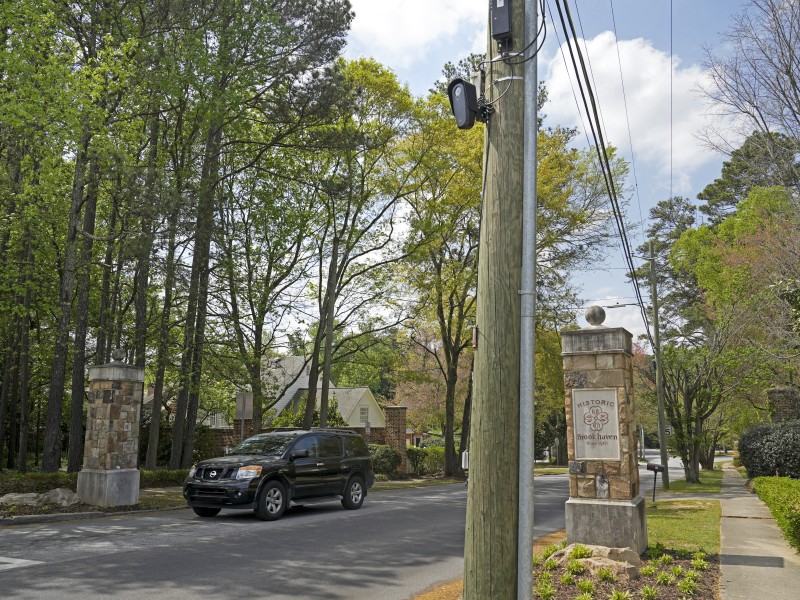
From Aug. 16 to Aug. 22 organizers, both new and experienced, are holding events across the country for the National Week of Action Against Automated License Plate Readers.

Potent, mislabeled and easy to buy: Inside Georgia’s kratom market
Investigation finds weak oversight of state laws regulating potency levels, leaving Georgia consumers at risk.

