‘We’ll be here until God wants us to be’: Venezuelans in Georgia live with uncertainty, ‘persecution’
As a result of increasing pressure from the Trump administration and ICE, many Venezuelans in Georgia have uncertain futures.
On a weekday morning, a gas station parking lot off Jimmy Carter Blvd. in Gwinnett County bustles with energy.
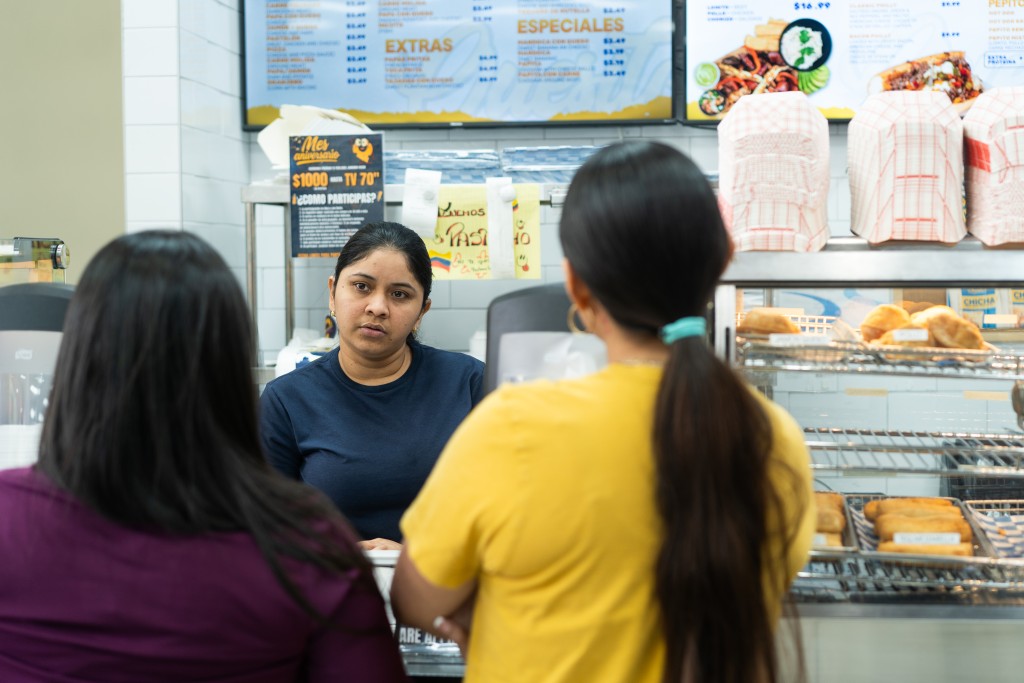
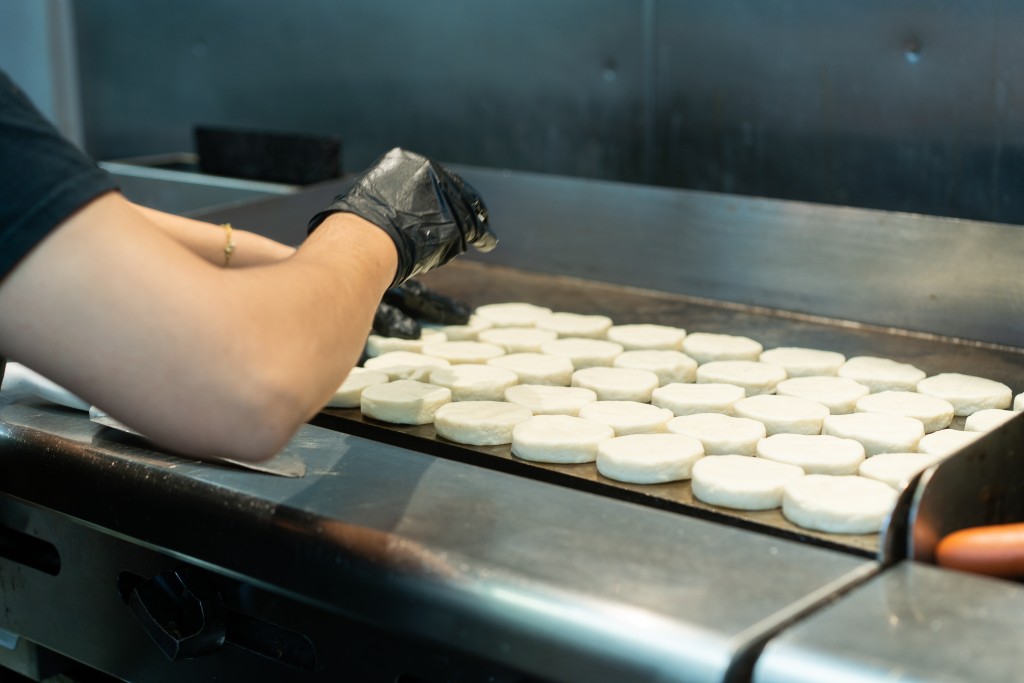
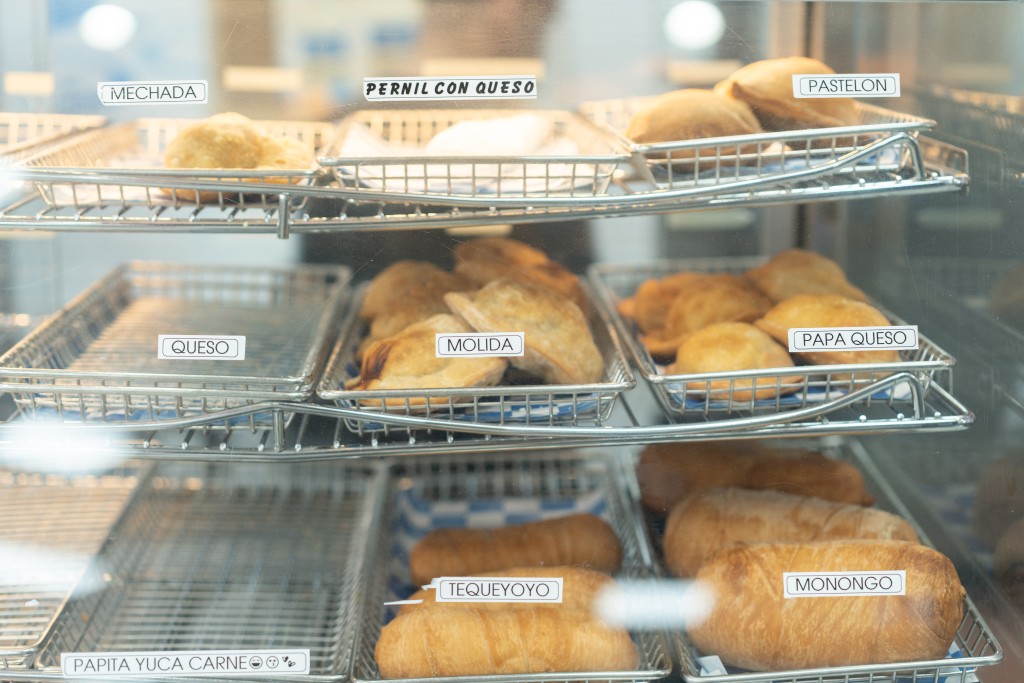
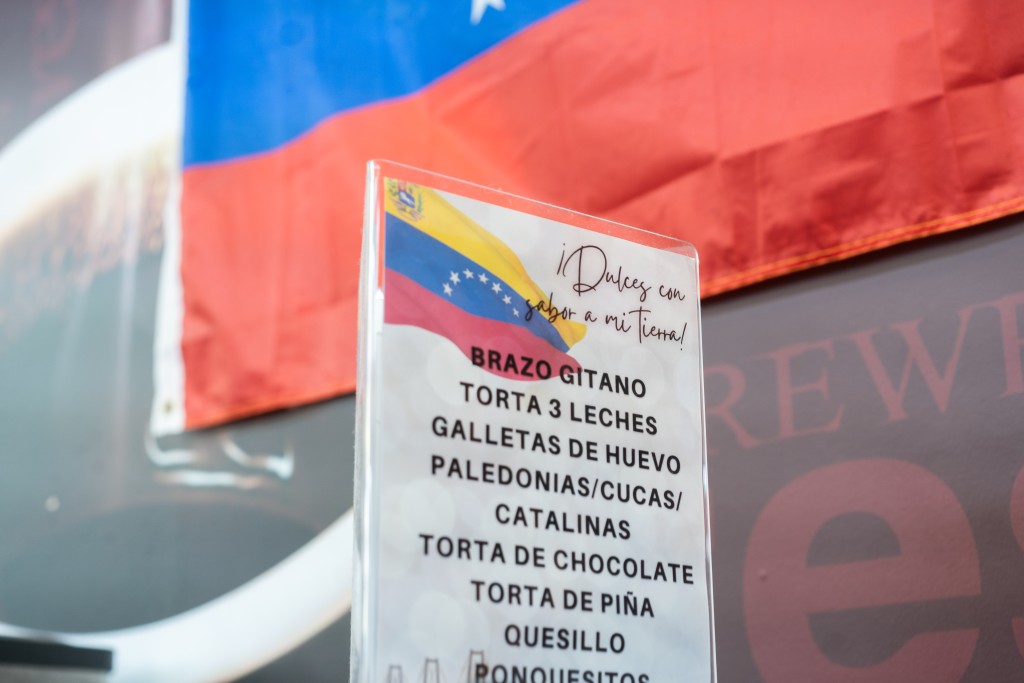
A man passes by on the sidewalk in front of the station’s market with a large tray of grated cheese on his shoulder. A van pulls up with boxes brimming with avocados, plantains and onions. Inside the market, a wall in a corner displays the brightly-colored Venezuelan flag, setting off a small restaurant; several customers sit at tables, waiting for beef empanadas and arepas with steak, while Venezuelan employees of Don Arepacho hustle around a grill behind a counter.
But all of this forward-moving energy contrasts with the daily reality for most of the Venezuelans working and eating at the restaurant: completely uncertain, often stressful. The same can be said for the rest of the 23,000 or more Venezuelans in Georgia—the third-largest population of immigrants from the South American country in the U.S.
The current administration’s onslaught against immigrants has disrupted the lives of many communities, particularly those of Latin-American descent. But Venezuelans face unique challenges. The Trump administration continues to demonize the country, and has invoked the Tren de Aragua gang to justify a series of extra-legal moves, from deporting Venezuelans to shooting at boats in the Caribbean. While reporting out this story, news broke of the Supreme Court’s decision to allow the Trump administration to take away Temporary Protected Status (TPS) from some 350,000 Venezuelans—meaning they lose permission to work and can be deported immediately.
Arepas in Gwinnett
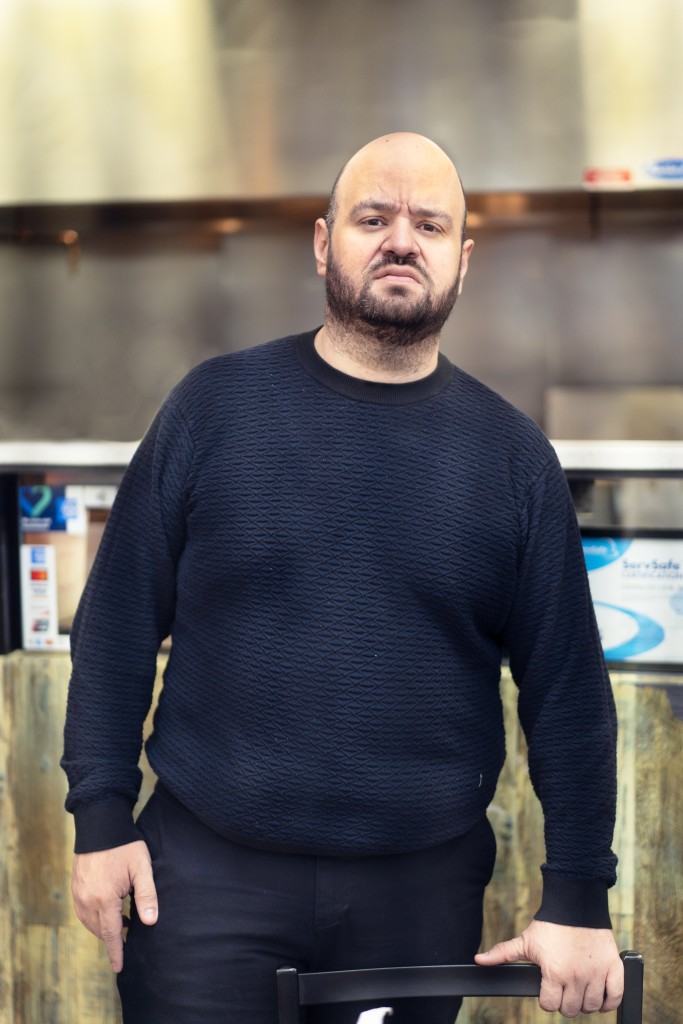
At Don Arepacho shortly before noon last Thursday, owner Oswaldo Leal stood in the middle of the small restaurant, paying attention to customers. “I tremble when I think of returning to Venezuela,” he says. Leal has been in Georgia a decade, still waiting for the resolution of his asylum case. He ran a business selling medical supplies in his home country and was threatened with kidnapping due to his stance against Maduro, Venezuela’s president since 2013. He turned 46 the day after we spoke.
As with many immigrants, after coming to the U.S., he’s had to reinvent himself. He drove a taxi. He sold pots and pans. Leal notes that Venezuelans in the U.S. tend to be more highly educated than the native-born population. “You see professionals, doctors, driving taxis here,” he says.
Seven years ago, Leal opened Don Arepacho. Back then, there were only a few Venezuelan restaurants in Gwinnett featuring arepas, the corn cakes at the center of the country’s diet, he says; now, there are several dozen with the word “arepa” in their names registered on the Georgia Secretary of State’s website.
They include three of Leal’s Don Arepacho restaurants. Between them, Leal employs 17 people, all Venezuelan—all “with work permits,” he says.
As with many Venezuelans, Leal also has TPS status, made for immigrants from countries beset by conflict or natural disasters. “We came to this country seeking protection,” he says. He finds news on TPS confusing; the Trump administration also recently announced that some 250,000 Venezuelans who arrived in 2021 will no longer have the status in November.
“I feel like everything’s up in the air. I’m surrounded by uncertainty,” he says. “I’ll just keep moving forward until my turn comes.”
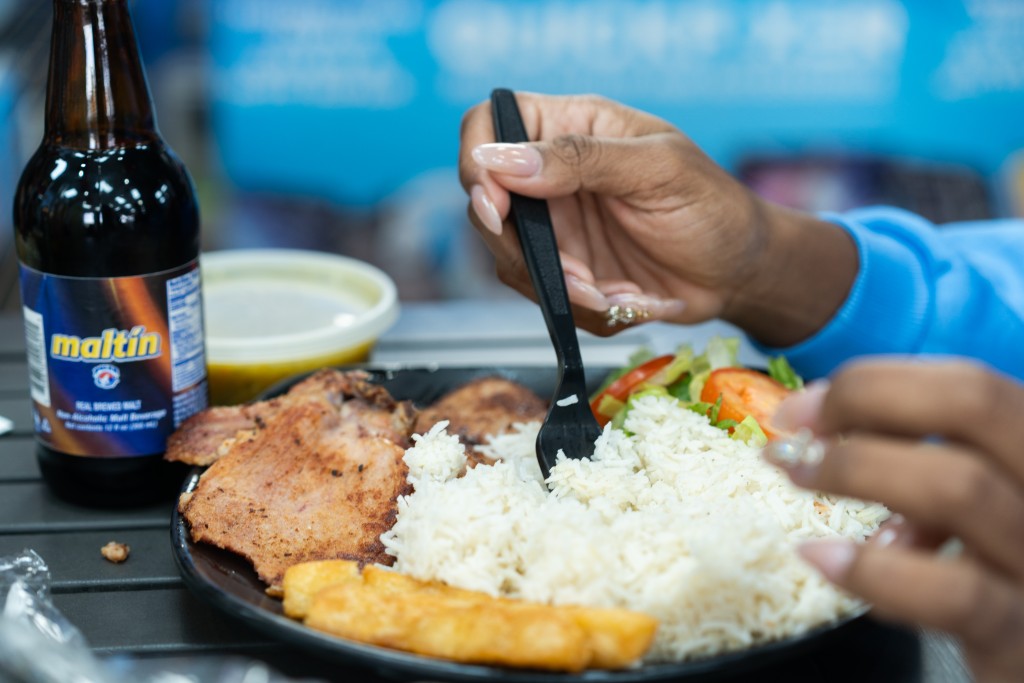
Nearby sat Gustavo Molero, waiting on an order of empanadas to go. Like Leal, Molero is 46 and came to the U.S. in pursuit of asylum. A mechanical engineer in the petroleum industry, he moved to Georgia with his wife and two children two years ago. In Gwinnett, he and his wife drive for Uber.
Molero says the current administration “has attacked Venezuelans.”
“It’s a persecution against us,” he says. He complains about the lack of due process in the Trump administration’s mass deportation push. “You’re gone [deported] because you’re gone. No one gets the right to demonstrate that we came to contribute something.”
Molero is nervous about Immigration and Customs Enforcement (ICE). “I live in total fear,” he says. “If somebody hears you speaking with a Venezuelan accent, or you look a certain way…”
He and his wife have made an agreement: if one is deported, they all go. He looks out for vans and trucks when he’s driving, thinking they might hold ICE agents. “I don’t work in peace. My nerves get to me.”
As with nearly everyone I spoke to for this story, Molero doesn’t feel in control of the future—his or his family’s. “We’ll be here until God wants us to be,” he says.
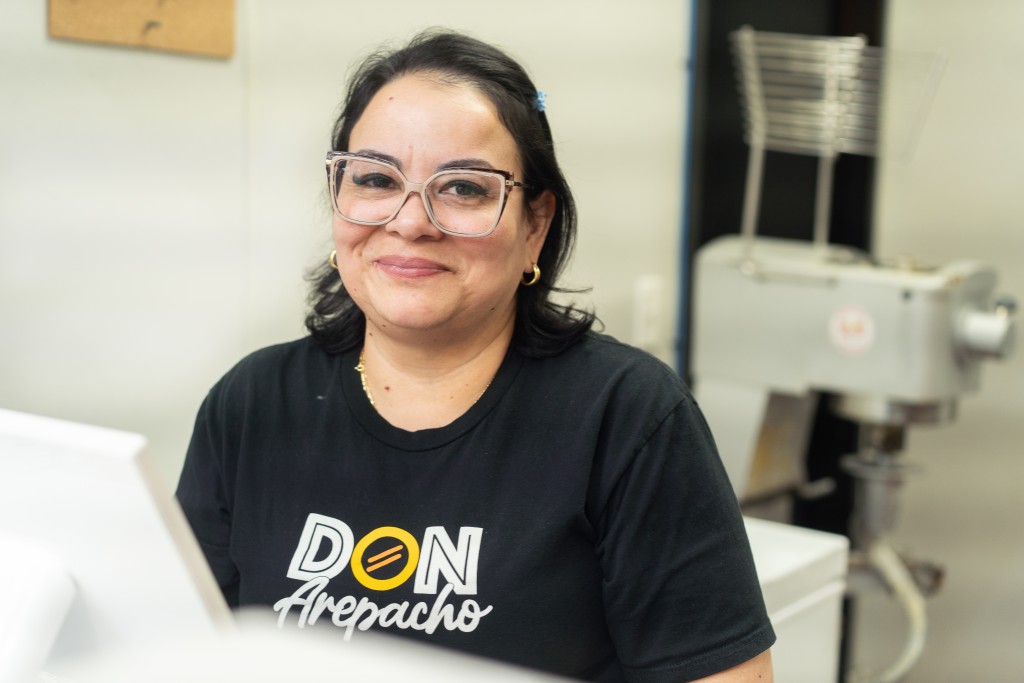
Johanne Leal, Oswaldo’s sister, also works at Don Arepacho. She’s been in Georgia for four years, also pursuing asylum. She has an adult son who lives in Colombia who she hasn’t seen since arriving here. “I just do my rhythm: work, home; work, home. I don’t expose myself,” she says, referring to the threat of deportation.
Less than five minutes away, at Quesito’s Express, another Venezuelan restaurant, Argely González, 22, was cutting mangos into spears to stuff into clear plastic cups. She came up through the Darién Gap in Panamá two years ago and is waiting on her asylum case to be resolved. She also has TPS. If she has to leave the U.S., she says, she would go to another country, like Chile. “I’m just working, saving money. You don’t know what might happen here [in the U.S.].”
Before Rafael Olavarría could ask a question of CNN correspondent Fareed Zakaria at a recent immigration policy conference at Georgetown University, he said, “I’m Venezuelan and I’m not Tren de Aragua—just in case.”
The crowd—people interested in immigration policy—laughed. Olavarría is a former journalist who now works at a digital project combatting disinformation in Spanish called “Factchequeado.” He says Venezuelans in the U.S. are caught between “two opposing narratives [from the U.S. government]: Tren de Aragua is an arm of the Maduro government … [and] TPS is ending because things have gotten better in Venezuela.” His point: how can Venezuela be run by gangsters and also be safe?
There is a tendency for Venezuelans to be somewhat anxious about the Tren de Aragua association; nearly everyone I spoke with made sure to assert that Venezuelans are in the U.S. to work, to contribute. Marcial Márquez, an industrial engineer and president of Casa Venezuela Atlanta—one of a hundred similar organizations around the country working on behalf of Venezuelans—sees the Trump administration’s moves to end TPS as the fault of “a small number [of Venezuelans] who did bad things, and ruined our reputation.”
But Olavarría says that this viewpoint is influenced by social media algorithms. “If one Venezuelan is accused of a crime, it goes viral and then it turns into a national story,” he says. “Data show that immigrants, in general, commit less crimes than those born in the U.S.”
He also notes how some middle-class Venezuelan social media users who have lived here longer have turned against poorer Venezuelan immigrants who arrived more recently—part of the classism that exists in Venezuela and in the diaspora.
Olavarría lived in Georgia for a decade, before moving in February to Washington, D.C. His mother and a cousin still live here. His cousin’s husband is among those who recently lost TPS; the two of them and their U.S.-born toddler are now planning to move to a third country, likely Spain.
Olavarría said many Venezuelans are living with a “double vulnerability.” “They’re at a point where neither the country where they are or their own country will protect them. It’s close to being stateless.”
Nobel in Venezuela
On Oct. 10, the Nobel Peace Prize was awarded to Maria Corina Machado, leader of the opposition to Venezuelan dictator Nicolás Maduro and a symbol of the country’s potential return to democracy.
I caught up with Marcial Márquez on Friday, hours after the announcement. He had been receiving WhatsApp messages from fellow Venezuelans in the U.S. and in South America. “Everyone is happy and hopeful,” he tells me, calling Nobel prizewinner Machado “a voice for liberty and justice in the world.”
I also wanted to see how Leal received the news of Machado, particularly since it came on his birthday. When I got back to Don Arepacho the day after, I found him there, distracted by a call on his cell. I asked him about the news when he got off. “We want Maduro to leave,” he said. “We’ve been through many failed attempts already. But—the important thing is not to lose faith.”
I was surprised by Leal’s understated response. Another call came in. I heard him say, “They got him.” He talked about bond, about his attorney. When he hung up, he announced to everyone working on the afternoon orders that one of their team had been detained by ICE.
I asked him who it was. He described the guy we had seen carrying the tray of cheese several days before, who greeted us with a smile and told us where to find Leal.
Another call came in. Leal vanished behind a door and left.
No paywall. No corporate sponsors. No corporate ownership.
Help keep it that way by becoming a monthly donor today.
Free news isn't cheap to make.
Author
Related Articles
What’s happening with the Cop City domestic terrorism, RICO charges?
In Fulton County, a judge dismissed the 61-person Cop City racketeering charge while also ruling that domestic terrorism charges could move forward. On the same day, an activist filed a motion to dismiss her domestic terrorism charge in DeKalb County.