Atlantans protest, reflect on 2 years of Israel’s genocide in Gaza ahead of ceasefire
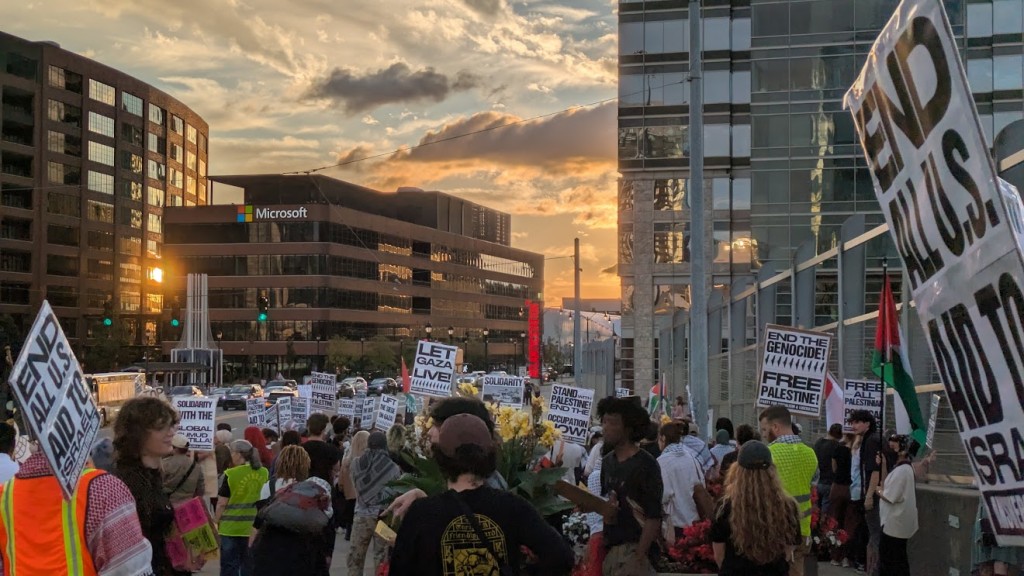
On Oct. 4, hundreds of Atlantans gathered at the 17th Street Bridge near Atlantic Station to protest Israel’s crimes in Gaza. The crowd marched through the streets of Midtown until they reached the Israeli consulate, where organizers emphasized that the fight to free Palestine is far from over.
Osama Mor, an organizer with Atlanta for Palestine, said, “The two-year commemoration of the ongoing Israeli genocide reminds us of our responsibility to the people of Gaza—who have resisted, who have endured, who have suffered a total war of annihilation for over 700 days. We must reaffirm our commitment to resisting Zionism and U.S. imperialism.”
Israel has killed 67,160 Palestinians since Oct. 7, 2023, though the precise number is disputed. A study published in The Lancet in February suggested that the Palestinian Ministry of Health significantly undercounted deaths directly resulting from Israel’s actions. Over the past two years, 94% of Gaza’s hospitals have been damaged or destroyed, over 12,000 Palestinians have been detained and over 200 journalists have been reported killed.
Now, more than half of Gaza’s population faces famine, largely due to Israel’s aid blockade. The Palestinian Ministry of Health reports that at least 440 Palestinians have died of starvation.
In response to the starvation of Gaza, a fleet of supply ships known as the Global Sumud Flotilla set sail with the intent of landing directly on Gazan soil, breaking the blockade and creating an aid corridor to deliver food, water and other resources to the strip. Aboard the flotilla were activists from Spain, Italy, and 42 other countries, including noted Swedish climate activist Greta Thunberg.
In early October, Israeli forces intercepted all ships and detained about 450 activists in the Ketzoit prison, resulting in a global outbreak of protests, boycotts, and strikes for Palestine.
Turkish journalist Ersin Celik reported Israeli forces tortured Thunberg by making her crawl and forcing her to kiss the Israeli flag before deporting her and 171 other activists.
In a speech following her deportation, Thunberg directed media attention away from Israel’s treatment of her and back to the plight of Palestinians. “And I could talk for a very, very long time about our mistreatment and abuses in our imprisonment, trust me, but that is not the story. What happened here was that Israel, while continuing to worsen and escalate their genocide and mass destruction with genocidal intent, attempting to erase an entire population, an entire nation in front of our very eyes, they once again violated international law by preventing humanitarian aid from getting into Gaza while people are being starved,’’ Thunberg said.
On the ground in Gaza
No paywall. No corporate sponsors. No corporate ownership.
Help keep it that way by becoming a monthly donor today.
Free news isn’t cheap to make.
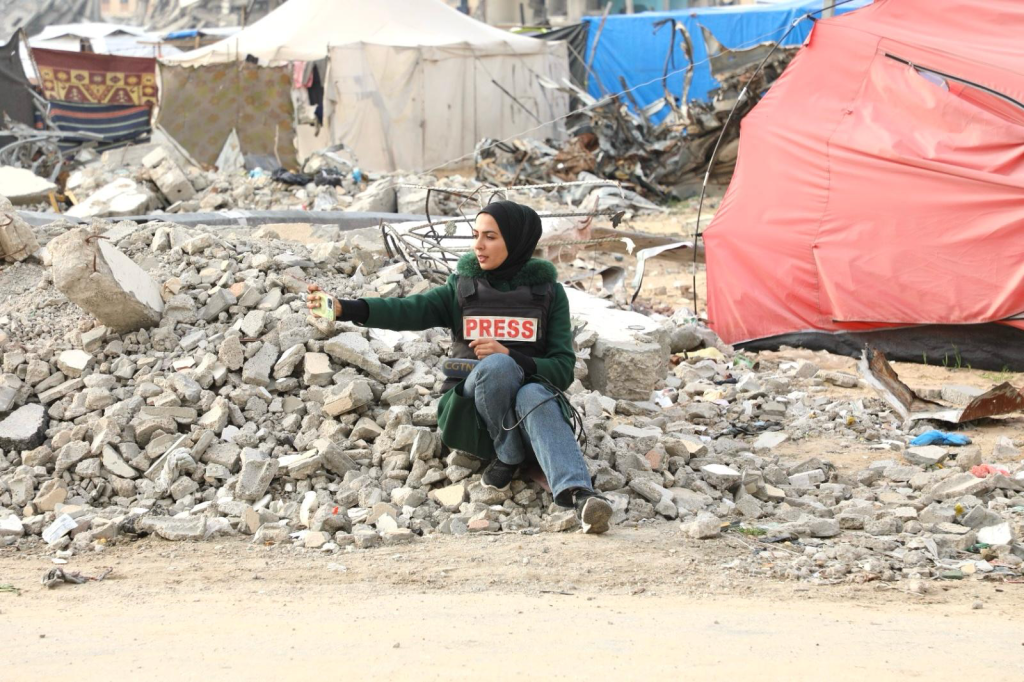
I spoke to Nadra El-Tibi, a journalist reporting on the ground in Gaza, about the ongoing struggle of living in Gaza amid the genocide.
“It feels like time has frozen in pain. Two years of displacement, destruction and endless loss. Every day feels heavier than the last, as if the world never ends,” said El-Tibi.
While speaking with El-Tibi, she abruptly asked if I had heard the loud noise in the background.
Israeli aircraft were bombing the area.
She said a short prayer and continued the interview.
El-Tibi has been displaced 10 times since Oct. 7, 2023. Her mother was recently diagnosed with cancer and El-Tibi said it has been unbearably difficult to find help for her and her family.
“The fact is that seeking treatment has become a nightmare,” El-Tibi said. “Hospitals are overwhelmed. Many services have collapsed, and sometimes we are told there’s nothing doctors can do. Survival feels like a miracle.”
On Oct. 3, in response to Hamas accepting a ceasefire proposal, United States President Donald Trump told Israel to stop its bombardment of Gaza. Israeli strikes killed over 70 Palestinians the following day, according to Al Jazeera.
The next few days Israel and Hamas negotiated a ceasefire deal. Both have agreed to the first phase of the deal, which includes an exchange of 20 Israeli hostages for 250 Palestinian prisoners and 17,000 detainees from Gaza. The deal will also allow around 600 aid trucks to enter Gaza daily.
“The situation on the ground remains dire regardless of any statement. Statements come and go, but people are still suffering every day,” said El-Tibi.
The 1948 Nakba and Today’s Genocide
Fahed AbuAkel, a Palestinian-Christian reverend in Atlanta, is a Nakba survivor.
“When I think about my experience with the Nakba, I immediately think about being a four-year-old kid. The thing that I still remember vividly is leaving our home with my dad, five sisters and two brothers,” said AbuAkel.
He distinctly remembers looking back at his home and watching his mother waving goodbye.
“I always wanted to ask my mother why she didn’t go with us. Later, I discovered that my mother was strong. She had told my dad, ‘You go and protect the children. I will stay here. This is our home—our land,’” said AbuAkel.
From 1947-1948, 750,000 Palestinians were expelled from their homes by the Israeli Army and various Zionist militias in an event known as the Nakba, or “catastrophe” in Arabic. Zionists took more than 78% of Palestinian land, destroyed about 530 villages and killed around 15,000 Palestinians.
Cheikh Niang, chair of the United Nations Palestinian Rights Committee, believes the Nakba and today’s genocide are not separate events, but rather a continuation of the displacement and ethnic cleansing of the Palestinian people.
After AbuAkel was expelled from his home, he and his family were forced to stay in makeshift tents for three months. When they went back home to their village of Kafr Yasf, they found their mother still alive. Five neighboring Palestinian villages had been destroyed.
AbuAkel said that a huge difference between the Nakba and today’s genocide is that, back then, Israel committed their crimes when no one was watching, but now there is hour-by-hour coverage. He is glad that the world now has its eyes on Palestine.
Since Oct. 7, 2023, 20 countries, including France, the United Kingdom and Portugal, have recognized Palestine as a sovereign nation, bringing the official number to 157 UN member states.
“The last two years in Gaza have put Palestine in a global arena in a way we never dreamed of since 1948!” said AbuAkel.
Author

Related Articles
A Rohingya man in New York died under mysterious circumstances— his relatives in Georgia are grappling with the loss
Federal immigration officers left Nurul Amin Shah Alam outside a closed coffee shop in harsh winter weather— days later he was found dead. He was getting ready to move to Georgia, says his niece in Stone Mountain.