Meet the Atlanta City Council candidates: Andre Burgin for District 11
As a career tech professional, District 11 candidate and Adams Park resident Andre Burgin emphasizes technological solutions in his way forward for Atlanta.
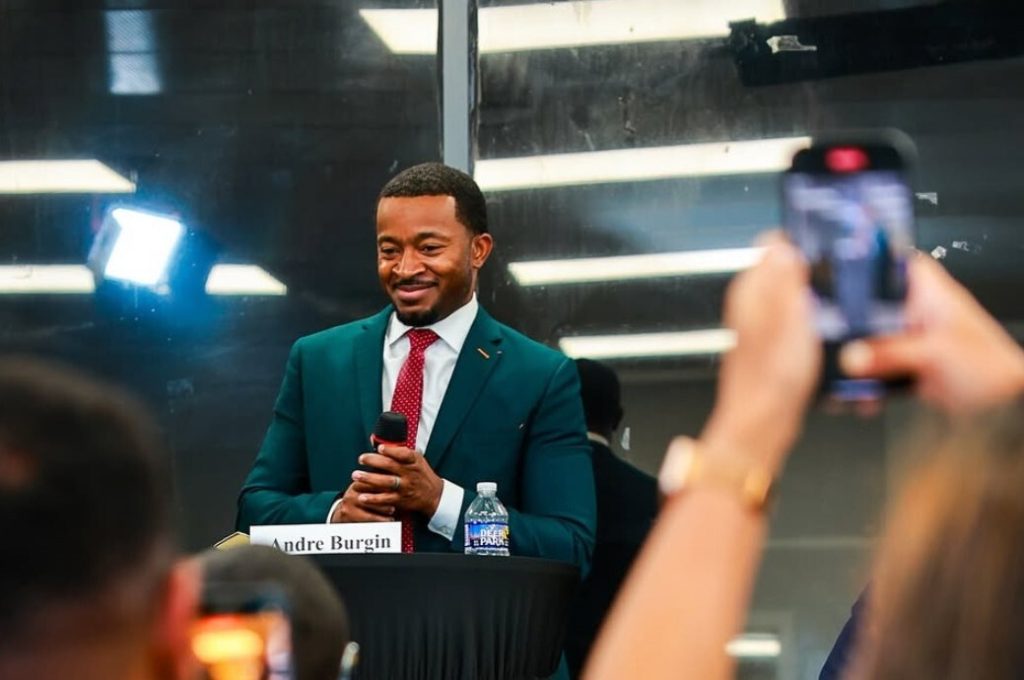
This November, the entire Atlanta City Council is up for election, including the District 11 position, which council member Marci Overstreet is vacating after two terms to run for council president. One candidate is market researcher Andre Burgin, whose answers to Atlanta Community Press Collective questions about his background, District 11 and objectives if elected are below.
Answers are condensed for space.
How would you describe District 11 in its qualities and challenges?
District 11 represents Southwest Atlanta’s unique cultural fabric. I could run into my teacher at church, Hank Aaron at the grocery store or Shirley Franklin at Rich’s in Greenbriar Mall. Coming from a working-class family, I could still encounter neighbors from every income level in the same spaces. That’s only possible because of the housing and community mix we’ve preserved; people connect at parks, churches and stores, trading perspectives that make us all stronger.
Our challenge is growing while preserving the income diversity that makes our community special. We face an “over-planned, underfunded” problem, beautiful development plans without execution or resources that feed more displacement fears than friendly progress. This shows up in our housing concerns, transportation gaps, crumbling infrastructure and underdeveloped business corridors.
What are the biggest lessons from your involvement in many community initiatives in Southwest Atlanta?
I’ve learned plans that aren’t executed get lost and forgotten by city officials—along with funding allocated for those projects. Sustained collaboration with the city allowed us to find funding for the AeroATL Greenway Model Mile Atlanta Project and move it from plans to feasibility and design stages. It required dedicated neighbors working with the city and fostering interdepartmental collaboration between ATLDOT and Parks & Recreation.
Seven years co-chairing the Adams Park Residents Association taught me community voices are essential. The city may develop plans and priorities, but residents can tell you what solutions actually work and hold the city accountable.
What led you to corporate market research and user experience as a career? How would you apply that, if elected?
I’ve always been naturally curious about life and understanding human behavior, which is why I love history, and that led me to marketing. When I was getting my MBA at Clark Atlanta University, my statistics professor noticed I was really good at numbers and asked what I wanted to do. I thought about being a brand manager, but he opened my eyes to market research. I could blend quantitative data analysis with qualitative methods like interviewing, where I still get to learn and understand people’s perspectives.
This taught me to analyze data, get context from people affected, THEN develop solutions. That’s what a great user experience researcher does. At Meta, I learned to translate complex insights into actionable recommendations. In government, that means using data to identify problems, listening to residents for context, then developing policies that actually improve lives rather than making decisions based on assumptions.
Your campaign includes a pillar for quality of life by “ending wellness deserts.” Could you explain this concept and how multiple issues intersect under it?
“Wellness deserts” are communities lacking infrastructure for healthy living: no fresh food access, limited health care, inadequate transportation, unsafe streets. These barriers intersect and compound each other. We have to think about this holistically.
My approach involves attracting more health care providers and grocery stores to reduce food deserts, pushing for sidewalks and better lighting, and removing blight. This can be spurred through incentives and public-private partnerships that improve the overall wellness of residents. If you don’t have transportation to reach a grocery store, accessing healthy food becomes impossible. If streets aren’t safe or well-lit for walking, children can’t play outside and families can’t exercise safely. If we don’t address blight, it signals disinvestment and affects everything from property values to community pride.
For your tech-based vision of government, how would you ensure technology is used for the good of everyday Atlantans, not their detriment or the gains of corporations?
I understand how things like data centers impact public health and how quickly this space is evolving, especially with AI. We need someone who understands how to use technology to increase transparency, increase efficiency and provide sufficient oversight and strategic thinking for technology projects and tools proposed to the city.
I propose real-time dashboards tracking project progress so residents can see where their tax dollars are working. Having worked on AI systems at Meta, I understand how bias gets encoded into algorithms. Any surveillance or predictive policing technology must have community oversight and regular audits to prevent discriminatory outcomes. The key to everything is the community having meaningful input on what technologies get deployed and how they’re used.
How would your approach differ from outgoing District 11 Council Member Marci Overstreet?
Building on Councilwoman Overstreet’s foundation, I’d bring tech-driven accountability and execution focus. Real-time dashboards tracking progress hold people accountable. I’d bring ruthless prioritization to ensure we’re prioritizing impact. When there’s a problem, we quickly identify who owns it and correct it.
My career has focused on analyzing data, talking with people and prioritizing impact. You move fast because you have the accountability systems I named. That’s what tech-driven accountability and execution means—that’s what I’ll bring with my unique tech background while leveraging industry relationships to bring new resources to District 11.
For more information on Burgin and his platform, visit andreburgin.com.
No paywall. No corporate sponsors. No corporate ownership.
Help keep it that way by becoming a monthly donor today.
Free news isn't cheap to make.
Related Articles
Georgia Court of Appeals will take up ‘Cop City’ RICO case
Attorney General Chris Carr appealed Fulton County Superior Court Judge Kevin A. Farmer’s dismissal of racketeering charges against 61 people. The Georgia Court of Appeals accepted the application on Wednesday, despite process challenges from the defense.

Local orgs fear further criminalized homelessness in HB 295, advanced from Public Safety Committee
The 8-5 vote marked the third straight year the bill proceeded to the House floor, where it was withdrawn last year without a full-House vote.