
‘Probably one of the worst things you could do to people’: Immigrant communities face compounding traumas amid Trump’s deportation blitz
It’s a traumatic time for many immigrant families. The Trump administration’s crackdown on immigration has produced consistent ICE raids, making deportation feel like an ever-present possibility. Whether being separated from a deported loved one or enduring the lingering fear that comes with seeing every day’s headlines, it’s not an easy time for their mental health.
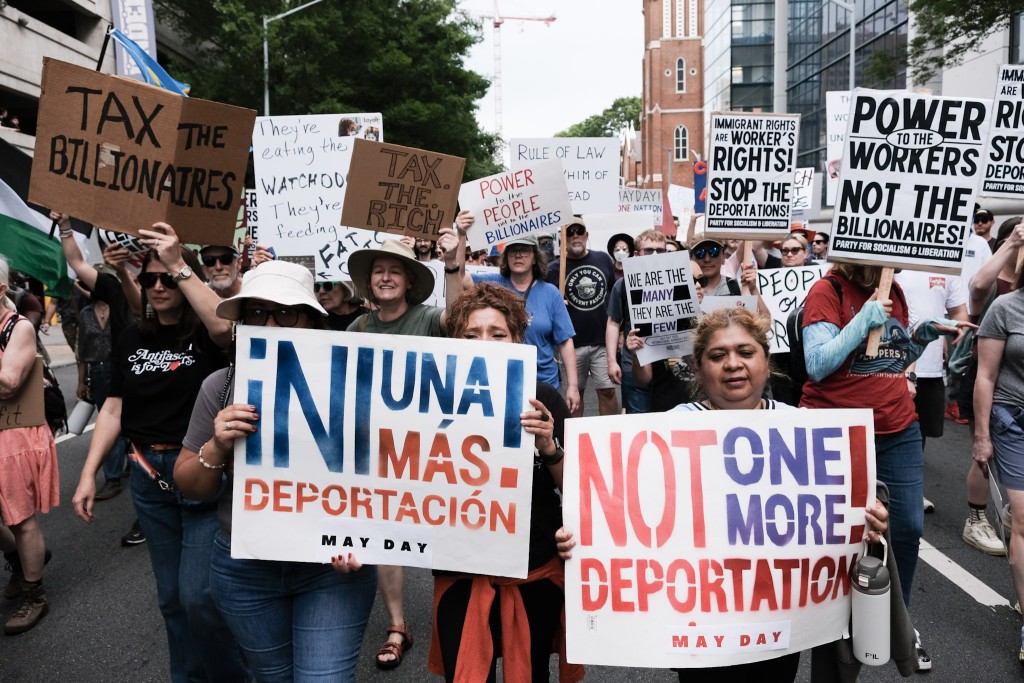
It’s a traumatic time for many immigrant families. The Trump administration’s crackdown on immigration has produced consistent ICE raids, making deportation feel like an ever-present possibility. Whether being separated from a deported loved one or enduring the lingering fear that comes with seeing every day’s headlines, it’s not an easy time for their mental health.
“I have seen an increase in a lot of anxiety and depression issues. Clients who have already been traumatized by a separation from family have symptoms flaring up again; a lot of flashbacks happening all over again and dreams,” Eliamonic Lopez, owner of The Center for Multicultural Counseling, said.
As a bilingual licensed professional counselor, Lopez provides therapy to many Spanish-speaking clients. She explained the impact that living in constant fear has had on her clients.
“I hear a lot of like, ‘Did you see this on the news, how they just took the baby away from the mom? Or this old man who was pushed down to the ground?’ Lopez said. “Mentally, if we’re seeing that someone who’s innocently walking down the street gets attacked simply because of the way that they look, that is causing more and more irrationality on what feels safe and what doesn’t feel safe.”
This trauma can manifest in a variety of ways: intrusive thoughts, low self-esteem, difficulties with trust, grief, anger, isolation, social withdrawal and hypervigilance. These symptoms are also associated with a prolonged period of stress known as “survival mode,” which the body activates in order to ward off any perceived threats.
“When the brain goes through something so traumatizing, the neurons start to kind of restructure themselves to be more in survival mode, because they’re constantly on edge,” Lopez said. “So then you have high cortisol levels, and you have adrenaline constantly pumping.”
These effects go beyond the head and heart. Physical symptoms, including stomach aches, chest pain, insomnia, changes in appetite and difficulty focusing, can also develop and disrupt a person’s daily life.
For school-aged children, these symptoms can be particularly consequential, even affecting classroom performance.
Reinforcing generational trauma
The father of Lopez’s children was deported.
No paywall. No corporate sponsors. No corporate ownership.
Help keep it that way by becoming a monthly donor today.
Free news isn’t cheap to make.
“I didn’t tell them that their dad had been deported, because I wasn’t 100% sure how they would deal with it, and I was scared in terms of what that meant for them,” Lopez explains.
Eventually, the children’s father told them what happened, despite Lopez’s belief that they weren’t ready to receive the information.
“They cried. They didn’t know what to say. They were trying to make sense of this, and this was four and six, right? So, very young,” Lopez said. “And I can’t even imagine what it’s like for other children who come home and do not have [both of] their parents there at that age.”
Her four-year-old daughter became very quiet and didn’t talk about the deportation much. Lopez said she’s very understanding and has a lot of empathy and tries to look on the bright side.
Her six-year-old son had difficulty regulating the influx of emotions he experienced, ranging from anger to sadness to anxiety.
Lopez put her children in therapy to address some of these new stressors. At the time, she was also in the process of divorcing their father, resulting in another layer of trauma.
Losing their father changed the bond they had with him. “Not being able to hug him or just talk to him face to face—sometimes that emotional connection gets lost,” she said.
Children whose parents have been deported may develop attachment or abandonment issues, she says. These attachment issues often extend into relationships with peers and can manifest in a fear of losing friendships due to potential deportation.
William Smith, president and co-founder of the Atlanta Immigration Clinic, has also seen an increase in requests for help.
Smith cited the Center for Victims of Torture to explain the impact of these deportations.
“It’s a really intense-sounding name. What their definition of torture is is not necessarily like people getting water boarded,” Smith said. “It’s people that get ripped away from their kids, or their kids don’t know where their parents are.”
From a psychological viewpoint, Smith thinks that’s “probably one of the worst things you could do to people.” By traumatizing these children, authorities could be impacting generations of people to come.
Smith believes that the current mass sweep of deportations happening across the country can be considered historical trauma. According to the Substance Abuse and Mental Health Services Administration, historical trauma is “the cumulative, multigenerational, collective experience of emotional and psychological injury in communities and in descendants.” Examples on American soil include the forced displacement and genocide of Native Americans and the enslavement of Africans.
“I sort of think that what is happening here is in that ballpark,” says Smith.
“I really believe, and some other colleagues believe, that immigration has become the civil rights issue of the 21st century,” he said.
Inescapable fear: “They don’t have a chance to tell their families where they’re going”
Shae Ivie-Williams is a somatic trauma therapist who provides immigrant communities with mental health evaluations, which assess whether or not applicants meet the mental health and fitness requirements for immigration, especially in cases of domestic violence or seeking asylum.
Ivie-Williams has recently seen a drastic increase in evaluation requests, which she attributes to the current administration and its crackdown on immigrant communities.
“I hear about a lot of stress; they’re afraid to go to work because they’re afraid that ICE may pick them up while they’re at work, and they don’t have a chance to tell their families where they’re going,” Ivie-Williams said.
She says spouses have told her that they stay on the phone during their partner’s entire commute home to make sure they make it home safely.
Smith says studies have shown that undocumented people are less likely to pursue health care treatment.
According to the U.S. Committee for Refugees and Immigrants, increased deportation rates and the fear of deportation are associated with reduced enrollment in health care and social welfare programs, poor cardiovascular health, food insecurity, delays in receiving prenatal care, increases in low birthweight babies, reduced K-12 school completion and increased childhood poverty.
“I think that there’s, right now, a lot of fear about if there could be some sort of a raid … if I’m going to be at the wrong place, wrong time where ICE shows up and I get taken away,” he said. “Or ‘are they going to somehow get my information and come and look me up?’”
Smith often has to explain to clients who have signed up for therapy that notes are protected and access to them would require court orders.
“…Getting access to any kind of mental health notes is really sort of a tall order,” he said. “That includes undocumented people, or anybody.”
Lopez feels the effects of this, too. Despite being an American citizen, she worried about which documents she needed to bring on a trip to Florida for her son’s birthday.
“I took all my legal documents with me, whereas maybe a year ago, I wouldn’t have thought of having birth certificates, passports, any of that to say I am a U.S. citizen,” Lopez said.
Smith believes that a lot of the immigrants who are here “are probably exactly the kind of people you’d want.” He says they’re hard-working, family people, have a lot of American values, and are, by and large, harmless and just want to be left alone.
“I think that America is a melting pot, and I think that we’re better and stronger for having diversity,” he said.
Author

Related Articles

Georgia law students say “Hell no” to ICE recruiting at interscholastic career fair
Hundreds of students and dozens of organizations across Georgia’s five major law schools demand ICE be uninvited to the schools’ Public Sector Career Fair this Friday.
Dunwoody City Council votes to defer Flock contract over data use concerns
A viral video showing the ease of accessing live feeds from Flock cameras prompted deep questioning of the company’s data practices and contract changes.

Meet Sandbox: Atlanta’s fix-it hackerspace and progressive tech collective
Launched in early 2025, Sandbox offers its space in Little Five Points’ Hartz Building for member-run digital security trainings, community fix-it days, 3-D printing and much more.