
Atlanta Immigration Court denying bond, sending more people to detention centers, oversight group says

For years, the Atlanta Immigration Court has been known as one of the harshest in the United States, rarely granting asylum. Now, as U.S. Immigration and Customs Enforcement arrests continue to increase throughout the country, extra efforts are being made to document court hearing proceedings.
Asian Americans Advancing Justice (AAAJ), an organization dedicated to empowering communities of color, has launched a program dedicated solely to court watching at the Atlanta Immigration Court.
Anjali Nair, AAAJ’s deputy director, said, “We are there as legal observers, trying to build a consistent presence and spotlight into the courts because oftentimes they go fully unchecked—and there’s a lot of what we would consider egregiousness in a broken system there.”
In the past, other organizations and court-watching groups have also documented Atlanta Immigration Court’s proceedings. A 2017 letter from Emory Law detailed how the court’s judges would routinely express disinterest and hostility toward detained people throughout the process; interpreters were often denied or unavailable; court hearings were canceled at the last minute; bonds were either denied or set at an unattainable amount and “on occasion, Immigration Judges prohibited observers in their courtrooms, even though Immigration Courts are open to the public.”
For now, AAAJ staffers attend master calendar hearings at the Atlanta Immigration Court to document court proceedings. Agnes Nyguen, AAAJ’s senior immigration programs associate, said the organization is trying to capture an individual’s country of origin, the amount of time they’ve been in the U.S., what languages they speak, whether there is an official court-appointed interpreter and whether the court moves to dismiss any cases. Their aim is to witness and record data to get a better understanding of what is happening inside the Atlanta Immigration Court as well as encourage others to attend public hearings.
While AAAJ is focusing on non-detained cases, the Georgia Asylum and Immigration Network (GAIN) recently launched an “online court watch program” earlier this year which called for volunteers to virtually attend immigration court hearings at the Stewart Detention Center in Lumpkin, Georgia.
Adriana Heffley, GAIN’s legal director, said staff members and volunteers have documented over 400 cases.
Bond hearings and asylum-seeking
Jessica Calmes, a private attorney working with detained immigrants in Georgia, said that even though ongoing efforts like court-watch programs have helped improve Atlanta’s Immigration Court, there is a significant shift in immigration court proceedings since President Trump took office.
Typically, a removal proceeding occurs during that timeframe where an immigration judge will determine if a non-U.S. citizen is allowed to remain in the U.S. or has to return to their home country.
Entering the country through a humanitarian parole program allows individuals to lawfully cross the border, protects them from being deported during the allotted parole timeframe and guarantees due process. Asylum seekers must prove they are at risk of persecution in their home country, which is extremely difficult. Even then, the humanitarian protection order isn’t guaranteed. The Atlanta court’s asylum grant rate is around 5%.
Calmes said that lately, the “courthouse is crawling with ICE officers.”
“They seem to mostly be waiting outside of these large master calendar hearings so they can get people in large numbers, and a lot of people show up to those without attorneys, so they are easier to arrest,” Calmes said.
Historically, if an individual poses no flight risk or public threat, they are eligible for bond, which would allow them to return to their family while awaiting their hearing. Calmes said that now, government attorneys are claiming that the “only people eligible for bond are people entering the country with a visa,” and dismissing a large number of cases and removal proceedings. This is where it gets complicated.
“They’re not dismissing the case because they don’t want to deport the person anymore, they’re dismissing the case because if those normal removal proceedings are dismissed then they no longer have the opportunity to go through these steps in front of a judge and they go from a procedure that has due process to then walking out of the court room and ICE can just detain them.”
Calmes explained that, once an individual is in detention, the only way out is to ask for an interview with an asylum officer who will determine whether they have a chance at being granted asylum.
“Then they need to be prepared to be detained for 6 months, a year, maybe more, before they get a decision—so it’s using detention as a deterrent to seeking asylum.”
With plans to expand the Folkston ICE Processing Center and so much news about detention centers’ human rights violations, Heffley said it’s more important now than ever that the public know and understand what is happening inside of court hearings, especially within detention centers like Stewart.
Both GAIN and AAAJ want the public to know that immigration court hearings are public and encourage others to get involved, stay informed and follow similar organizations and efforts. GAIN has a courtwatch program volunteer page. Both programs are still in the pilot phase and mainly focused on gathering and analyzing data. AAAJ has not yet called for outside volunteers.
No paywall. No corporate sponsors. No corporate ownership.
Help keep it that way by becoming a monthly donor today.
Free news isn't cheap to make.
Related Articles
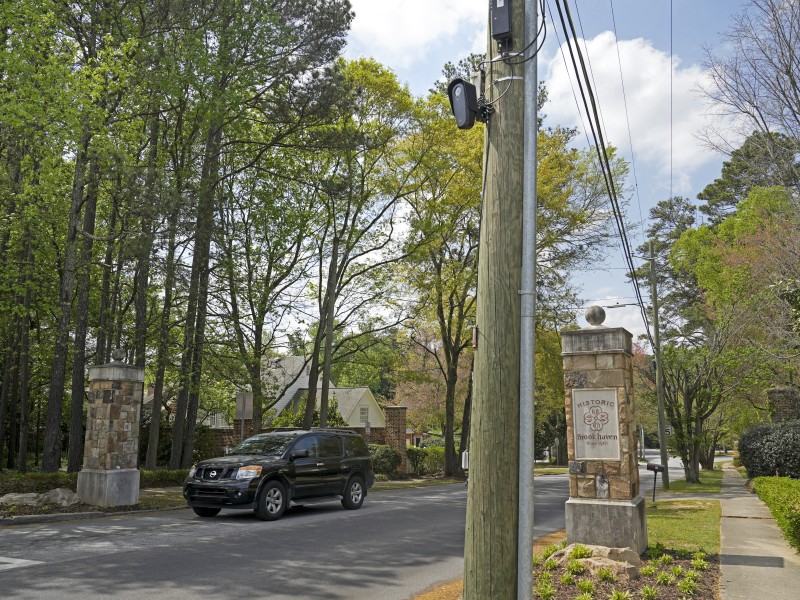
Popsicles and the FBI: Organizers launching week of action against Flock and ALPRs
From Aug. 16 to Aug. 22 organizers, both new and experienced, are holding events across the country for the National Week of Action Against Automated License Plate Readers.
Potent, mislabeled and easy to buy: Inside Georgia’s kratom market
Investigation finds weak oversight of state laws regulating potency levels, leaving Georgia consumers at risk.

