
Meet the Atlanta City Council candidates: Jacob Chambers for District 2
District 2 candidate Jacob Chambers emphasizes housing, transportation and infrastructure as key issues for Atlanta to remedy.
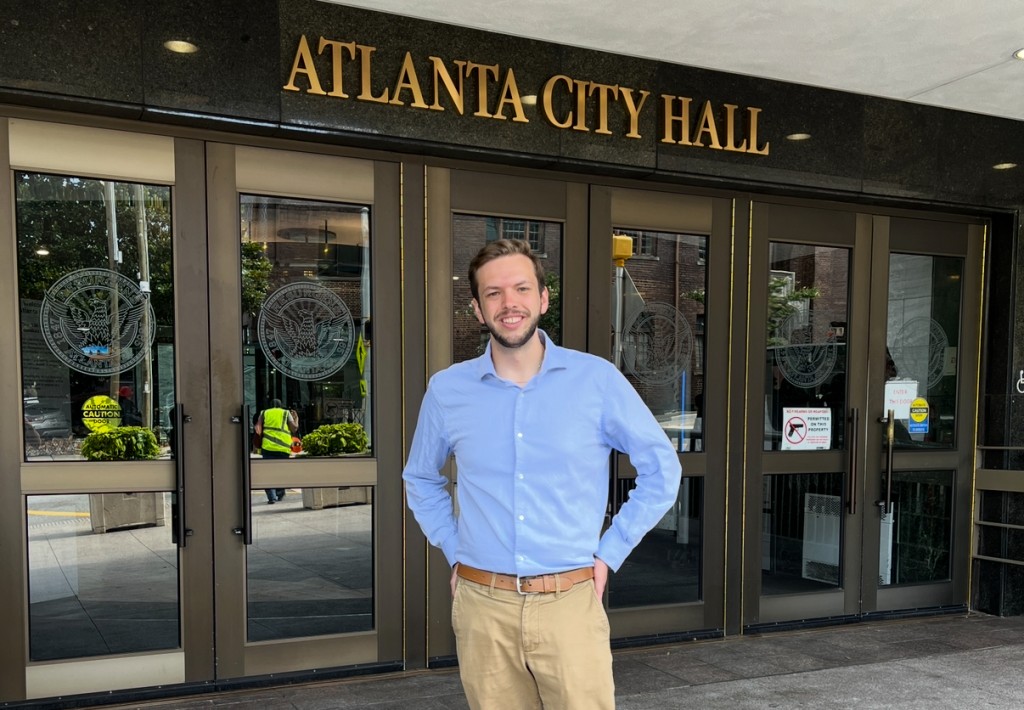
This November, the entire Atlanta City Council is up for election, including the District 2 position, which council member Amir Farokhi recently announced he would vacate to lead the Galloway School. One candidate is Georgia Tech software engineer Jacob Chambers, whose answers to Atlanta Community Press Collective questions about his background, District 2 and objectives if elected are below.
Answers are condensed for space. Chambers stresses he answers only as himself, not a Georgia Tech or University System of Georgia employee.
What distinguishes District 2 from the rest of Atlanta?
District 2 is unique as Atlanta’s most densely populated district and heart of the city. It is home to world-class amenities, diverse housing and the Eastside Beltline Trail, which has been transformative—positively and, regrettably, through displacement of longtime residents. The challenges here serve as a microcosm of the city’s larger issues.
District 2 is home to some of Atlanta’s greatest cultural, religious and business institutions. One reason I decided to run is that I am uncertain I will be able to live long-term in my community and raise a family here, due to cost of living. We need to acknowledge housing is an existential crisis, pricing out families that have lived in District 2 for generations and gentrifying historically Black neighborhoods such as Old Fourth Ward. Incremental zoning reforms that expand housing supply while protecting housing stability are necessary to ensure the sustainable growth of our city.
Transportation is another challenge. District 2 needs a connected network of protected bike and scooter lanes, along with long-promised Beltline Rail. These investments would make it easier to move around without a car, better connect neighborhoods and bring parts of the district not served by MARTA heavy rail into the system.
What are the biggest issues for the entire city you’d address? How?
The cost of housing, our antiquated transportation network and deep questions about funding critical infrastructure all point to the biggest issue facing Atlanta: what kind of city we want to be. Growth is a blessing but raises hard questions: Will it serve longtime residents and newcomers alike or push out lower-income neighbors? Will downtown be a vibrant place to live and work or just a commuter hub?
With the eyes of the world coming to Atlanta next year, our unique merits and struggles will be on display. Our plans for Beltline Rail and affordable housing are badly behind schedule. We can be a world-class city but need to own the problems we face and take control of our future.
We need leadership ready to tackle these challenges with a long-term vision. My goal is to help build an Atlanta that is connected, sustainable and affordable, where people enjoy freedom of mobility and our children’s lives are better than ours.
How does your computer science career inform your candidacy?
As an engineer, I approach the city’s challenges differently than a career politician. I see them as complex, systemic problems that require careful analysis, not oversimplification. In my field, we call that debugging—finding root causes and fixing them step-by-step. That perspective would equip me to serve as a unique voice on Council, not just naming problems, but solving them with practical, systemic solutions.
You’ve worked with the federal government a lot, particularly in aerospace and military (NASA, DoD, Navy). How does this affect your view of heated Atlanta issues related to the flight industry and to militarism?
I have been honored to work in a variety of roles, from helping improve health care access for rural Georgians to supporting security at NASA facilities. These experiences taught me how to navigate large, complex bureaucracies and achieve results. That perspective is directly relevant to City Council, where collaboration and problem-solving are essential.
At the local level, my focus is on how federal partnerships can strengthen Atlanta’s economy and infrastructure. With the world’s busiest airport in our backyard, maintaining strong, productive relationships with federal agencies is not just a political necessity, but an economic one. My background gives me unique insight into how to steward those relationships so they benefit all Atlantans.
Tell us about your broader political journey and identity. How do these fit the representation of District 2?
My political identity is rooted in pursuing pragmatic, progressive solutions for our city. As an engineer, Georgia Tech grad and professor, I’m policy-oriented and technical at heart. My approach is to understand systemic challenges facing our city, and then finding achievable policy changes to solve those challenges. That means helping middle- and working-class families by addressing rising housing costs, investing in active transportation and embracing diversity as a strength for Atlanta’s future, which can improve if we work together.
District 2 is filled with hardworking Atlantans who hold tremendous promise but often feel cynical or shut out. My candidacy offers a different way forward: building an Atlanta for everyone, where families can afford to stay, opportunities are accessible and our city is the best place in the world to raise a family, start a business, pursue an education and live fully.
For more information on Chambers and his platform, visit jacobforatlanta.com
No paywall. No corporate sponsors. No corporate ownership.
Help keep it that way by becoming a monthly donor today.
Free news isn't cheap to make.
Related Articles
Georgia Court of Appeals will take up ‘Cop City’ RICO case
Attorney General Chris Carr appealed Fulton County Superior Court Judge Kevin A. Farmer’s dismissal of racketeering charges against 61 people. The Georgia Court of Appeals accepted the application on Wednesday, despite process challenges from the defense.

Local orgs fear further criminalized homelessness in HB 295, advanced from Public Safety Committee
The 8-5 vote marked the third straight year the bill proceeded to the House floor, where it was withdrawn last year without a full-House vote.