
Fate of Fulton’s Atlanta City Detention Center lease withdrawal further delayed in committee
Several public commenters joined Fulton County Sheriff Patrick Labat in addressing the committee on whether to extend the Atlanta City Detention Center lease or seek alternatives.
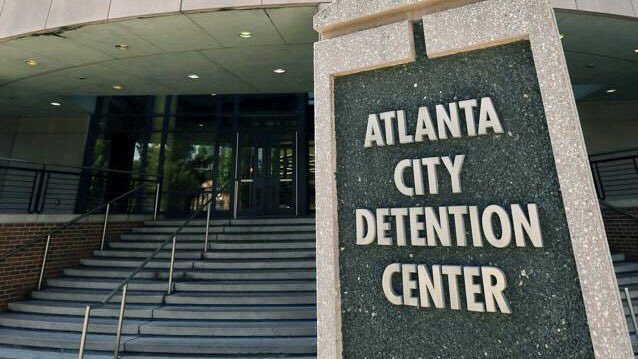
After more than two hours of comments, statistics, discussions and clarifications consumed the Atlanta City Council Public Safety Committee meeting Monday afternoon, the committee chose not to vote on a resolution for staged withdrawal of detainees at Atlanta City Detention Center (ACDC).
“We had so much information that came to us today, I don’t know if today’s the day we should be able to make this vote on this legislation,” District 12 Council Member Antonio Lewis said just before the meeting’s conclusion. “But we did hear enough today—I’ll be going back and listening to (the meeting).”
District 3 Council Member Byron Amos agreed that the information was abundant but made clear what he believed the committee could do.
“There’s a lot that needs to be fixed on the Fulton County side,” Amos said. “But I think I heard that sometimes our officers may upcharge or may do things that trigger people to go to Fulton County (Jail), versus coming to our facility. Whatever we can do on our side … to fix that, I think that’s what we need to really be laser-focused on.”
Amos added that Fulton County use of tax-allocation district money to build a jail troubled him, versus his desire to build housing.
At the full council meeting on Aug. 18, the council referred the resolution back to the committee after determining it needed more information. On Monday, District 10 Council Member Andrea Boone, the committee chair, said the committee should visit ACDC and Fulton County Jail—commonly known as Rice Street Jail—as a next step.
Fulton County Sheriff Patrick Labat repeatedly said he welcomed the committee and anyone to visit the jails, talk to imprisoned people and see the true conditions for themselves, versus what he described as misinformation. Withdrawal of inmates as the city’s four-year jail lease with the county nears its end in 2026 would cause more harm to more people, he stated.
“We have to figure out how to coexist in this space,” Labat said of Atlanta and Fulton County personnel in ACDC. “As much as anybody that is anti-Patrick Labat, anti-Fulton County Sheriff’s Office, anti-law enforcement—whatever that looks like—the reality is we’re going to put people in front of politics and continue to fight.”
Labat’s fight has included a lawsuit against Fulton County government, stating a 2024 county ordinance illegally restricts his privileges as sheriff to control how he spends the sheriff’s office budget. He and his office have also been defendants in numerous lawsuits and complaints, including from the U.S. Department of Justice this January, for Rice Street Jail’s unconstitutionally awful conditions in violation of the Americans With Disabilities Act of 1990 and the Civil Rights of Institutionalized Persons Act. Labat maintained at the meeting that suffering in the jail—which includes many of the at least 30 deaths since 2022 of people in Fulton County custody—is foremost due to preexisting decrepit conditions. Labat said conditions have improved in his tenure but remain dangerous from poor infrastructure, noting a flood last week from rain. The DOJ complaint cited patterns of preventable harm, such as officers’ excessive use of force, discrimination against people with mental health disabilities and prolonged inappropriate use of restrictive housing.
Whereas Labat has insisted on a new jail building that he believed would ultimately cost $2.2 billion after run-ups from a proposed $1.2 billion plan, public commenters offered alternatives, particularly members of the Community Over Cages Coalition.
One member, Women on the Rise Campaign and Community Organizer Kayla Smith, explained jail personnel not providing her epilepsy medication while detained as an instance of preventable harm.
“Friends and family even called to the jail and let the staff know it’s imperative that I have my medication,” she said. “I missed two doses … and could’ve easily lost my life if I had a seizure, since my medication was never given to me. There is no accountability, and I can’t understand why we insist on following a failing, inept plan. We can do better than this. Keep your word and close the jail.”
Devin Franklin, senior movement policy counsel for the Southern Center for Human Rights, also spoke as a Community Over Cages member. He cited the Center’s four successful suits against Fulton County Jail and “demonstrated inability” of the sheriff and county to be competent caretakers as clear reasons the council should look elsewhere—and imprison fewer people regardless.
“About a week ago, he was again found in contempt of a settlement agreement found by the Southern Center for Human Rights,” Franklin said of Labat. “And documented by data scientists, the City of Atlanta arrests more persons for low-level nonviolent offenses than 85% of police departments in the United States. Of those arrests, Black folks were 8.9 times more likely to be arrested.
“Address the fact that you are arresting for a number of offenses that do not necessarily have to be arrests.”
Citations with releases, diversion center referrals and the Policing Alternatives & Diversions initiative (PAD) were among alternatives Franklin mentioned.
Likewise starting atop the incarceration chain, Devin Barrington-Ward of the National Police Accountability Project excoriated the Atlanta Police Department and council based on what he called patterns of stonewalling instead of public transparency, abuse and attracting violent people to APD via lack of accountability for that abuse, including killings.
“I have observed time and time again, when APD officials come to this committee, they are showered with thanks, praise and appreciation, rather than being pressed with tough questions about the public’s expectations of officers’ duty and conduct,” Barrington-Ward said. “Do you all have oversight responsibility or not? … I’m tired of coming up here and listening to them gaslight you.
“We had done so much work to empty that building, because we made a commitment that Atlanta was going to get out of the jailing business. And it seems like no officials here with the City of Atlanta are willing to adhere to the promises that were made to the public.”
No paywall. No corporate sponsors. No corporate ownership.
Help keep it that way by becoming a monthly donor today.
Free news isn't cheap to make.
Related Articles

AI, Flock cameras and data centers dominate debates for Georgia’s statewide races
AI was a hot topic in every Atlanta Press Club debate, from Attorney General to Agriculture Commissioner

Approximately 500 participate in hunger strike at Folkston immigration detention center
Government recently awarded massive contract to expand GEO Group facility to 3,000 beds to become largest permanent ICE site in United States.

