Coalition of organizers and unhoused Atlantans secured housing commitment from city ahead of sweep
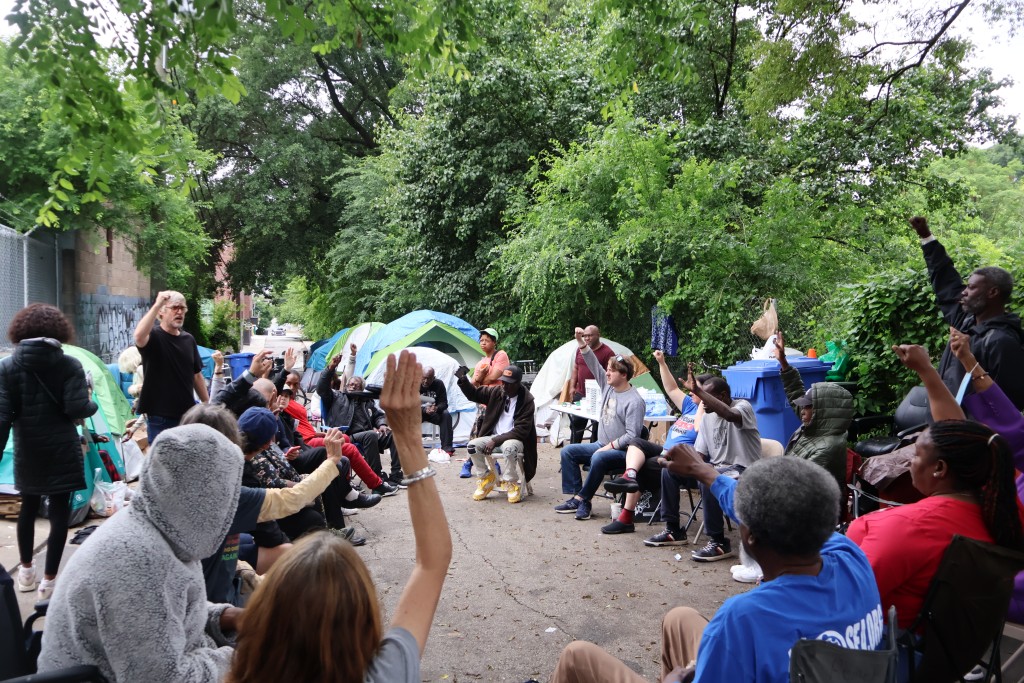
As the deadline for an encampment clearing loomed over the Backstreet, organizers with the Justice for Cornelius Taylor Coalition faced a conundrum. Almost all of the encampment’s 31 residents wanted to move to transitional housing, but organizers said the City of Atlanta was only prepared for about 15, half that number.
Until its “permanent closure” Thursday, the Backstreet was a small encampment off Old Wheat Street just outside of Atlanta’s downtown core. The city previously cleared the Backstreet in January, just two days before Martin Luther King Jr. Day. During that clearing, a city employee driving a construction vehicle ran over and killed Cornelius Taylor, who was asleep in his tent.
In the months since Taylor’s death, the eponymous coalition became a collaborative effort between community organizers and the Backstreet’s residents. Pastor, coalition organizer and former Backstreet resident Nolan English credited the trust built with residents over months of engagement for the high interest in transitional housing. “If there’s no rapport, there’s nothing,” English said.
Backstreet resident Ebony Tymes excitedly anticipated her move into Welcome House, an apartment complex where most residents working with the coalition expected to transition. Tymes said the Cornelius Taylor Coalition members stood out because “they’ve been more involved. It’s been personal … noticing me and just like, wanna hear what I gotta say and just giving me an answer and making it feel real and sincere.”
Mawuli Davis, the attorney for Taylor’s family, said, “This coalition has stuck together to collaborate and work with the city. Now that this community has been built, we are able to help move people into a safe space.”
Cornelius Taylor Coalition prepares for Old Wheat sweep
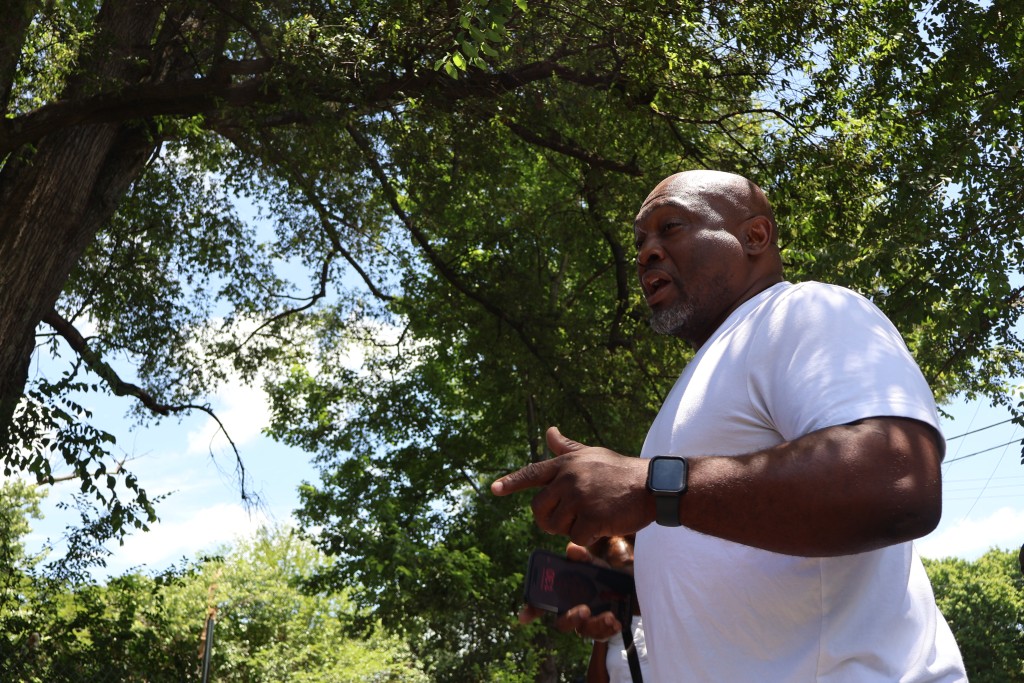
Prompted by the posted signs on the Backstreet warning of a clearing scheduled for July 10, coalition members organized a press conference outside City Hall on Monday and signed up for public comment during that afternoon’s city council meeting. Chief Operating Officer LaChandra Burks met with the coalition and offered a 24-hour extension on the closure.
The coalition was originally a member of the city’s Homelessness Task Force, created in the wake of Taylor’s death to review and establish new policies on homelessness. The coalition withdrew in May amid dissatisfaction with the continued involvement of Partners For Home, the lead organization in Atlanta’s Continuum of Care.
After leaving the task force, the coalition published a policy proposal focused on housing-first initiatives and wraparound services for around 30 people living in the Backstreet, but did not receive a response from the mayor’s office. Weeks later, Partners for Home released its “Atlanta Rising” plan to address homelessness in anticipation of the 2026 World Cup.
No paywall. No corporate sponsors. No corporate ownership.
Help keep it that way by becoming a monthly donor today.
Free news isn’t cheap to make.
In the runup to the closure, housing nonprofits working with the city created a list of Backstreet residents to determine who would require housing, but that list left out half of the residents. Backstreet resident Lena Ellis said the agencies’ list was created by check-ins at 6 a.m. and 11 p.m. and was based on who was “sleeping in the bed.” Ellis said that’s not a reliable method, as people come and go at different times.
“I sleep back here, do I have to hang back here?” Ellis asked.
Backstreet residents move into transitional housing or temporary hotels
Residents were taken to view the facilities at Welcome House in two groups. Despite the contested number of people on lists and the city’s stated limitations of capacity and resources, all of the coalition’s 31 residents were transitioned off the Backstreet. On July 10, the coalition brought in school buses to carry people and their belongings to their new housing.
Once everyone was loaded onto buses, English told the assembled group of city and agency workers, “This is day one. We’ve got plenty of work to do.” The day that people on the Backstreet got housing, English said, would be the start of the direct services outlined in the coalition’s proposal.
The residents ready to move in were brought to a processing space in Welcome House, where they signed paperwork and received keys to their rooms.
Backstreet resident Erick Bovia watched the check-in process for the group. He already held his keys, but he wanted to make sure “the family” did too.
Some people on the coalition’s service list were missing key documents, including background checks. Rather than going to city shelters, the coalition purchased them hotel rooms.
Other Backstreet residents unaffiliated with the coalition were sent to city shelters.
Until residents in hotels can transition into housing, the coalition is committed to providing meals and staying engaged. They also plan to independently provide wraparound services that include job training, transportation and case management.
‘We got a whole lot of work to do’
Moments before the Backstreet was “decommissioned,” all tents and remaining belongings were thrown away by city workers.
Before leaving the encampment, Griffeth spoke to the memory of her partner. “Baby, I’m not coming back no more.”
Hours later, Griffeth sat outside the Welcome House, ready to move in. “Cornelius loved these people,” she said. “That was his family. I know he would be so happy.” But, Griffeth added, “there’s so much more to do. We got a whole lot of work to do.”
Related Articles
A Rohingya man in New York died under mysterious circumstances— his relatives in Georgia are grappling with the loss
Federal immigration officers left Nurul Amin Shah Alam outside a closed coffee shop in harsh winter weather— days later he was found dead. He was getting ready to move to Georgia, says his niece in Stone Mountain.