
Cop City RICO: Trial of Ayla King delayed again over mistrial, double jeopardy appeal
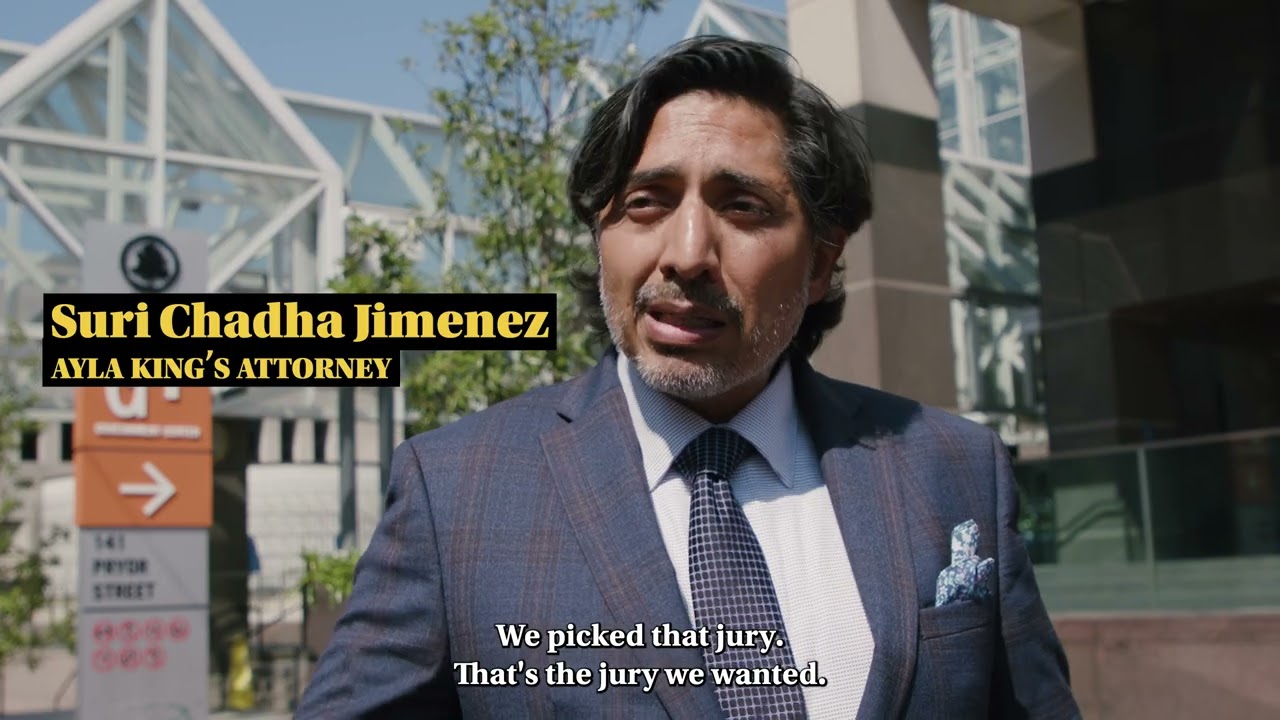
The speedy trial of “Cop City” racketeering defendant Ayla King resumed Monday after 18 months of delays, but after Judge Kevin Farmer declared a mistrial, the case was promptly put back on hold as the Georgia Court of Appeals rules on whether King faces double jeopardy.
“What I’m appealing right now is that my client has already been placed in jeopardy once,“ said King’s attorney, Surinder K. Chadha Jimenez, following Monday’s hearing. “And the Constitution guarantees that you cannot be placed in jeopardy twice.”
The Georgia State Constitution also provides additional protections against double jeopardy, Chadha Jimenez said.
18 months of delays and a Court of Appeals opinion set the stage for Monday’s hearing
King, who uses they/them pronouns, and 60 other people were indicted by a grand jury on Aug. 29, 2023, for alleged violations of the Georgia Racketeer-Influenced and Corrupt Organization (RICO) Act as part of a multi-year protest against the Atlanta Public Safety Training Center, also known as “Cop City.” If convicted, the defendants face up to 20 years in prison.
King filed a demand for a speedy trial in October 2023 before Fulton County Superior Court Judge Kimberly Esmond Adams, and jury selection began in December 2023. Media and members of the public were not allowed in the courtroom during jury selection, which lasted for three days. Immediately following jury selection, the Court scheduled a 28-day break that lasted into the New Year.
Chadha Jimenez filed a motion to dismiss the charges against King just after midnight on Jan. 1, 2024. He argued that the Court failed to satisfy the requirements of a speedy trial under Georgia law, which sets a time limit by which a trial must commence. Adams denied the motion and Chadha Jimenez appealed. The issue then went to the Georgia Court of Appeals, which affirmed Adams’ ruling, stating that the trial court acted in accordance with the speedy trial statute because empanelling a jury constitutes the commencement of a trial.
However, the Court of Appeals remittitur—a document transferring a case back to the trial court—also stated that Adams had “erred in closing the courtroom to the public and media” during the jury selection process. Because jury selection was closed, the Court of Appeals said the trial court should declare a mistrial and reconduct jury selection in an open courtroom.
In the intervening months, Fulton County Superior Court Judge Kevin M. Farmer replaced Adams as the presiding judge over all the Cop City RICO trials after Adams was moved to a different court.

Defense tried to avoid the need for new appeal, attorney says
Chadha Jimenez said he filed a motion ahead of Monday’s hearing in order to retain the already sworn-in jury so that the speedy trial could go forward this week.
“I want an open, public trial,” Chadha Jimenez said, “but I want this jury more than that—these jurors that we spent three days picking. Those were our jurors.”
Judge Farmer said he would follow the instructions of the Court of Appeals and denied that motion. He then informed the jury that he had declared a mistrial and dismissed them.
This prompted Chadha Jimenez to move for acquittal. He said jeopardy attaches when the jury is empaneled, and to empanel a new jury would constitute double jeopardy.
There are exceptions to the double jeopardy clause, said Deputy Georgia Attorney General John Fowler, the lead prosecutor in the trial. “The Constitutional provision that precludes double jeopardy carves out an exception in the event of a mistrial.”
The Court of Appeals must now rule on the issue. The earliest that the trial would recommence is September or October, two years after the indictment against King and their codefendants.
If the defense is successful in its appeal, it will result in King’s acquittal.
Judge Farmer said he would move on to trials for the codefendants while the appeal is still pending.
Over the past several months, four other defendants—Jamie Marsicano, Spencer Liberto, Francis Carroll and Alex Papali—filed motions for speedy trials. One or some combination of those defendants will be the next to be tried, according to an order of trials submitted by the prosecution.
The next trial is not yet scheduled, as of the time of publishing.
Increased security measures and restricted courtroom access issues continue
The Fulton County Sheriff’s Office has instituted secondary security measures for the Cop City RICO trials that it doesn’t seem to be applying to most other cases. At one hearing in June, bags were not allowed inside the courtroom, despite mandatory metal detector and X-ray bag screenings conducted upon entry into the courthouse.
At every hearing under Farmer, members of the public have been required to place their cell phones in magnetically sealable bags, which is not typical for most cases. The judge said this was to prevent unauthorized recording of the Court proceedings.
Monday, bailiffs were checking government IDs at the door to the courtroom. Chadha Jimenez said that the measure has a chilling effect on public participation. “Some people don’t have ID,” Chadha Jimenez said. “So, are those people not welcome in the courtroom?”
Farmer instructed Chadha Jimenez to file a motion on the issue.
Live video streaming was an important aspect of the recent YSL RICO trial, but may not be available in the Cop City trials. One media organization live-streamed video of a Cop City RICO status conference in May without the judge’s permission. Because of that, he said, he was not allowing live streaming.
No paywall. No corporate sponsors. No corporate ownership.
Help keep it that way by becoming a monthly donor today.
Free news isn't cheap to make.
Authors

Related Articles
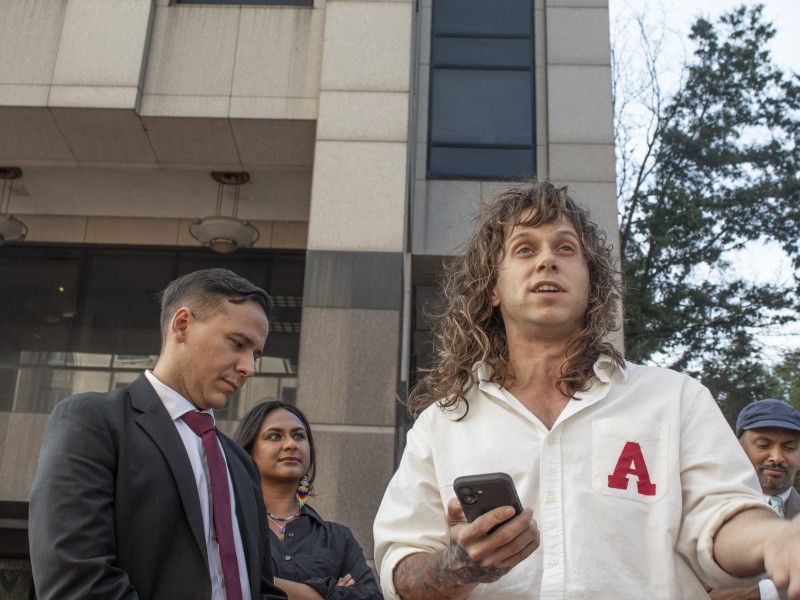
Georgia Court of Appeals will take up ‘Cop City’ RICO case
Attorney General Chris Carr appealed Fulton County Superior Court Judge Kevin A. Farmer’s dismissal of racketeering charges against 61 people. The Georgia Court of Appeals accepted the application on Wednesday, despite process challenges from the defense.
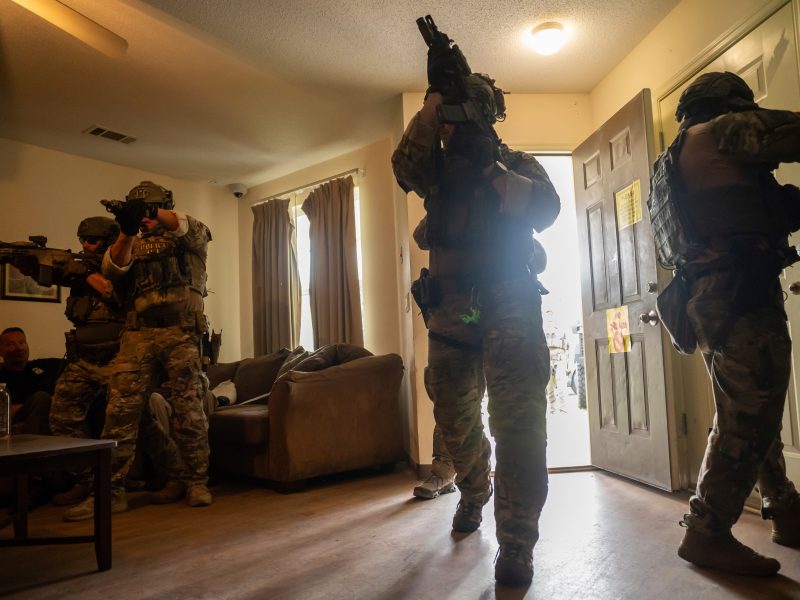
Local orgs fear further criminalized homelessness in HB 295, advanced from Public Safety Committee
The 8-5 vote marked the third straight year the bill proceeded to the House floor, where it was withdrawn last year without a full-House vote.