Meet the Atlanta City Council candidates: Rohit Malhotra for city council president
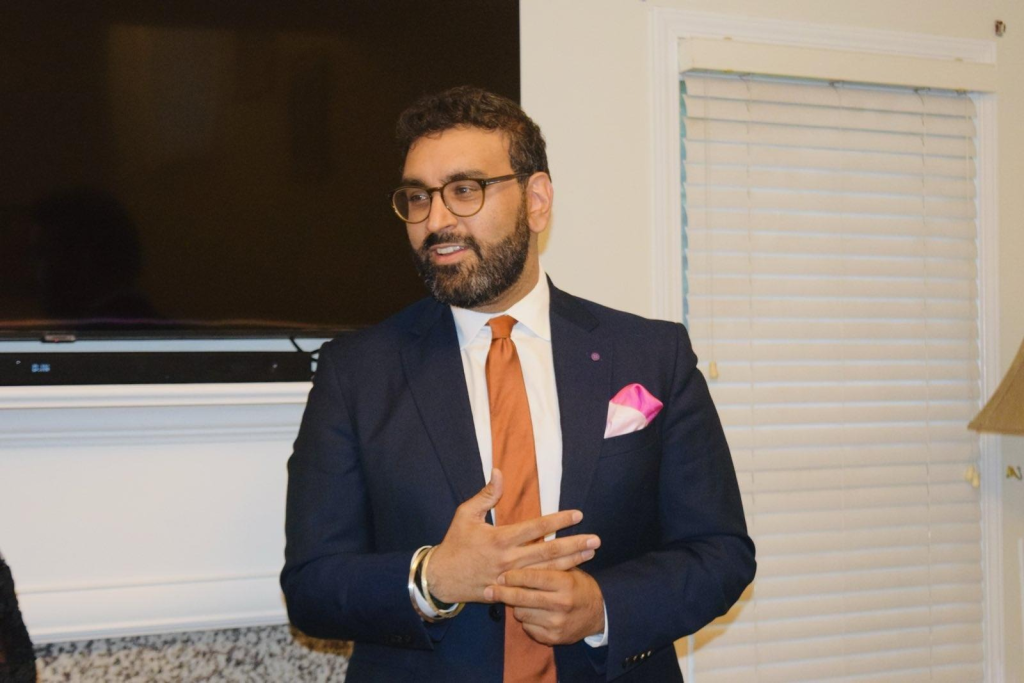
This November, the entire Atlanta City Council is up for election, including the council president position currently occupied by Doug Shipman, who will leave the role as this term ends. Candidates include Marci Collier Overstreet—an eight-year member of Atlanta City Council—and Rohit Malhotra—a longtime local civic organization leader. Each spoke with Atlanta Community Press Collective about the council president’s role and priorities to address.
This post covers responses given by Rohit Malhotra.
Answers are condensed for space.
What makes the council president position important?
The role as I read it is a policy role. It is supposed to be an independent legislative mind able to look at and provide a policy agenda for the city of Atlanta to both consider and to expand our imagination of what’s possible in this city.
I’m certainly not leaving a 12-year career to facilitate meetings. The highest potential, the best use of this office, is a place where public policy can be researched, designed, reimagined—and could help build a more robust, transparent and powerful agenda for the people of Atlanta.
That’s why I chose this position. It’s a really unique one. I’ve talked to city council presidents around the country, and when it’s done best—like Boston or St. Louis—it is an independent office. It’s not rooted in the day-to-day of the executive. Its policy perspectives cannot be compromised by a vote.
It depends how the person occupying the role chooses to lead. For example, Wyche Fowler, the first council president, was notorious as offering counterbalance to the mayor. But Fowler was really about a multitude of perspectives in policy-making as we entered this new age of Atlanta.
After the (Mayor Kasim) Reed scandals, City Hall had a dark cloud on it. I was in Felicia Moore’s office when she was council president, meeting with her about some transparency and anti-corruption work. 2017 onward, corruption was the number one issue. If you’re the mayor, there’s only so much you can spend on that. Moore took a lot of legislation around transparency and anti-corruption work and pushed on that. That led to the establishment of the Office of the Inspector General.
Today, you have Doug Shipman, who brings a lot of different people to the table, but he’s a policy guy. The numbers have to make sense. He’s always been a transit advocate, and he called for an audit of MARTA, which I think raised the consciousness on transportation. If we don’t address it now, we may be punting for decades before we see any semblance of effective transportation systems.
No paywall. No corporate sponsors. No corporate ownership.
Help keep it that way by becoming a monthly donor today.
Free news isn’t cheap to make.
The role can imagine public policy in a way that neither of those roles can. It can advocate for the executive or legislative branch; I also think it can be a protective measure for someone who wants to do something bold but can’t take the political backfire. And that stalls good policy in cities; politics is the greatest antidote to good public policy.
What is your strategy for picking committee chairs?
To me, first and foremost, the chair should have some established subject matter expertise. If they don’t have the expertise on it, I think it should be a requirement that they get it.
The city has actually done a good job of making sure the Finance chair has that.
Similarly we should be thinking about that with CDHS (Community Development/Human Services), Utilities, Transportation—not just “I care about that issue,” but “I have an established commitment to that issue,” so if the chair wants a working session, they’re not confused about subject matter experts (SMEs) they should bring in.
The other thing we should look for is potential conflicts of interest. If you have a set of donors or consultants or others potentially influencing city-level decision-making also actively involved in your political career, there should be a separation of whether that person has an established conflict of interest as the chair.
Policy is hard work—it’s an actual skill. Just like you would send a quarterback who won a Super Bowl to quarterback camp, I think we should send policymakers to policy camp. You should learn, be up to date. People should look at you and say, “Great, I trust you. I understand what you’re saying.”
Way too often, it’s become political assignments. “Oh, you were really nice to me, so what’s your favorite committee?” I’m not saying that’s how city council presidents have operated. I’m saying that’s the expectation.
You want a diversity of thought on those committee assignments. Do we have equitable representation of neighborhoods? If certain issue areas impact neighborhoods more, we should prioritize those council members being on those specific committees. If a council member is absent from a committee, their constituents are absent from that committee.
What is your position regarding the mayoral administration and the growing number of city employee complaints?
There needs to be strong processes that ensure employees are protected. I’m a big proponent of labor. When we think about people at City Hall, we often only think about the people who wear suits. We don’t think about the folks who get there before those suits are even awake, and are still there when the suits are asleep.
We should be thinking about city workers, and if they are concerned, they should have a safe and easy place to express those concerns and be elevated. When we pretend those concerns don’t exist, we often create a bigger problem.
People are struggling. I ran a company for over a decade, and the hardest part of leading people is creating room for their humanity and the reality of existence.
My hardest days were, when employees would come during COVID, almost every other week going to funerals. We just acted like that didn’t happen. There’s $5.15 representing one hour of work, and we’re like, “You should be good”? No, I think we have to just sit with that. People are not just complaining to complain.
You have strong processes around ethics, transparency, anti-corruption and anti-fraud because you need people cross-checking what’s going on, but also preparing workplaces to be better for the future.
The city is requiring—very quietly—people to come into the office again. Some jobs may be better in person, but we don’t live in the same work conditions that we did in 2019. Cities have to be more open and empathetic to how they are reintegrating employees back into working conditions far from what we’re used to.
If you tell people to come back full-time in person, the numbers show an automatic reduction in workforce without cuts. We’re facing a $20 million deficit in Atlanta. The easiest way to cut costs is to create a condition in which personnel will be less. We need to take problems and deal with them now, but also plan for the future, not just call it someone else’s problem.
The council president can take that on. The pressure on the mayor’s office to deliver now, that’s also true for council. But the council president can take a long view of the city—what do our policies look like years from now? What are the detriments of the decisions we’re making today and the potential benefits? What an amazing opportunity to utilize a position to make everything about the city better.
What are your budget priorities for FY27 and beyond?
I love budgets because I think budgets are moral documents. Over the past 12 years that I’ve been running a local policy organization, one of the main ways we evaluated what was working was political priorities based on budgets. If you believe something is a priority as an elected official, then it has to be reflected in your policies, procedures and legislation. For me, that’s budgets.
Good budgeting is not a seasonal thing. It’s a recurring daily piece. I think the office of the city council president actually plays a significant role in understanding, dissecting and analyzing the budget.
People look at the budget and say, “All right, what do we need to change up or down about the existing budget?” As long as we keep doing that, it’s like adding rooms to your house over and over to get more space, rather than looking at the existing space you have and saying, “Maybe our initial layout isn’t right.”
Cities have addressed this. San Antonio, they’re trying zero-based budgeting: What would it look like to just take everything down to zero? And if you had to rebuild an entire budget based on the operations of the city, what would it look like and what would happen? If done well, you do long-term zero-based budgeting to say, “2027, 2028, what do we think the budget of the City of Atlanta should look like? And what would that mean for each department in its current infrastructure?”
We should be looking at deeper line items. We can’t just put a big umbrella under executive initiatives. What executive initiatives? What are the line items of that? How do we get to the line items that actually show us performance and impact? Not just “Here’s how much is in salaries, here’s how much is in equipment,” because if you do an arbitrary 10% cut, all that means is “Which two people are we going to cut?”
But maybe you don’t need to cut people. Maybe you just need to be more efficient with other parts, or maybe there’s underutilized assets or assets that could be removed. That’s what good municipal budgeting looks like. I think the office of the city council president can do that, because it doesn’t have a district.
We’re going to need to strengthen our reserves. I think reserves of a city usually sit between 15-20%. Every economist is predicting a financial crash—we have to ask if we’re prepared for that, because the last time that happened, we weren’t. So we should be doing some forecasting. I’d love to see a 2030 budget by next year, not just a budget for the existing year. If that means strengthening the Department of Finance, making it more independent so it’s actually providing forecasting and guidance, I think that would be great. They know the answers to the questions. But they are only going to answer questions that they’re actually asked.
The devil’s in the details. These are actual taxpayer dollars that we’re dealing with. If folks aren’t in the granular detail, that’s the core of the work.
What impact do you believe your role and council can have related to federal use of local police departments for immigration policy enforcement? How would you approach this?
My parents are immigrants to this country. I know very personally how scary it can feel to be an immigrant and to be othered.
Often people are like, “Well, Atlanta doesn’t really need to worry about immigration, because it’s such a small part of our population.” But we underestimate the millions of people who come every day to work here and how many of those folks are immigrants.
What’s important are protective measures for immigrant populations, not utilizing the law to target immigrants and to unfairly surveil them. Atlanta’s the most surveilled city in the country. Who do you think is being surveilled? Where surveillance is set up and how is not a protective measure. It is often used to target. At least, that’s how it feels for a lot of immigrants. Cities don’t have a lot of power against states and counties, but Atlanta is in a really interesting position. The city is responsible for our own police department. We should not be going out of our way to direct police departments to unfairly surveil or target anybody, especially those already with a target on their back. The state continues to pass legislation that unfairly targets people who are residents and workers in Atlanta. Cities have the responsibility to push back on those laws.
If the state is putting pressure on the city, aside from standing up and advocating against those measures, we should also, if our data is good, make everything public and transparent. If someone is unfairly targeted and they have a poor interaction in our city and are detained, that information should be so readily available that anyone fighting against those measures can act immediately. Good public information can lead to expedient action on detrimental measures.
We should have an MOU with public defenders, the Southern Center for Human Rights, ACLU (American Civil Liberties Union) that says, “If anyone in Atlanta is impacted by this, we want there to be a direct line to you.” We’re going to think three steps ahead. If you’re expecting the Law Department to have the answers to unprecedented policies affecting our people, that is irresponsible. We should have strong agreements and measures with folks who can step in the gaps.
I think 26,000 students in Atlanta are immigrants. There’s thousands more undocumented. This is not just a one-off thing. This is going to affect campuses and whether people want to come to school here. People are going to be like, “Do I really want to be in Georgia?” Recently, someone was wrongfully detained, 19 years old. Cities have to make sure people feel protected—this too is public safety, feeling like your city is not going to let you be prey to predatory public policy.
How do you plan to adapt community violence intervention (CVI) and homelessness initiatives with decreased federal funding?
In Atlanta, we have the IVYY (Interrupting Violence with Youth and Young Adults) Project pushing a community-based violence-interruption ecosystem, Circle of Safety. We should be investing in coordinated efforts like that, but more often than not, what’s happening at the city level is fractures, like who gets the credit.
Even if the federal government continued to provide, I don’t believe we have built the ecosystem to compete for those public dollars. We didn’t receive them when Biden was president and had an Office of Gun Violence Prevention. Where was that money going? We had an Office of Violence Reduction in Atlanta that sat vacant for years.
You’re just dependent on the federal government to trickle down money to do it? Then we got a problem.
If those strategies were effective and just losing money from the federal government, that money could be supplemented by large philanthropic institutions. If there’s a broken ecosystem in the first place, putting money into it is only going to further fracture that ecosystem.
CVI work needs major investments. But we also need people to come together—meaning from the county, city, hospital systems, nonprofit sector, and foundations—in lock-step for our CVI plan over the next 10 years, making essential investments in it. When that happens, in cities like Newark, you end up seeing major decreases in violent episodic crime. People love [Gov.] Wes Moore in Maryland creating a violence reduction strategy across the state. It only works if you have all of these different sectors together. It doesn’t work if all you’re doing is ribbon cuttings and press releases.
Our measurements around violence reduction are misinformed. Reduction in homicides is a very important measure, but not the measure of reduction of crime or violence. At Grady, they have specialized surgeons focused on gun violence surgery, rooms packed with people who’ve been shot. What are we doing? Homicide just means they died or it was reported. We don’t get the non-reports, and we don’t count the people who made it. Ironically, we’ve gotten better at these surgeries—and thank goodness for these surgeons and physicians saving people’s lives—but we have a big issue still.
On homelessness initiatives, we need a housing-first policy. That’s the only thing proven to work. 60% of this country is one paycheck away from being on the streets? This is going to be an issue for everyone soon. With rising costs, we are bound to be Seattle, San Francisco, because we use the same strategies around economic development they did. Recent data show Atlanta is the fourth- or fifth-fastest gentrifying city and has completely wiped out Black neighborhoods through the way it’s doing development.
We have to address what initiatives we are focused on and, in spite of federal dollars not coming here, how we make sure those initiatives are well-funded, scaled and part of our economic development strategy.
My work and thesis is around social impact bonds. It’s about performance-based and outcome-based finance. If someone is on the streets less, that puts less of a burden on the hospital system, on public services. The cost savings out of that are far higher than the cost to create life-changing measures.
Look at the last 30 years of economic data: Atlanta, the highest income inequality gap in the United States. But the problem with income inequality as a statistic is that you’re able to say, for every person struggling in Atlanta, you also have people doing great. And it creates this false narrative: “Why can one person do great and another not? It must be because of their decision-making.”
But the statistic to focus on is economic mobility at 4%—worst in the country. Where you’re born and your identity are actually the greatest determinants of whether you’re going to be economically mobile or experience generational poverty. That is a stark and scathing statistic.
I have been doing this work for over a decade. I have not watched policymakers address this issue head-on. I’ve watched them run from this issue, not toward it. This will be my number one issue, Atlanta’s economic mobility for families who deserve to participate in the growth of an economy built on their narrative but not for their lives.
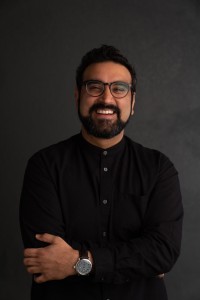
Rohit Malhotra’s experience
- B.A., philosophy, anthropology and religion, Emory University
- Master’s, public policy, business and government, Harvard University
- Center for Civic Innovation founder and executive director
- Leadership Atlanta Class of 2019
- Atlanta Business Chronicle 40 Under 40
- Atlanta Magazine’s 500 Most Powerful Leaders
- Emory University Entrepreneur of the Year
- City of Atlanta fellow
- White House Ash Innovations fellow
- Democratic National Committee constituency manager/digital strategist
- Metro Atlanta Chamber of Commerce Board of Directors member
- Global Campaign for Education coalitions executive/digital strategist
- HouseATL Board member and policy co-author
- Grady Memorial Hospital Ambassador Force member
Related Articles


Georgia law students say “Hell no” to ICE recruiting at interscholastic career fair
Hundreds of students and dozens of organizations across Georgia’s five major law schools demand ICE be uninvited to the schools’ Public Sector Career Fair this Friday.
Dunwoody City Council votes to defer Flock contract over data use concerns
A viral video showing the ease of accessing live feeds from Flock cameras prompted deep questioning of the company’s data practices and contract changes.