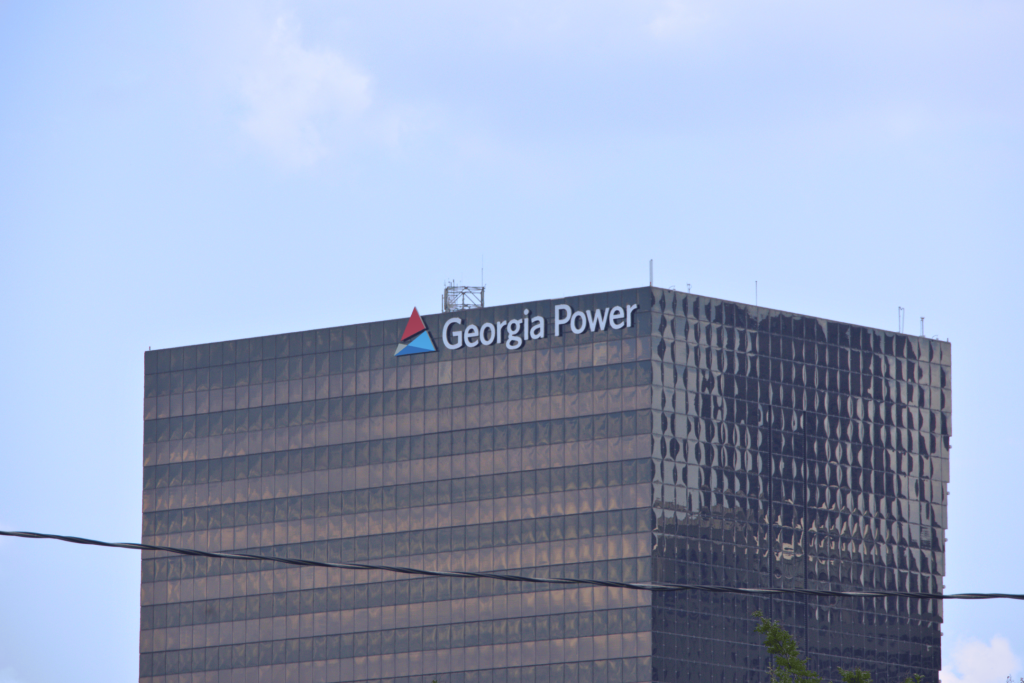
Georgia Power poised to freeze base rates until 2028 — with a catch
In a marathon, seven-hour rate case hearing Thursday, the Georgia Public Service Commission (PSC) weighed Georgia Power’s request to keep base consumer power rates frozen at their current level for three additional years.
This story was originally published by Atlanta Civic Circle and The Xylom.
In a marathon, seven-hour rate case hearing Thursday, the Georgia Public Service Commission (PSC) weighed Georgia Power’s request to keep base consumer power rates frozen at their current level for three additional years.
The five-member PSC will likely vote to approve that request next week, which would extend the alternative rate plan that it approved in 2022 for the utility monopoly. That comes after the PSC has approved six rate increases implemented by Georgia Power since late 2022.
Unlike the 2022 plan, the proposed extension doesn’t include any pre-approved rate hikes, but there’s a catch. Georgia Power signaled it will file a separate rate case in 2026 to recover an estimated $860 million in storm costs, mostly due to Hurricane Helene, from its 2.7 million customers. It will also file a case to recover fuel costs from customers by February 2026. If the PSC agrees, that could further raise consumers’ power bills.
What’s more, if the PSC approves extending the 2022 alternative rate plan, Georgia Power will be allowed to defer certain costs for consideration for three years until its subsequent 2028 rate case.
Consumer watchdogs push back
Georgia Power CFO Aaron Abramovitz testified that he expected no change in overall rates under the proposal before the PSC, and perhaps even a decrease next year – a claim that clean energy advocates vigorously disputed.
During public comment, Neil Sardana of Georgia Conservation Voters raised the concern that Georgia Power’s proposed rate freeze would “lock in” the 11.9% profit margin that the PSC has granted the utility for another three years. That is well above the national average, consumer advocates said.
“It is the equivalent of grocery stores locking in $10 carton egg prices for three years, and expecting everyone to be glad about that when egg prices have dropped,” said Patty Durand, the founder of utility watchdog Georgians for Affordable Energy and a former Democratic PSC candidate.
Georgia Power’s profit increased 22% to $2.5 billion in 2024, making it the most profitable subsidiary for its parent, Southern Company, according to the Atlanta Journal-Constitution. Thanks to higher utility revenue, Southern Company increased its own profit last year by $400 million to $4.4 billion.
Abramovitz said the average requested profit margin is 10.62% in current rate cases brought by investor-owned utilities nationally. “It is an indication that the cost of capital to invest in utility infrastructure is increasing,” the Georgia Power CFO said.
This affects not just residential customers but also commercial and industrial users: For example, MARTA reports that its total electricity and propulsion costs increased by 10.3% in fiscal year 2024 due to rate increases. The embattled transit agency filed a motion to intervene in the rate case, along with a number of consumer watchdogs, clean energy groups, industry associations, and Walmart.
Many representatives of business groups, trade unions, nonprofits, and local governments were largely supportive of the proposed rate extension during public comment.
“It gives families room to breathe. It gives nonprofits like ours the chance to focus less on emergency response and more on helping people move forward and achieve stability,” said Michael Smith, CEO of the Greater Valdosta United Way and a Lowndes County Commissioner.
“Frankly, I wish more utilities adopted this. This kind of partnership between utilities, nonprofits, and public servants is what it takes to create real change,” Smith said.
PSC criticism in election run-up
The June 26 rate hearing followed a related PSC hearing over Georgia Power’s proposed integrated resource plan, updated every three years, which determines how Georgia Power will generate enough energy to meet future demand growth.
It turned into a sparring ground for competing visions of the public utility regulator, at a moment when two of the five Republican commissioners, Tim Echols and Fitz Johnson, are up for re-election in November – the first PSC elections in five years. After low-turnout primaries last week, Echols will face Democrat Alicia Johnson, while the Democratic primary will go to a runoff on July 15.
All five current commissioners have faced criticism over their commitment to affordable and clean energy for Georgia consumers, as well as influence from Georgia Power. In a phone interview, Sardana from Georgia Conservation Voters pointed out that commissioners have received campaign donations from the energy industry that they are supposed to be regulating on behalf of the public.
Atlanta Civic Circle’s review of campaign contribution disclosure reports filed in June found that in his ongoing reelection campaign, Echols received tens of thousands of dollars from executives, managers, and attorneys associated with regulated utilities.
The PSC also has been criticized for its inaccessibility to the public – most recently, at a late-May candidate forum. Both Democratic and Republican challengers for the two open PSC seats criticized it for limiting public comment to in-person only for just three minutes at its public hearings held in Atlanta.
For the June 26 hearing, concerned groups and citizens traveled to Atlanta from as far as Valdosta in South Georgia and Bethlehem in Barrow County.
Effective oversight?
Three PSC commissioners, Chairman Jason Shaw, Bubba McDonald, and Echols, had already spoken publicly in support of the proposed rate freeze before the hearing, which prompted a formal complaint from watchdog groups including Georgia Conservation Voters – and protests at the rate hearing from clean energy advocates.
The three commissioners declined to recuse themselves on Thursday after the PSC’s advisory staff determined there were no grounds. There is currently no mechanism to require commissioners to recuse themselves during potential conflicts of interest, unless changes are made at the Georgia Legislature.
After the hearing, Sardana remained skeptical that the PSC has effectively exercised its primary role of protecting the public from abuse by monopoly utilities. Rather, he considers the rate case an attempt to deflect public outrage over previous rate increases, saying Georgia Power could still raise rates for consumers under the proposed extension of the 2022 rate plan before the PSC.
“To me, it seems like they were unwilling to identify solutions to lower rates in the long run,” Sardana said. “It’s not so much a rate freeze … It’s projecting false hope.”
No paywall. No corporate sponsors. No corporate ownership.
Help keep it that way by becoming a monthly donor today.
Free news isn't cheap to make.
Related Articles

Defamation suit against former Atlanta Police Chief Rodney Bryant will move forward
Ricardo Haro can now pursue his claim that ex-Atlanta Police Chief Rodney Bryant knowingly defamed him as a gang-affiliated “repeat offender” during a high-profile 2020 press conference, despite records showing that was untrue.