Senior APD official failed to disclose financial interest in police tech company, ethics probe finds
A senior APD official held an equity stake in a police technology company while using his official position to promote the company’s products to departments across the United States, investigators say.
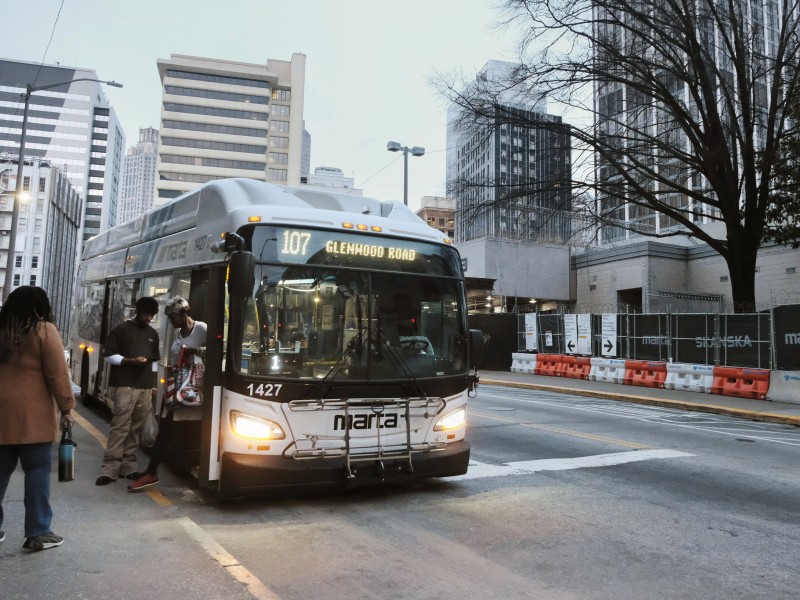
Correction: A previous version of this article incorrectly stated “Flock” in a caption instead of Fusus. Flock Safety has no relation to the subject matter of this story.
The city of Atlanta Ethics Office found Atlanta Police Department (APD) Chief Administrative Officer Marshall Freeman secretly worked as a consultant and booster for Fusus—a police technology company that powers the city’s Connect Atlanta surveillance camera network and real-time crime center (RTCC).
At the time when the ethics investigation began, Freeman was APD’s deputy chief administrative officer. He has since been promoted.
The Ethics Office investigates and prosecutes violations of the City of Atlanta Code of Ethics, including conflicts of interest and financial disclosures. The office launched an investigation into Freeman’s potential financial conflict of interest in March 2024.
The resulting report said Freeman was “an active stakeholder” in Fusus’ success while at the same time overseeing APD’s use of Fusus’ products. Beyond that, the report says, “… for more than a year, Freeman made the decision in his official capacity to participate in at least 15 separate matters involving Fusus.” Those fifteen matters allegedly included meeting with other police agencies to promote Fusus’ technology.
On five occasions, the report says, “Freeman used his city email to discuss and arrange meetings unrelated to official city business and for his private advantage” with BlackRock Financial officials between May 2023 and March 2024. In addition, Freeman allegedly used his official email account to set up a meeting between a consulting firm he owns and Bosch, a technology conglomerate with a subsidiary that sells first responder dispatch technology.
For those alleged actions, the Ethics Office found that Freeman violated the city’s Code of Ethics by failing to disclose his interests, improperly using city property and giving the appearance of impropriety. The Ethics Office recommended Freeman pay a total of $5,000 in administrative sanctions for his alleged violations.
Freeman has appealed the Ethics Office findings.
In a statement to ACPC, APD Chief Darin Schierbaum said, “… we take every matter concerning employee conduct with the utmost seriousness.
No paywall. No corporate sponsors. No corporate ownership.
Help keep it that way by becoming a monthly donor today.
Free news isn’t cheap to make.
“While this matter is under review, including any appeal process by Chief Administration Officer Marshall Freeman, we trust that due process will prevail. We will follow any corrective actions deemed appropriate.”
Ethics probe shows Freeman’s financial ties to Fusus remained a secret until ACPC investigation
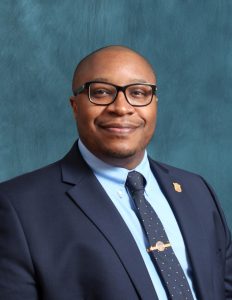
The ethics investigation into Freeman’s alleged inappropriate activity was opened in response to a report by the Atlanta Community Press Collective (ACPC) about his promotion of Fusus to other police departments through emails, meetings and a conference panel appearance. Freeman used his official city email address to arrange those promotions; however, he paid for travel expenses to the conference out of his own pocket. ACPC obtained records of those emails through an open records request.
Freeman also consulted for Fusus outside of his work at APD. He sought and was granted approval by Chief Schierbaum to conduct outside work through Blue Maverick LLC, the consulting company Freeman owns. Freeman had previously consulted for Fusus through Blue Maverick prior to joining APD.
Freeman met with Schierbaum and Peter Aman, then-APD chief administrative officer and Freeman’s direct supervisor, to discuss his outside work approval request. During that meeting, Freeman did not offer—nor, apparently, was he asked—any information regarding which companies Blue Maverick consulted for.
Freeman told ethics investigators that in November 2022, Fusus gave him an equity stake in the company for his consulting work. He said his equity stake was “worth less than a percent” of ownership in the company.
According to the ethics report, Aman “was unaware that Freeman’s financial interest was in Fusus until speculation arose in the … ACPC article.”
On Feb. 1, 2024, police technology company Axon announced that it had purchased Fusus for $240 million. Axon is a city of Atlanta vendor, with a multi-year contract worth over $100 million.
Freeman was quoted as APD’s deputy chief administrative officer in Axon’s press release about the purchase. His quote promoted the use of RTCCs but did not name Fusus specifically.
Freeman did not disclose a conflict of interest to his superiors at APD or the Ethics Office until he learned of Axon’s intent to purchase Fusus. At that point, because of the city’s contract with Axon, he filed an ethics disclosure recusing himself from dealings between APD and Axon.
Freeman told investigators his equity paid out upon Axon’s purchase and at that point, he stopped consulting for Fusus.
“Freeman added,” the report continues, “that he never had an equity interest in Axon and never consulted on Axon’s behalf.”
However, researchers at the Internet Protocol Video Market, a surveillance technology trade publication, discovered that even after Axon’s purchase of Fusus, Freeman was added to the board of directors for two Fusus subsidiary companies in Virginia and Florida. Freeman was added to the Virginia board in the company’s February 2024 filing and first appeared on the Florida board in its January 2025 filing.
During his interview with ethics investigators in June 2024, the report says, Freeman did not disclose his position on Fusus’ Virginia board of directors.
Freeman acknowledges appearance of impropriety but appeals other allegations
On May 21, attorney Joseph J. Siegelman of the Chilivis Grubman law firm responded on Freeman’s behalf to the preliminary findings of the Ethics Office.
Siegelman wrote that Freeman had “previously acknowledged and addressed” the appearance of impropriety and that the two remaining alleged ethics violations—failure to disclose interests and improper use of city property—lacked merit.
Regarding the failure to disclose a conflict of interest, Siegelman argued that the Ethics Office incorrectly categorized Freeman’s deputy chief administrative officer position as falling under the “bureau directors, assistant bureau directors and managers” category. The Code of Ethics bars employees in these positions, among others, from engaging in or influencing decisions for which they stand to gain financial or personal benefit. Siegelman said that Freeman was unaware that the Ethics Office considered his position under this category until his June 12 interview with ethics investigators. Had Freeman known, Siegelman said, he “most certainly would have made the allegedly necessary disclosures.”
Freeman also disputes the allegation of misuse of city property for personal advantage. Siegelman called it “a simple misunderstanding.”
When Freeman sat for his interview with the Ethics Office, Siegelman said, he was not questioned about the emails between himself and BlackRock or Bosch. According to Siegelman, had Freeman been given the chance to respond to those allegations, he would have informed ethics investigators that those meetings were official City business.
“… through Mr. Freeman, BlackRock’s Managing Director became more involved in public safety initiatives and even presented awards to deserving officers at the Atlanta Police Department Award Ceremonies,” Siegelman wrote. “Similarly, Mr. Freeman’s interactions with a Bosch representative, including his emails, were official City business not aimed to advance any personal benefit or business.”
According to the ethics report, the meeting with Bosch was held in a penthouse room in the Glenn Hotel.
Siegelman argued that the ethics investigation discourages employees from voluntarily disclosing conflicts of interest. “Had Mr. Freeman never submitted the Conflict-of-Interest Disclosure Form — which by law he had no obligation to do … — then there would have been no inquiry by the Atlanta Community Press Collective and thus no ethics investigation.”
Freeman’s appeal of the ethics decision will be heard by the Board of Ethics.
However, that may take a while. The previous board was dissolved in February when the City Council adopted legislation reforming the Office of Inspector General, Ethics Office and their joint governing board. To date, only one new member of the five-person Ethics Board has been confirmed by the City Council.
Freeman did not respond to a request for comment on this story.
Authors

Related Articles

A Rohingya man in New York died under mysterious circumstances— his relatives in Georgia are grappling with the loss
Federal immigration officers left Nurul Amin Shah Alam outside a closed coffee shop in harsh winter weather— days later he was found dead. He was getting ready to move to Georgia, says his niece in Stone Mountain.