
Whistleblowers targeted in Atlanta’s Department of Procurement, employee union alleges
In early April, City of Atlanta Department of Procurement employees who had previously filed complaints with the city’s oversight offices were terminated. Union representatives questioned whether this violated the city’s whistleblower protections.
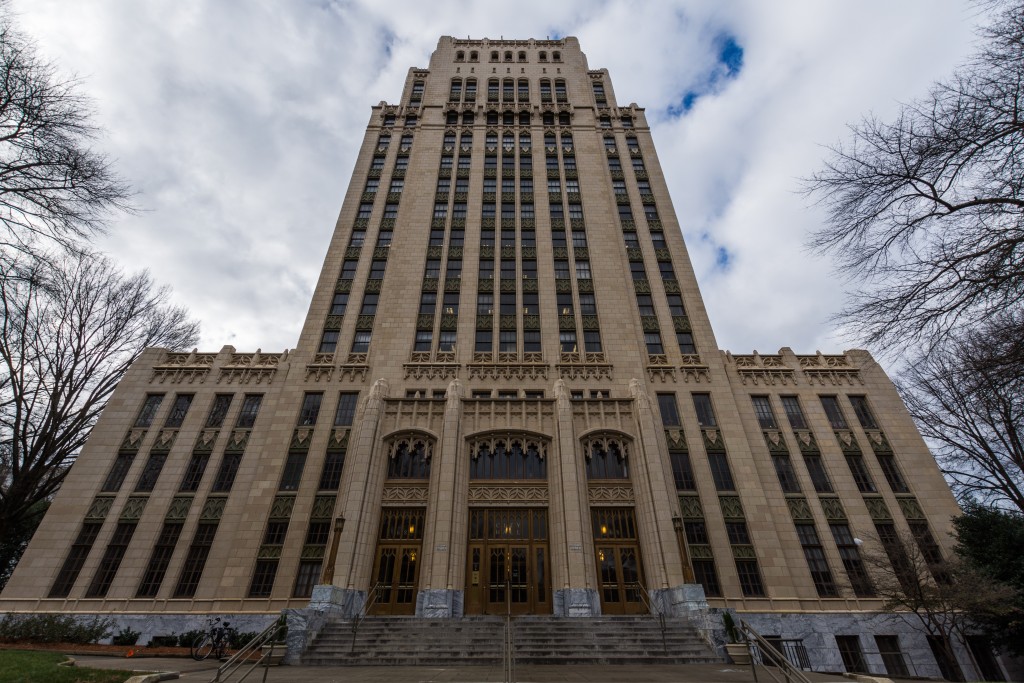
Union leadership representing 16 former City of Atlanta Department of Procurement (DOP) employees allege the former employees were terminated in April for lodging complaints with the Office of Inspector General, the Ethics Office and the Department of Human Resources’ Office of Employee Labor Relations.
During a Tuesday, May 7, budget hearing for the union representing the employees, National Association of Government Employees (NAGE) National Labor Relations Manager Ana Avato told members of the Atlanta City Council, “They got rid of the troublemakers, the people who complained, the people who asked questions.”
The DOP is responsible for purchasing goods and services on behalf of the City of Atlanta and works with local businesses to grow the number of suppliers working with the City.
The impacted employees are members of the Professional Association of City Employees (PACE) Atlanta, a member organization of NAGE. During the May 7 budget hearing, PACE Atlanta’s president, Gina Pagnotta, told the Atlanta City Council that the union was considering a lawsuit.
Union representatives questioned whether the employees should have been granted whistleblower status under the state whistleblower protection law. The 16 employees had all filed complaints about working conditions in DOP. In early April, each received an email from DOP leadership for a “Personnel Discussion” meeting. They were informed of their termination at those meetings.
Atlanta City Council members told union representatives they would investigate the issue.
Terminated employees spoke with the Atlanta Community Press Collective (ACPC) and were granted anonymity due to the potential for future litigation or retaliation by the City.
Toxic and hostile working conditions, former employees say
Former DOP employees said the department operates as a “clique culture” where certain employees are favored. They alleged that promotions were given to certain employees with limited experience and without going through the typical competitive promotion process. The favoritism made the department less efficient, employees said.
Former employees reported that upper-level managers created a culture of fear and division. They said they were told not to speak with employees who questioned leadership decisions. During meetings, phones were checked to ensure no one was recording. They were instructed not to commit records to writing. One employee said they were told on multiple occasions, “This is an election year” and “The mayor’s not going down on my watch.”
No paywall. No corporate sponsors. No corporate ownership.
Help keep it that way by becoming a monthly donor today.
Free news isn’t cheap to make.
During a departmental meeting in January, a former DOP employee said they shared a mental health diagnosis that they said was an outcome of growing job stressors. The employee, who was among those terminated in April, said leadership took no action after the meeting to address workplace conditions.
After the April terminations, PACE surveyed its union members about working conditions in DOP. Avato told the City Council, “A majority of people either answered ‘yes’ or ‘maybe’ to ‘In the past six months have you experienced any harassment or discrimination at work?’”
The survey results show employees believe the department is still hostile. Avato highlighted four issues in DOP brought forward by membership: toxic work culture and poor leadership, communication gaps and mistrust, workload and misalignment, and distrust in the broader system.
“The City claims that it cares about employees, and they’re the most valuable resource,” one former employee said. “This is not backing that up.”
Issues in the department persisted through leadership changes
During the Tuesday, May 6, budget hearing, Avato told the City Council employees have raised concerns in the DOP “for the last nine months to a year.”
Working conditions in DOP began to deteriorate in October 2024, following the resignation of Deputy Chief Procurement Officer Kevin Floyd. The next month, a manager was abruptly placed on administrative leave with no explanation, according to former employees. That manager was brought back from administrative leave in January but stripped of job responsibilities, then terminated in February.
Chief Procurement Officer Jaideep Majumdar resigned in early January, leaving the department after two and a half years. His letter of resignation, signed Jan. 15, references a Jan. 7 discussion with the Dickens administration “regarding stepping down from the position.” The same day as the discussion with Majumdar, the administration announced that Chandra Houston—then-deputy city attorney in the City’s Business Services Division—would replace Majumdar.
Dickens’ Chief Operating Officer Lachandra Burks informed DOP employees of the leadership change during a department-wide meeting Jan. 8.
Former employees said they thought conditions would improve after Majumdar’s departure, but more uncertainty and toxicity followed, they reported.
During the Jan. 8 meeting, DOP leadership told employees the department was too “top-heavy.” At another departmental meeting about two weeks later, employees were presented with an initial restructuring plan. Over the next few months, one former employee said, “people’s duties were stripped from them, and they were just assigned to stuff like open records.”
Since they were laid off, the employee said, multiple people with “less time and less knowledge of the system” were promoted.
Council members and former employees question restructuring claims
During the PACE budget hearing, Interim Human Resources Commissioner Calvin Blackburn told the City Council that the layoffs were part of a “restructuring” in the DOP. He added that the administration has and continues to meet with the terminated DOP employees and will issue a final report with a determination on whether employees were targeted or if laws were violated.
Employees were involuntarily terminated due to restructuring, Blackburn told the City Council. Employee separation notices filed with the Georgia Department of Labor list the same reason.
Former employees say those separation notices should have specified lack of work as a reason for the layoffs. Union representatives told the City Council the layoffs constituted a reduction in force (RIF). Atlanta’s City Code lays out ground rules for RIFs. It says one of the metrics for determining which positions are terminated on the basis of RIF should be “employee job performance history.”
“When they did this reduction in force, they were supposed to determine who stays and who goes based on what they offer,” one of the terminated employees said. “We never had performance evaluations. We were never evaluated for 2024.”
Finance Executive Committee Chair Howard Shook and Councilmember Marci Collier Overstreet expressed agreement with PACE and the former employees regarding the terminations being RIFs.
“We need a very clear explanation as to why this is not a RIF,” Shook told Blackburn. “It’s something that looks like a RIF, sounds like a RIF and quacks like a RIF.”
After layoffs, Procurement Department plans to hire more staff
The DOP layoffs came amid a $20M city budget deficit for fiscal year 2025, which prompted 5% reductions in expenditures across all city departments. Many departments looked to layoffs to address the budget deficit.
Despite the recent layoffs, Mayor Andre Dickens’ proposed fiscal year 2026 budget asks for an increase in the number of authorized DOP full-time equivalent staff to 119, up from 97 in the current fiscal year. The department’s general operating fund budget is proposed to increase by 72.77% over the previous year—nearly double the next highest increase.
“Our eyebrows have all been raised when we looked at their budget,” Shook said of DOP during the union budget hearing.
Author