One year after the Gaza solidarity encampment at Emory, Atlantans recount law enforcement brutality
One year after Emory University students launched a pro-Palestine encampment protesting the Gaza genocide and “Cop City,” activists demand justice for the 28 arrested and call for institutional accountability.
Updated on July 30, 2025: On July 23, organizers and community members showed their support at a press conference and rally in front of the DeKalb County Courthouse for the Emory arrestees who still face charges. Erica Kadel, Alexander Carson, and Sebastian Cadiz Garcia pleaded not guilty during their court arraignment for charges from the pro-Palestine encampment at Emory University. All three are scheduled to return to court on Sept. 25.
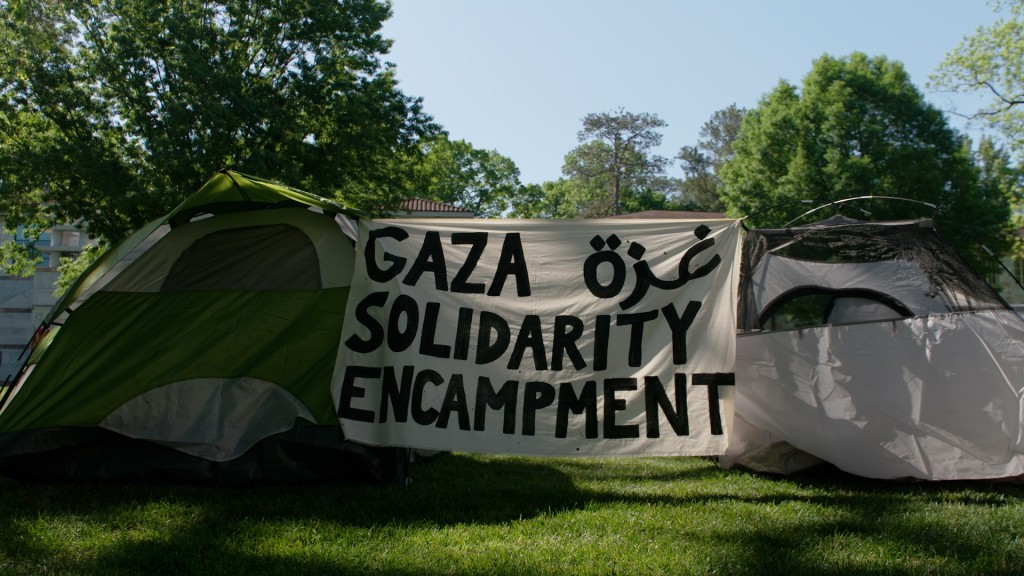
April 25, 2025, marked one year since Emory University students and activists set up a pro-Palestine encampment on the university’s quad to demand Emory’s divestment from Israel’s genocide in Gaza and to oppose the construction of the Atlanta Public Safety Training Center known as “Cop City.”
Within hours of protesters erecting tents, Emory called outside police agencies to campus, triggering a violent response from the Atlanta Police Department (APD) and Georgia State Patrol. Officers tackled and tased demonstrators, fired pepper balls toward them, and arrested 28 individuals, including 20 students and faculty members.
Feda, a Palestinian graduate student at Emory, said, “We joined hundreds of other campuses across the nation in setting up encampments because our universities are complicit in investing in Israel and investing in the violence abroad that creates the bloodshed of Palestinians.”
Community members gathered for a press conference Friday outside DeKalb County Courthouse. Representatives of advocacy organizations condemned what they said was Emory University’s year-long silence toward those brutalized on its campus. Speakers also urged Solicitor-General Donna Coleman-Stribling to dismiss the remaining charges against the Gaza solidarity protesters.
After the press conference, Emory students and faculty, along with supporters, held candles and wrote testimonies in front of Emory’s administration building to remember the police brutality that took place on campus.
“The police came ready for war”
Emil’ Keme, a professor at Emory, told ACPC he arrived on campus early to set up for his classes on April 25, 2024. When he first saw the encampment, he said that community members were singing, chanting and protesting peacefully. That atmosphere changed rapidly after Emory called law enforcement on its students.
“Everything just became like a war zone because the police came ready for war,” Keme said. “They weren’t even asking questions; they just began to destroy the encampment, push students around, arrest people, and force others out of the quad. What was once a peaceful atmosphere became a very traumatic experience.”
No paywall. No corporate sponsors. No corporate ownership.
Help keep it that way by becoming a monthly donor today.
Free news isn’t cheap to make.
Keme rushed to support the protesters and record the violence taking place on campus. He locked arms with the students, he said, and was violently thrown to the ground, arrested. He was charged with disorderly conduct.
Keme was held in DeKalb County Jail for a few hours, where the police confiscated his belongings. After his release, he discovered that all the recordings on his phone had been erased.
Dilek Huseyinzadegan, also a professor at Emory, was in a meeting when she heard that Noelle McAfee, chair of the philosophy department, had been arrested. She quickly went outside to try and help.
Huseyinzadegan said that while she was helping arrested students, a police officer pointed a pepper ball gun at her head and threatened to shoot her.
She was granted medical accommodation for the Fall 2024 semester due to the trauma she endured as a result of this experience.
“I am a tenured professor who lives in Atlanta,” Huseyinzadegan said. “I worked at Emory for 11 years. How can this happen to me on my own campus?”.
David Meer, a Jewish graduate student at Emory, said, “The police brought the violence to campus.” Meer joined the encampment to support the protesters, but was arrested for disorderly conduct. His charge was later changed to trespassing, despite being a student at the university.
Meer told ACPC that he and his peers want President Gregory Fenves removed for calling the police on students exercising their First Amendment rights. In May 2024, Emory students overwhelmingly voted no confidence in Fenves in a referendum called by the Student Government Association over how Fenves handled the Emory encampment.
Erica Kadel, an organizer with the Atlanta Alliance Against Racist and Political Repression, received word of the encampment early that morning. She decided to go to Emory to offer support. By the time she arrived, law enforcement had already dismantled the encampment.
A secondary protest formed next to a parking lot nearby the quad to support those who had already been arrested. Kadel said she was holding a bullhorn and chanting against police brutality when she was similarly targeted and arrested.
Kadel said an officer pressed his knee onto her neck, and arrestees detained inside the police van saw this and chanted, ‘Get your knee off her neck.’
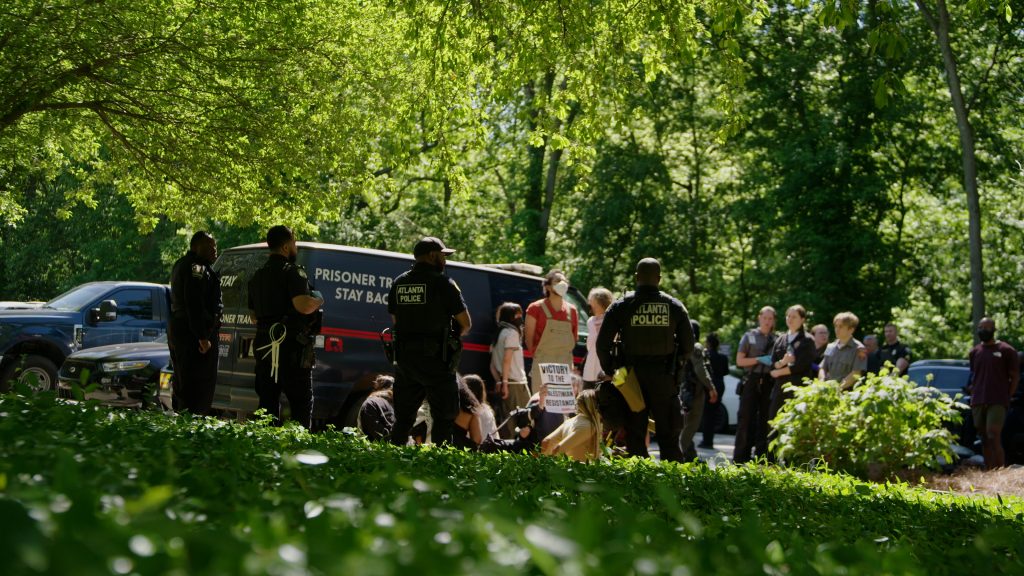
“Once we got to the [Dekalb County Jail], we were held outside on the ground for hours and hours, handcuffed,” Kadel said. “So, for me, I had to make a very specific plea, because I was handcuffed behind my back, and I lost circulation in my thumbs. I didn’t regain feeling in my thumbs for about six months. I was in extreme pain. I was crying.”
Many of those arrested are still facing charges. Emory students, like Feda—who is continuing her graduate studies at the university—have kept up the demand that Emory stop the violence against Palestinians and the greater community in Atlanta.
“We can’t trust [the Emory administration] to save us or protect us,” said Feda, “and we can’t have faith in them. We just need to lean on one another, be there for each other, and stay united.”
Author