Mourning Our Losses: A night of remembrance and resistance at South Bend Park

On the evening of March 26, mourners gathered in Atlanta’s South Bend Park to honor the lives of those who have died while incarcerated in a memorial event organized by Mourning Our Losses (MOL). The gathering marked five years since Anthony Cheek became the first person known to have died of COVID-19 in prison in the United States. His death on March 26, 2020, in Albany, Georgia, was the first in what would become a devastating pattern that laid bare the negligence of prison administrations, lawmakers, and the Georgia parole board, whose refusal to release people during the pandemic allowed the virus to spread unchecked behind bars. But COVID-19 wasn’t the only cause of death in prisons, jails, and detention centers during this time. Failure to provide basic medical care, rampant violence inside facilities, and the sheer despair of prolonged confinement all contributed to a rising death toll—one that has continued to climb long after the worst of the pandemic.
From 7 to 9 p.m., people gathered to mourn those lost, speak their names aloud, light candles in their memory, and share stories, art, and letters from those still incarcerated. The event was open to all, but especially to those who have been personally impacted by incarceration— and while it was a space for grief, it was also a space for recognition, for witnessing the ways in which mass incarceration continues to strip people of their humanity—not just in death, but in life, too.
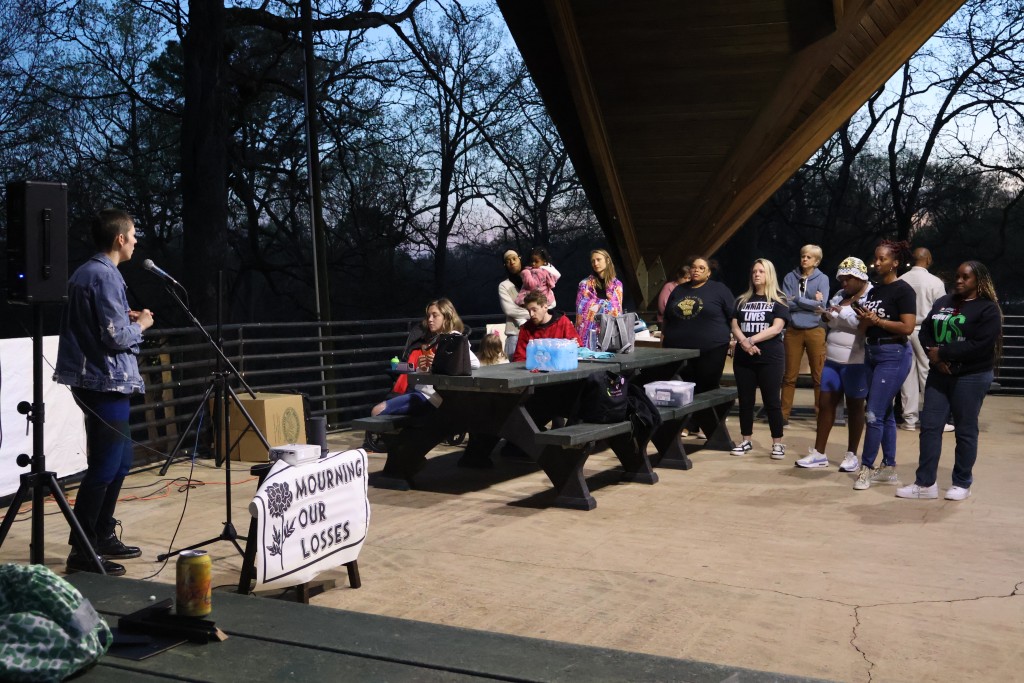
Page Dukes, co-founder and core organizer of MOL, spoke to the Atlanta Community Press Collective about the organization’s origins.
“Mourning Our Losses was founded from a place of defeat after all our efforts had failed to convince carceral systems to release people most at risk of death and serious complications from COVID-19,” Dukes said. “People had started dying and were reported only as numbers on a dashboard. We created a space to name and honor them, to make a record of the ways they had touched others’ lives in their communities, and to name the ways they were being systematically abandoned.”
Bearing witness to injustice
Cheek’s death should have been a wake-up call, Dukes said at the memorial.
Instead, it was just the beginning as COVID-19 spread through Georgia’s prison system, leaving those inside unprotected. Overcrowded dorms and cellblocks made social distancing impossible. Prison medical care—already notoriously inadequate—crumbled under the weight of a public health crisis it was not designed to handle. Rather than releasing people to prevent additional deaths, the Georgia State Board of Pardons and Paroles chose to do the opposite, drastically reducing the number of people granted parole.
Across the state, incarcerated people were left to fend for themselves as conditions inside worsened. The number of deaths from suicide, violence, untreated illnesses, and medical neglect increased. Even as COVID-19 fades from headlines, the reality remains: incarcerated people are still dying from preventable causes at alarming rates.
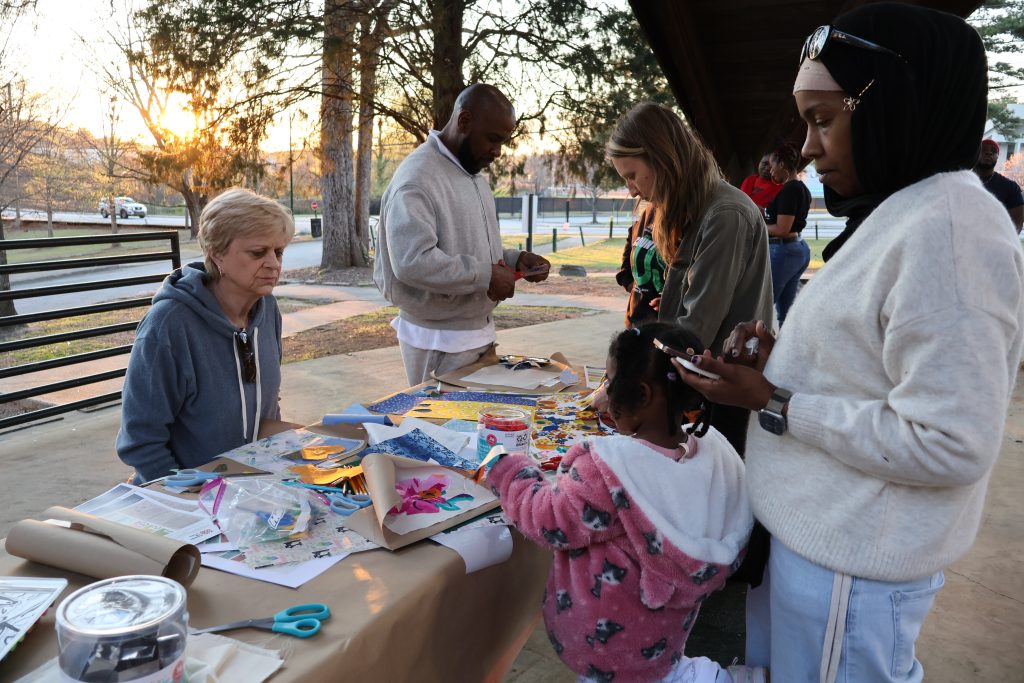
The memorial at South Bend Park was an act of mourning and protest, calling attention to lives that should not have been lost.
One by one, memorial attendees spoke aloud the names of people whose deaths had been documented, those for whom families or advocates had fought to ensure they were not forgotten, and those whose deaths had gone largely unnoticed outside prison walls.
The group held moments of silence for the names of those unknown—people who lived and died in confinement, with no one on the outside to tell their stories—in a recognition that even in death, some remain invisible to the world.
“People are being disappeared. We cannot wash our hands of the brutality of our punishment system by blaming people inside. We have to take responsibility for what we all play a role in perpetuating by holding our parole boards and carceral systems accountable for the atrocities they commit in our name,” Dukes told ACPC. “We are not alone or isolated; so many of us have been robbed of futures and families. Our hope is that by collecting memorials and researching carceral deaths, we may bear witness and hold space for this disenfranchised grief and our collective, liberatory memory.”
No paywall. No corporate sponsors. No corporate ownership.
Help keep it that way by becoming a monthly donor today.
Free news isn't cheap to make.
Related Articles
Georgia Court of Appeals will take up ‘Cop City’ RICO case
Attorney General Chris Carr appealed Fulton County Superior Court Judge Kevin A. Farmer’s dismissal of racketeering charges against 61 people. The Georgia Court of Appeals accepted the application on Wednesday, despite process challenges from the defense.
Local orgs fear further criminalized homelessness in HB 295, advanced from Public Safety Committee
The 8-5 vote marked the third straight year the bill proceeded to the House floor, where it was withdrawn last year without a full-House vote.