
Opinion: Ending the long fight over the Atlanta City Detention Center
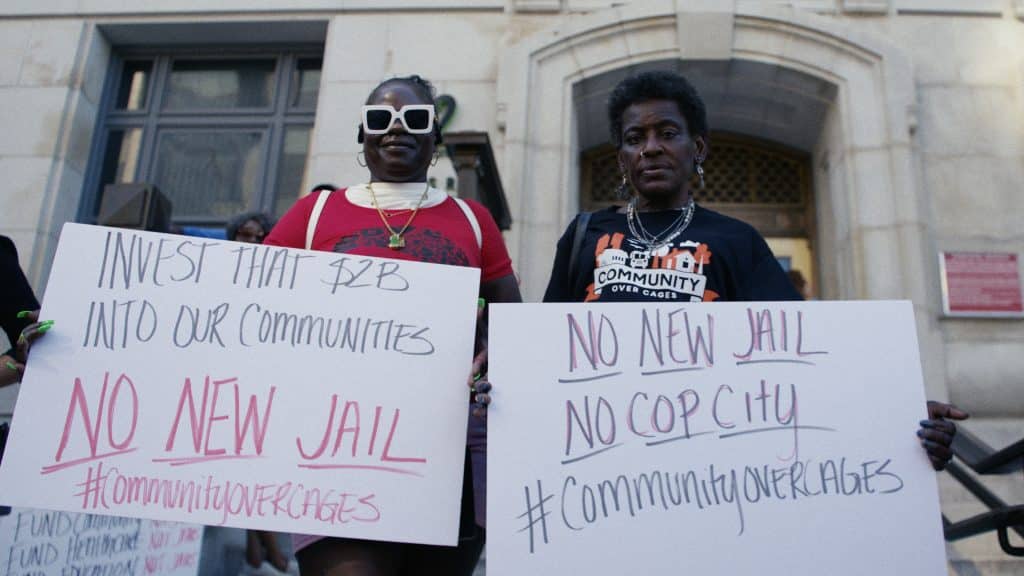
The future of the Atlanta City Detention Center (ACDC) has long been uncertain. Opened in 1996 and set for closure in 2019, the City instead began a four-year lease of 700 of its 1300 beds in ACDC to Fulton County in 2022.
Some of Atlanta’s elected officials, Fulton commissioners, and Fulton County Sheriff Pat Labat seek an extended lease or permanent sale of the facility to Fulton. At the state level, bill SB 7 would have mandated Atlanta make ACDC available to the Fulton sheriff, but it did not receive a vote on crossover day and failed to move to the House.
Other Atlanta council members have begun to see the necessity of divorcing Atlanta from Fulton’s carceral politics and have drafted a resolution recommending Fulton’s phased withdrawal from ACDC.
Fulton’s desire for carceral expansion mirrors that of the new presidential administration. As Immigration and Customs Enforcement (ICE) looks to vastly expand the detention of immigrants, it requires additional space and will heavily rely on sheriff departments and local jails.
Atlanta’s lease to Fulton in 2022 was a mistake. Without decisive action, it stands to become a disaster. In order for Atlanta to chart its own path forward, ACDC must be shuttered and repurposed once and for all.
Fulton’s Carceral Catastrophe
Fulton County Jails have experienced neglect and overcrowding concerns for decades. In 1999, the Fulton County Sheriff’s Office faced litigation over the main Fulton County Jail—one of four county jails and colloquially known as Rice Street—for failure to provide adequate treatment to incarcerated people with HIV. Despite a decade of federal oversight, in 2018, at least one in three incarcerated people with HIV were not receiving appropriate medication. The Sheriff’s Office also faced litigation over the South Annex Jail in 2019 over the abhorrent conditions for women with significant mental health conditions, an issue that has yet to be rectified.
Since the start of 2022, at least 30 people have died in Fulton’s custody. Despite Sheriff Labat’s assertions about the inevitability of in-custody deaths, nearly all of these deaths were preventable. It is clear that overcrowding, neglect, dehumanization, and a culture of abuse are longstanding, defining features of Fulton’s legal system.
Labat and his legislative backers have maintained that the issue is a lack of space and an aging facility, deflecting criticism by blaming the jail itself. The county’s primary response to preventable overcrowding has been to spread people out over the system, spending over $19 million in 2024 to do so. At least $300 million is still planned for renovations while Fulton’s never-ending search for more jail space continues.
Fulton has three times the incarceration rate of other urban counties, driving the supposed need for more jail space and contributing to poor conditions within existing facilities.
Contrary to Labat’s previous claims, a 2022 ACLU report made plain that the problem is over-detention, stating “Fulton County’s failure to account for people’s ability to pay bail, confinement of people charged only with misdemeanors, failure to timely indict people, and local law enforcement agencies’ failure to fully utilize diversion programs has led to population levels above capacity at Fulton County Jail.” Address these cases, the report urged, and “the population would be reduced to levels more than sufficient to eliminate overcrowding at the Fulton County Jail.”
The myopic focus on the need for carceral space led to Atlanta’s lease of 700 beds in ACDC to Fulton. While framed as a humanitarian solution to overcrowding by both Labat and Atlanta Mayor Andre Dickens, it has not improved conditions for those incarcerated.
Prior to the lease, ACDC saw fewer than 25 of its beds occupied on an average day. Former Atlanta Mayor Keisha Lance Bottoms signed legislation to repurpose the space in 2019, slating it to become a community resource center.
In agreeing to the lease, the City of Atlanta and Dickens abandoned a large coalition of community members, which was led by those directly impacted by the legal system. Dickens framed this decision as unfortunate but necessary and attempted to provide reassurance. “I remain committed to fully repurposing the ACDC facility for non-incarceration purposes,” he stated. We will soon see if this is yet another broken promise.
Fulton now finds itself, yet again, under investigation by the Department of Justice. To read the findings report, released November 2024, is to bear witness to a litany of horrors. The investigation found failures to keep incarcerated people safe from harm, excessive use of force by staff, abhorrent medical and mental healthcare, inappropriate use of solitary confinement, and poor environmental conditions.
As organizers and advocates noted for years, leasing ACDC would not mitigate the ongoing dysfunction but would instead distract from necessary changes to Fulton’s criminal legal system.
Inflection Point
Fulton acquiring ACDC would represent an ongoing commitment to an ineffective politics of punishment that is all but guaranteed to exacerbate existing disparities in safety and health. It would perpetuate a status quo of gapping inequality.
The demand to close and repurpose ACDC is not a call to abandon those suffering the abysmal conditions in Fulton jails today. It is a demand for solutions that can address the immediate needs of those disproportionately criminalized and to center harm prevention as a policy priority.
The burden of Fulton’s carceral facilities is not felt equally. Despite the county population being roughly 45% Black, 90% of the incarcerated population in Fulton County Jail is Black. Incarcerated people are also disproportionately low-income, more likely to be unhoused, or have an untreated mental health or substance use disorder. It is precisely because of the profound structural violence these individuals endure prior to their incarceration that a myriad of solutions remain within reach.
Under tremendous pressure, some reforms have taken hold and the total incarcerated population has dropped from 3,700 to around 2,500. There is currently enough space to detain all 2,500 incarcerated people in existing Fulton facilities without using a single bed at ACDC.
Despite this, the county has made it clear they want ACDC. Yet there is no reason to think this decarceral trend cannot endure. The city and county are only just beginning to embrace alternative response and diversion. Utilization of these evidence-based interventions would further reduce arrests, the length of pre-trial detention, and long-term jail populations. Addressing housing insecurity, poverty, mental health, and substance use disorders also lessens crime and enables communities to thrive, but Fulton and Atlanta have yet to invest at the scale needed.
As the federal administration takes aim at an already threadbare social safety net, an extended lease or sale of ACDC to Fulton would divert funds away from solutions benefiting vulnerable Atlantans and towards increasing carceral force that would harm those same people. More jail space would remove pressure to address legal system inefficiencies, and institutional inertia would prevail.
In 2018, Atlanta ended its partnership with ICE as advocates made clear that the agency did not embody the professed values of Atlanta. Yet now the city is primed to enable both the mass detention of immigrants and, with the World Cup looming, a resurgence of hyper-criminalization that attempts to disappear visible signs of poverty. Standing by and watching it happen is not an adequate plan. Pretending the city has no say is as dishonest as it is feeble.
Atlanta must divorce itself from Fulton’s carceral disaster. Only through an urgent repurposing of the facility will this come to pass. It cannot be left to chance.
No paywall. No corporate sponsors. No corporate ownership.
Help keep it that way by becoming a monthly donor today.
Free news isn't cheap to make.
Author

Related Articles


Opinion — Play the Game. Vote for Public Service Commissioners.
The most important race in the country is in your hands.
