Georgia Republicans move to gut Open Records Act as legislative session closes

SB 12 would amend the Georgia Open Records Act to shield legislative communications and police reports from public scrutiny.
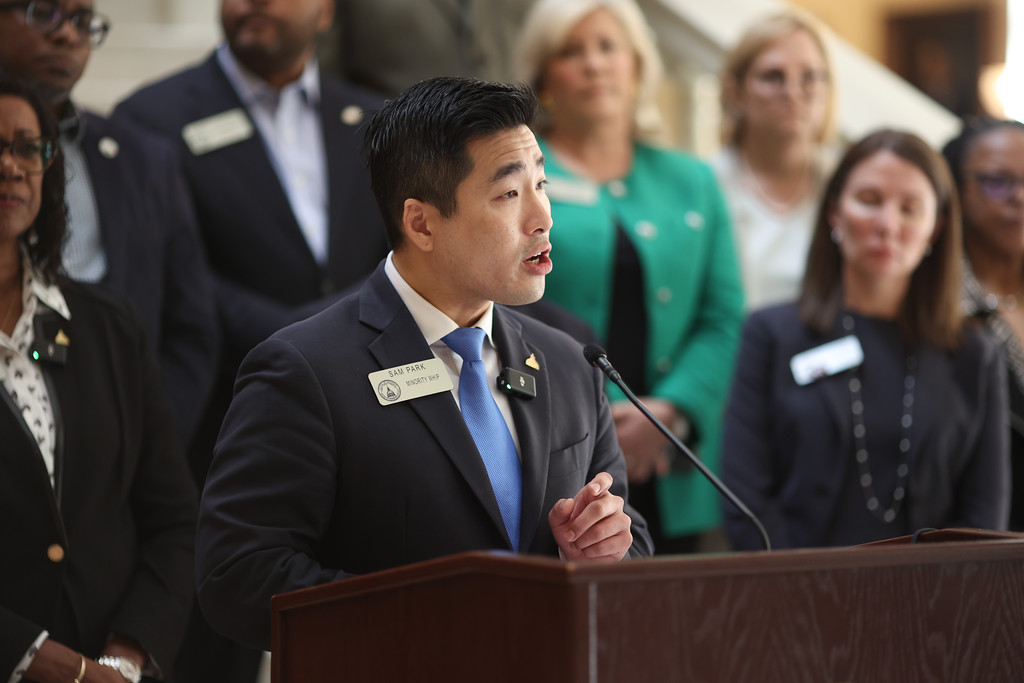
“What are you trying to hide,” Georgia House Minority Whip Sam Park asked during the debate over last-minute changes to Senate Bill 12. The proposed changes were introduced during a House Rules Committee meeting late Wednesday evening and would amend the Georgia Open Records Act.
SB 12 was originally a short bill that would exempt private contractors from responding to open records requests regarding work done for or on behalf of government agencies.
That changed Wednesday night. The two-and-a-half-page long bill grew to 34 pages, altering parts of the Georgia Open Records Act, or GORA. While the bill still includes the original provisions, the latest version exempts communications between state lawmakers and the executive branch or private entities from disclosure under GORA. The privilege exemption extends beyond the legislators themselves; their staff would also be exempt. The updated language of SB 12 would also limit what information police agencies must disclose in response to the Open Records Act while investigations are ongoing.
Rep. Victor Anderson, who presented the updated bill to the Rules Committee, said, “It was just felt it would be good to put this in law while we had an opportunity to do so and to further sort of ‘clean up’ some issues that have arisen.”
Those “issues” are likely recent open records lawsuits that resulted in victories for transparency advocates, including the Georgia Supreme Court Decision in Milliron v. Antonakakis, holding private contractors of government agencies were subject to the Open Records Act, and the Dekalb Superior Court decision in Campside Media v. Georgia Bureau of Investigations, ordering the release of GBI records related to the death of Manuel “Tortuguita” Paez Terán. (Note: Attorneys from both of those respective cases represent ACPC in an ongoing open records lawsuit.)
The Open Records Act already broadly exempts the legislative branch from turning over documents. The new act would broaden that exemption to include communications between legislators and organizations or individuals that help shape or influence new legislation.
“I think that people should have the right to know where certain information that impacts and influences legislation comes from—whether it is an extremist organization, or a foreign billionaire,” Park said.
The method by which the amended legislation was introduced drew concern from Democrats on the committee. Typically, bills are introduced in one of the two chambers of the legislature and go through a committee process with public input before coming up for a final vote in the originating chamber and repeating the cycle in the other chamber.
The original version of SB 12 went through this process. It was adopted by the Senate Judiciary Committee and unanimously approved in the Senate. It then moved to the House Governmental Affairs Committee, where the discussions held no indication that the bill would undergo such drastic changes.
By introducing the amended legislation in the Rules Committee, this expanded version of SB 12 avoided public scrutiny and gave lawmakers little time to respond to the changes.
Chairman Anderson did not identify the source of the updated language.
Rep. Tanya Miller, a Democrat representing Southeast Atlanta, questioned the intent behind the updated legislation that would shield communications with legislators.
“I know that this session,” Miller said, “there has been a whole lot of communication between the executive branch and the legislative branch about a certain priority. And I’m wondering if this is being done at this time in an attempt to shield the level of communication, pressure, exertion, all the other things that we’ve all talked about on the floor.”
Friday, April 4, is the final day of the 2025 legislative session. SB 12 may come up for a floor vote in the House, but agendas have not been posted at the time of publication.
No paywall. No corporate sponsors. No corporate ownership.
Help keep it that way by becoming a monthly donor today.
Free news isn't cheap to make.
Author

Related Articles
Georgia Court of Appeals will take up ‘Cop City’ RICO case
Attorney General Chris Carr appealed Fulton County Superior Court Judge Kevin A. Farmer’s dismissal of racketeering charges against 61 people. The Georgia Court of Appeals accepted the application on Wednesday, despite process challenges from the defense.


Local orgs fear further criminalized homelessness in HB 295, advanced from Public Safety Committee
The 8-5 vote marked the third straight year the bill proceeded to the House floor, where it was withdrawn last year without a full-House vote.