Riley Gaines Act banning youth from sports and bathrooms faces broad opposition from local activists and advocates
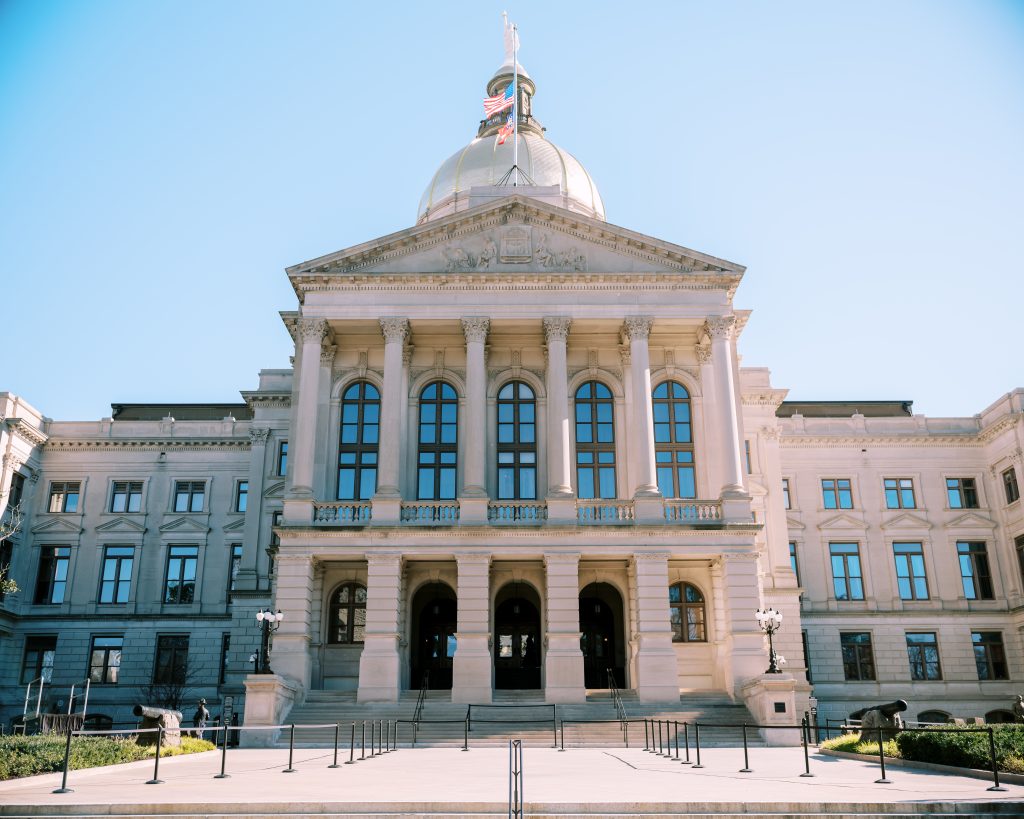
Broad opposition to Georgia House Bill 267, the Riley Gaines Act, accompanied its tabling by the Senate Judiciary Committee.
Correction: a previous version of this article stated that HB 267 was tabled in committee. The bill was not taken up for a vote by the committee.
Activists, advocacy organization representatives and concerned community members packed the Georgia Senate Judiciary Subcommittee on HB 267 for a public hearing Wednesday about what they described as a trans-erasing bill.
Titled the Riley Gaines Act, 73rd District Rep. Josh Bonner’s bill would replace “gender” with “sex” throughout the Official Code of Georgia Annotated, require separate restrooms and changing areas in schools by one’s sex designated upon birth, ban those designated male at birth from playing official games for girls’ teams, mandate separate sleeping arrangements by sex on school trips and more, from kindergarten through college.
ACLU of Georgia First Amendment policy advocate Sarah Hunt-Blackwell began the long line of public commenters opposed to the bill.
“The bill does nothing but perpetuate fearmongering and scapegoating of trans and intersex people,” Hunt-Blackwell said. “HB 267 ultimately excludes trans, intersex and nonbinary people from receiving state services and protections. That is the exact opposite of what this body is here to do and is an unfathomable affront to the rights of trans, intersex and nonbinary Georgians.”
Noël Heatherland, statewide organizing manager for Georgia Equality, blasted the bill and Bonner for the consequences cisgender females would also face.
“In Utah, a high school girl had to be placed under police protection after being falsely accused of being trans because she excelled in sports,” Heatherland said, noting tennis legend Serena Williams faced similar ire. “The bill author also said the school is free to inspect if they choose. As a child sexual abuse survivor, that frightens me beyond description.”
Local physician Jason Schneider spoke to studies of how laws like this harm young people’s physiological health, as well as of negligible differences in athletes of different sexes before puberty, making the first several years affected “scientifically invalid.” YWCA of Greater Atlanta advocacy manager Elle Knott said protection of women’s sports would entail pay and resource equity, contrary to this bill fostering greater harm toward trans youth. And Marisa Pyle, Georgia senior democracy defense manager at All Voting Is Local, spoke in a personal capacity to their entire life as nonbinary, encouraging queer children and allies to be their full selves regardless of politicians’ acts.
No paywall. No corporate sponsors. No corporate ownership.
Help keep it that way by becoming a monthly donor today.
Free news isn’t cheap to make.
“I am the same person who found friends, leadership and community on my sports teams, where I learned to stand up to bullies, not elect them,” Pyle said. “I work in this legislature every year, and I bring my entire queer self to this building because the world needs all of us. … Likely nothing we say here will change your votes. No amount of queer people, no amount of desperate parents begging for their lives and for their families, no amount of medical experts contradicting every sad, skewed and false justification for this legislation will move you.”
Some changes to Riley Gaines Act on the horizon
In response to the many comments concerned about exclusion, Bonner said: “I like to focus in on not who’s perceived to be excluded, but who the bill is protecting, and that’s female athletes in Georgia. … Furthermore, I do not want to put any girl in Georgia in a situation where they would be exposed to a biological male in an area that they’re changing. I just don’t think that’s in line with my constituents’ values, and I don’t think it’s in line with the majority of Georgians’ values either.”
Sen. Elena Parent, the lone Democrat on the subcommittee, posed many questions to Bonner. She spoke of up to 1.7% of all live births not conforming to the typical sex chromosome binary, similar laws stricken down for rights violations and concerns of discrimination against transgender foster parents, as an example.

“If you take out ‘gender’ and put in ‘sex,’ then you remove that protection for transgender folks,” Parent said. “So even if they would still be permitted to be foster parents, they then come out of the non-discrimination statute.”
Bonner replied that this wasn’t the intent and agreed with Parent’s request to amend language in the bill for clarity in that area, later noting the bill should apply only during athletic events, not during the regular school day.

Mike Griffin, a public affairs representative of the Georgia Baptist Mission Board, was the sole speaker from the public who favored the bill.
The subcommittee did not vote on whether to advance the bill, though its chairman, Sen. Greg Dolezal, said the meeting’s notes would be referred to Judiciary Committee chairman Sen. Brian Strickland. Dolezal is listed as the first sponsor of Senate Bill 1, “Fair and Safe Athletic Opportunities Act,” which contains many of the same provisions and passed the Senate Feb. 6, by a 35-17 vote.
HB 267 passed the House Feb. 27, by a vote of 102-54. At press time, the next scheduled convening of the Senate Judiciary Committee was March 24 at 4 p.m.
Related Articles
A Rohingya man in New York died under mysterious circumstances— his relatives in Georgia are grappling with the loss
Federal immigration officers left Nurul Amin Shah Alam outside a closed coffee shop in harsh winter weather— days later he was found dead. He was getting ready to move to Georgia, says his niece in Stone Mountain.