Israel breaks ceasefire agreement, Atlantans continue to fight for Palestine
Israel resumed its genocidal assault on the Palestinian people of Gaza Monday, ending the ceasefire agreement during the Islamic holy month of Ramadan.
The Israeli army carried out widespread airstrikes and bombing of the Gaza Strip, reportedly killing over 500 people, according to the UNRWA. The death toll is expected to rise as the bombing continues. More than 64,000 Palestinians were killed between Oct. 7, 2023, and June 30, 2024, according to the medical journal The Lancet.
I just want to tell you that in the past two days, over 1,000 people have been killed. The explosions are terrifying—every hour, there is a new one. Currently, we are living in a very, very, very, very hard situation. There is no food, no water, no aid entering through Rafah crossing.
Sama Hasan Alhalb
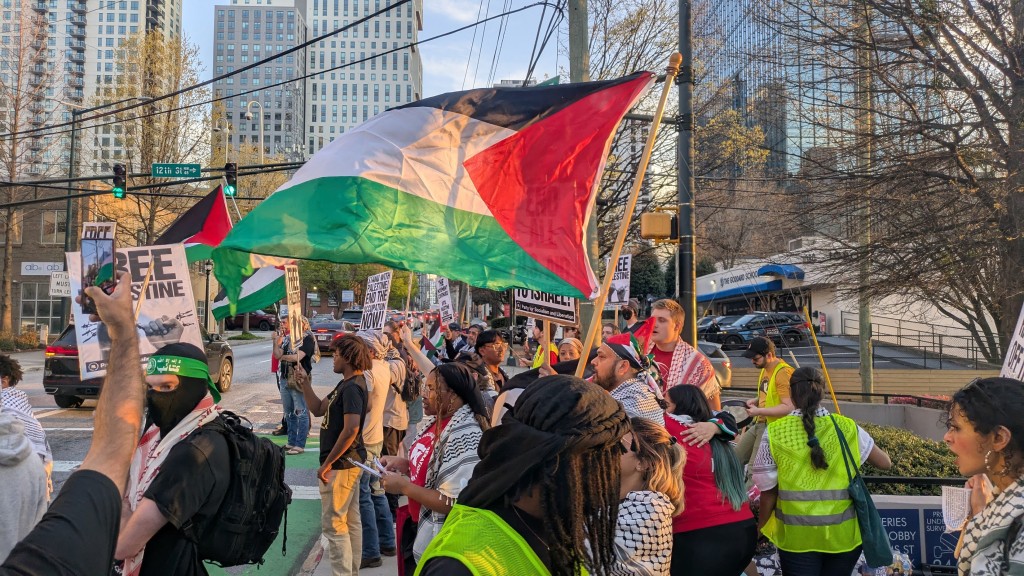
Atlantans gathered outside the Israeli consulate Tuesday to protest the full-scale resumption of genocide in the Gaza Strip. They called for a free Palestine and a people’s arms embargo as the United States continued its support of the genocide in Gaza.
Feda, a Palestinian community member in Atlanta, told ACPC that her family was among the few who were able to evacuate through the Rafah crossing during the genocide. However, genocide watchdog organizations warn these evacuations are, in reality, part of the ongoing displacement and ethnic cleansing of Palestinians from their homeland.
The effects of the genocide continue to impact Feda and her family, as the trauma remains ongoing.
“Even though all of us knew the ceasefire wasn’t something Israel was going to comply with, it didn’t make it any less horrific,” Feda said. “Especially the way we all found out, which was through logging onto Instagram and just seeing a new wave of people’s limbs being torn off, their burnt flesh, children’s skulls being cracked open –that’s when we knew the violence had resumed in full force.”
Life in Gaza disrupted
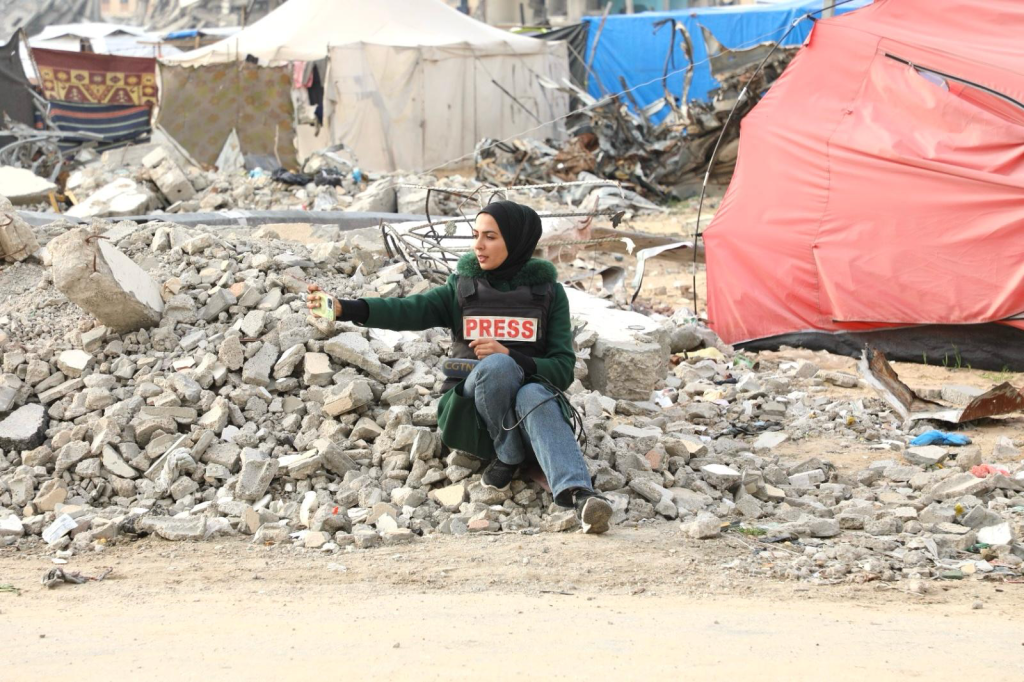
On Tuesday, ACPC contacted Nadra El-Tibi, a journalist based in Gaza, who offered to provide insight into what was happening on the ground. She scheduled an interview for 7 p.m. local time in Gaza. However, her scheduled interview time came without a response, and her phone signal was dead.
No paywall. No corporate sponsors. No corporate ownership.
Help keep it that way by becoming a monthly donor today.
Free news isn’t cheap to make.
Four hours later, El-Tibi messaged, “The bombing was all around me. I couldn’t answer or even hold my phone at seven o’clock.”
El-Tibi’s access to data networks remained an issue. Israel frequently cuts off access to cell and data networks during its bombing campaigns.
The following day, at 8:49 PM local time in Gaza, El-Tibi reconnected with ACPC.
“The situation here is indescribable, ‘wallahi’ [I swear to God].,” El-Tibi said. “I understand that the whole world should know what is going on in Gaza. I will continue to provide coverage and images despite the situation around me.”
ACPC also followed up with Sama Hasan Alhalbi, who was interviewed after the ceasefire agreement on Jan. 15, 2025.
“I just want to tell you that in the past two days, over 1,000 people have been killed. The explosions are terrifying—every hour, there is a new one. Currently, we are living in a very, very, very, very hard situation. There is no food, no water, no aid entering through Rafah crossing,” Alhalbi said.

Fight for Palestine continues in Atlanta
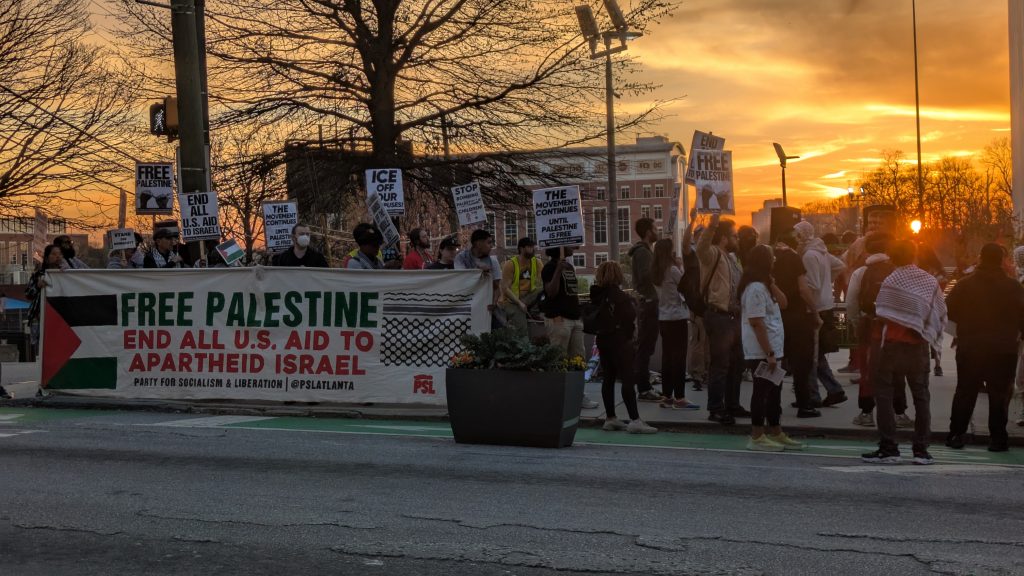
Despite the Trump administration’s recent crackdown on support for the Palestinian people, protesters have continued to rally against Israel’s genocidal escalation in Gaza
Mahmoud Khalil, a Palestinian political prisoner and green card holder, was detained on March 8 by the Department of Homeland Security for his involvement in the student encampment on Columbia University’s campus. Following his arrest, President Trump wrote on his Truth Social media platform that this arrest was the “first of many to come.”
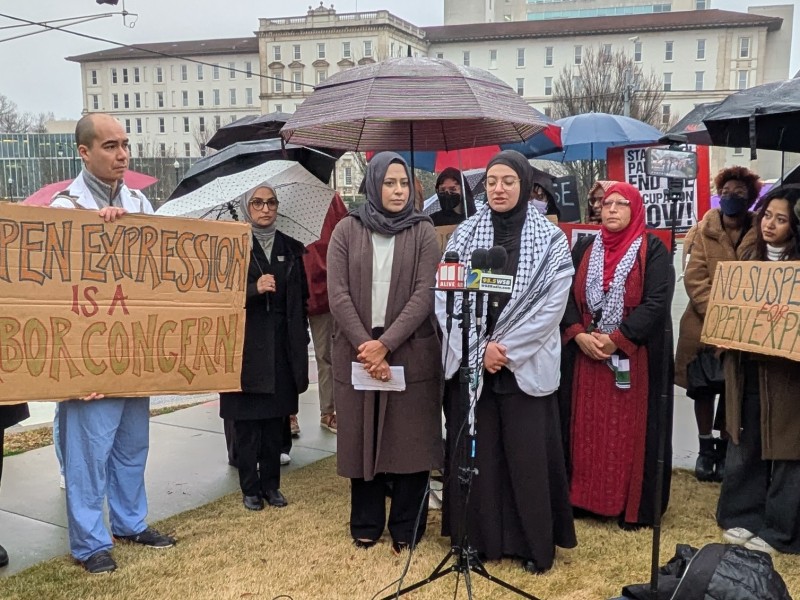
Cait Fogerty, an organizer with Atlanta for Palestine, said, “I don’t think it’s a coincidence that we saw the Trump administration target activists like Mahmoud Khalil in such a heightened way this past week. The community here in Atlanta is aware that we face an unprecedented threat of police repression, one that we fear will only grow with the opening of the Atlanta Police Training Center, known as Cop City.”
Author

Related Articles
A Rohingya man in New York died under mysterious circumstances— his relatives in Georgia are grappling with the loss
Federal immigration officers left Nurul Amin Shah Alam outside a closed coffee shop in harsh winter weather— days later he was found dead. He was getting ready to move to Georgia, says his niece in Stone Mountain.