Under the Gold Dome: March 17, 2025
What just happened?
Recovering from Crossover Day
Legislators continued to wade through the volume of bills that hurriedly passed from one chamber to the other on a hectic Crossover Day and assessed the work ahead for the final passage of favorite bills. Rep. Saira Draper reported in her newsletter that around 75 bills passed out of the House on Crossover Dday alone. And Rep. Shea Roberts’ tally of the total number of bills shows that 205 Republican-sponsored bills passed out of the House compared to only 16 Democratic bills. Rep. Draper points out that “these are meager numbers even though we [Demcrats] represent over 6.5 million constituents across Georgia and even more Democrats in other districts across the state.”
A good bit of time last week was consumed by Gov. Brian Kemp’s massive tort reform package. After passing the Senate with no amendments, the two bills, SB 68 and 69, were considered by the newly created Rules Subcommittee on Lawsuit Reform, which held two days of public testimony. You can watch both days for compelling arguments, mostly against this legislation, here and using the drop-down menu in the upper left corner for the 10th and 11th.
Most people will probably get a tiny reduction in our state income tax in 2026. HB 111, despite some opposition expressed by Democrats, crossed over to the Senate for consideration. This bill will reduce the highest marginal state income tax rate from its current 5.39% to 5.19%, reducing the state’s revenue by an estimated $748 million per year. However, about two-thirds of the tax savings will go to the top 20% of earners, according to the Georgia Budget and Policy Institute.
What is coming up next?
On the agenda
This is a short week. The legislature is not in session on Monday. Wednesday is a committee day and does not count as a legislative day. Friday is listed as a legislative day, but as of Sunday, no meetings have been scheduled. This is likely to change, however.
This week will be consumed with Senate Appropriations Hearings for the FY 2026 budget, which begins July 1. This budget has passed the House, but apparently, some differences of opinion are arising on the Senate side. Sen. Sally Harrell commented in her recent newsletter that “budget negotiations have gotten intense between the House and the Senate.”
SB 151 would create a new economic development authority, this time for North Fulton. It is on Tuesday’s agenda for the Intragovernmental Coordination Committee at 9:00 a.m. It will be interesting to hear lead sponsor Sen. Brandon Beach explain why the area needs yet another development authority to authorize massive tax breaks for development. It passed the Senate with all of the Democrats opposed.
No paywall. No corporate sponsors. No corporate ownership.
Help keep it that way by becoming a monthly donor today.
Free news isn’t cheap to make.
Another bill of concern is SB 177, which was voted out of the Senate and is assigned to the House’s Technology and Innovation Infrastructure Committee. This bill would require organizations that may have received funds from foreign entities to register with the state Ethics Commission. It could threaten or inhibit free speech and freedom of association and have a chilling effect on political activity and expression.
How is a bill not actually dead?
Even if a bill did not cross over from the originating chamber, it may still have a chance to pass. A bill is not truly dead until the gavel is banged on Sine Die, April 7. This second life happens when sponsors find another bill that is still alive and either attach the bill’s language or strip the original language altogether. In legislative speak, this is called a zombie or Frankenstein bill. Some bills that did not cross over have powerful sponsors who are probably already trying such maneuvers behind the scenes. The problem with these types of bills is that they avoid public comment, transparency, and efforts to improve the language of bills.
Bills to watch for in the next three weeks:
- SB 12 passed out of the Senate and is assigned to the House Governmental Affairs Committee. This bill modifies the Georgia Open Records Act and requires open records requests to be first presented to the governmental agency when seeking records from a contractor or consultant doing business with the agency.
- SB 61, assigned to the House Judiciary Non-Civil Committee, would require that young people ages 13 to 17 who are charged with domestic terrorist threats be tried in superior court rather than juvenile court.
- SB 21 would prohibit sanctuary cities in Georgia and waives any sovereign or governmental immunity for local elected officials. It is assigned to the House Public Safety and Homeland Security Committee.
- SB 36, the so-called Religious Freedom Bill, would increase the possibility of discrimination against LGBTQ individuals. It is assigned to the House Judiciary Committee.
- SB 154, assigned to the House Education Committee, would change references to the U.S. Department of Education throughout the Georgia code to include “or its successor” or similar language. This is apparently in anticipation of the Trump administration eliminating this federal department.
- SB 268 would create another penalty for interfering with a first responder. It is assigned to the House Judiciary Non-Civil Committee.
None of these bills appear on committee agendas so far for this week. But stay watchful.
Advocacy Days
The best way to learn about the legislative process and to advocate for particular issues is to come to the Capitol for an advocacy day.
This week, on Thursday, the Georgia Youth Justice League will host a Youth Take Over Day.
Author

Related Articles
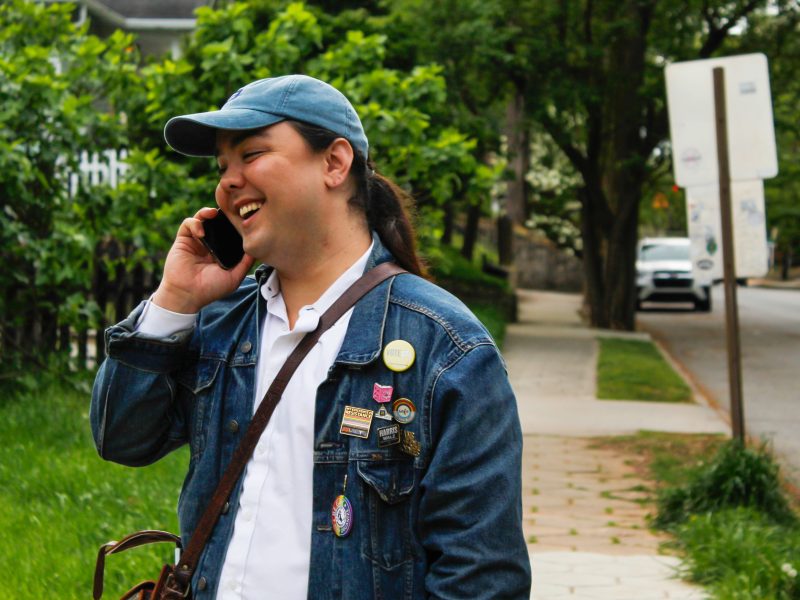
Organizer Bentley Hudgins takes second crack at Georgia House District 90 seat
Veteran organizer Bentley Hudgins seeks a second chance at Georgia House District 90, pitching neighborhood investment and alternative approaches to public safety in a crowded Democratic primary.
Melting ICE and other chilly topics for families: The People’s Puppet Show
A local organizer uses scenarios of colorful animal friends in conversation to help families break the ice on ICE every Saturday afternoon in Grant Park.