Community and activists come together for Cornelius Taylor’s funeral

Photos by Zoey Laird
The melody of “Amazing Grace” played at the funeral service for Cornelius Taylor on the morning of Feb. 3, held in the Ebenezer Baptist Church. Assembled members of the “Coalition for Cornelius Taylor” filled the pews, wearing black t-shirts with the words “I am Cornelius.” Elisabeth Omilami of Hosea Helps, the South’s largest Black-owned food bank, addressed the church, saying, “In the name of Cornelius Taylor, we set a marker on Old Wheat Street” and promised Taylor’s encampment home would not be cleared.
Taylor’s neighbors from the “backstreet” were present, having received haircuts, showers, and funeral clothes from the neighborhood outreach group Misfit Love Mafia. The group crowdfunded on social media for supplies, barbers, and makeup artists. Don Turner, freshly pressed in a suit and a new haircut, preached at the funeral. “It was the first time homeless folks were able to go into that church,” Turner said. Taylor’s death, he said, “opened doors.”
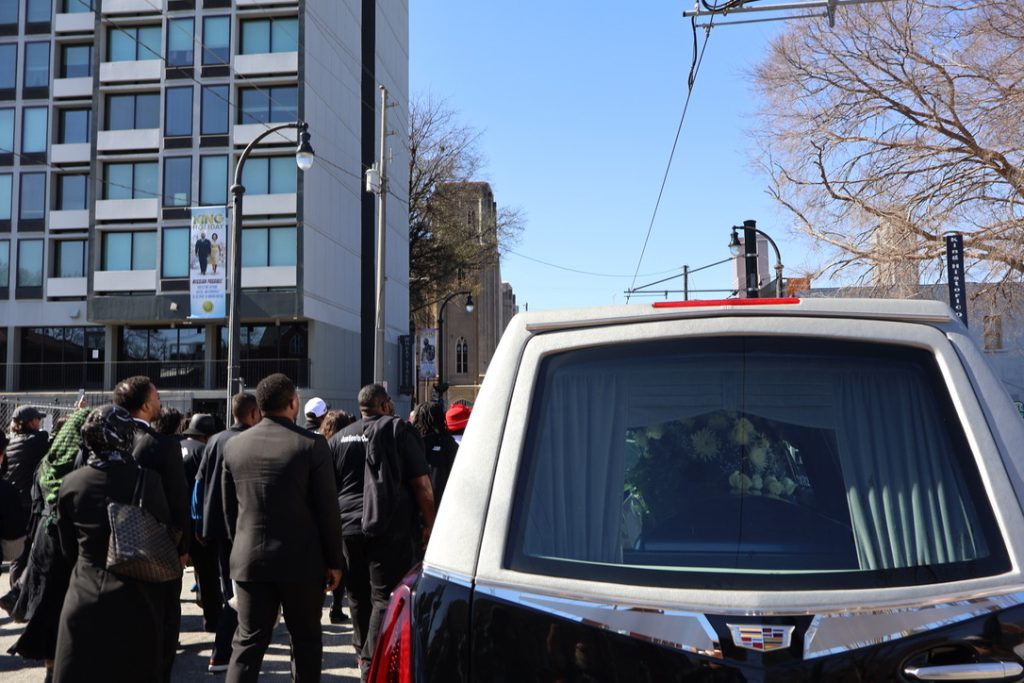
Notably, many of Taylor’s unhoused community returned to the backstreet while the casket was driven by horse and buggy to Atlanta City Hall. Attendees marched with the hearse, linking arms and calling out Cornelius Taylor’s name. Marchers were encouraged to attend the City Council meeting and make public comments in favor of legislation instituting a moratorium on heavy equipment used in sweeps and a task force to address housing justice in Atlanta.
People stood and clapped for speakers’ words, which were less eulogies and more calls to action. Reverend Warnock said, “He is one of us,” evoking Jesus’s ministry to the poor and the Memphis Sanitation Workers Strike of 1968. Following the service, the casket was solemnly processed to the hearse outside the church. Latisha Morris, Taylor’s neighbor, cut through the line of clergy people and dignitaries, shaking her head at the pomp and circumstance.

That evening on the backstreet, Gus Hendricks, Taylor’s friend, recalled Mayor Andre Dickens asking how he could help. “You need to free up some of that damn money they put out there for the homeless every day,” Hendricks recounted telling Dickens. He condemned the incident report APD released the day of Taylor’s death, that cast his death as a drug overdose. The medical examiner’s autopsy report later confirmed he was run over by heavy machinery.
Members of the Coalition for Cornelius Taylor passed out shirts, and a Hosea Helps truck delivered food. A meal was shared, along with the news that the legislation was passed in City Council and was now awaiting the mayor’s signature. Omilami oversaw the distribution of plates and pizza on the backstreet that night. She described Taylor’s death as “breaking open” a wound, exposing the plight of the unhoused “silent minority” in Atlanta to create policy change, long overdue and at a deadly cost.

No paywall. No corporate sponsors. No corporate ownership.
Help keep it that way by becoming a monthly donor today.
Free news isn’t cheap to make.
Related Articles
A Rohingya man in New York died under mysterious circumstances— his relatives in Georgia are grappling with the loss
Federal immigration officers left Nurul Amin Shah Alam outside a closed coffee shop in harsh winter weather— days later he was found dead. He was getting ready to move to Georgia, says his niece in Stone Mountain.