Opinion — Police surveillance tech and Cop Cities are the State’s complementary counterinsurgency strategy

Faced with organizing to Stop Cop City, Atlanta’s elite responded with the full authority of the state to act with violence against the varied but coordinated elements of this movement. Whether blocking a call for a citywide referendum on the construction of Cop City, issuing RICO charges, conducting raids on activists at their homes, and even murdering a protestor, the Stop Cop City movement has been met with harsh tactics intended to break the resistance to the construction of the Atlanta Public Safety Training Center. This multi-pronged counterinsurgency strategy is designed to crack collaboration, discredit demands, and scare protestors challenging Cop City.
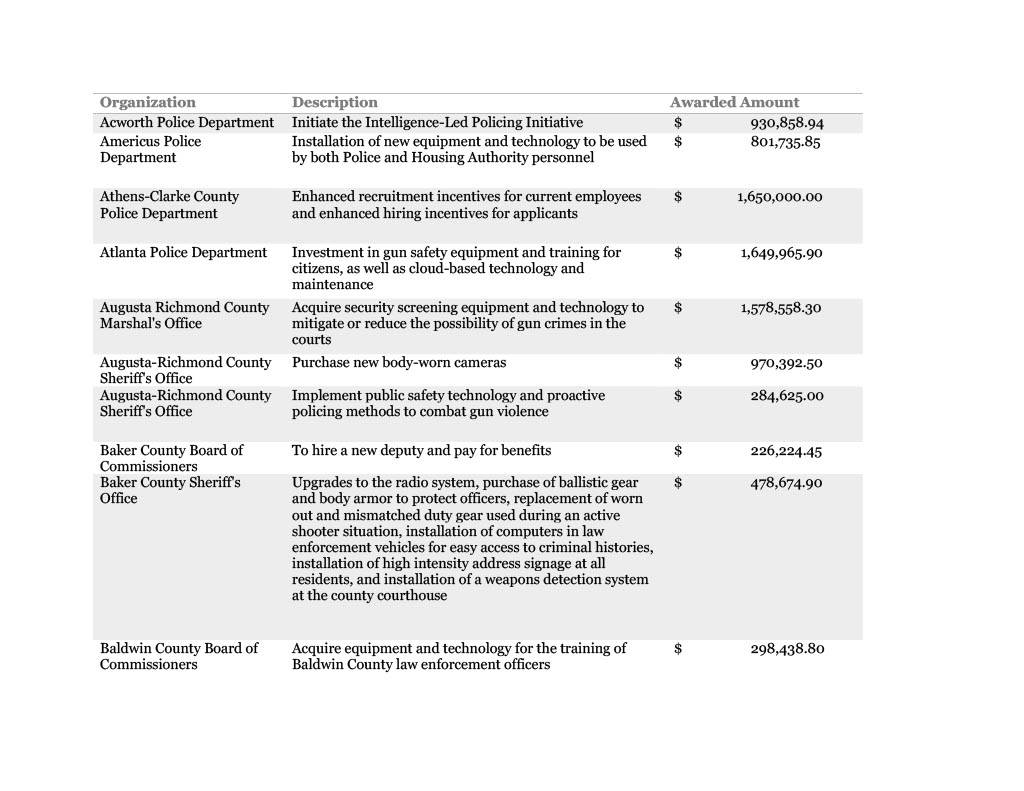
Amidst the state’s well-documented aggression against the Stop Cop City movement, Georgia officials have built upon Atlanta’s huge surveillance infrastructure by quietly expanding the use of tools across the state, including a $83.5 million surveillance technology grant program administered by Gov. Kemp’s office in 2023. The simultaneous investment in Cop City and surveillance systems signals an intensification of repression in the coming years through the marriage of these complementary counterinsurgency strategies.
Central to Atlanta’s policing strategy is the city’s well-documented adoption of surveillance technologies, particularly a camera system that blankets the city. The Atlanta Police Department has embraced surveillance because of the generosity of the Atlanta Police Foundation and the growth of Atlanta as a hub for the police surveillance industry as homegrown companies like Flock Safety and Fusus now have thousands of contracts across the country. While Atlanta’s existing surveillance apparatus received much attention as the envy of many police departments across the country, Georgia officials have discreetly expanded surveillance infrastructure beyond the city’s borders amidst the growing threat of the Stop Cop City movement.
In June 2023, Georgia Gov. Brian Kemp announced that his office was awarding $83.5 million in American Rescue Plan funds towards “public safety” grants for 118 grantees, declaring that the funding will support police against “dangerous criminals.” Many of the grantees are in counties and towns proximate to the site where the Atlanta Public Safety Training Center is under construction.
Among the grantees, the Cherokee County Sheriff used its $518,787.50 grant to grow the agency’s automated license plate reader network with 35 more cameras from Flock Safety. The DeKalb County Police Department proposed using the agency’s nearly $1 million grant to purchase a military grade surveillance camera to be installed on one of the agency’s helicopters along with a thermal imaging camera for its SWAT team. Doraville proposed purchasing equipment from Cellebrite, a mobile forensics technology, which has questionable legal status as the technology is designed to extract information from smartphones without user permission to log into the device.
Georgia public safety grants are funding not only individual surveillance technologies, but also platforms that facilitate police integration of numerous data sources, broadening and streamlining the surveillance dragnet. South Fulton is following a national trend by using their grant to sign a contract with Fusus’ cloud-based platform that integrates multiple surveillance technologies for use in real time crime centers.
Fusus also touts the infrastructure for constructing a camera network of both public and private cameras to police, similar to Amazon Ring but with dramatically increased surveillance capacity. Atlanta was awarded more than $1,600,000 for, “investment in gun safety equipment and training for citizens, as well as cloud-based technology and maintenance.”
The grant funding is not limited to local police, as the Georgia Bureau of Investigation and the Georgia Public Safety Training Center also were awarded funds, furthering the post-9/11 goal of building an interoperable surveillance and communications network among all layers of law enforcement.
The timing of Gov. Kemp’s grant program signals his intention of using this expanding surveillance apparatus across Georgia as part of a broader counterinsurgency strategy. As the Stop Cop City movement has grown, police agencies have utilized punishment and sheer violence as part of an effort to maintain control. Complementing this violence, Kemp’s recent grant program initiated possibly the largest expansion of surveillance systems in Georgia history.

No paywall. No corporate sponsors. No corporate ownership.
Help keep it that way by becoming a monthly donor today.
Free news isn’t cheap to make.
Now, Georgia police agencies can deploy a set of tools that provide an unprecedented level of power due to technological advances which encourage indiscriminate dragnet monitoring of people and geographies.
Beyond the isolated use of these tools by different agencies, Kemp’s grant program introduced an expanded infrastructure of surveillance technology encouraging maximum data sharing or “mutual aid” support across all levels of policing. For example, it is possible that any data copied and extracted from a cellphone through Doraville’s use of its GrayShift tool will not sit isolated in Doraville’s storage software but will now be shared across Georgia and even federal police agencies. Police and the companies selling surveillance routinely highlight these tools as “force multipliers,” meaning that the unprecedented level of surveillance will have a compounding effect in the ability of police to track any person deemed to be a threat.
With this surveillance infrastructure firmly in place encouraging police to share and request data across jurisdictions in real time, it is likely that the power of this apparatus will inspire new laws and practices aimed at criminalizing dissent. Georgia has already utilized menacing charges, like the use of RICO, to not only intimidate but also to discredit and delegitimize activists and organizers in the eyes of the public.
State officials know the power of narrative control, and will likely use the information collected by surveillance technology not only as a tool of punishment and coercion but also as a means to build consent for intensifying repression against future movements. It’s not hard to imagine automated license plate readers used to track anyone with out-of-state plates in an attempt to push an “outside agitator” narrative intended to undermine the actions and demands of future movements. With cameras everywhere, state officials and police will make use of footage to build public support for using the powers of the police to track and quash threats.
The growth of the surveillance apparatus in Georgia and beyond should be alarming as Trump takes office again. While this growth over the last 40 years has been a bipartisan affair with both parties at all levels of government supporting the adoption of police surveillance infrastructure, President Trump is constructing a team that is fully aligned with his desire to maximally punish dissent.
Trump will likely maintain an open spigot of federal funding for surveillance technologies and other elected officials will follow Kemp’s lead in building their local surveillance infrastructure, particularly in jurisdictions building their own Cop Cities. Where dissent simmers, police surveillance technologies will follow as the state intensifies its counterinsurgency infrastructure and power.
Related Articles

Opinion — Play the Game. Vote for Public Service Commissioners.
The most important race in the country is in your hands.