
What to know about the 2025 Georgia General Assembly
FROM NOW UNTIL DECEMBER 31, NEWSMATCH WILL MATCH ANY NEW MONTHLY DONATION 12X OR DOUBLE ANY ONE TIME GIFT UP TO $1,000.
All donations to ACPC are tax-deductible and go directly to powering our newsroom.
Will you show your support for local news?
All donations to ACPC are tax-deductible and go directly to
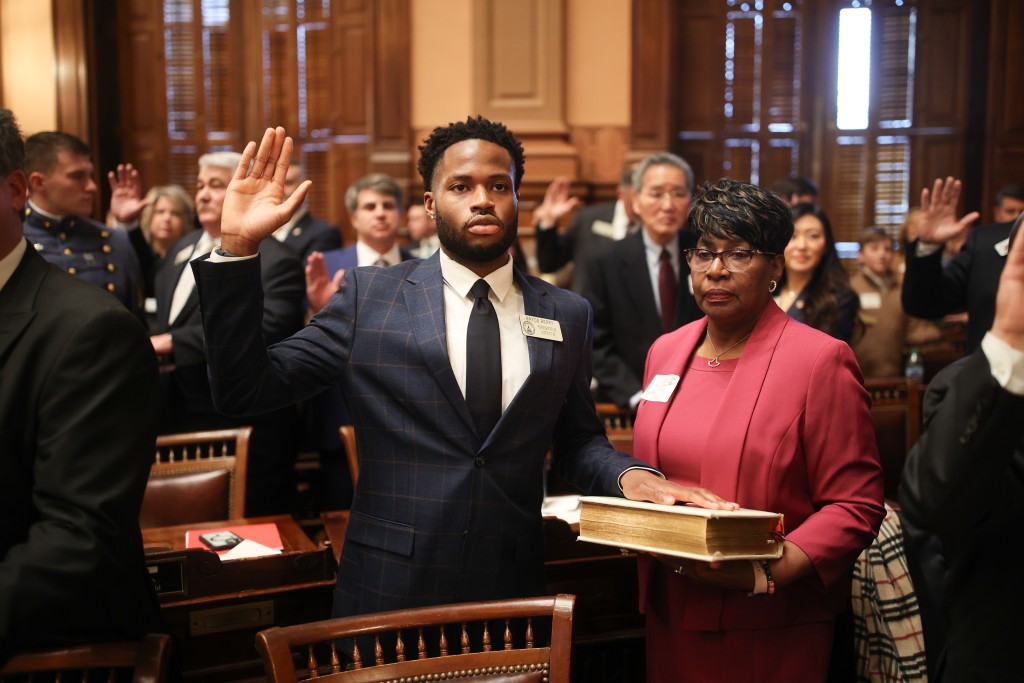
The 62nd annual Wild Hog Supper last Sunday, with BBQ with Southern sides and featuring an actual hog being carved in the middle of the room, signaled the start of the 2025 Georgia General Assembly’s annual marathon of debating and enacting policies and budgets for the state. The Assembly lasts 40 legislative days as opposed to calendar days, as required by the state constitution.
Things start slowly for the legislature. The House and Senate leadership hand out new committee assignments in the first week. Rules of both chambers are updated and adopted, and legislators’ offices are moved and decorated. Last Tuesday, the second day of the session, the Governor addressed the Eggs and Issues breakfast sponsored by the Georgia Chamber of Commerce. On Thursday, the Governor gave his State of the State address, laying out his legislative priorities. Then, on Friday, he submitted his draft budgets for the remainder of the current fiscal year and the upcoming fiscal year that begins each July. This week is “Budget Week,” where many state departments and agencies come before the House and Senate appropriation committees to plead for more money.
After Budget Week, things get rolling with committee meetings and press conferences galore. In addition, issue advocacy groups descend on the Capitol for specific lobby days where advocates and everyday Georgians who care about a particular issue usually meet early in the day for lobby and talking points training before fanning out to speak with legislators.
What does the General Assembly look like?
While each legislator represents their district and the interests of all Georgians, the entire culture and practice of the legislature is deeply steeped in partisan politics. Georgia’s population is almost evenly divided between Democratic and Republican voters. In state-wide elections, Democrats often get results in the mid-40%. Opinion polls consistently indicate that Georgians approve of policies like gun safety and environmental protections, to name two traditionally Democratic positions, by wide margins. Yet, because of gerrymandered districts, the Georgia Legislature is controlled by Republicans, with a 33/23 split in the Senate and a 100/80 split in the House. Democrats did have a net gain of two seats in this current House. And the legislature is slowly growing more diverse. The number of Black legislators is 74, which roughly mirrors the 30% Black population in the state. The number of Hispanics, Asian Americans, and other ethnic groups is also increasing. While the number of women has increased over the last decade, they still hold only 34% of the seats, a long way from parity with the state’s general population.

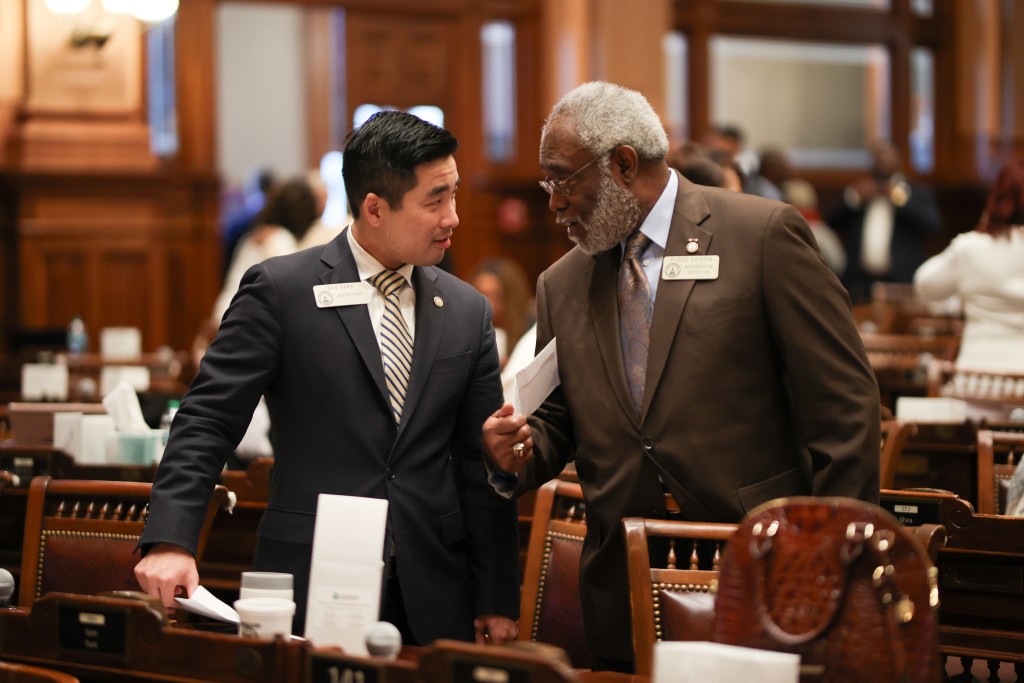
“Every single election cycle,” says Democrat Rep. Sam Park, “we have gained one or two seats, and in some instances, more than 10 seats, thinking about 2018. And as I look back on the trajectory of my legislative career for the past eight to nine years, we were at 62 members. Now we are at 80, and we are now 45% of the house. And therein lies the opportunity to pass good legislation for the people, to stop bad bills, and to hopefully continue to build a new Democratic majority that actually represents the people of Georgia.”
“A bright spot for this session is the strength of the new Senate and House Democratic leadership,” says Democrat Sen. Nan Orrock. “The depth of the bench in both chambers holds great potential for the significant battles we’re facing. And the skill set, talent, and dedication of the new generation of Democratic legislators entering the fray in the Capitol is terrific.”
Another bright spot is the ever-growing and increasingly skilled non-partisan advocates lobbying for progressive issues and pushing for good policy daily at the Capitol. Larry Pellegrini, who has been at the Capitol for more than a decade working and mentoring new activists, said that the progressive activists are growing more strategic and knowledgeable about particular issue areas.
What’s already in the works for this legislative session?
Despite the incremental gains and growing strength of the Democrats, the legislative priorities are set by the Republican leadership and the governor, and this year is no exception. Several Capitol observers quipped that it seems like déjà vu with perennial controversial issues such as legalizing gambling, tort reform, anti-transgender concerns, and education vouchers being promoted by Republicans year after year.
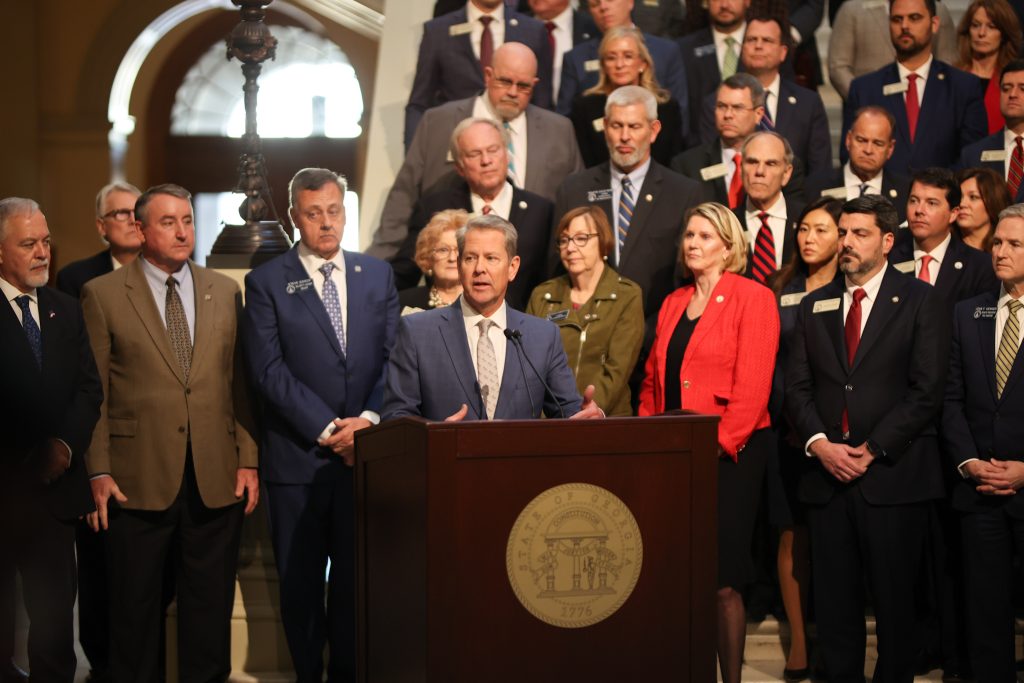
Tort or litigation reform appears to be Gov. Kemp’s top priority for this session, even threatening to call a special session of the legislature if significant reform is not passed in the regular session. While the governor has not presented any details of a tort reform bill, it may involve limiting the amount of money an individual could recover from a lawsuit. With little evidence, tort reform supporters have long argued that insurance rates will be lowered if fewer lawsuits result in huge settlements or jury awards. The governor’s office promises to release the details of tort reform legislation soon, but as the governor said in his State of the State address, tort reform is complicated.
Attorney and Democratic state Sen. Elena Parent said, “The Governor is already applying political pressure but it is clear he expects a tough battle and does not have votes lined up. He is making overtures to Democrats and threatened a special session in his State of the State if we did not act to his liking.”
Legislators wasted little time introducing bills in the first five days of the session: Democratic Rep. Michelle Au was first out of the block with HB-1 to HB-4, all relating to gun safety measures. In the Senate, the first legislation filed was a transphobic bill that would prohibit transgender youth from participating in sports with their peers and from using bathrooms, locker/changing rooms, or sleeping facilities that align with their gender identity.
As of Friday, 118 bills had been filed in the House and 26 in the Senate. New rules adopted by the House eliminated the long-standing practice of pre-filing bills and now limit each representative to introducing only 10 bills. Many bills introduced will not be passed or even get committee hearings.
A few other bills and budgeting of note that are worthy of early attention are:
- HB-40 calls for the role of secretary of state to serve as chair of the State Election Board.
- SB-7 wades into the conflict over using the city of Atlanta’s jail facility. It would require municipalities to let county sheriffs fill unused city jail beds with county inmates.
- SB-21 makes it more difficult for counties or municipalities to serve as sanctuary cities by not turning over arrestees who might be without legal status in the U.S.
- Gov. Kemp has allotted over $600 million for state prison upgrades under pressure from a Department of Justice report about deficiencies. How this money will be allocated may be outlined during Budget Week.
How else to stay informed
While the legislature’s operations can seem daunting and shrouded in vague traditions, even to seasoned lobbyists, the day-to-day functions are surprisingly accessible and transparent. The General Assembly website home page lists schedules of the floor sessions and all committee meetings. This page offers links to live videos of meetings, a way to search for bills by bill number, and links to member and committee information. Bills filed in what is referred to as the Hopper are listed here, which include legislation proposed for both the House and the Senate, a keyword search function, and an indication of the committee to which the bill has been assigned. The legislature’s media services department keeps video archives of all floor sessions and most committee meetings. Archives for House and Senate videos are posted regularly. Staff of legislators and committees have their contact information available on the General Assembly website and are usually a helpful resource for citizens and lobbyists.
Despite the increasing diversity and a few more Democrats, “This certainly promises to be a challenging session for progressive forces,” Rep. Sam Park said. “Republicans have continued to fail the people of Georgia on health care, on education, on economic mobility. So, Democrats will continue fighting for the people on all the issues that impact their daily lives.”
No paywall. No corporate sponsors. No corporate ownership.
Help keep it that way by becoming a monthly donor today.
Free news isn't cheap to make.
Author

Related Articles

Public Service Commission meets scathing public backlash with stipulated agreement for Georgia Power expansion
While protesters preceded Wednesday’s Public Service Commission hearing with a press conference and in-chamber disruption, the Commission announced a stipulated agreement accepting Georgia Power’s full 10,000-megawatt expansion.
Mayor promotes new Constituent Service chief who was subject of an inspector general investigation
The Office of Inspector General found that in 2022, Vanessa Manley used her position in the city for personal gain, failed to disclose outside employment and submitted a false invoice.