“Reimagining Safety” documentary and discussion highlight a different approach to community safety

On Saturday afternoon, more than 50 community members gathered at Park Avenue Baptist Church for the Atlanta Reimagining Safety Festival to visualize life with a curtailed police presence and discuss what they believe makes communities truly safe. The event was co-hosted by Strike Black and Atlanta Justice Alliance.
A screening of the documentary “Reimagining Safety” served as a guide for that visualization, featuring perspectives from former police, sociologists, professors, activists and a former district attorney. Local musicians such as Penelope French, Tardia and River Michael inspired the discussion as well, with musical performances centered on the theme of what safety means to the people who comprise this community.
Posters with the question “What does safety in community look like?” lined the walls of the room, inviting attendees to offer their answers. Affordable housing, equitable distribution of resources and expansion of substitute programs such as the Police Alternatives and Diversion (PAD) Initiative were the most common responses. Other responses included accessibility, community training and self-defense, and empowered community-controlled police accountability systems.
In the open forum, longtime local activist Lorraine Fontana expounded on that last idea:
On the topic of police citizen review boards, Fontana said, “They have no power. They can investigate or report and take that information and send it to the police department. Usually the police chief decides—for a while it was 100% — it would not agree with anything happening to the cop who was reported on. It started to change when people complained a bunch. … But there’s no power in that committee; police have the final determination over everything. That’s not a good citizen review board. That’s meaninglessly giving a name to make you feel good, that you’re doing something.”
Some community members posited social awareness, engagement in events like this and cultural competency education as part of the solution. Others added political theory to the discussion, such as the Zapatistas’ model of community control over local resources in southern Mexico and the autonomous direct democracy posed by the Kurdistan Worker’s Party. Still, others remarked how the “Reimagining Safety” documentary related to their personal stories and helped them find empathy and love for all, even those who hurt them, in what they saw as a broken system hurting everyone.
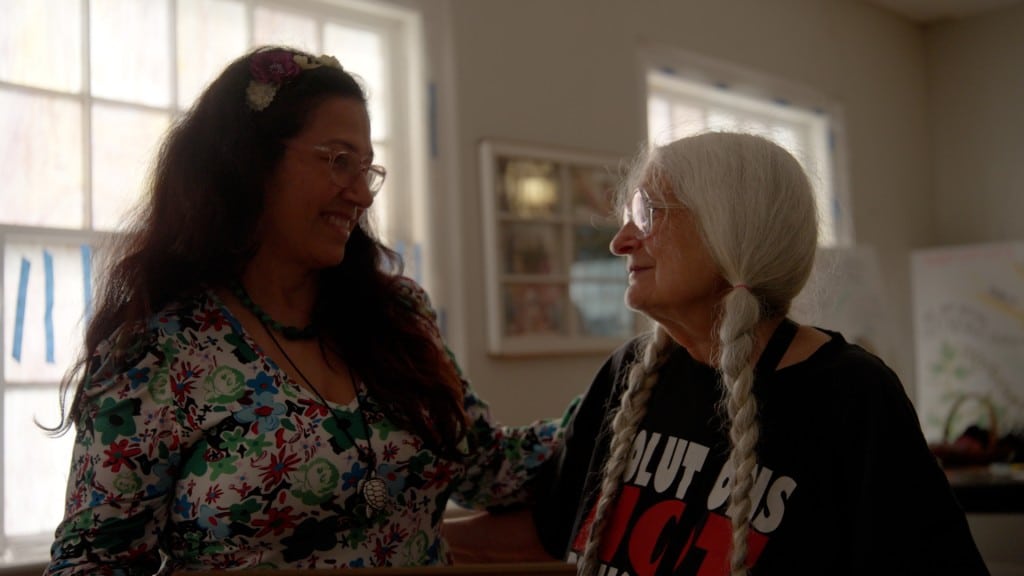
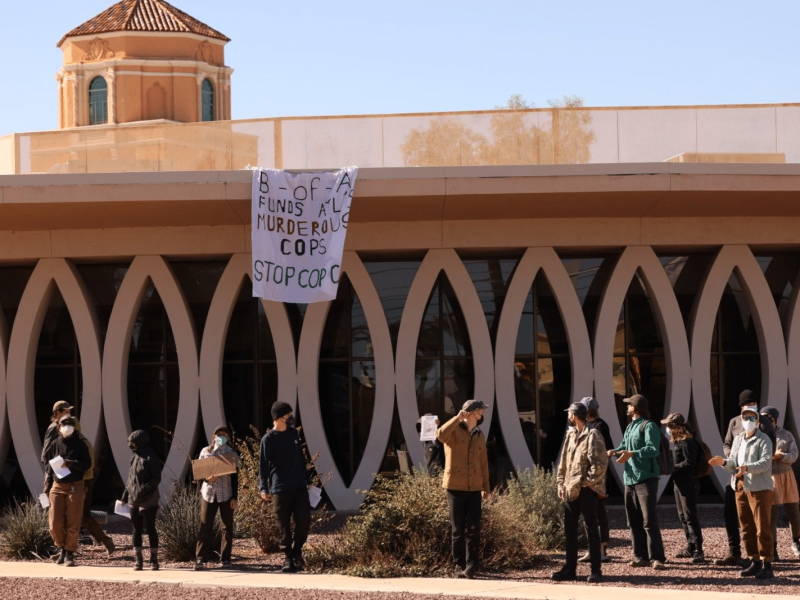
In that last camp was Belkís Teran, mother of environmental activist Manuel Esteban Paez Teran, known as “Tortuguita,” whom police killed in a raid on the Weelaunee Forest in January 2023 where the Atlanta Public Safety Training Center, commonly called Cop City, now stands.
“Put your love in action,” Teran said. “Why am I so strong? Because of the love I gave to my Manuel. And the love he gave me is still alive — and I can share with you. … In the name of love, in the name of doing good things, create those links in the community.”
She explained that examples of mutual aid, in line with the Tortuguita Healing Center she established in Panama where she lives, as crucial demonstrations of love in action. She also sang a song in Spanish about things that will not pass and proclaimed her vision for Tortuguita Healing Centers around the world to provide such care to forest defenders.
No paywall. No corporate sponsors. No corporate ownership.
Help keep it that way by becoming a monthly donor today.
Free news isn’t cheap to make.
Noelle Adams, creator of the Culpability app, likewise cast a vision of communities caring for one another. She explained how the app connects users online with encouragement for accountability and a red SOS button that automatically alerts connections that one is in danger, along with a location pin and a link to live audio and video from the person’s phone.
“Our goal is to be able to take that information and share in advance those things taking place within our community,” Adams said. “This is how we create community policing, with us knowing our neighbors and being able to navigate those spaces in communities the way we deserve.”
“Reimagining Safety” director Matthew Solomon explained how his background in helping neighbors better communicate with one another sparked the journey that culminated in creating the film and screening it in communities across the nation.
“Most inspiring is being in rooms with people like you all who care,” Solomon said. “Care about people, care about tuning in to something different. In 2020 I had lost a lot of faith in humanity, and traveling around the country and being in rooms like this for the last year and a half has really restored that for me.”
Shanae Stover of Strike Black concluded the event by leaving attendees with a challenge to invest in one another:
“Most of us in here have shared values and a shared purpose, but we don’t even know each other,” Stover said. “That person who you’re like, ‘I know I’ve seen that person many times’ — talk to them. Ask them their name. Ask them how you can connect with them. And go a step further: Get their number and intentionally build community with them. We cannot keep coming together in these ways and talk about community and safety and this grand scheme perspective if we’re not even building community with people who we are actually in community with already. … There’s a lot of people that don’t have family, don’t have community. And we all are chosen community, so let’s start doing that today.”
For more information on “Reimagining Safety,” visit ReimaginingSafetyMovie.com or @ReimaginingSafetyMovie on Instagram.