
Opinion — Decarceration: The Urgent and Necessary Solution To Georgia’s Prison Crisis

by Mark Spencer
There is an undeniable human rights crisis inside Georgia’s state prisons. Federal investigations have been ongoing since 2016 and 2021, with a scathing report released in October 2024. This year has likewise brought a new Georgia Senate committee, House subcommittee, and the hiring of a private consultant agency, all of whom are tasked with addressing the disastrous prison conditions.
Georgia has long been a world leader in incarceration, at five to ten times the rate of other democratic nations. There are few states that rival Georgia’s predilection to cage its own citizens and none that can match the rate of total correctional control. As of October 2024, 51,766 people were incarcerated in Georgia state prisons. The heavily racialized criminalization across Georgia has seen Black people imprisoned at five times the rate of white Georgians.
Safety and Health
Those entering Georgia prisons have above average rates of chronic disease, mental health issues, and substance use disorders. Much of these health struggles can be attributed to unmet social determinants of health, with pre-incarceration lives often defined by poverty, trauma, and job and housing insecurity. In prison, medical concerns are often met by skepticism and indifference by staff. Coupled with chronic understaffing, privatization of medical services, lack of programming, and a long history of abuse of power, the current crisis is as predictable as it is horrifying.
The widespread instability of the system has led to an unprecedented surge in premature death. 2024 is currently shaping up to be the deadliest year in the Department of Corrections history, with a reported 156 deaths in custody in just the first six months. Instead of addressing the crisis, already limited transparency has been curtailed and the DOC is no longer reporting the suspected cause of death for those who die in custody.
A Way Forward
Nationally it is estimated that roughly 40 percent of incarcerated individuals pose zero public safety risk. Additionally, 22 percent, or nearly 12,000 people, are over the age of 50 in Georgia prisons today. One of the most well documented criminological facts is that people age out of crime, with those aged 50 or older significantly less likely to be reconvicted and those 65 or older approaching a near zero rate of recidivism. These statistics make clear that urgent decarceration will not hinder, but enhance the safety of people in Georgia, especially when we consider the health and wellbeing of those incarcerated today. There are many actions that can be taken today and in the next legislative session to address this unmitigated crisis.

Early release through the parole board is the primary mechanism for decarceration. This five person board, appointed by the governor for seven-year terms, holds tremendous power to address the crisis. Unfortunately, it is in dire need of reform. They hear and approve too few cases, focus extensively on the initial conviction and not the current state of the individual, all while discounting the carceral impact to the individuals physical and mental wellbeing. The excessively punitive politics of this board are inhibiting the most significant, immediately available avenue for decarceration.
Some potential reforms to the parole board should include mandating a new make up of parole board to include a member with a public health background and a formerly incarcerated member, barring parole boards from considering the nature of original offense in their decisions, extending good time credits, shortening intervals for reconsideration, expanding second look legislation, eliminating any requirements to serve 100% of a sentence, and increased transparency and engagement with incarcerated individuals prior to and following parole decisions.
The parole board can also pardon individuals. This should be done immediately for those sentenced for crimes now widely considered not harmful, including the majority of drug related convictions. When you consider Georgia sentences people far longer for the same crimes than other peer nations, early release of thousands of individuals is not unreasonable. These long sentences empirically do not serve as any significant deterrent but hold a high financial, social, and moral cost.
There are two other pathways to release those who are often both the lowest risk and most medically vulnerable. The first is parole due to advanced age, which anyone in prison is eligible for starting at the age of 62, regardless of sentence. The second process is medical reprieve, which requires an incurable illness, significant disability from this illness, and a prognosis of less than 12 months. Both of these pathways are underutilized. To maximize the impact of these policies, Georgia should move all medical reprieve decisions to an external medical review board where decisions are made in an expedited fashion and based on criteria solely medical in nature. Parole due to advanced age should be evaluated starting at 50 years old, not 62. The chronic stress endured in prison has been shown to prematurely age people, with one study showing one year incarcerated taking two years off of one’s life expectancy. Incarcerated people in their fifties can be considered geriatric from a medical standpoint, having many conditions typically seen in individuals in their seventies in the community.
Decarceration should occur without the bureaucracy and onerous requirements of parole. Quite simply, parole too often serves as a tripwire for reincarceration rather than a support system for transitioning home. There should be zero people sent to prison for technical parole violations. Former New York City probation commissioner Vincent Schiraldi summarized decades of research saying, “The massive growth of supervision in all 50 states over the past 40 years did next to nothing to reduce the likelihood of incarceration, let alone improve our traditional notions of public safety.”
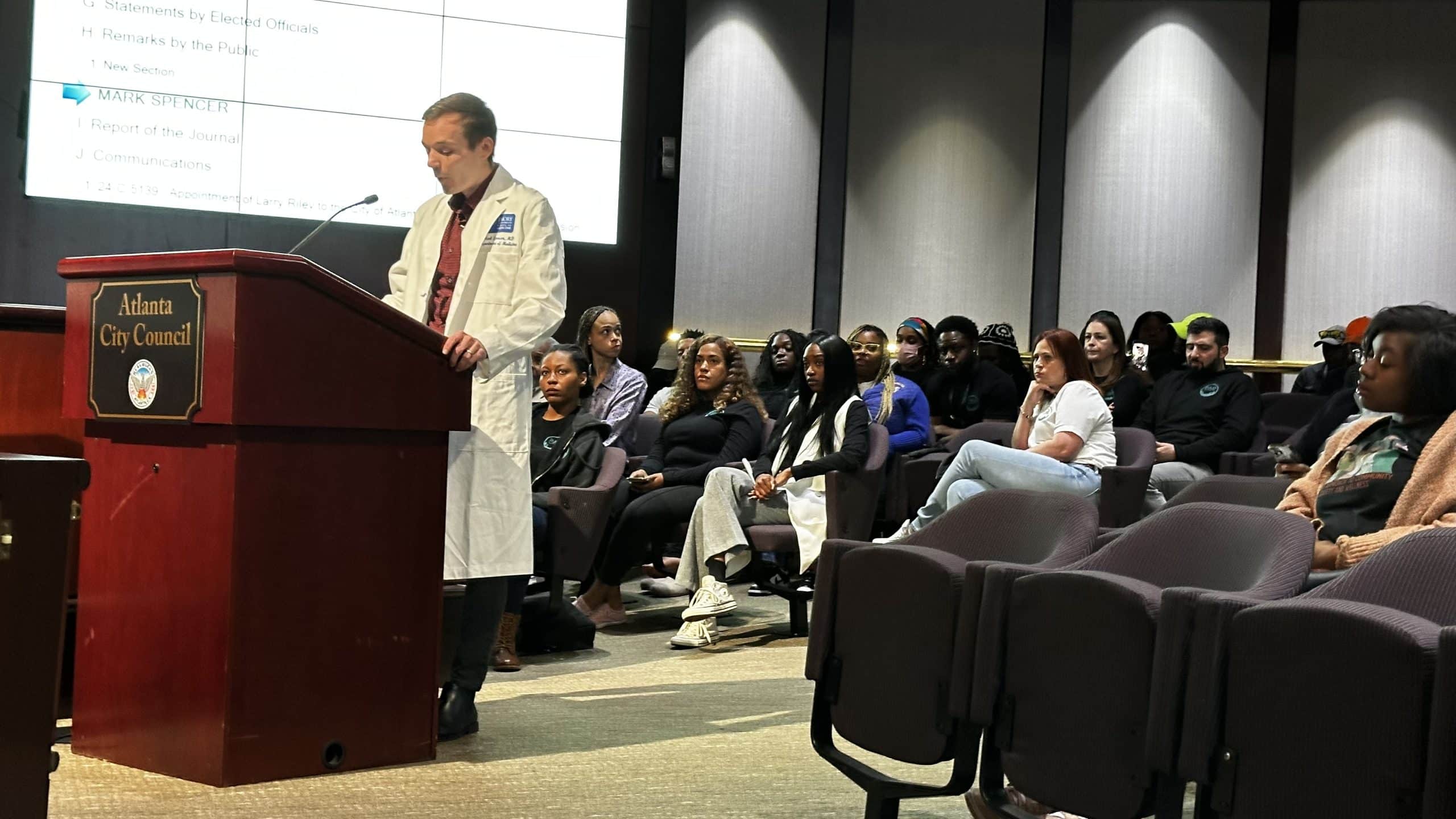
Outside of decarceration, Georgia is in dire need of sentencing reform or we risk finding ourselves back in the same place. The promise of ever increasing punitive policies to improve safety has been an abject failure. Laws related to mandatory minimums, truth in sentencing, and three strikes should all be eliminated or severely curtailed. The resultant decades-long sentences have significant financial and social costs to the families enmeshed in the legal system. Incarceration is simply not a very effective public safety intervention and in fact undermines public safety goals in many cases.
Georgia should immediately institute a moratorium on building new prisons. It strains credulity to suggest Georgia needs more prisons while continuing to cage an unprecedented number of human beings. Plans to build two new prisons at the cost of $600 million should be immediately abandoned and funds repurposed. It is not the physical buildings that are the root cause of the disorder and despair, but the endemic culture and function of prisons themselves. Sinking more money into a failing system that already costs $1.5 billion annually is not the solution. With crime trends at historic lows, justifying these carceral investments becomes even more indefensible. Georgia should go further and aim to close a minimum of ten prisons in the next five years. This would allow remaining prisons to be adequately staffed and all cost savings put into robust reentry support. This could include larger “gate money” given on release, often the most vulnerable time period of reentry.
Envisioning A Safe Georgia For All
There are thousands of people incarcerated in Georgia prisons today who are ready and willing to contribute to a better Georgia. We must shift how we collectively understand what produces safety. Decades have shown that marginalization and lack of opportunity can drive crime while well resourced communities can serve as the best deterrent. More importantly, we cannot focus solely on interpersonal harm while ignoring the much larger systemic harms. This structural violence, or harm driven by policy, is the root cause of much of the preventable suffering Georgians endure. Structural violence cannot be undone by policing and prisons.
At present, Georgia has some of the weakest social safety net systems, worst renter protections, and one of the highest uninsured rates. The results are predictable with worse health outcomes not just than the majority of other states but every other peer nation. Carceral-centric policy making has proven detrimental to the wellbeing of Georgians. It does little to address the harms people care most about, inflicts additional suffering on individuals and families, starves communities of resources and investment, all while exacerbating existing inequities by labeling tens of thousands of Georgians as undeserving of care.
Building a safety net to lift all in Georgia up is about preventing as much harm as possible. This process could start with Medicaid Expansion, which would not only improve health outcomes and be an economic stimulus, it remains one of the most robust state level crime reduction policies of the past decade. There must be accompanied investments in affordable housing, renter protections, mental health infrastructure, and harm reduction. Georgia must at a minimum join other states in building systems of social support and protection that allow families and children to live well.
Some will say these proposals are a political impossibility. This is not the case. There is popular support for change amidst the intersecting crises of housing affordability, healthcare access, and state prison catastrophe. We can and must reject manufactured scarcity. Justice need not be replicating the same violence we claim to abhor, but can be found in equipping all communities with resources not simply to survive but to thrive.

Mark Spencer, MD is an Internal Medicine physician in Atlanta. His academic and community work focus on the impacts of carceral systems on health. He is the executive director of Stop Criminalization Of Our Patients (SCOOP), a collective of healthcare students and workers who support non-carceral approaches to public safety.
No paywall. No corporate sponsors. No corporate ownership.
Help keep it that way by becoming a monthly donor today.
Free news isn't cheap to make.
Related Articles


Opinion — Play the Game. Vote for Public Service Commissioners.
The most important race in the country is in your hands.
