
Opinion – How anti-Black dog whistles evolve over time but never go away
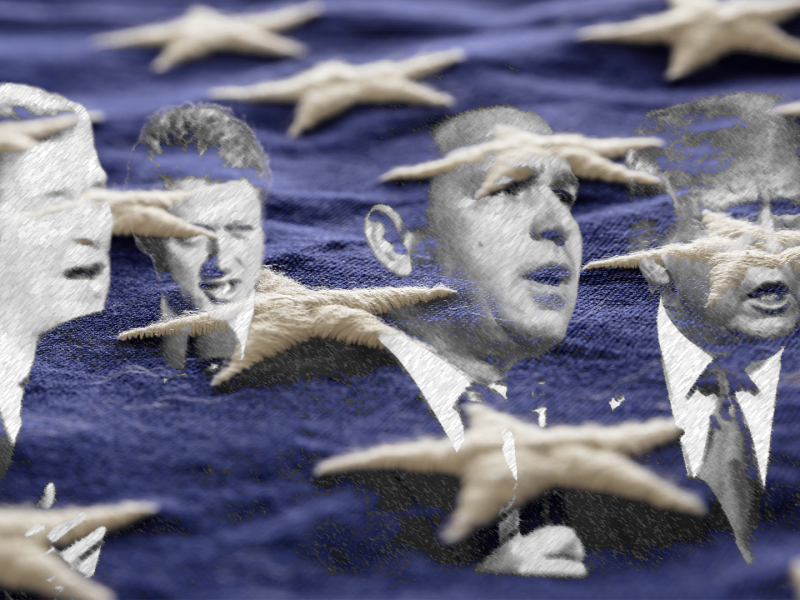
As race relations in the United States trend towards equity, slurs have largely fallen out of popular usage. Remnants of language from bygone times still exist in organization names like the National Association for the Advancement of Colored People. Today, Americans are more likely to, intentionally or unintentionally, use dog whistles instead. Dog whistles—coded or suggestive sociopolitical language intended to gain support from certain groups while avoiding backlash from other groups—and their linguistic evolution reflect the depths to which white supremacy continues to infect our society.
Many modern anti-Black dog whistles are based on rhetoric used and popularized by Ronald Reagan in the late 70s and early 80s. The idea of a welfare queen, an urban woman who abused public benefits assistance by using fake names or addresses, was popularized by Reagan throughout his campaign. While he never assigned a race to this allegedly real woman, the implication of her being Black was readily understood by supporters and detractors of Reagan alike. In his crusade against public benefits, Reagan would also frequently talk about “young bucks” who were allegedly using food stamps to buy steaks and other fancy foods. This term also lacked a racial descriptor, but the fact that Reagan only used the term while campaigning in Southern states betrayed his anti-Black intentions.
Republicans don’t monopolize anti-Blackness. Democratic politicians have also engaged in dog whistles for political gain. Research internal to the Democratic party in the early 90s revealed that white voters had fully bought into Reagan’s rhetoric and viewed those on welfare as burdens, lazy freeloaders, and, most of all, people of color. Trying to recapture these disaffected white voters, Bill Clinton consistently advocated for “end[ing] welfare as we know it” while campaigning. President Clinton signed the Personal Responsibility and Work Opportunity Reconciliation Act into law in 1996. These sweeping changes to welfare programs increased the number of Black children living in deep poverty.
The 2000s and 2010s saw the resurgence of a century-old conspiracy theory: cultural Marxism. The anti-semitic theory rests on the idea that Jewish intellectuals are responsible for pushing a progressive and multicultural ideology on society. The lack of evidence for the theory does not deter social regressives from decrying cultural Marxism and attacking all diverse marginalized groups, even at times going as far as committing terror attacks. Despite the growing violent undertones to the theory, right-wing politicians such as Ron DeSantis and Ted Cruz have invoked the phrase to stoke both discrimination and the ever-present red scare sentiment lingering in the American populace.
The term woke became popular in the early 2010s as African American Vernacular English (AAVE) slang. But as is unfortunately commonplace with Black American culture, white society quickly stole, and then warped, the term. Woke was broadened in scope from initially being cognizant of racial inequality, such as the 2014 police murder of Michael Brown, to all social justice issues more generally. With that came the Right using the term as a pejorative to mock those who dared care about social justice. The 2020 murder of George Floyd reignited popular usage of woke, used both unironically and derogatorily by social justice supporters and detractors, respectively. Because woke has its roots in AAVE, the association with Blackness is explicit despite its mainstream usage.
The weaponization of the term is clear in laws like the Stop WOKE Act, a 2022 Florida law that limits how schools and businesses can talk about race and LGBTQ-related issues. Parts of the Act, described as “bordering on unintelligible” by District Court Judge Mark Waller, have been enjoined in federal court. Litigation on the remaining provisions continues. Florida is just one of the 18 states as of January 2024 that has enacted laws prohibiting diverse and equitable educational instruction; Georgia is among these states with HB 1084, a “divisive concepts” bill that prohibits teaching, among other concepts, that America is embedded with institutional racism. When signing the bill into law, Governor Kemp explicitly stated the law would “keep… woke politics out of the classroom.”
Today, the dog whistle du jour is DEI, or diversity, equity, and inclusion. In the wake of George Floyd’s murder, institutions across the country professed a heightened commitment to these three values. But like the terms that came before it, the Right now uses the initialism while on the attack. Weaponized as the modern version of a diversity hire, the Right is quick to lob the label of being a DEI hire at any marginalized person, and especially any Black person, who achieves success. Take Kamala Harris, an educated Black woman, accomplished lawyer, United States senator, and now Vice President who nevertheless is decried as being a DEI hire unequipped for the office of the presidency.
Gaslighting, a manipulation tactic that warps an individual’s sense of reality, often accompanies dog whistles. When former President Trump was interviewed at the National Association for Black Journalists Conference, he repeatedly asked interviewer Rachel Scott to define DEI even after she gave the surely obvious to an Ivy-educated man definition to him. Trump’s feigned ignorance defies all reason, but to acknowledge the term head-on would remove the thin veneer of plausible deniability when the term is hurled toward diverse people.
Lee Atwater, a republican strategist in the late 20th century, said it best: you can’t just say slurs anymore, “that hurts you, backfires. So you say stuff like, uh, forced busing, states’ rights, and all that stuff, and you’re getting so abstract. Now, you’re talking about cutting taxes, and all these things you’re talking about are totally economic things and a byproduct of them is, blacks get hurt worse than whites.”
Put even more explicitly: dog whistles allow white politicians to flag their anti-Black sentiment while appealing to modern sensibilities.
Words have power. When largely, though not exclusively, republicans use dog whistles, they know what they’re doing. Regardless of the specific term used, America’s sociopolitical discourse will always find a way to signal resistance to a more diverse and equitable future. Subtly stoking anti-Blackness within American voters has been a popular method for decades. As the dog whistles evolve, racial justice advocates would benefit from calling out this rhetoric directly and the underlying racism that inspires it.
Nneka Ewulonu (they/them) is a civil rights attorney based out of Atlanta, Georgia. When not waxing poetically about the law, they enjoy college football, baking, and spending time with their partner and dogs. All views contained in Nneka’s writing represent them alone and not their employer or affiliated organizations.
No paywall. No corporate sponsors. No corporate ownership.
Help keep it that way by becoming a monthly donor today.
Free news isn't cheap to make.
Related Articles

Opinion — Raising comrades: a dispatch from the children’s movement to Stop Cop City
Everyone has the right to protest. That includes kids.


Opinion — Play the Game. Vote for Public Service Commissioners.
The most important race in the country is in your hands.

