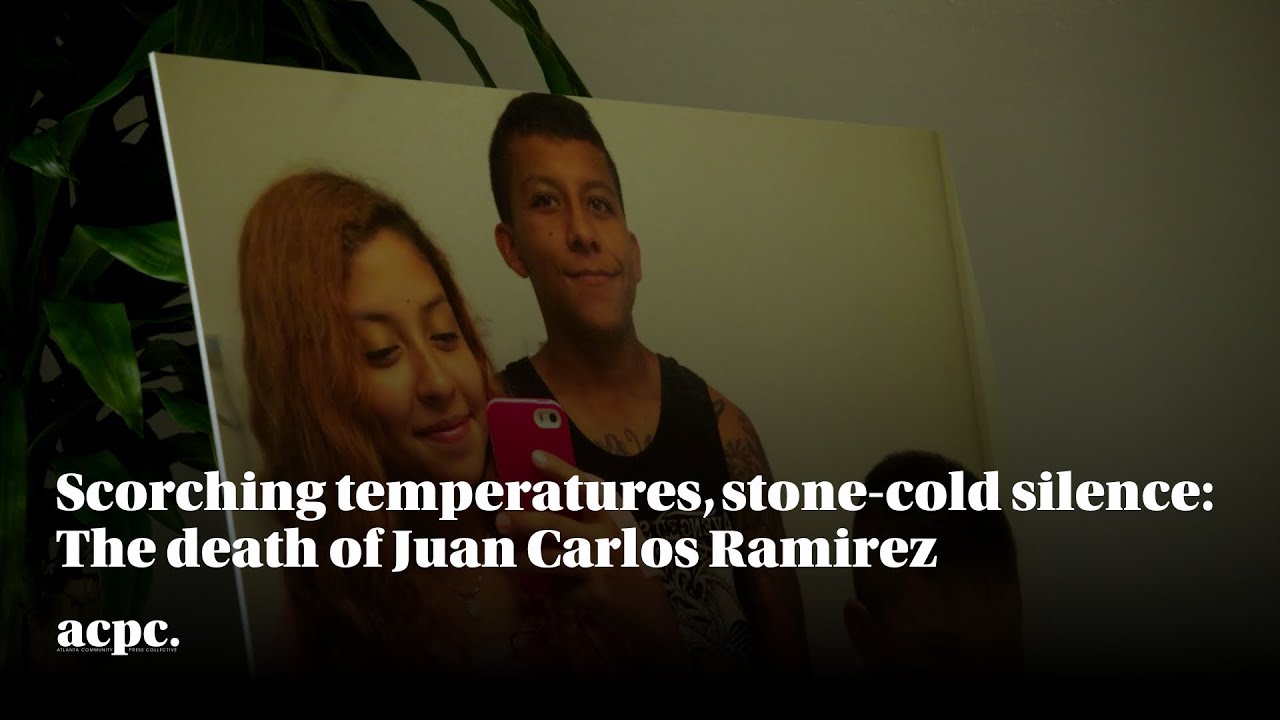
Scorching temperatures, stone-cold silence: The death of Juan Carlos Ramirez

Corrections officers at Telfair State Prison in Mcrae-Helena, Georgia held Juan Carlos Ramirez Bibiano in an outdoor cage for five hours without water, shade, or ice. Guards confined Ramirez at 10:00 a.m. July 20, 2023 to a chain-fenced concrete slab. The heat index outside soared to 105 degrees. Security staff sent an alert around 3:00 p.m. for a medical emergency in the outdoor recreational cell. Five onsite nurses rushed into the cage to find Ramirez blue-faced, naked, throwing up, and lying in his excrement. Ramirez was hot to the touch and had an irregular heartbeat ranging from 90 to 144 beats per minute. He struggled to breathe.
The nurses placed cold water bottles on his groin and under his arms to reduce his body temperature, but he remained unresponsive. An automated external defibrillator placed on Ramirez’s chest alerted medical staff to begin CPR. A doctor attempted to intubate Ramirez, whose yellow stomach bile protruded from his mouth.
Despite the medical team’s efforts, Ramirez’s condition was dire, and emergency medics rushed him to Dodge County Hospital. Medical records provided to Ramirez’s family indicate that he arrived with an internal body temperature of 107 degrees.
That evening, Ramirez died from heat-induced cardiac arrest at the age of 27.
The warden’s heat warning
Tragically, Ramirez’s death was foreseeable.
The Atlanta Community Press Collective (ACPC) obtained a copy of the meeting minutes from Telfair State Prison’s 8:00 a.m. staff meeting on the day Ramirez died.
Warden Andrew McFarlane warned prison staff about the extreme heat during the meeting. McFarlane instructed department heads to conduct frequent ice calls and “make sure offenders are not being left on the yard for extended amounts of time.”
Ramirez’s preventable heat-related death is not a unique occurrence in prisons throughout the United States. A 2023 study led by epidemiologist Julianne Skarha found that overall prison mortality rates across the country increased by 5.2%, and heart-related mortality increased by 6.7% when temperatures in June, July, and August rose by 10 degrees.
A grieving family wants answers from the State
No paywall. No corporate sponsors. No corporate ownership.
Help keep it that way by becoming a monthly donor today.
Free news isn’t cheap to make.
The Georgia Department of Corrections’ (GDC) in-custody death records list Ramirez as dying from natural causes.
Ramirez’s mother, Norma Bibiano, wants answers, but the GDC is not providing them.
Bibiano said state prison officials have been intentionally withholding information on her son’s death. She is now suing the GDC for negligence. Attorneys from Spears & Filipovits, LLC, and the Chadha Jimenez Law Firm filed the lawsuit on her behalf in the Superior Court of Telfair County.
Bibiano still doesn’t know why her son was placed in the outdoor cage, who was responsible for his care, or whether corrections officers did anything to protect Ramirez from harm.
“As a mother, I have a lot of questions about what happened that day, questions that I still don’t have clear answers to,” Bibiano, who spoke in Spanish, said via an interpreter. “In truth, what we want is answers from the authorities.”
Attorney Jeff Filipovits said his firm settled on filing a negligence action against the GDC, but “the range of possibilities go from negligence to murder.”
“Ordinarily, we would file suit against individual guards who are involved in the death, and we would have to name them individually and describe the conduct individually and file that in federal court,” Filipovits explained. “The reason we can’t do that here is because we don’t know enough,” he continued.
Georgia Secrecy Act shrouds accountability
The GDC’s lack of transparency surrounding Ramirez’s death mirrors a broader pattern of obfuscation, raising questions about the true extent of the crisis within Georgia’s prison system.
The Atlanta Journal-Constitution (AJC) reviewed GDC’s in-custody death records last year. The AJC’s report documented 37 homicides and 32 suicides and determined that 2023 was one of the deadliest years in the history of Georgia prisons. The AJC’s analysis did not include Ramirez’s death because it was reported he died from natural causes.
Georgia prisons are on pace in 2024 to set yet another grim record for homicides. At the same time, the GDC has stopped issuing reports on how incarcerated people are dying, citing the Georgia Secrecy Act.
The Georgia Secrecy Act allows the GDC’s Internal Investigations Unit to investigate deaths in the prison system. The act maintains that internal investigation reports and intelligence data “shall be classified as confidential state secrets and privileged under law.” The GDC commissioner alone can declassify investigations.
Bibiano’s attorneys asked GDC commissioner Tyrone Oliver to declassify the department’s internal investigative records surrounding Ramirez’s death.
“That request was promptly denied,” said Filipovits.
Filipovits lamented that his law firm had to piece together what happened to Ramirez through medical records. Those are the only records the Bibiano family has the legal right to review.
Filipovits stressed that his firm often relies on receiving information directly from people incarcerated in Georgia prisons or their loved ones.
“If anyone knows anything, please come forward about this case or any case,” said Filipovits. “I don’t care if it benefits us or our clients. I care if it benefits fighting against this inhumane system that we have.”
Author

Related Articles

A Rohingya man in New York died under mysterious circumstances— his relatives in Georgia are grappling with the loss
Federal immigration officers left Nurul Amin Shah Alam outside a closed coffee shop in harsh winter weather— days later he was found dead. He was getting ready to move to Georgia, says his niece in Stone Mountain.