Video Protestors gather at Atlanta mayor’s home over ‘Cop City’ referendum
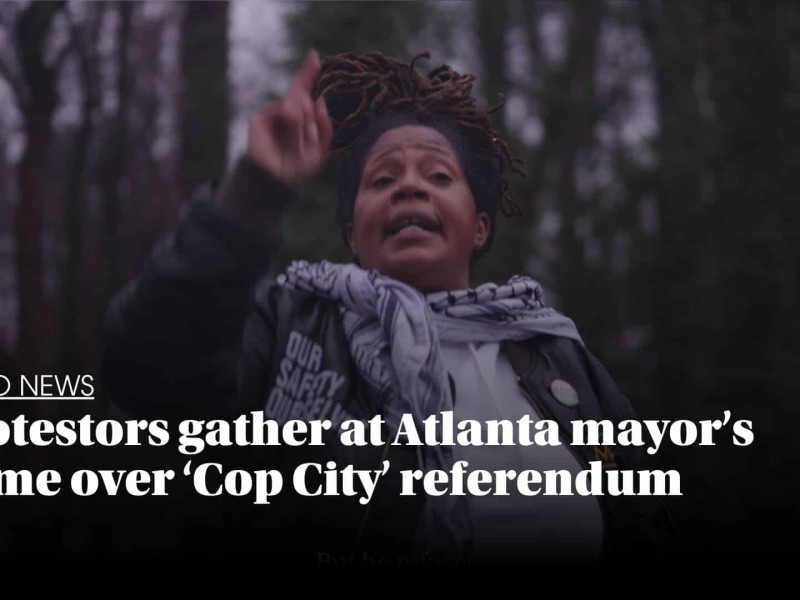
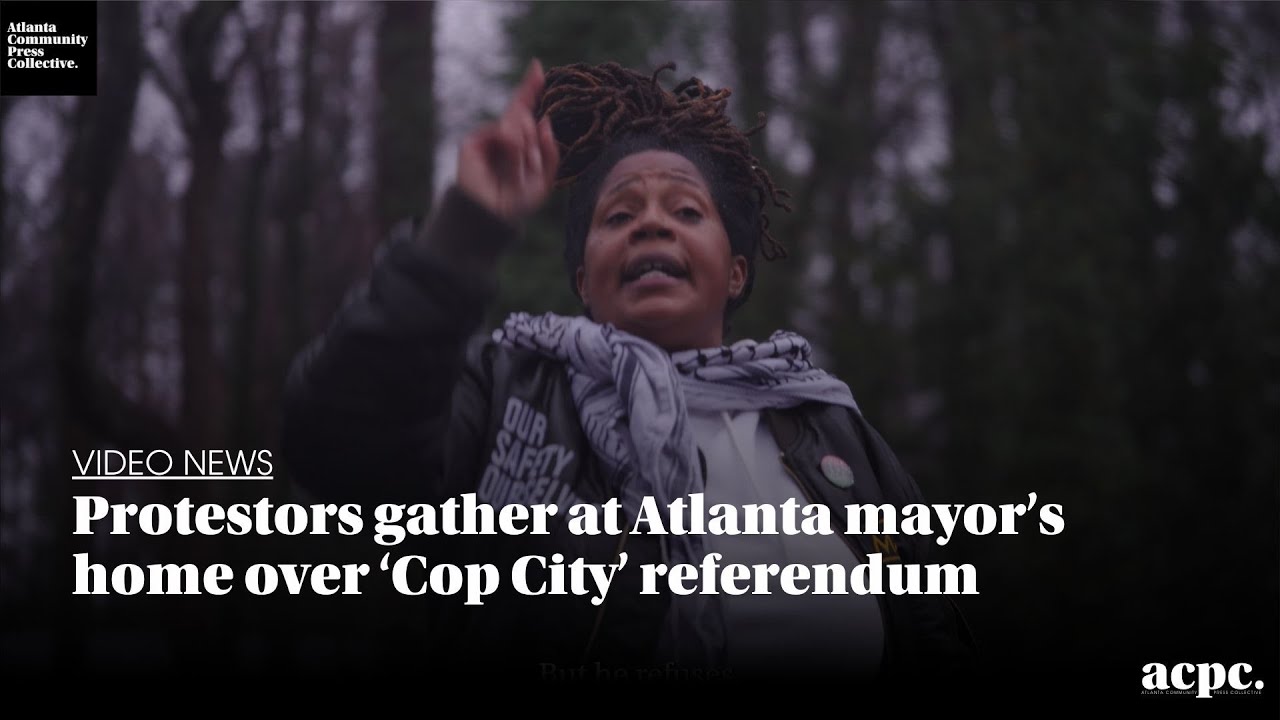
Friday morning, around 20 Black women and femmes protested outside the Collier Heights home of Mayor Andre Dickens. Wearing all white despite the rain, the group demanded that Mayor Dickens drop the City of Atlanta’s court appeal against the referendum that would put the ‘Cop City’ project up for a city-wide vote.
The group said they found Mayor Dickens’ address through publicly accessible paperwork. They confirmed he lives there, at least some of the time, through neighbors and an Instagram story showing the mayor passing out candy from that address on Halloween.
Sitting in a circle before the action, Mary Hooks, tactical lead for the Cop City Vote campaign, which was responsible for the referendum effort, asked each person in the group to share the reason they got out of bed before 6 a.m. to protest at the mayor’s house. Several women invoked the names of their children. Another spoke about her brother who is currently incarcerated. Others voiced their hope and anger, speaking more broadly about the need to fight for a world where Black people can be safe from state violence.
Danielle Rodriguez is Program Coordinator for SisterSong, an advocacy organization for indigenous women and women of color. She said she woke up excited at 4 a.m. “What got me up this morning was you all,” Rodriguez said as she scanned the circle and made eye contact with each person.
Local organizer and Spelman graduate Eva shared that they got out of bed because they respected the protest’s strategy. “I think this is a really beautiful, culturally responsive strategy. I think it’s a strategy that tells the truth about who is impacted and who cares about this fight,” they said. “The other thing that got me out of bed this morning was Palestine,” they added.
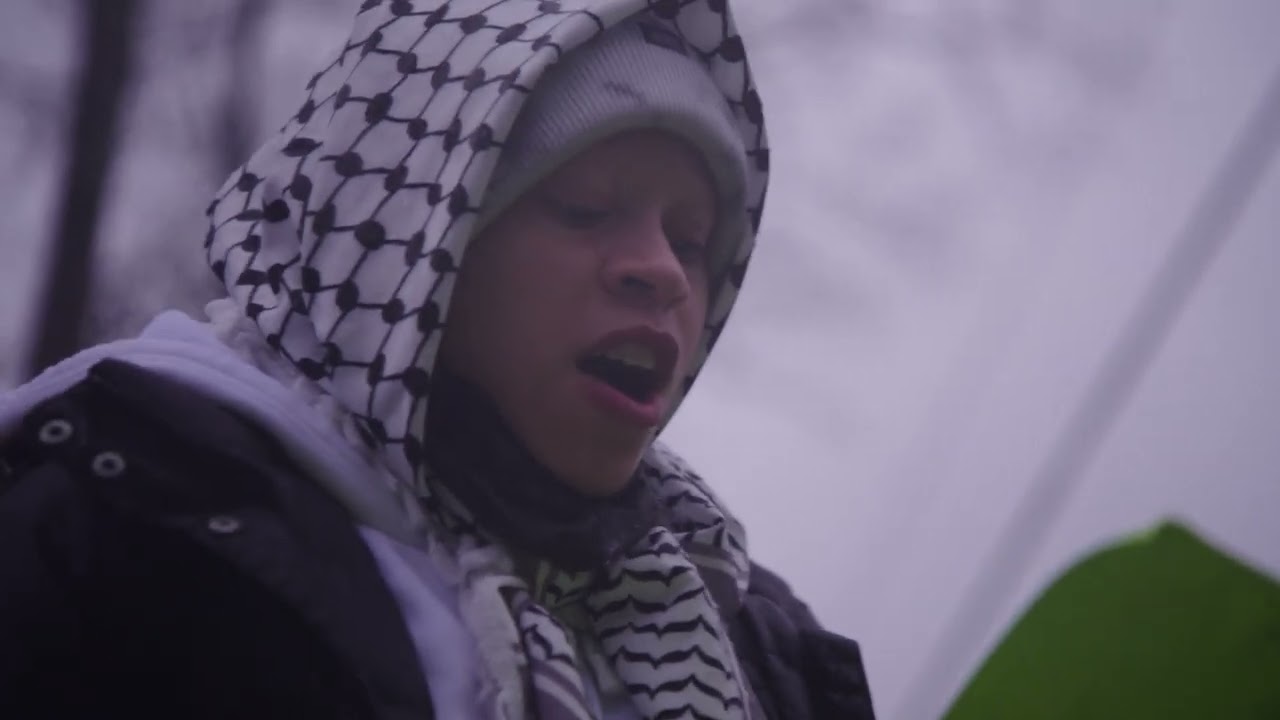
While the core demand of the protest was for Mayor Dickens to drop the city’s court appeal, several protesters wore kufiyahs, and their speeches made it obvious that the people of Palestine were in the hearts of everyone there.
“The mayor is stealing our votes,” Hooks said after the group arrived at the mayor’s house, “He could drop the appeal right now, but he refuses. He refuses the way we see Biden refusing to call for a ceasefire [in Gaza] and pull money. The Democrats in this country are null and void when it comes to democracy and what that actually means.”
Eva spoke about the special love that Black people in Atlanta have for Palestine. Calling out the Atlanta Police Department and the Israeli Police (IOF), which train together through the Georgia International Law Enforcement Exchange program, Eva said, “Black mothers in Atlanta and Palestinian mothers there know what it’s like to not be able to protect their children from armed forces who roam their streets.”
They added, “Black mothers in Atlanta and Palestinian mothers know what it’s like to not be able to reach their children because they are locked away in cages.”
No paywall. No corporate sponsors. No corporate ownership.
Help keep it that way by becoming a monthly donor today.
Free news isn’t cheap to make.
Eva also said that as APD and IOF officers look to one another for tactics and strategy, Black women and femmes look to their ancestors, their foremothers, and the Palestinian resistance. Referring to Hamas’ Oct. 7 attack, Eva exclaimed, “They bust down that wall and took back their land.” Speaking at Mayor Dickens, Eva warned, “Nobody in Atlanta is afraid to bust down your door and take back what’s ours.”
Regarding the all-white attire, Eva explained that the Black traditions and spiritualities they carry from their ancestors are concentrated here in the South. “Among many Black circles, we wear white to conjure images of power, endurance, paths opening,” they said before adding with a smirk, “In other Black circles, a group of Black femmes showing up in white in the pouring rain implies some things the mayor should be very afraid of.”
How did we get here?
Municipal bureaucracy and court appeals have greatly delayed the referendum. In June, then-Interim Municipal Clerk Vanessa Waldon took two weeks to approve the referendum petition. After it was approved, referendum supporters had 60 days to collect around 58,000 signatures to put the referendum question on the ballot.
At first, only Atlanta residents were able to collect petition signatures, but four Dekalb County residents filed a lawsuit, and a US district court judge issued an injunction in late July that opened the door for anyone, regardless of residency, to collect signatures. The judge stated that the city’s residency limitation imposed “a severe burden on core political speech.”
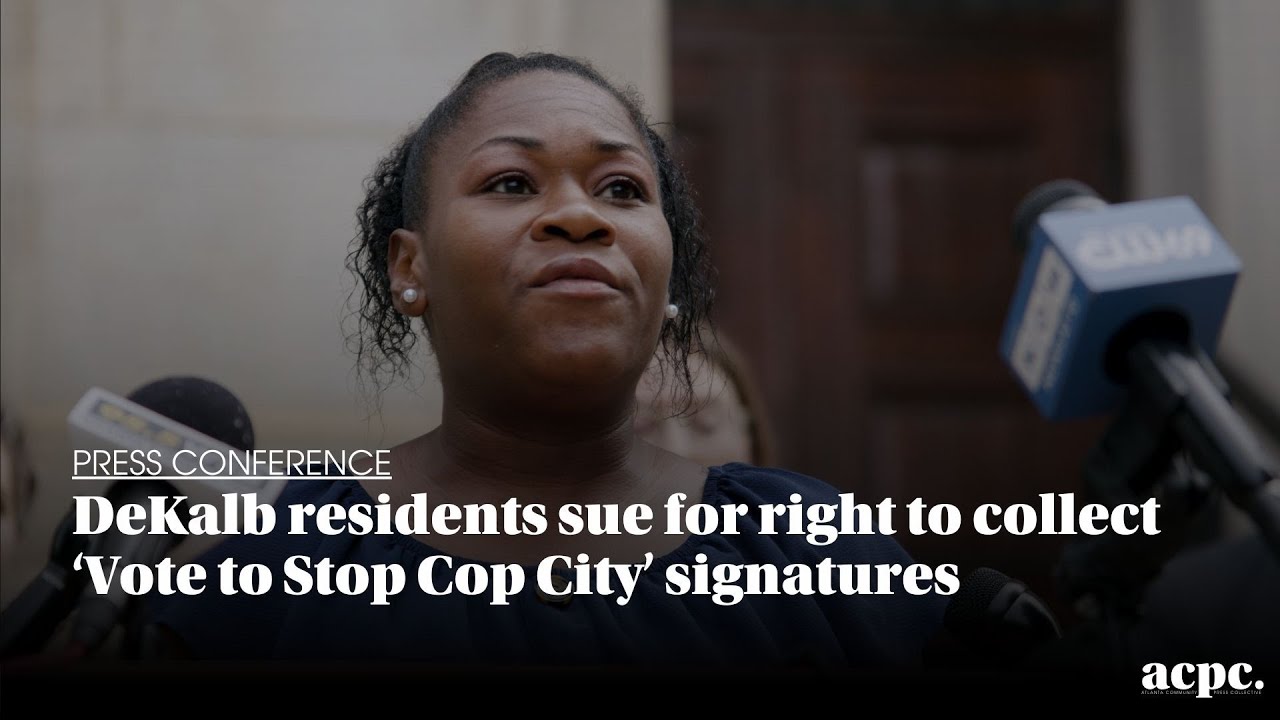
The injunction also reset the 60-day window petition gatherers had to collect signatures. The city appealed that decision. The Eleventh Circuit Court of Appeals stayed the lower court’s injunction without offering clarity on whether the stay would affect the signature collection deadline or if the signatures collected by nonresidents were still valid. The lack of clarity left the referendum in a state of limbo.
Hooks and the Cop City Vote campaign rushed to turn in the collected signatures in August, days after the appeals court stayed the injunction. However, the city refused to begin validating the signatures until the appeals court decided whether to uphold or overturn the district court’s ruling. Hooks and other referendum supporters said the mayor could drop the appeal lawsuit and allow referendum signatures to be counted at any time.
What happens next?
If the appeals court rules in favor of the referendum campaign, the city will begin counting signatures using the verification process approved by the City Council Feb. 5. That process includes a version of signature matching, which voting rights experts say negatively impacts Black, poor, disabled and elderly voters.
An independent analysis by several media organizations found that the Cop City Vote Coalition submitted around 108,500 signatures. To go on the ballot, the campaign needs just a little less than 54% of those signatures to be valid. The media organizations conducted a random sampling of 1,000 petition signatures, finding 48% were valid, with an additional 5% that could not be determined either way. The margin of error for the sampling was 3%.
The mayor’s office did not respond to a request for comment on this story.
Authors