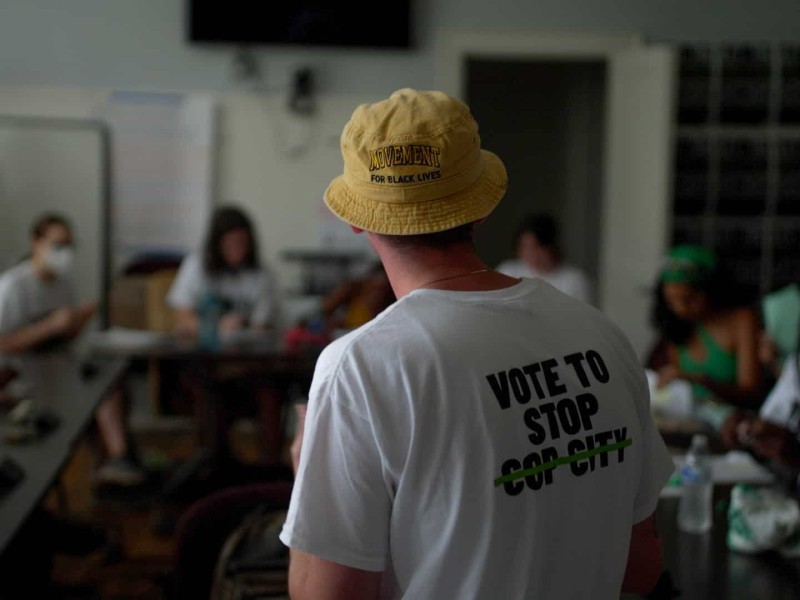
Lawsuit claims culture of indifference for Atlanta Police use of force
The family of Deacon Johnny Hollman filed a federal civil rights complaint in the Northern District of Georgia against the City of Atlanta, Atlanta Police Department Chief Darin Scheirbaum and former APD Officer Kiran Kimbrough, attorneys for the family announced at a press conference Thursday afternoon.
Kimbrough tased and repeatedly punched Hollman while attempting to arrest the deacon during a traffic accident investigation in August. The GBI concluded its investigation into the incident and turned over its findings to the Fulton County District Attorney, who has not accounted charges in the case.
The first three counts of the 63-page civil rights complaint allege Kimbrough violated the First and Fourth Amendment rights of Hollman, which is commonplace for wrongful death suits in police violence cases. The complaint goes a step further and takes aim at what attorney Mawuli Davis of the Davis Bozeman law firm, which is representing the Hollman family, says is a culture within the department that allows officers to believe they can engage in excessive force without fear of repercussions.
A culture of indifference toward violence
Count five takes up nearly a third of the pages of the complaint and details what attorneys label the “unofficial policy of deliberate indifference to widespread pattern and practice of excessive force and inadequate [use of force] investigations.”
Establishing the existence of this culture of indifference is a key aspect of the lawsuit, which aims to hold the city and APD’s Chief Scheirbaum liable in addition to officer Kimbrough.
“In general,” explained attorney Herald Spence, “to hold a municipality liable to for the misconduct of its employees, in the civil rights context, you have to show that a custom, policy or practice by the city was the moving force behind the constitutional violation.”
According to APD policy, officers are required to report any use of force incidents to their immediate superior, who in turn prepares a “Use of Force Report” to turn over to APD’s Office of Professional Standards (OPS) to investigate and determine if the officer acted constitutionally. However, between 2017 and 2020, APD officers reported 1,274 instances of non-deadly physical force, not counting instances where forced entry or firearms were used alone. Only around 5% of those instances were forwarded to OPS. The remaining 95% were “rubber-stamped” by supervisors, attorneys allege, without any disciplinary action against the officer in question.
In those rare instances where a report does make it to OPS, investigators in that office routinely closed out investigations as “not sustained” without determining either way as to the justification of use of force. Additionally, the filing states, OPS investigators closed out UOF investigations “without interviewing the complainant and/or other available civilian witnesses.”
OPS investigators also frequently chose not to—or “failed to” as the complaint describes it—administer lie detector tests to officers in use of force investigations. Worse, in those rare cases where lie detector tests were administered, attorneys allege, “OPS investigators routinely disregarded the results of [lie detector] exams which clearly indicated that the officer was lying.”
Lack of enforcement plays out over decades
The complaint details nine cases of APD officers engaging in force without serious repercussion dating back to 2003. Four of the cases involve former APD Officer Mark Gardner. In 2003, a bystander witnessed Gardner hit a handcuffed person in the face, and in 2006 an arrestee claimed that while he was not resisting, Gardner kicked him and hit him on the head with his radio. In both cases, APD closed their internal investigation without confirming or denying the allegations.
Gardner was again subject to a complaint in 2015 after an individual who sustained a two-inch headwound during an arrest claimed an unidentified officer hit him with a revolver even though he was not resisting. APD investigators closed the case without determining guilt or innocence or subjecting any officers to lie detector tests.

Then, on May 30, 2020, Gardner and eight other officers dragged two Black college students out of their vehicle, tasing them repeatedly. During depositions in a civil suit brought by Taniyah Pilgrim, one of the two students, officers admitted Pilgrim did not act in any way to justify the force used against her. Supervisors failed to initiate use of force investigations in the incident. Then-APD Chief Erika Shields fired Gardner and another officer the following day, but the firings were overturned after a review board determined APD violated the officers’ due process rights.
A top-down issue
The problem starts at the top and includes APD’s Chief Schierbaum and city leadership.
“That is how culture is created,” said attorney Davis. “Just like in anyone’s home, if your child does this and you allow it, then that becomes the culture of the home.”
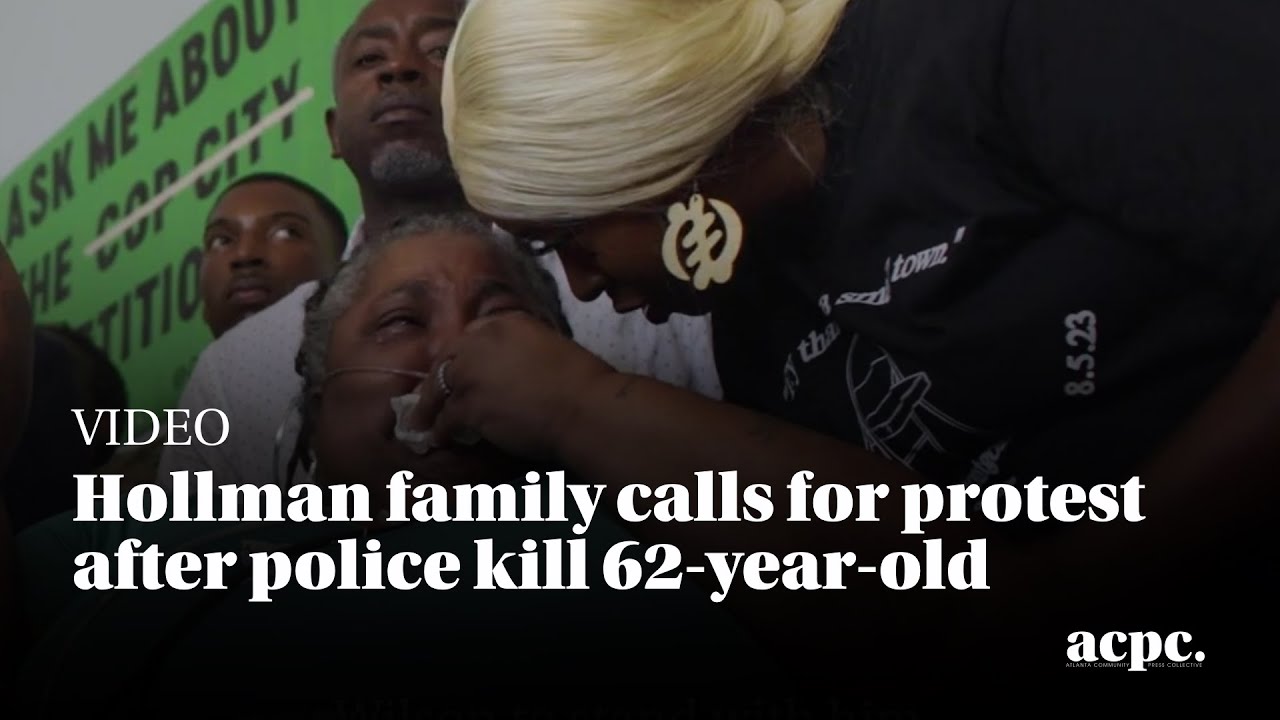
“While the chief, the city council and the mayor’s hand were not on that taser,” Davis continued, “their fingerprints are all over it. While they did not stand over the top of Deacon Hollman as he took his last breath, they were there because they created the culture that allowed this officer to believe his conduct would go unpunished.”
In particular, “Chief Schierbaum,” the complaint states, “had knowledge that APD officers throughout the department were routinely using unjustified force against citizens with impunity and without consequences, and that these uses of force were routinely not being investigated in any meaningful or constitutionally adequate manner by APD supervisors and/or OPS investigators.” Likewise, the complaint continues, the City of Atlanta allowed the development “widespread and persistent unconstitutional patterns and practices regarding the use of force instilled in Atlanta Police Officers the belief that they were permitted to use force against citizens with impunity and without any consequences.”
Use of force data for the APD backs up claims of a culture permissive of violence. The department has 83% more use of force and 88% more use of deadly force than police departments nationwide, according to Tiffany Roberts, Director of Public Policy for the Southern Center for Human Rights.
More shocking is the racial disparity in the use of deadly force by APD officers.
“100% of people who are unarmed and killed by [Atlanta] police are Black,” Roberts says.
No paywall. No corporate sponsors. No corporate ownership.
Help keep it that way by becoming a monthly donor today.
Free news isn't cheap to make.
Author

Related Articles

What’s happening with the Cop City domestic terrorism, RICO charges?
In Fulton County, a judge dismissed the 61-person Cop City racketeering charge while also ruling that domestic terrorism charges could move forward. On the same day, an activist filed a motion to dismiss her domestic terrorism charge in DeKalb County.